
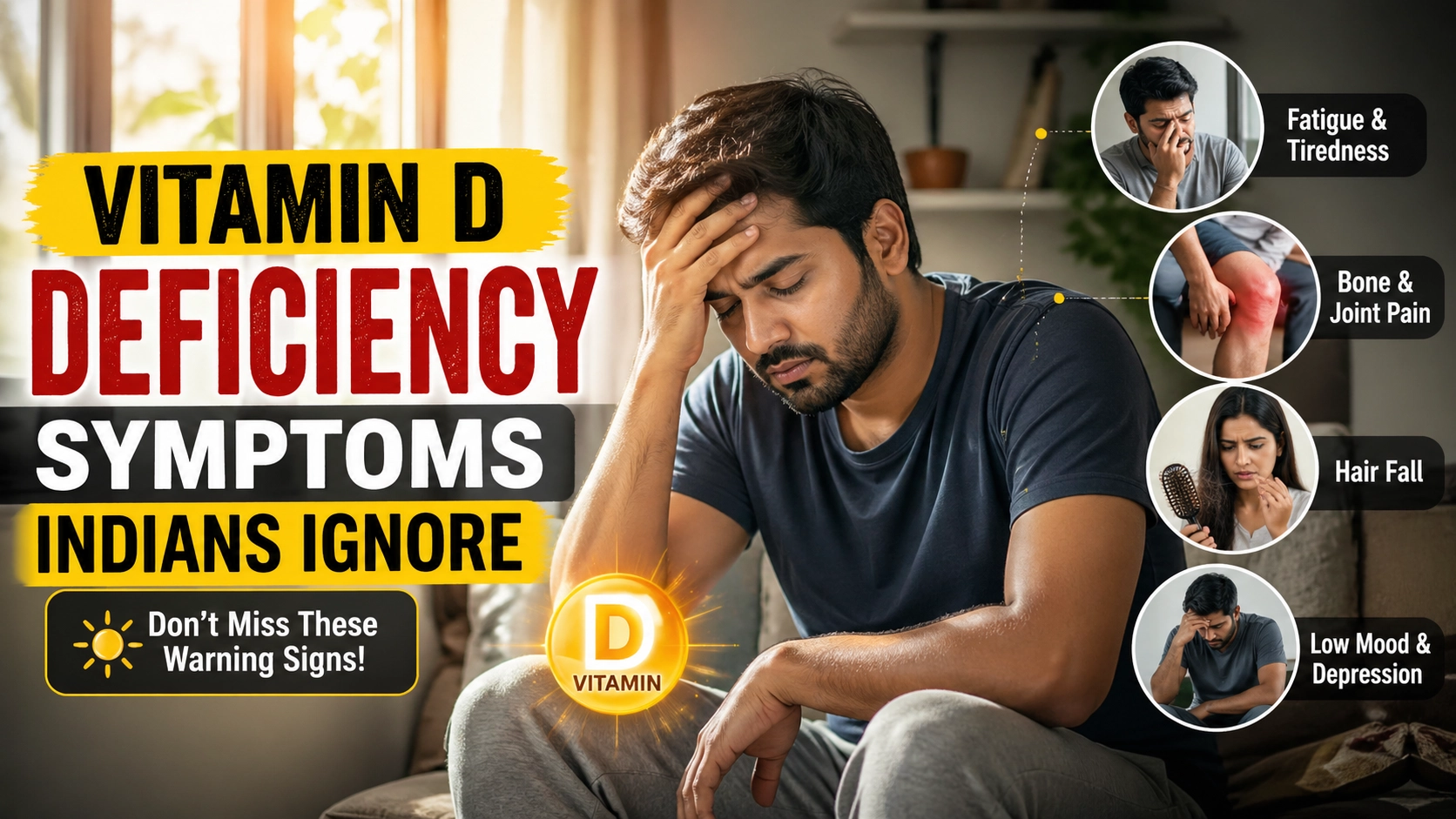
Introduction
Vitamin D deficiency symptoms have become a silent epidemic across India, quietly undermining the well-being of millions. Despite abundant sunshine, Indians often ignore key warning signs that their bodies are running low on this essential nutrient. In this guide, we reveal overlooked symptoms, why deficiency is so common in India, and simple solutions you can start today.
Why Vitamin D Deficiency Is Rampant in India
It may sound strange that vitamin D deficiency symptoms are so widespread in India, a country bathed in sunlight. However, several unique factors impact absorption and production of vitamin D among Indians.
- Skin Tone: Darker skin produces less vitamin D from sunlight compared to lighter skin tones. Because melanin acts as a natural sunscreen, people with brown or dark skin need more sun exposure to make the same levels as lighter-skinned individuals.
- Modern Lifestyles: Many people work indoors and avoid the sun, especially in urban areas. Air-conditioned offices, malls, and apartment living reduce natural light exposure dramatically.
- Clothing and Cultural Norms: Traditional clothing often covers most of the skin, limiting the amount of ultraviolet B (UVB) rays that trigger vitamin D synthesis.
- Air Pollution: Major Indian cities suffer from high pollution, which blocks UVB rays. Even if you stand outside, the UVB needed for vitamin D production can’t penetrate the smog efficiently.
Therefore, despite the sunny climate, Indians are surprisingly prone to low vitamin D, making awareness crucial.

12 Overlooked Vitamin D Deficiency Symptoms
Many signs of low vitamin D are subtle, non-specific, and easily ignored until the deficiency becomes severe. Here is an overview of twelve common-but-often-missed symptoms:
- Unexplained fatigue and constant tiredness
- Frequent colds or infections
- Bone pain or aches, especially in the legs and lower back
- Weakness in muscles or general body aches
- Hair thinning or loss
- Low mood, anxiety, or depressive feelings
- Slow wound healing
- Joint stiffness and swelling
- Sleep issues, including insomnia
- Excessive sweating, especially on the forehead
- Loss of appetite in children
- Chronic pain or persistent headaches
Let’s delve deeper into these warning signs and what they mean for you.
Muscle and Bone Warning Signs

Muscle Weakness and Body Pain
One of the hallmark indicators of low vitamin D levels is persistent muscle weakness. This isn’t just occasional soreness after a workout — it’s an on-and-off feeling of heaviness or lack of power, which can make everyday activities, from climbing stairs to carrying groceries, seem unusually hard. Additionally, unexplained body aches, particularly around the hips, legs, or lower back, can signal underlying issues with calcium absorption, which vitamin D regulates.
Bone Discomfort and Risk of Fractures
Beyond soft tissue, insufficient vitamin D leads to weaker bones over time. Adults may notice widespread bone discomfort, or children could develop bone deformities. Research shows that low levels contribute to increased fracture risks, especially in the hips and spine. For example, elderly adults who often break their bones from minor falls may actually be suffering from chronic vitamin D deficiency, rather than just age-related bone loss.
Immunity and Frequent Illness
Are you catching every bug or infection making the rounds? Vitamin D plays a major role in modulating the immune system. Deficient individuals tend to fall ill more often and recover more slowly after illnesses. For instance, children experiencing repeated respiratory infections may have their root cause traced back to low vitamin D levels. Similarly, adults struggling with constant sore throats or sinus infections should check their nutrient levels.
Moreover, studies indicate a correlation between vitamin D status and autoimmune disorders. Ensuring optimal intake may help reduce risks of conditions like type 1 diabetes, multiple sclerosis, and rheumatoid arthritis.
Mental and Emotional Changes
Low Mood and Anxiety
Mental health isn’t spared either. Many affected by a deficiency describe feeling down, or experiencing increased anxiety without a clear trigger. Vitamin D interacts with brain receptors affecting mood-regulating neurotransmitters like serotonin. Seasonal Affective Disorder (SAD), common in some regions during winter, illustrates how lower sunlight impairs mood by reducing vitamin D synthesis. In India, urban lifestyles tend to mimic this sunlight deprivation year-round.
Sleep Disturbances
Insomnia or poor sleep quality can also be subtle signs. Disrupted sleep, frequent awakenings, or restlessness may be linked to altered melatonin rhythms, influenced by vitamin D status. Good sleep hygiene—like keeping phones away after bedtime—helps, but may not resolve underlying deficiencies.
Skin, Hair, and Other Physical Signs

Hair Loss Issues
Unexpected hair thinning, especially in women, can indicate deeper nutritional problems. While genetics and stress play major roles, several dermatologists now check vitamin D status in patients with unexplained hair loss. Correcting the deficiency often leads to visible improvements within months.
Slow Wound Healing & Sweating
If bruises or cuts take longer than usual to heal, or you notice excessive forehead sweating, especially in newborns, it’s likely time for a vitamin D check. In infants, this type of sweating is a classic early sign parents might not associate with nutrition at all.
Furthermore, some individuals report symptoms such as loss of appetite in children, or nonspecific headaches, that only resolve once vitamin D is replenished.
Unique Indian Risk Factors
Aside from global risk groups—elderly, pregnant women, or those with chronic illnesses—India’s population faces unique challenges:
- Vegetarian diets: Many Indians consume little to no animal products, which are the richest sources of vitamin D in food. Plant-based diets, while healthy, often lack sufficient vitamin D unless fortified foods or supplements are included.
- Higher prevalence of obesity: Vitamin D, being fat-soluble, can get trapped in body fat, making it less available to the body in overweight individuals. This reduces the effectiveness of endogenous production, even with sun exposure.
- Unawareness and lack of routine screening: Most people do not check vitamin D levels until symptoms become severe. There remains a misconception that living in a sunny country is protection enough.
Compared to Western populations, the lack of fortified foods in India increases vulnerability. For instance, in the West, milk is usually enriched with vitamin D; in India, this is rare.
Diagnosis and Practical Solutions
If you suspect vitamin D deficiency symptoms, getting a simple blood test called 25(OH)D is the gold standard for diagnosis. Ideally, levels should range between 20-50 ng/mL. Anything below is considered deficient, and anything significantly below 20 ng/mL warrants action.
- Easy Fixes: Besides strategic sun exposure—like spending 15–30 minutes in the sun (with arms and legs exposed), preferably between 10am and 3pm—supplementation is often required. Consult your doctor for the proper dosage.
- Dietary Improvements: Include mushrooms exposed to sunlight, fortified milk or cereals, egg yolks, and fatty fish in your diet. For vegetarians, fortified products and supplements become key. For more on healthy food swaps, check our travel tips.
- Lifestyle Changes: Children, elderly, or those with medical conditions may need extra care and more regular screening. Remember, sunscreen blocks UVB conversion, so balance skin protection with exposure needs.
It’s vital not to self-medicate excessively, as hypervitaminosis D brings its own risks.
Prevention: Real-Life Tips for Indians
Prevention is always better than cure. Here are practical, culturally-appropriate tips for boosting vitamin D safely in India:
- Plan outings or activity breaks in the late morning/early afternoon when the sun’s UVB rays are strongest.
- Choose clothing that allows for some skin exposure where culturally appropriate.
- Incorporate fortified foods—milks, grains, soya products—available in urban markets.
- Encourage children and elderly to spend at least 20 minutes outdoors daily.
- Add more nuts, seeds, mushrooms, and eggs to daily meals. For vegans, discuss supplements with your doctor.
- Monitor air quality using phone apps; on less polluted days, prioritize sunbathing safely.
- Schedule annual or biannual vitamin D level checks, especially if you experience any of the symptoms discussed above.
With just a few tweaks, most people can dramatically improve their vitamin D status.
FAQs
Can I get enough vitamin D from diet alone?
It’s challenging to meet daily needs from diet alone, especially on a vegetarian or vegan diet. Animal sources (like fatty fish and egg yolk) are rich, but most people need a mix of strategic sun exposure and supplementation. Fortified foods can help close the gap for many.
How quickly can vitamin D deficiency symptoms improve?
Most people start feeling better within a few weeks of correcting the deficiency—energy, mood, and sleep often improve noticeably. However, restoring optimal levels may take several months, especially in cases of severe deficiency. Regular monitoring is important to ensure the right dosage and avoid excess.
Are there risks in taking too much vitamin D?
Yes. Excessive intake through high-dose supplements (usually prescription-only) can trigger toxicity, leading to nausea, kidney problems, or abnormal heart rhythms. Always consult a doctor before starting supplementation, especially if you have pre-existing health conditions.
Conclusion: Take Charge of Your Health
Vitamin D deficiency symptoms remain underrecognized in India, despite touching nearly every aspect of well-being—from bones and immunity to mood and energy. Increasing awareness and proactive health checks are crucial. By understanding the root causes, recognizing early signs, and taking simple, practical steps, you can prevent long-term complications and improve your quality of life. Recognizing vitamin D deficiency symptoms early can help prevent long-term bone and immunity problems.
Remember, a few minutes of sunlight, a balanced diet, and regular health screening make all the difference. You don’t have to wait until symptoms worsen—prevention is key. For more insights on nutrition and lifestyle, explore authoritative resources like this reference.
Yoga vs Gym vs Walking: 9 Smart Fitness Truths