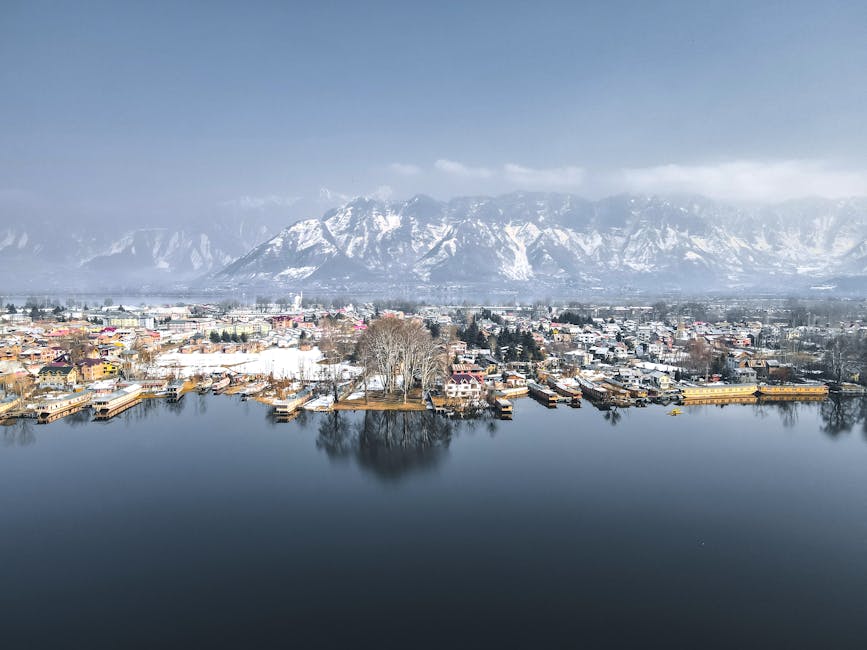
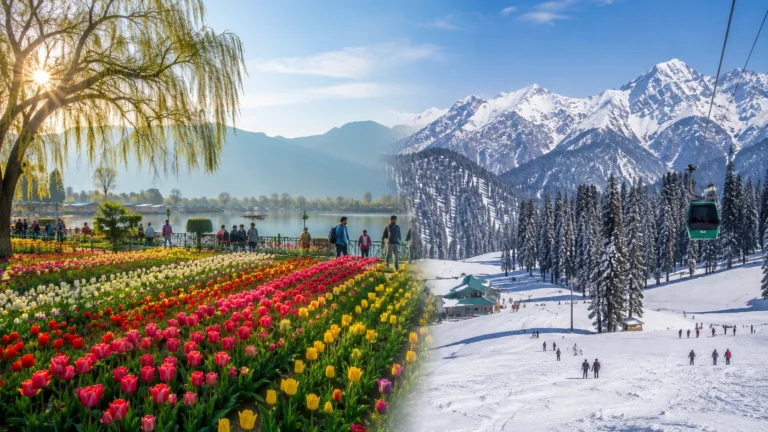
If you’ve ever stared at a Kashmir travel reel on Instagram and thought, “There’s no way it actually looks like that in real life”— trust me, it does. And it gets better. Because honestly? Exploring the enchanting lakes of Kashmir is one of those rare experiences where the photos don’t even do justice to the real thing.
I’ve spent a fair bit of time wandering around these lakes — some by shikara, some by foot, and a couple I literally trekked seven days to reach. So instead of giving you the boring tourist-brochure version, I’m just going to chat with you like we’re sitting over a cup of kahwa.
Official Planning Resource Pair this guide with the Jammu & Kashmir Tourism website for current permits, advisories, and registered operator lists before you book anything.
Dal is loud and full of life. Wular is moody and massive. Tarsar feels like a secret. Gadsar feels like another planet entirely.
It’s Not a Filter
You’re sandwiched between the Pir Panjal range and the Greater Himalayas. Glaciers feed most of these lakes. That turquoise is real.
Living Culture on the Water
Floating vegetable markets, woven reed gardens, 8,000 fishermen — Kashmir’s lakes are economic and cultural ecosystems, not just scenery.
Ramsar-Protected Wetlands
Multiple lakes here — Wular, Surinsar, Mansar — are internationally designated wetlands. Biodiversity is extraordinary.
Lake One
Srinagar · 18 sq km
Dal Lake
The Soul of Srinagar — and yes, it lives up to the hype.
01
Dal Lake sits right in the heart of Srinagar and stretches across roughly 18 sq km. It’s actually divided into four basins — Gagribal, Lokut Dal, Bod Dal, and Nagin — and each section has its own vibe. The famous floating gardens (locally called Rad) aren’t a gimmick: locals genuinely grow tomatoes, cucumbers, and lotus stems on woven reed mats.
“After my first 6 a.m. shikara ride, gliding past the floating vegetable market while old uncles sold me kahwa from their boats… yeah, I get it now.”
Shikara Ride — Real Talk on Costs
The J&K Tourism Department officially fixed shikara rates at ₹700/hour for Dal and Nigeen Lakes (2023 notification), with ₹400 for every additional hour, and ₹2,700 for a full 6-hour day. On the ground? You’ll be quoted ₹1,200–₹1,500/hour. Negotiate hard and you’ll settle around ₹800–₹1,000.
Pro tip: Start your ride from Ghat No. 7 near Dal Gate for the floating market experience, or Ghat 23–24 (near Hotel Centaur) for the Char Chinar route.
My Honest Tips
Sunset shikara > sunrise shikara. The Zabarwan range glows golden.
Skip daytime rides between 11 a.m. and 3 p.m. — summer glare off the water is brutal.
Houseboat: worth it for one night. Nigeen area for peace, central Dal for buzz.
Best time: April–October for warmth; December–February for misty winter magic.
Quick Facts · Dal Lake
Area~18 sq km
LocationSrinagar City
Basins4 (Gagribal, Lokut Dal, Bod Dal, Nagin)
Official Shikara Rate₹700 / hour
Real Rate₹800–₹1,000/hr (negotiated)
Full Day (6 hrs)₹2,700 official
Best MonthsApr–Oct · Dec–Feb
Best GhatNo. 7 (Dal Gate)
Lake Two
Bandipora · Up to 189 sq km · Ramsar Site
Wular Lake
The quiet giant most tourists miss.
02
Located near Bandipora town (about 65 km north of Srinagar), Wular is officially one of the largest freshwater lakes in the Indian subcontinent — its size fluctuates seasonally between 30 to 189 square kilometres. It was designated a Wetland of International Importance under the Ramsar Convention in 1990.
“If Dal is the loud cousin at the wedding, Wular is the calm uncle who knows everything but says little.”
This isn’t a “shikara and selfie” lake. Wular is for travellers who want to feel something instead of do something. Over 8,000 fishermen depend on this lake, and you’ll spot everything from kingfishers and Eurasian sparrowhawks to migratory mallards in winter.
History note: Kashmiri sultan Zain-ul-Abidin built an artificial island called Zaina Lank in the middle of the lake in 1444. You can still see the ruins.
Heads up: Wular has been struggling with pollution and weed infestation. Carry your trash back. The lake doesn’t deserve our nonsense.
Quick Tips
Distance from Srinagar: ~65 km (1.5–2 hrs by road)
Best time: September–November (migratory birds); April–June (clear skies)
Eat: Rogan Josh and Modur Pulav at small dhabas in Bandipora
Bring binoculars — birding here is exceptional
Quick Facts · Wular Lake
Area30–189 sq km (seasonal)
From Srinagar~65 km
Ramsar Designation1990
Historic FeatureZaina Lank Island (1444)
Best ForBirding, solitude, photography
Best MonthsSep–Nov · Apr–Jun
Lake Three
Jammu Region · Ramsar Site 2005
Mansar & Surinsar
The sacred twins of Jammu — with a Mahabharata backstory.
03
Not all of Kashmir’s lakes are in the Kashmir Valley. The twin lakes of Mansar and Surinsar sit in the Jammu region with a fascinating mythological backstory tied to the Mahabharata. According to local legend, Babruvahana, son of Arjuna and Ulupi, shot an arrow into the ground at Surinsar that emerged at Mansar — creating a mythological underground link between the two.
Mansar Lake — The Bigger, Livelier One
Located in Samba district, about 62 km from Jammu city, Mansar is roughly 1.6 km long and 0.8 km wide. It has a Sheshnag Temple (six-headed serpent deity) on its eastern bank. Paddle boats are available at ~₹100 for an hour for 4 people. Newlyweds traditionally do three parikramas around the lake for blessings.
Surinsar Lake — The Quieter Sibling
About 9 km from Mansar and 42 km from Jammu, Surinsar is smaller and significantly more peaceful. Boating and swimming are prohibited here due to religious beliefs — the small island in the middle is said to be home to thousands of bats. (Yes, real bats.) Both lakes form part of the Surinsar-Mansar Wildlife Sanctuary (~98 sq km), home to nilgai, barking deer, and leopards.
Quick Facts · Sacred Twins
Mansar — From Jammu~62 km
Mansar — Size1.6 × 0.8 km
Mansar — Boating₹100 / hr (4 persons)
Surinsar — From Jammu~42 km
Surinsar — ActivitiesNone (religious restriction)
Ramsar DesignationNov 2005
Wildlife Sanctuary~98 sq km
WildlifeNilgai, Barking Deer, Leopard
Lake Four
Aru Valley · 12,500–13,500 ft · 6–7 Day Trek
Tarsar & Marsar
The trek that will ruin you for other treks.
04
These twin alpine lakes sit at around 12,500–13,500 ft, deep in the Aru Valley region near Pahalgam. Tarsar is almond-shaped (you’ll recognize it from a thousand Instagram posts), and Marsar is the mystical, mist-covered one that’s often hidden by clouds — adding to its eerie beauty.
“A shepherd was told not to look back at his 1,000 sheep. He looked. 800 drowned in the first lake. 200 emerged from a second. That’s Tarsar and Marsar.”
Day-by-Day Route
Day
Route
Dist.
Day 1
Srinagar → Aru Village (drive)
103 km
Day 2
Aru → Lidderwat
10 km
Day 3
Lidderwat → Shekwas
6 km
Day 4
Shekwas → Tarsar Lake
5 km
Day 5
Tarsar → Sundersar (via Tarsar Pass)
6 km
Day 6
Sundersar → Marsar → Homwas
11 km
Day 7
Homwas → Aru + drive to Srinagar
13 km
Use a postpaid SIM — prepaid SIMs from outside J&K don’t work. Call family before Aru; you’ll lose signal after.
Best months: July–September (June has snow patches, October gets too cold)
Difficulty: Moderate — doable for fit beginners with prior short-trek experience
Trek Facts · Tarsar Marsar
Base CampAru Village
From Srinagar~103 km (3 hrs)
Total Distance~48 km
Duration6–7 days
Max Altitude~13,500 ft
DifficultyModerate
Best MonthsJul–Sep
Package Cost₹13,000–₹18,000 / person
Lake Five
Bandipora · 3,600 m · Kashmir Great Lakes Trek
Gadsar Lake
The Valley of Flowers nobody talks about.
05
If Tarsar is famous, Gadsar is its underrated, mysterious cousin. Sitting at around 3,600 m (11,800 ft) in the Bandipora district, Gadsar is part of the legendary Kashmir Great Lakes Trek. The name literally means “Lake of Fishes” in Kashmiri (it’s full of trout) — but locals also call it Yemsar, “Lake of Yama,” the god of death.
“There’s a creepy local legend that a freshwater octopus-like creature drags shepherds’ sheep into the water. Most shepherds still refuse to graze too close.”
Spooky vibes aside — Gadsar is genuinely one of the most floral, photogenic lakes in Kashmir. In summer, the meadows explode with blue poppies, daisies, and forget-me-nots, which is why people call it the “Valley of Flowers of Kashmir.”
Access: Trek only (Sonamarg → Nichnai → Vishansar → Gadsar, ~28 km)
Best time: July–September
Gadsar Pass: 13,750 ft — highest point of the Kashmir Great Lakes Trek
Minced meat balls in creamy yoghurt — the crown of a Wazwan feast.
Modur Pulav
Sweet saffron rice with nuts and raisins. Try it in Bandipora.
Dum Aloo
Kashmiri-style potatoes in fennel-forward gravy. Best veg option.
Kahwa Tea
Green tea with saffron, cardamom, and almonds. Have it constantly.
Practical Planning
Packing Essentials
Layers (15°C day, 0°C night at altitude)
Waterproof jacket Kashmir = mood swings
Sunscreen SPF 50+ High-altitude UV
Trekking shoes (ankle support) For Tarsar / Gadsar
Power bank No charging on treks
Postpaid SIM (Airtel / Jio) Prepaid won’t work in J&K
Approximate Budget (2025)
Shikara ride (1 hour) ₹700–₹1,200
Houseboat stay / night ₹2,500–₹6,000
Tarsar Marsar trek package ₹13,000–₹18,000
Srinagar → Sonamarg cab ₹3,000–₹4,500
Local Wazwan meal ₹600–₹1,200/person
How to Get There
Fly into SXR Srinagar Airport
Direct flights from Delhi, Mumbai, Bengaluru
Train to Jammu Tawi / Udhampur then 6–8 hr cab
Dal / Wular Local taxi from Srinagar
Tarsar base (Aru) ~3 hr drive via Pahalgam
Gadsar start (Sonamarg) ~1.5 hr from Srinagar
Cultural Etiquette
🕌
Dress modestly near religious sites (Hazratbal, Mansar temples). Cover shoulders and legs.
📷
Don’t photograph army installations — many are around Wular and the high-altitude lakes.
🙏
Respect sacred lakes: no swimming or littering at Surinsar or Mansar. Circumambulation is a ritual, not a photo op.
💰
Tip your trek guides and shikara owners generously. Most earn seasonally — these gigs are their livelihood.
Frequently Asked Questions
What is the best time to visit Kashmir’s lakes?
For valley lakes (Dal, Wular), April to October is ideal. For high-altitude lake treks like Tarsar-Marsar and Gadsar, stick to July to September when snow has melted and meadows are in full bloom.
Are houseboats really worth it?
For one or two nights, yes — they’re a unique cultural experience. After that, the novelty wears off (bathrooms can be hit-or-miss). Stay 1 night in a houseboat, then shift to a regular hotel.
Is Kashmir safe for tourists in 2025?
Generally yes — tourism is booming and the situation in tourist areas (Srinagar, Pahalgam, Sonamarg, Gulmarg) is stable. Always check current advisories on the MEA Travel Advisory page before booking.
How much does the Tarsar Marsar trek cost?
Reputed trek operators charge between ₹13,000–₹18,000 per person including meals, camping gear, permits, and transport from Srinagar.
Can I visit Gadsar Lake without trekking?
Unfortunately, no. Gadsar isn’t road-accessible. The only way is via the Kashmir Great Lakes Trek (8 days) or as part of the Tarsar-Marsar variant route.
Is this good for solo female travellers?
Absolutely. Kashmir is one of the most respectful regions you’ll travel to. Use registered shikara owners, stick to reputed trek companies (Indiahikes, Trek The Himalayas, Travel My Kashmir), and you’ll be more than fine.
What’s the entry fee for Dal Lake shikara rides?
There’s no entry fee for the lake itself. Official shikara rate is ₹700/hour (per J&K Tourism), but expect to negotiate up to ₹1,000–₹1,500/hour during peak season.
Which SIM card should I bring?
Use a postpaid SIM from Airtel or Jio — prepaid SIMs from outside J&K don’t work in the state. You’ll lose all signal after Aru Village on the Tarsar trek, so call family before you start.
Go. Before Kashmir Changes.
Exploring the enchanting lakes of Kashmir isn’t just a holiday — it’s the kind of trip that recalibrates your idea of what “beautiful” means. I’ve watched first-time visitors literally tear up at Tarsar. I’ve seen kids stop scrolling their phones to stare at Dal at sunset.
There’s something here that doesn’t translate to Instagram, no matter how hard we try. So take leave from work. Skip that overpriced Bali trip. Come to Kashmir, get on a shikara, eat too much Rogan Josh, trek your legs off, and let these lakes do their quiet magic on you.