The future of creative work in the AI era is not a simple story of machines replacing people. It is a story of abundance, speed, and a new kind of scarcity: human originality. As AI systems make it easier to generate images, drafts, music, layouts, and videos, the creative landscape is changing fast. That can feel threatening. But it also creates an opportunity for writers, designers, strategists, editors, artists, and storytellers who understand what AI cannot easily replicate.
In this new environment, the future of creative work in the AI era depends less on raw production and more on judgment, taste, trust, and lived experience. The people who thrive will not necessarily be the fastest content makers. They will be the ones who know what matters, what resonates, and what deserves to be made in the first place. This article explores why that shift is happening, how it affects creative jobs, and what practical steps creators can take to stay relevant and valuable.
For anyone working in content, branding, design, media, or digital storytelling, understanding the future of creative work in the AI era is now a career skill, not just a trend watch. The good news is that the demand for human-centered creativity may grow as AI makes generic output cheap and plentiful.
Why the future of creative work in the AI era looks different
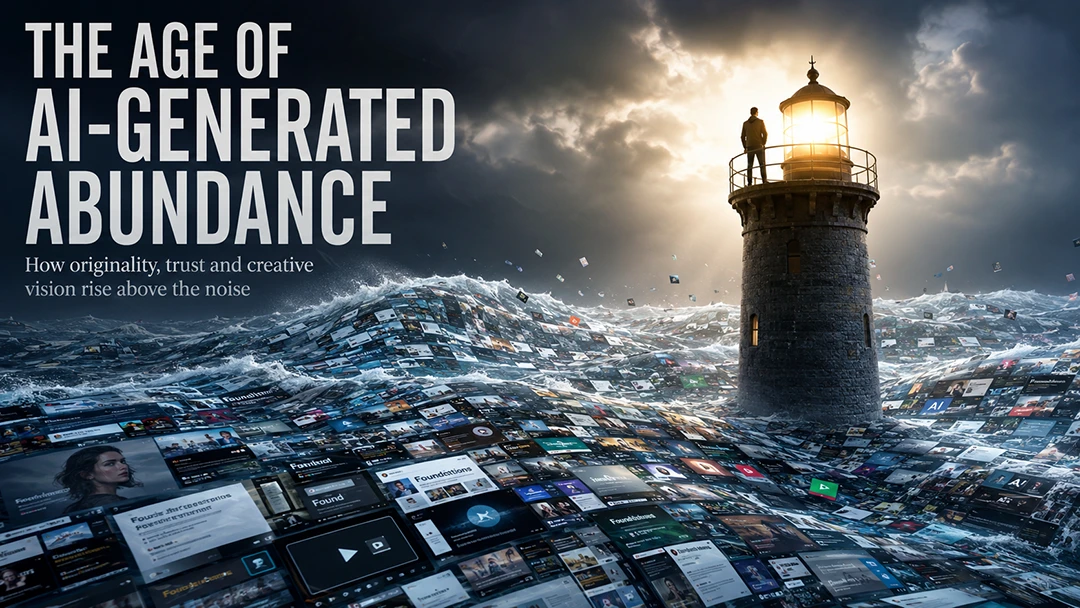
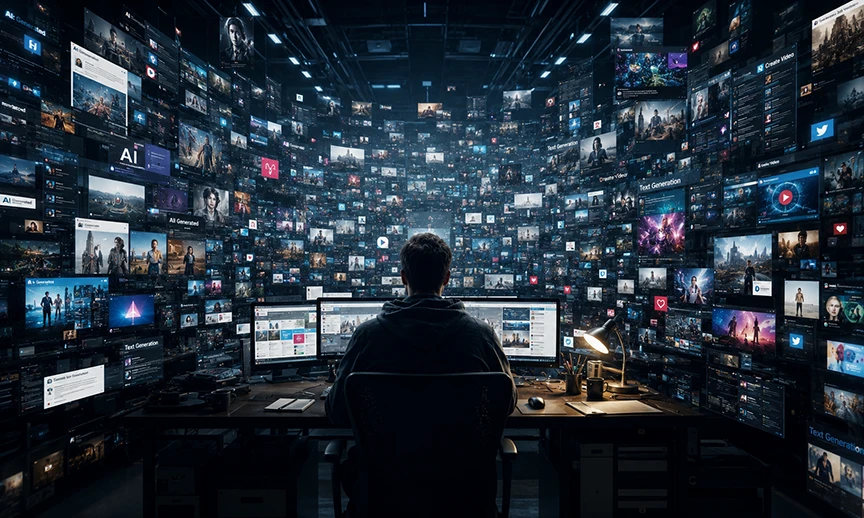
The biggest change is that creative output is becoming abundant. AI can produce endless headlines, mockups, captions, mood boards, and concept variations in minutes. That shifts the market from scarcity of content to scarcity of attention. In the past, being able to create something at all was a competitive advantage. Now, simply producing more is no longer enough.
This is where the future of creative work in the AI era starts to favor people over systems. Audiences do not just want more content. They want content that feels credible, distinct, emotionally intelligent, and worth trusting. A hundred AI-generated options may still fail to deliver the one idea that feels fresh. Human creators add context, consistency, and meaning.
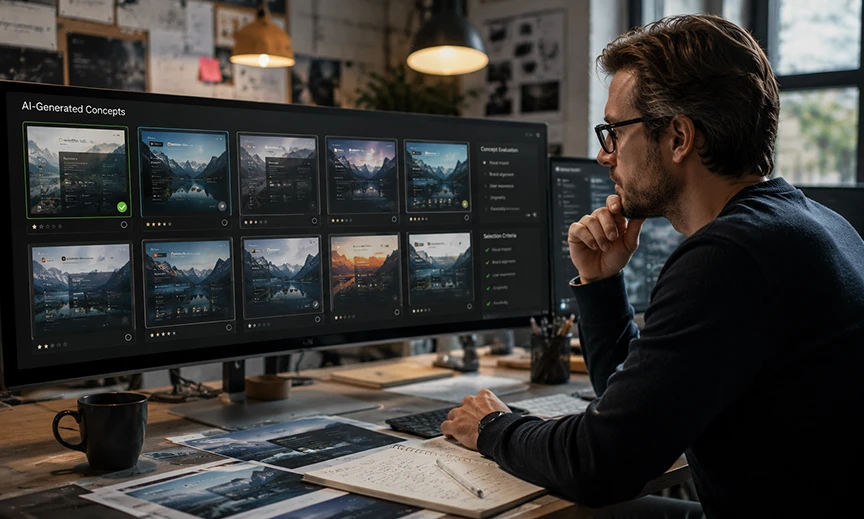
Practical example: a brand can use AI to generate twenty blog outlines, but a human editor is still needed to choose which topic matches audience pain points, which angle feels authentic, and which language fits the brand voice. The machine can assist with volume. The human decides value.
Pros of this shift include faster workflows, lower production costs, and more room to experiment. Cons include content saturation, weaker differentiation, and pressure on entry-level creative roles. The future of creative work in the AI era is therefore not just about making things faster. It is about making things matter.
AI and creativity: abundance changes what people value
One of the clearest effects of AI and creativity is that once rare outputs are now easy to generate. A company can create ad concepts, landing page copy, social posts, and illustrations much faster than before. The result is not just efficiency; it is a flood of similar-looking work. When everything is available, attention shifts toward style, perspective, and judgment.
This means creative professionals are increasingly judged on what they choose, not only what they produce. The question becomes: do you know the audience well enough to select the right idea? Can you distinguish a clever draft from a strategically strong one? Can you shape a message that feels human in a sea of machine-made sameness?
That is why AI and creativity is really a conversation about sense-making. AI can mimic patterns. Humans can understand relevance. In practice, this affects:
Brand identity and voice development
Editorial direction and content strategy
Art direction and visual coherence
Story selection and narrative structure
A useful real-world application is in newsrooms and content teams. AI may help generate summaries or first drafts, but editors still decide which stories deserve attention, what context matters, and how to avoid misinformation or blandness. In the future of creative work in the AI era, those choices become more valuable than production alone.
Why originality and taste are becoming premium skills
Originality is not just about making something new. It is about making something that feels specific, recognizable, and meaningful. Taste is the ability to recognize what is good, appropriate, and resonant. In the future of creative work in the AI era, these two qualities are becoming premium skills because AI can imitate style, but it cannot truly own perspective.
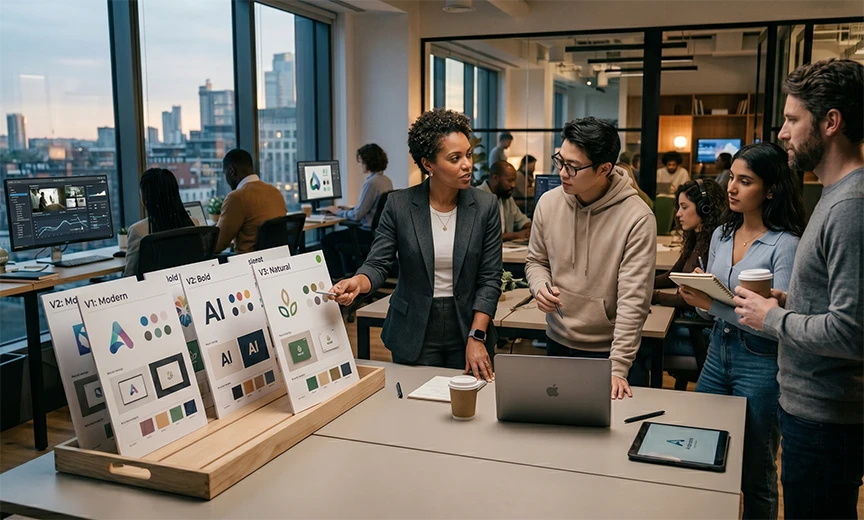
Consider fashion, branding, or film marketing. A tool can create ten polished options quickly, but it cannot tell you which option best reflects a subculture, a brand promise, or a moment in society. Human taste connects creative work to the larger world. It helps creators know when to be bold, when to be minimal, and when to break a pattern.
future of creative work in the AI era and the rise of taste
The future of creative work in the AI era rewards people who can curate with confidence. A good creative professional may soon be valued as much for selecting and refining as for generating. That is especially true in agencies, publishing, and digital media, where differentiation matters. Clients do not only want output. They want a point of view.
Practical takeaway: build taste by studying strong work, comparing options, and asking why certain ideas work better than others. Keep a swipe file. Review campaigns, films, books, and design systems. The more informed your taste, the more valuable your judgment becomes.
AI impact on creators: what changes and what does not
The AI impact on creators is uneven. Some tasks become faster, some roles become more hybrid, and some entry-level jobs become harder to defend. But the core human advantages remain. Storytelling, emotional nuance, cultural sensitivity, and trust are still difficult to automate fully. This is why the future of creative work in the AI era is more nuanced than simple replacement stories suggest.
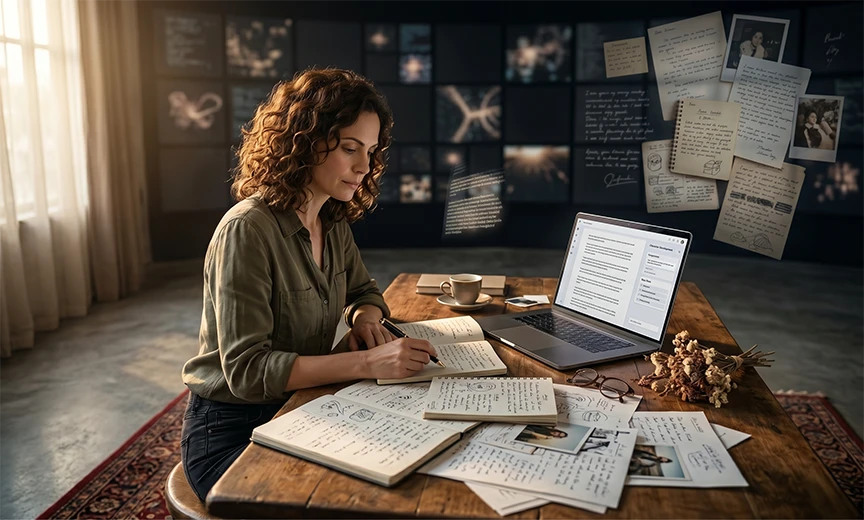
For example, a freelance writer may use AI to brainstorm structure, but still bring lived experience, client insight, interviewing skill, and editorial judgment to the final piece. A designer may use AI for concept exploration while relying on human expertise for composition, hierarchy, and brand consistency. The same pattern appears across creative fields.
Pros of AI for creators include quicker drafts, more prototypes, lower overhead, and more time for high-level thinking. Cons include creative sameness, dependence on tools, and the risk of undervaluing craft. The healthiest response is not refusal or surrender. It is intentional integration.
If you work in a creative field, ask three questions:
Which parts of my process are repetitive?
Which parts require judgment and relationships?
Which parts express my point of view?
Those answers reveal where AI helps and where human skill remains central in the future of creative work in the AI era.
AI and human creativity as a partnership, not a competition
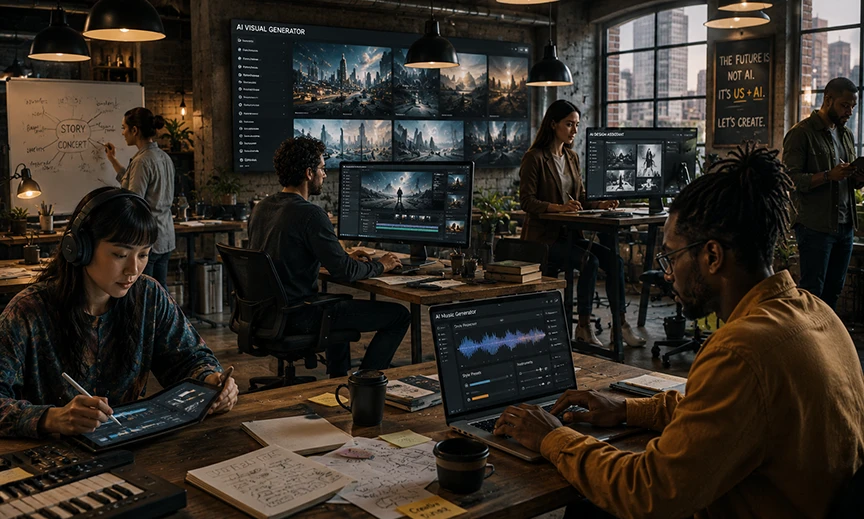
The most productive model is AI and human creativity working together. AI is strongest as an assistant, accelerator, and idea generator. Humans are strongest as editors, interpreters, and meaning-makers. When creators combine both, they can move faster without sacrificing originality.
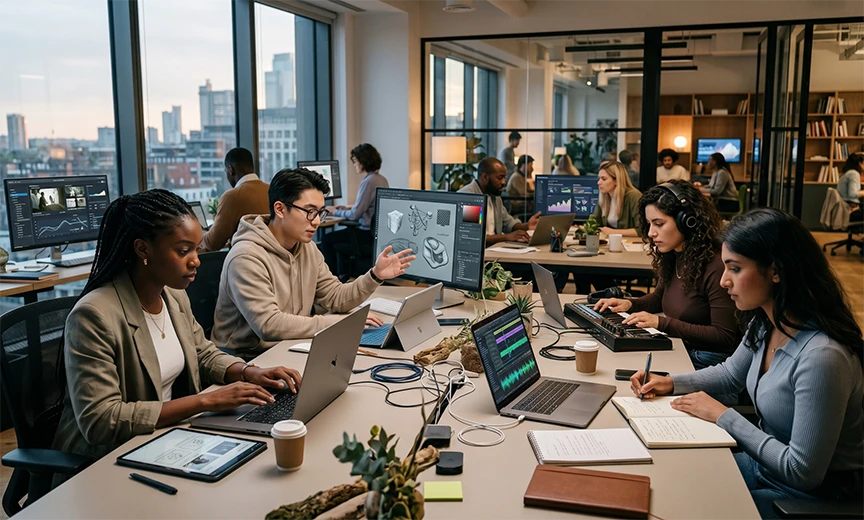
This partnership is already visible in marketing teams that use AI for campaign drafts, then refine messaging through human strategy. It is visible in design studios that use AI for mood boards and rough composition, then apply human taste to finalize the look and feel. It is visible in publishing teams that use AI for research support but depend on human editors for structure and quality.
A practical benefit of this approach is energy management. Creators often spend too much time on first drafts or repetitive variations. AI can relieve that burden. That frees time for interviews, ideation, observation, and refinement. In the future of creative work in the AI era, these higher-value activities may define career durability.
There is also a trust advantage. Audiences often sense when work has no point of view. Human creativity brings texture, imperfection, and personality. Those traits create connection. AI may help execute, but humans still give creative work its reason for existing.
Future of creative jobs: which roles are most likely to evolve
The future of creative jobs is not evenly distributed. Some roles will shrink in their most repetitive tasks, while others become more strategic. Entry-level positions may shift first because they often involve production-heavy work. At the same time, senior roles may become more valuable because they require oversight, positioning, and decision-making.
Roles likely to evolve include copywriting, social media management, graphic design, video editing, illustration, and content strategy. Many of these jobs will not disappear. Instead, they will absorb AI tools into normal workflows. The creative professional of the future may need to be part technician, part editor, and part strategist.
Examples of evolving work:
Writers moving from draft generation to editorial development and brand voice management
Designers moving from manual production to concept direction and system thinking
Creators moving from posting volume to audience community building
There are also new opportunities. Someone skilled in prompt design, creative direction, editorial QA, or AI-assisted brand storytelling can become highly marketable. The future of creative work in the AI era is not about one job disappearing. It is about many jobs being rebuilt around AI literacy and human distinction.
How creators can stay valuable in the future of creative work in the AI era
Creative professionals do not need to compete with AI on speed alone. They need to deepen the skills that AI cannot copy easily. That means developing taste, research habits, storytelling ability, and audience understanding. It also means learning to use tools without becoming overly dependent on them.
Here are practical ways to stay relevant:
Learn how to direct AI instead of only consuming its output
Improve your editing and critique skills
Build a recognizable voice or visual style
Document your process and case studies
Study audience behavior, not just trends
Strengthen your credibility through lived expertise
For example, a writer who covers finance can add value by combining AI-assisted research with personal interviews, original analysis, and strong editorial framing. A designer who understands a niche market can use AI to accelerate concepts, then apply domain knowledge to make work more effective. In both cases, the human edge comes from context.
One thing worth remembering is that creative careers in the AI age may become less about being the person who does everything and more about being the person who knows what to do, why it matters, and how to make it resonate.
future of creative work in the AI era: skills that compound
Some skills will become more valuable over time because they improve every other part of the job. In the future of creative work in the AI era, these compound skills include critical thinking, synthesis, interviewing, art direction, narrative design, and audience empathy. They make AI output better, but they also stand on their own.
A content creator who can synthesize research, identify a strong angle, and package it clearly is more useful than someone who only produces volume. The same is true for designers who can understand brand strategy or video creators who can build emotional pacing. These are the skills that make automation less threatening and more accessible.
AI content creation and the risk of sameness
AI content creation is useful, but it also introduces a major risk: sameness. If every team uses the same prompts, the same models, and the same basic templates, output starts to blur together. This is a serious issue for brands, publishers, and creators trying to build loyalty in crowded markets.
The solution is not to reject AI content creation. It is to use it as a starting point, then add human layers of specificity. That can include original research, stronger editorial opinions, better examples, and a more distinct tone. The richer the human contribution, the harder it is for competitors to copy.
For businesses, this has a direct real-world application in marketing performance. Content that sounds generic often underperforms because it fails to build trust or memorability. Human review can improve relevance, accuracy, and emotional appeal. In the future of creative work in the AI era, the brands that win are likely to be the ones that feel more alive, not more automated.
Pros of AI content creation include scale and efficiency. Cons include low differentiation and potential audience fatigue. The best strategy is balanced: use the machine for momentum, then use the human for meaning.
What employers and clients will pay more for
As AI reduces the cost of basic production, employers and clients will pay more for outcomes that are harder to automate. That includes clear positioning, strong creative judgment, trust, and strategic thinking. They will also value people who can work across tools without losing the human thread.
The future of creative work in the AI era favors professionals who can answer questions such as:
What should we say?
Why should we say it this way?
Who is this really for?
What would make this memorable?
That is where compensation often moves. A person who can save time is useful. A person who can improve decision quality is more valuable. A person who can shape reputation and audience trust becomes indispensable.
There is also a leadership implication. Managers increasingly need creative people who can supervise AI-assisted processes, protect standards, and spot weak thinking early. In that sense, the future of creative work in the AI era may elevate roles that combine creativity with discernment.
Work Type
AI Strength
Human Strength
Value in the Future
Basic content drafts
Fast generation
Final judgment
High when edited well
Brand storytelling
Idea variation
Voice and trust
Very high
Visual concepting
Rapid mockups
Taste and coherence
Very high
Editorial strategy
Pattern support
Context and priorities
Essential
This comparison makes a simple point: AI helps with production, but humans shape value. That is the central lesson of the future of creative work in the AI era.
Frequently Asked Questions
Will the future of creative work in the AI era eliminate creative jobs?
Not entirely, but it will change many of them. Repetitive production tasks are more likely to be automated, while work that relies on judgment, originality, and audience understanding will become more important. Many creative roles will shift from making every asset manually to directing, editing, and refining AI-assisted output. That means the job market may reward fewer pure production roles and more strategic creative roles.
How can writers adapt to the future of creative work in the AI era?
Writers can adapt by becoming stronger editors, researchers, and analysts. AI can help with outlines and drafts, but humans still bring voice, interpretation, and trust. Writers who develop expertise in a niche, interview skills, and audience insight will be more competitive. The future of creative work in the AI era rewards writers who can create distinctive thinking, not just more text.
Why are originality and taste more valuable now?
Because AI can produce many acceptable options quickly, but it cannot reliably decide which one is most meaningful for a specific audience. Originality and taste help identify what is worth attention. In crowded digital markets, those qualities make content, design, and storytelling stand out. They also help creators avoid generic work that blends into the background.
How should designers use AI without losing their edge?
Designers can use AI for brainstorming, early concepts, and production shortcuts, while keeping human control over art direction, brand consistency, and user experience. The goal is not to let AI replace design thinking. It is to remove repetitive friction so creators can spend more time on clarity and impact. Strong taste and understanding of context remain the real differentiators.
What skills matter most in the future of creative work in the AI era?
The most important skills include critical thinking, storytelling, editing, taste, research, and audience empathy. Technical fluency with AI tools also matters, but it should support human judgment rather than replace it. Creators who can combine creative vision with strategic thinking are likely to stay valuable across industries.
Is AI and human creativity a better model than human-only work?
In many cases, yes. AI and human creativity can work together to speed up brainstorming, reduce repetitive labor, and improve experimentation. Human-only work can be slower and more expensive, while AI-only work can feel generic or disconnected. The best results often come from collaboration, where the machine provides efficiency and the human provides meaning.
How can creative freelancers stand out in crowded markets?
Freelancers can stand out by specializing, building a clear point of view, and showing results rather than only samples. Case studies, niche expertise, and a recognizable style matter more when AI makes generic content easy to produce. In the future of creative work in the AI era, clients will choose freelancers they trust to think well, not just execute quickly.
What is the biggest mistake creators can make with AI?
The biggest mistake is using AI to replace thought instead of extending it. If a creator accepts the first output without critique, the work becomes generic and weak. AI should speed up the process, not flatten it. The most effective creators use AI to open options, then use human experience, taste, and judgment to make the final work stronger.
Conclusion
The future of creative work in the AI era will belong to people who can combine speed with substance. AI makes it easier to produce content, but that very abundance increases the value of originality, trust, taste, and lived experience. Human creativity becomes more visible when generic output is everywhere. The creators who thrive will be the ones who know how to direct tools, sharpen ideas, and make work that feels specific and meaningful.
That is why the future of creative work in the AI era should not be framed as a battle between humans and machines. It is a shift toward AI-augmented creativity, where human judgment becomes the differentiator. If you are a writer, designer, strategist, or creator of any kind, now is the time to invest in the skills AI cannot easily replicate. The advantage will go to those who keep their sense of purpose, audience, and point of view. If you can do that, the next era of creativity may be more open to you than it first appears.
For more context and practical ideas, explore our more stories and related lifestyle articles on work, technology, and modern careers.