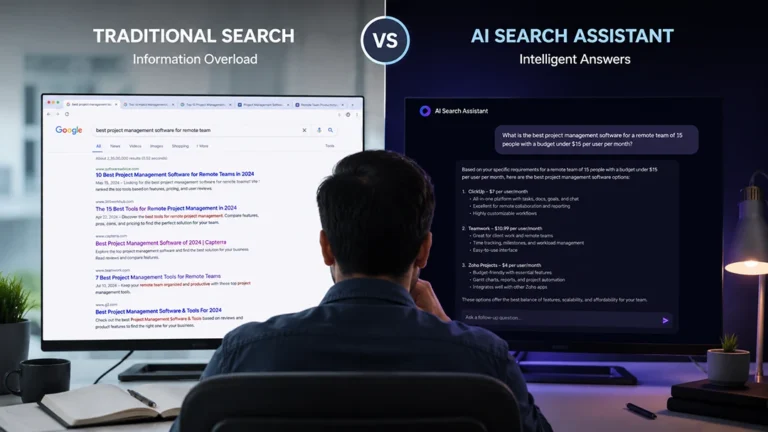
Updated: 29 October 2026. Models, specifications and India prices checked against Apple and Google’s official pages. This is a researched buying guide, not a hands-on test.
The iPhone vs Google Phone decision is easier when you start with the phone you can actually afford and the things you do every day. A sharper camera specification will not compensate for an awkward size, an expensive ecosystem change or a feature that does not work in your language.
Here, “Google phone” means Google Pixel, rather than every Android handset. The question remains the same: which platform fits your life? The answer now needs current models, comparable storage and India-specific prices instead of a mixture of older flagships and US dollar deals.
Choose iPhone if staying with your existing Apple devices and familiar apps is worth the price to you. Consider the iPhone 17 before paying substantially more for an iPhone 18 Pro.
Choose Pixel if you prefer Android’s way of working and want Google’s camera and software tools. The Pixel 11 is worth considering before the Pro: decide whether you need the extra camera hardware, rather than buying the name.
Keep your current phone if it still receives security updates, holds enough charge and handles your work. A new generation appearing does not make a functioning phone obsolete.
Current models and India prices
As checked on 29 October 2026, Apple’s India range includes iPhone 17e, iPhone 16, iPhone 17, iPhone Air, iPhone 18 Pro/Pro Max and the foldable iPhone Duo. Google’s current range includes Pixel 10a and the Pixel 11 family. This guide concentrates on conventional phones; foldables need a separate assessment of screen durability, repair costs and whether the larger workspace is useful.
The Pixel 10a discount shown is a store offer, not an exchange valuation. Its published offer period ends on 8 November 2026, subject to stock and terms. Bank cashback, EMI savings and exchange bonuses are separate conditions; they are not guaranteed savings for every buyer.
For the everyday pair, the listed difference is ₹9,901 between the 256GB iPhone 17 and Pixel 11. Between the smaller Pro models it is ₹44,901. Ask what you would gain for that extra money in your own workflow. Comparing an exchange-adjusted Pixel price with a full-price iPhone is not a fair comparison.
The practical distinction is the Pixel’s separate 5x telephoto camera. If distant details matter, try it in the shop before assuming that every useful camera feature requires a Pro model. The iPhone is lighter in this pair; hold each with a case, type a message and reach the top of the screen with one hand.
A larger RAM figure does not establish which phone will open your apps faster. Operating systems manage memory differently. For demanding games or long editing sessions, look for tests of the exact model, software version and workload. This guide does not assign a performance winner from chip names alone.
Pro phones: what the extra money buys
Specification
iPhone 18 Pro
Pixel 11 Pro
Processor
A20 Pro
Tensor G6
Display
6.3-inch OLED; up to 120Hz
6.3-inch LTPO OLED; 1–120Hz
Rear cameras
48MP main with variable aperture + 48MP ultrawide + 48MP 4x telephoto
50MP wide + 48MP ultrawide + 48MP 5x telephoto
Front camera
18MP
42MP
Storage / RAM
256GB to 2TB; RAM not listed on cited Apple page
256GB / 12GB RAM; 512GB / 16GB RAM on India spec page
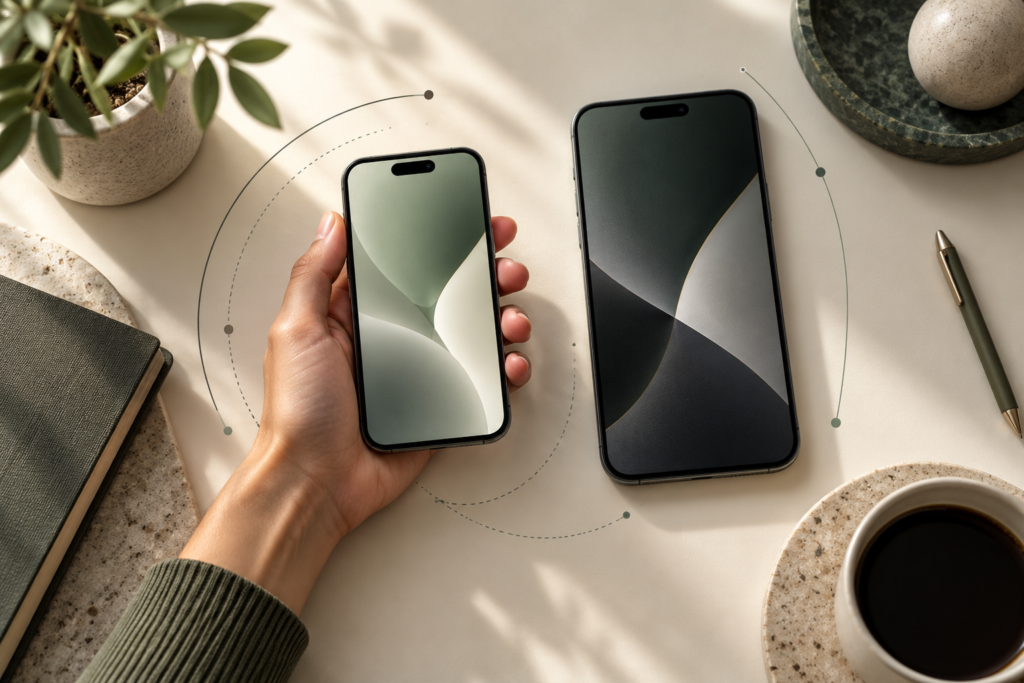
Compare screen comfort and everyday use. AI-generated conceptual illustration, not a photograph of a specific model.
Cameras: compare the photographs you actually take
For family photographs, try a moving person indoors, a face against a bright window and a group at the edge of the frame. For travel, compare distant details, night scenes and how quickly you can switch cameras. Review the original files at the same size, rather than deciding from a compressed social-media upload.
On iPhone 18 Pro, manual aperture control gives photographers another choice about light and depth of field. Its specification also lists ProRAW and advanced video formats. Those are reasons to consider it if you will use them; they are not proof that every automatic snapshot will be better.
Pixel 11 Pro lists tools including Add Me, Night Sight and photo editing features. Treat scene reconstruction and generative edits differently from simply adjusting brightness. Keep an untouched original when the photograph records something important. A more dramatic-looking result is not necessarily a more faithful record.
The large zoom number on a box needs care. Optical zoom, sensor cropping and computational enlargement do different jobs. Compare the actual focal length you use most, and inspect small details for unnatural textures. A useful 5x image matters more than an impressive maximum that you rarely need.
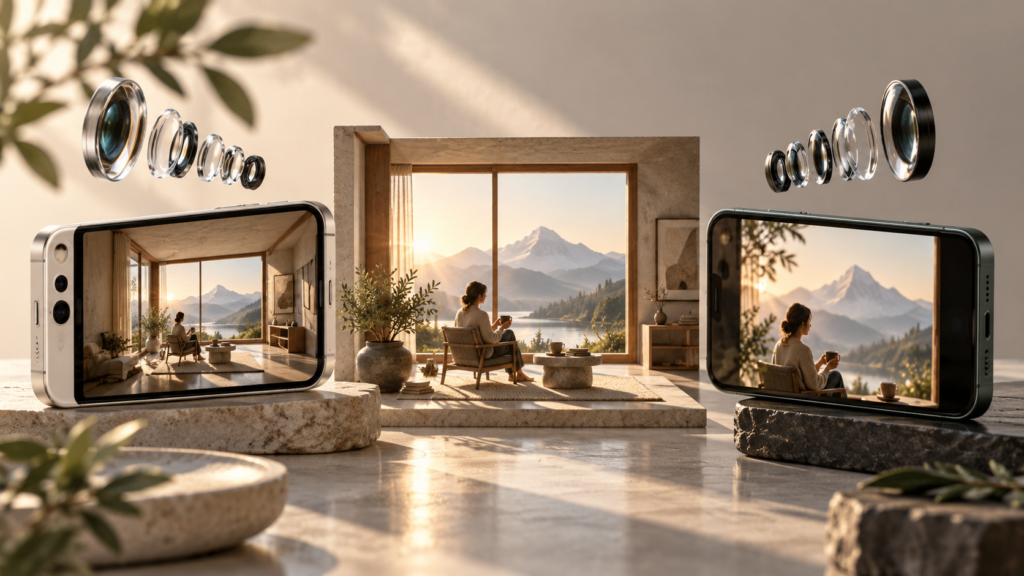
Choose cameras around the photographs you take. AI-generated conceptual illustration, not a photograph of a specific model.
Video: recording format is only half the story
For a short family clip, check focus transitions, speech clarity and whether stabilisation makes walking footage comfortable to watch. For paid work, verify your editing software, available storage, transfer method and backup plan before paying for advanced capture modes.
Apple lists 4K Dolby Vision up to 120fps on the iPhone 18 Pro main camera, with conditions for advanced recording workflows. Google lists 8K on Pixel 11 Pro as powered by Video Boost. Do not treat cloud-assisted processing and a locally recorded file as the same workflow; investigate internet, upload and processing requirements before relying on it away from home.
These manufacturer videos demonstrate the current products and their marketing claims; they are not independent camera tests.
An advertised video-playback duration cannot fairly be compared with another manufacturer’s mixed-use estimate. Screen brightness, mobile signal, navigation, camera use and temperature all affect how often you need a charger. Look for a single independent test method applied to both exact models if battery life is your deciding factor.
For charging, an adapter’s rating is not a promise that a phone continuously draws that power. Cable, charging protocol, starting charge and heat matter too. Check the manufacturer’s specified adapter requirements and whether your current charger supports them, rather than buying by wattage alone.
For example, Google specifies up to 55% in about 30 minutes for Pixel 11 using a compatible 30W USB-C PPS adapter or higher, sold separately. Apple specifies up to 50% in 20 minutes for iPhone 17 with a 40W adapter or higher, also sold separately. These are manufacturer claims under their respective conditions, not a head-to-head charging test. See the Pixel and iPhone specifications.
If you navigate and take photographs all day, budget for a suitable power bank and charging cable. If the only failing part of your present phone is its battery, obtain a replacement quote before assuming a new handset is the better purchase.
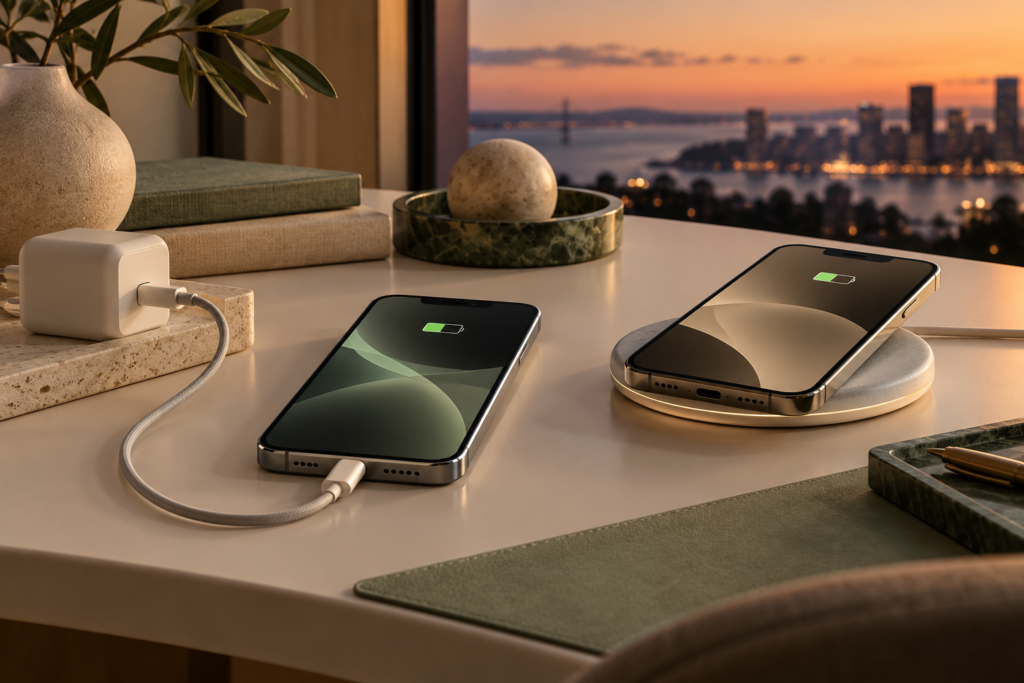
Battery and charging depend on the complete setup. AI-generated conceptual illustration, not a photograph of a specific model.
Software, AI and long-term support
Pixel 11 launched with Android 17. Google promises seven years of OS and security updates for Pixel 8 and later, counted from first US Google Store availability, not from your purchase date. Google’s update policy explains the timing and gradual rollout.
Apple’s current India pages describe iOS 27 and Apple Intelligence/Siri AI. That does not mean every advertised function works on every iPhone, in every Indian language or without an internet connection. The same caution applies to Pixel’s Gemini and calling tools.
Before making AI the deciding factor, check the exact language, region, eligible account, subscription and connection requirements of the feature you want. Apple’s feature-availability directory is a useful starting point. Ask for a demonstration in the language you will actually use, rather than relying on a US launch video.
Try one real task: summarising a document you are comfortable sharing, finding a photograph, or asking a follow-up question. Check the output yourself. If the feature does not save you useful effort today, do not build the buying decision around a promise of future improvements.
Consider where AI features process your information and which tasks they help with. AI-generated conceptual illustration, not a photograph of a specific model.
Ecosystem and switching costs
The phone is part of a wider set of habits. Write down the devices, apps and services you use each week. Include a watch, laptop, car connection, password manager, photo library, work login and any accessibility tools.
Then test the connections that matter. Can you move a file to your computer easily? Does your preferred app have the features you need on the new platform? Will an accessory have to be replaced? A familiar workflow may justify paying more, but calculate that value instead of assuming that brand loyalty is always sensible.
Both companies provide migration instructions: Move from Android to iPhone and transfer an iPhone to Pixel. Follow the current requirements for your particular data. Do not assume every app, purchase or login transfers automatically.
Back up first and keep the old phone until you have checked contacts, photographs, messages, authenticator access, banking apps and calls. Arrange enough time for setup rather than doing the switch just before a journey or an important workday.
Include your laptop, watch and everyday accessories in the switching decision. AI-generated conceptual illustration, not a photograph of a specific model.
Security and privacy without the brand slogans
Neither platform makes a careless user immune to phishing. The claim that one platform is automatically safer because its code is closed is too simplistic to guide a purchase. Compare supported software, account protection and the permissions you are willing to grant.
Use a strong screen lock, install updates, review app permissions and be suspicious of requests to share an OTP or install remote-access software. Decide which photos, contacts and documents may be uploaded to cloud or AI services. A familiar logo is not a substitute for checking what a feature does with your information.
India buying checklist: the costs beyond the handset
Find the service route before paying. Google publishes an India service-centre directory; check your city and repair options. For either brand, ask about battery and screen replacement, turnaround time and the warranty position of the exact unit you are buying.
Compare the final total for the same storage: phone, charger if needed, case, protection plan if wanted and any accessory replacement. If you use EMI, read the processing fees and cancellation conditions. An old phone’s exchange value is money from an asset you already own, not a free discount.
Recurring storage and AI subscriptions can change the long-term cost too. Our guide to subscription traps in India provides a useful reminder to check renewal charges before accepting a bundled trial.
Compare the full ownership cost, including accessories and recurring charges. AI-generated conceptual illustration, not a photograph of a specific model.
iPhone vs Google Phone: a practical shop test
Take the same short checklist to both counters. Set a comfortable display brightness, enlarge the text to your usual size and open a long page. Type with one hand, try the keyboard in your preferred language and check whether you can read small labels without repeatedly zooming. Ask to try the phone with a case similar to the one you will buy: grip and pocket comfort can change considerably.
For the camera comparison, ask permission to photograph the same subject from the same position. Take one normal photograph, one of a moving subject and one at the zoom setting you expect to use. Avoid comparing an edited promotional image on one display with a fresh photograph on the other. If possible, review both original files on one screen. This is a way to judge your own preferences, not a controlled laboratory test.
An iPhone vs Google Phone decision should also include accessibility. Try the text size, voice controls, hearing-device connection or screen reader that you actually need. A sales demonstration at default settings may miss the feature that makes the phone usable for you. Check compatibility with your specific accessory before paying.
Storage, subscriptions and a fair budget
Open the storage settings on your present phone before choosing a capacity. Note how much is used by photographs, videos, downloaded media and apps. Then consider what is likely to grow. Someone recording long videos needs a different allowance from someone who streams music and mainly sends messages. Leave room for system updates and temporary editing files instead of planning to fill the new phone immediately.
Cloud storage and phone storage solve different problems. A cloud subscription may help with backup or moving a library, but it does not automatically provide the local space needed to record and edit a large video. Check how your chosen photo service handles originals, offline access and deletion. Confirm a backup can be recovered before removing the only local copy.
For iPhone vs Google Phone value, write two totals: the amount payable today and the expected recurring cost over your planned ownership period. Include only subscriptions you intend to keep after any trial. Keep exchange value and conditional cashback in separate lines so you can still compare the phones if the quoted exchange amount changes at inspection.
If your budget does not comfortably cover either shortlisted phone, step down a category rather than stretching the monthly payment to reach a Pro model. Recheck the lower-priced model’s exact cameras, storage and remaining software support. Shared branding does not mean it inherits every capability in the more expensive phone’s specification table.
Conclusion: which phone is right for you?
For an existing Apple user, begin with iPhone 17 and identify the specific limitation that would justify an 18 Pro. For someone comfortable with Android, begin with Pixel 11 and test whether the Pro’s camera hardware solves a real problem. For a tighter budget, compare the lower-priced models as their own category rather than treating them as equivalent Pro flagships.
For a creator, the right choice is the phone that fits the complete capture, editing and delivery process. For an everyday buyer, comfort, reliable support and an affordable final bill may matter more than an advanced recording mode.
The best iPhone vs Google Phone choice is the one whose benefits you will use often enough to justify its cost. Write down your three priorities, test them on the shortlisted phones, and leave the rest of the specification race out of the decision.
Frequently asked questions
Does Google Phone mean the same as Android?
No. In this comparison it means Google Pixel. Android also runs on phones from other manufacturers, whose hardware, software features and update policies differ.
Why compare iPhone 17 with Pixel 11 as well as the Pro phones?
They answer different budgets. The current Apple range still includes iPhone 17 as a mainstream option alongside the newer iPhone 18 Pro family. A fair shortlist compares similar prices and needs rather than matching generation numbers.
Are the India prices the amount everyone will pay?
No. Listed prices are a dated reference. Storage, stock, store discounts, eligible bank offers and exchange valuation change the checkout total. Check the exact configuration without assuming that every advertised saving applies to you.
Which has the better camera?
There is no universal winner established by these specifications. Compare moving subjects, faces, night scenes, zoom and video using the exact models you are considering. This guide reports published capabilities and does not claim hands-on results.
Does seven years of Pixel support start when I buy it?
No. Google’s policy counts from the device’s first availability on the US Google Store. Buying an older model later leaves a shorter remaining support period.
Should I upgrade from an iPhone 16 or Pixel 9 immediately?
Only if your present phone has a limitation worth paying to fix. Check its support status, battery health, storage and actual performance first. The newer model name alone is not a reason to replace a working device.
Sources and media credits
Specifications and price links appear beside the relevant comparisons. Figures were checked on 29 October 2026 and should be checked again before purchase. The featured cover and comparison illustrations were generated with AI for this article. They illustrate buying considerations and are not photographs, verified product renders or evidence of camera performance. Embedded videos remain hosted by their respective YouTube publishers.