High protein Indian breakfast has become one of those phrases we hear everywhere now, especially when someone on Instagram holds up a bowl of sprouts and calls it a 30 gram meal. I used to nod along too. Then I started weighing my own food in my Delhi kitchen, and the numbers got far less dramatic. A plate that looked ‘protein rich’ often was not. A humble breakfast that looked ordinary sometimes did better. That shift changed how I see high protein Indian breakfast claims, and it is the reason I am writing this for you today.
I live in New Delhi, where breakfast is usually rushed, practical, and deeply emotional. One day it is besan chilla before the school run, another day it is paneer bhurji with toast, and sometimes it is just chai with something quick grabbed on the way out. That is exactly why high protein Indian breakfast advice needs to be real, not inflated. In this article, I am recalculating popular breakfast foods using cooked serving weights, not raw ingredient math that quietly makes numbers look bigger. If you want more everyday Indian nutrition context, my piece on vegetable protein sources fits nicely here.
High protein Indian breakfast does not mean chasing the biggest number on the internet. It means understanding how much protein you are actually eating, how cooking changes portion size, and how your body uses breakfast across the day. The NHS, Mayo Clinic, and WHO all agree that overall daily intake matters more than one dramatic meal, which is why I am grounding this in realistic maths, not hype. NIH protein guidance also supports a balanced daily approach. So let us fix the myths, gram by gram, and see what a truly honest high protein Indian breakfast looks like.
Why most high protein breakfast claims are measuring wrong
High protein Indian breakfast claims go wrong the moment raw ingredients are confused with cooked portions. A recipe may list 50 grams of besan, 100 grams of paneer, and a handful of sprouts, but your plate rarely weighs the same after soaking, whisking, cooking, and shrinking. That is where influencers quietly inflate numbers. They count the dry besan before water enters the bowl, or they quote paneer before the pan starts doing its work. In real life, your fork meets cooked food, not a spreadsheet.
High protein Indian breakfast numbers also get stretched because brand content loves round figures. ‘Two chillas equal 20 grams’ sounds neat, but it depends on gram weight, oil, stuffing, and the actual product you buy. I checked this in my own kitchen with a weighing scale, and the gap between claim and reality was often 20 to 30 percent. That is not a small error. It changes whether breakfast is a light protein nudge or a serious meal.
High protein Indian breakfast and the raw versus cooked trap
High protein Indian breakfast math gets messy when raw weight is used as if it were ready-to-eat weight. Besan absorbs water. Dal thickens. Moong sprouts lose and gain apparent volume depending on whether they are steamed or raw. Paneer can shed moisture and oil, while eggs retain almost all their protein but change in size after cooking. The protein itself does not disappear, but the serving size you actually eat can be far smaller or larger than the marketing number.
That is why I always ask one question now: what did the cooked plate weigh? Once you do that, the story becomes more honest and more useful. You stop expecting magic from a breakfast that was never designed to deliver it.
High protein Indian breakfast needs real kitchen weighing
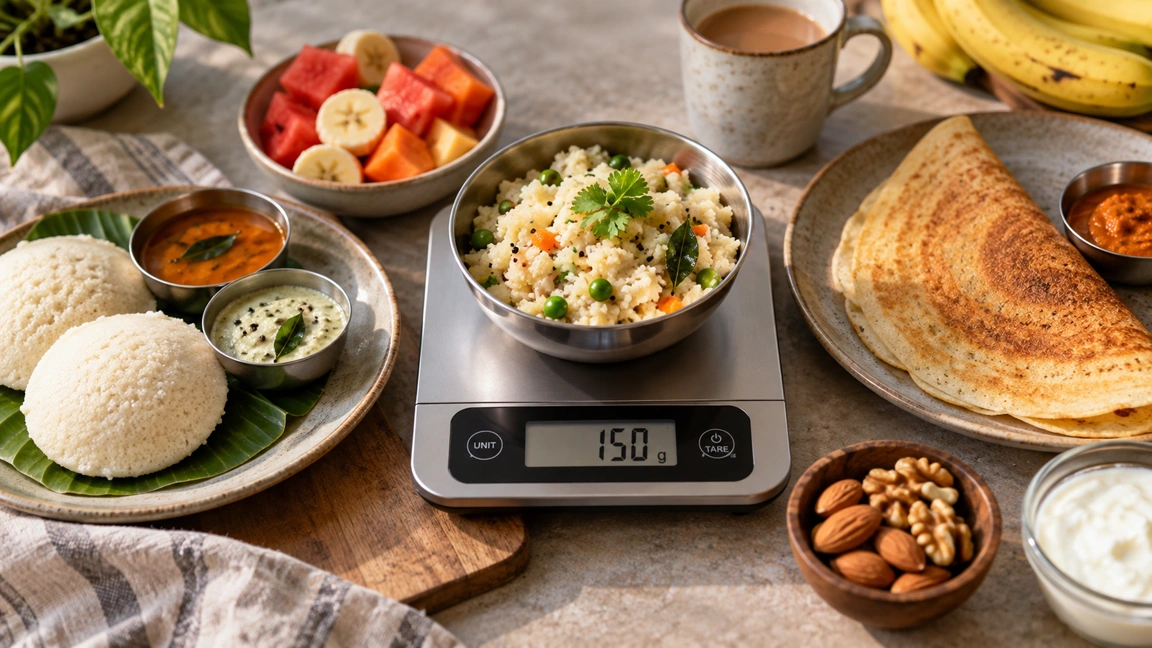
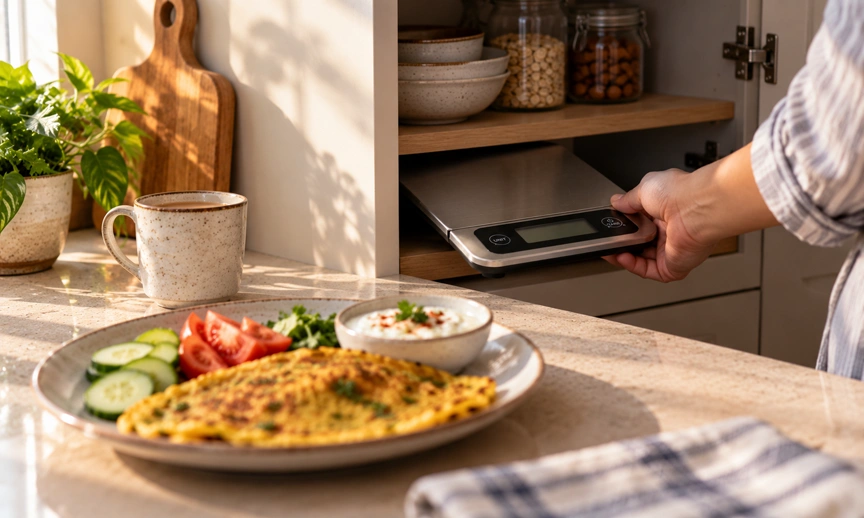
High protein Indian breakfast testing is simple. Use a kitchen scale, weigh the cooked dish, and then look up the protein content of each ingredient from reliable sources. I did this with besan chilla, paneer bhurji, sprouts chaat, and egg preparations, and the real servings were humbler than social media suggested. That is not bad news. It is freedom. You can build better meals when you know the truth.
Surprisingly, the honest number often helps you eat smarter. Instead of chasing one giant breakfast, you can spread protein across lunch and dinner too. If you want a gut-friendly companion to that plan, see probiotics in yogurt and gut health.
The daily protein math nobody applies to breakfast
High protein Indian breakfast planning makes sense only when you know your daily protein target. For many healthy adults, a common range is roughly 0.8 grams per kilogram of body weight, though active people, older adults, and those trying to preserve muscle may need more. Mayo Clinic and NIH both explain that needs vary by age, activity, and health status. In plain Delhi language, a 60 kilogram person may do fine with about 48 grams daily at the basic level, while a gym-going or older person may need more.
High protein Indian breakfast does not have to carry the whole burden. If your breakfast gives you 15 to 25 grams, that is already meaningful. The mistake is expecting one meal to fix an entire day of low protein eating. I see this all the time when people skip protein at lunch and then panic over breakfast numbers. Breakfast is important, but it is not a rescue mission.
High protein Indian breakfast and the 25 gram mindset
High protein Indian breakfast becomes practical when you aim for a target like 20 to 25 grams, not a fantasy number. That amount gives you a strong morning base without turning breakfast into a bodybuilding project. For many people, it is enough to reduce mid-morning hunger and support better focus. It also leaves room for a normal Indian lunch and dinner, which is how most households actually eat.
I have found this target works well in Delhi mornings when traffic, school drops, and office calls all happen at once. You want a plate that is filling, repeatable, and not too fussy. That is the real win.
High protein Indian breakfast versus total day intake
High protein Indian breakfast should be seen as one part of the day, not the entire strategy. If breakfast gives 18 grams, lunch gives 20 grams, and dinner another 18 grams, you are already in a solid zone. Add curd, milk, soy, dal, paneer, eggs, or legumes, and the total rises naturally. The WHO healthy diet guidance also reminds us that quality and balance matter alongside quantity. That is the sensible way to eat in India, where meals are cultural and shared, not isolated nutrition events.
That is why I never ask, ‘Is breakfast perfect?’ I ask, ‘Does breakfast help the whole day make sense?’
Vegetarian options gram for gram: paneer and chilla
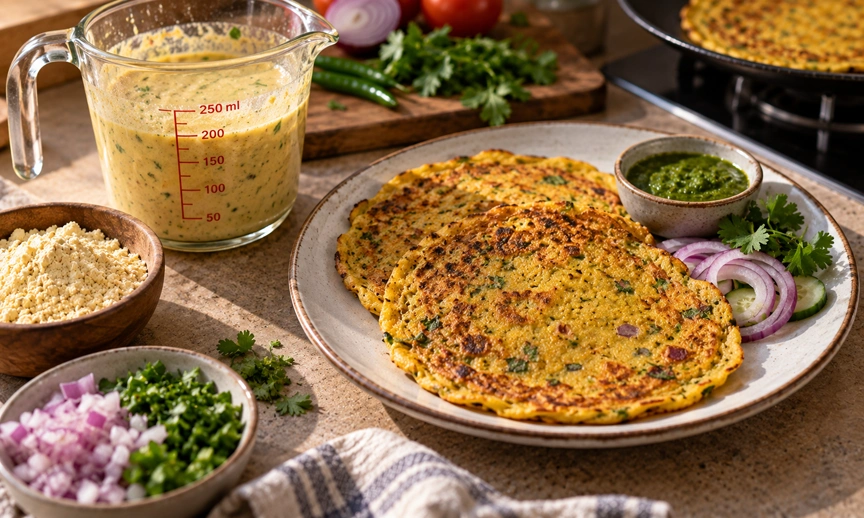
High protein Indian breakfast fans often point to paneer bhurji and besan chilla, and to be fair, both can be genuinely useful. But the numbers depend on how much paneer or besan actually lands on the plate. In my kitchen test, 100 grams of paneer gave roughly 18 grams of protein, while 50 grams of besan gave around 11 to 12 grams after cooking into two medium chillas. That is good, but not magical. It means you usually need more than one dish or a bigger portion to cross 25 grams.
High protein Indian breakfast is easier to build when you stop pretending one small chilla can do the job alone. Add curd, a glass of milk, or extra paneer, and the plate starts to look more realistic. Delhi breakfasts are already flexible, so use that flexibility well.
High protein Indian breakfast with paneer bhurji
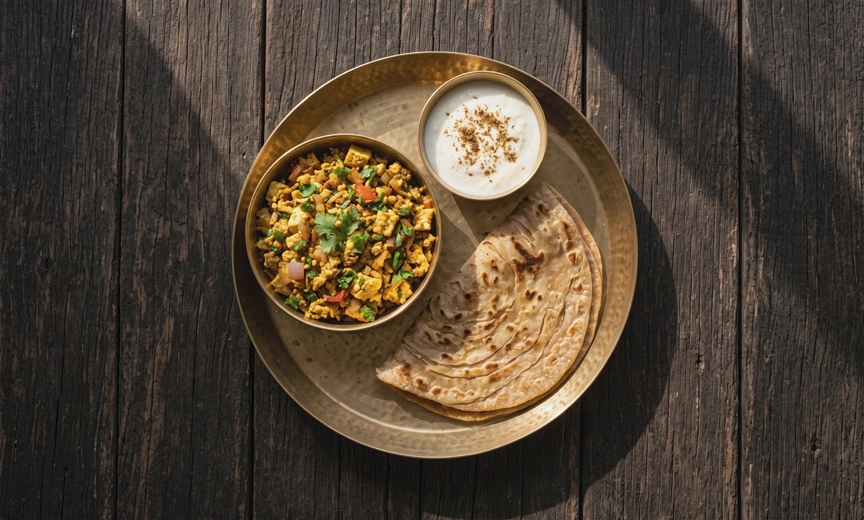
High protein Indian breakfast with paneer bhurji works best when paneer is measured after crumbling, not estimated from a block that still sits in the packet. A 100 gram cooked serving usually lands near 18 grams of protein, sometimes a little less depending on moisture and added vegetables. If you add onions, tomatoes, capsicum, and a teaspoon of oil, the protein does not rise much, but the meal becomes more satisfying. That is useful, because fullness matters too.
In my home, paneer bhurji is a Sunday breakfast, not an everyday myth. It feels indulgent, but it is also practical when I need one solid vegetarian plate.
High protein Indian breakfast with besan chilla
High protein Indian breakfast with besan chilla is honest only when the besan quantity is real. Two medium chillas made from about 50 grams besan usually offer around 11 to 12 grams protein. If you stuff them with paneer or serve them with curd, the meal gets stronger. If you drizzle oil heavily, the calories rise faster than the protein. That is one of the biggest mistakes people make when they call chilla a lean protein breakfast.
If you want a broader vegetarian protein map, this healthy habits guide helps you build meals that last beyond one trendy recipe.
Sprouts and legumes: the honest protein numbers
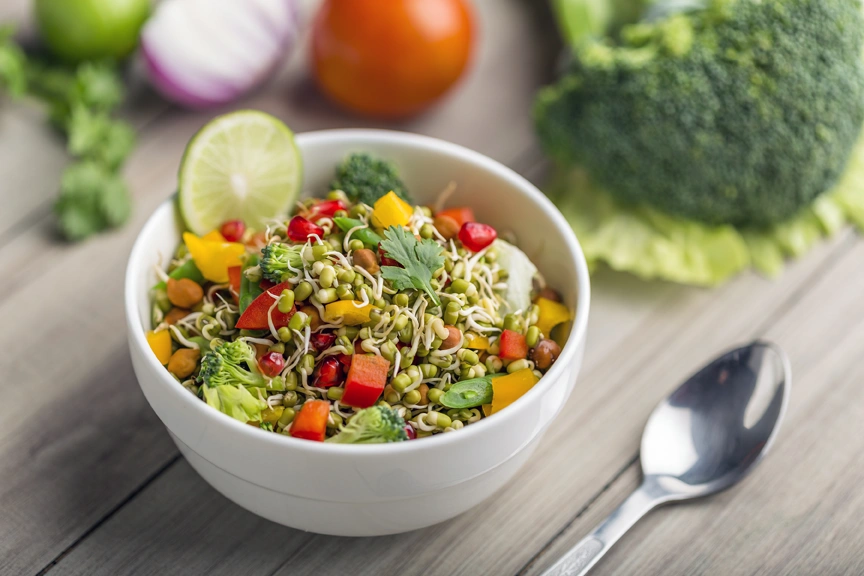
High protein Indian breakfast claims around sprouts often sound impressive, but raw sprouts can be misleading because they are light, watery, and visually large. A bowl may look full while carrying less protein than expected. Moong sprouts, chana sprouts, and mixed legumes are all useful, yet their actual cooked portion matters far more than the Instagram bowl. Once you steam or lightly sauté them, the volume drops and the truth becomes clearer.
High protein Indian breakfast with sprouts is still valuable. It just needs a realistic lens. A 100 gram serving of cooked moong sprouts may offer around 3 to 4 grams of protein, while chickpeas or kala chana deliver more per cooked cup. If you want a stronger breakfast, combine legumes with paneer, curd, or eggs.
High protein Indian breakfast with sprouts chaat
High protein Indian breakfast with sprouts chaat is refreshing, but it is not always as protein-dense as people think. A medium bowl of moong sprouts chaat may look healthy and bright, yet the protein can stay modest unless you add chana, paneer, or peanuts. That does not make it bad. It simply means sprouts are a support act, not always the star.
I like sprouts chaat on hot Delhi mornings when I want something light and fast. But if I know a long day is coming, I pair it with curd or eggs so it actually holds me through lunch.
High protein Indian breakfast with chana and rajma style bowls
High protein Indian breakfast with cooked chana or rajma bowls can be surprisingly better than many flashy recipes. A cup of cooked chana can deliver around 14 to 15 grams of protein, which is solid for breakfast if the portion is real. The issue is that people often count the dry weight before soaking and cooking, which makes the number seem much higher than what the body actually sees on the plate.
That is why I prefer cooked measures. They are not glamorous, but they are honest. And honesty is what makes breakfast sustainable.
Egg based options: realistic not exaggerated portions
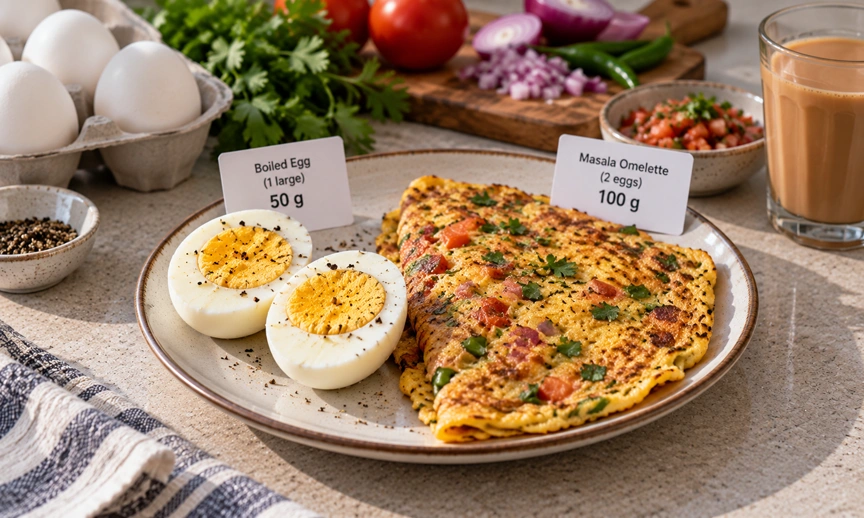
High protein Indian breakfast with eggs is one of the easiest ways to get reliable protein, because eggs are simple to measure and cook. One large egg gives about 6 to 7 grams of protein. Two eggs are helpful, but they are not 20 grams. If you want 25 grams, you usually need three to four eggs or an egg dish paired with toast, milk, or curd. That is a helpful correction for anyone who has been reading inflated fitness captions.
High protein Indian breakfast egg meals also fit Delhi life beautifully. They are fast, affordable, and adaptable. Anda bhurji, boiled eggs, omelette, or egg toast can all work, depending on your morning. The main thing is not to overstate the count.
High protein Indian breakfast with anda bhurji
High protein Indian breakfast with anda bhurji is a practical classic. Three eggs give about 18 to 20 grams of protein, depending on size, and a little onion, tomato, and masala does not change that much. If you cook with butter or extra oil, the taste improves, but the protein does not. That is why I like anda bhurji as a serious breakfast, not a miracle food.
When I was younger, I thought two eggs felt like a lot. Now I know better. The scale never lies, and neither does the morning hunger that comes back by 11 a.m. if the portion is too small.
High protein Indian breakfast with boiled eggs and toast
High protein Indian breakfast with boiled eggs and toast is one of the simplest ways to stay honest about portions. Two boiled eggs plus two slices of whole wheat toast may give a decent start, but the protein is still moderate, not extreme. Add a glass of milk or a bowl of curd if you want to push the total upward. The beauty of this meal is consistency. You can repeat it without drama.
That said, if you eat eggs regularly, watch your total diet quality and cholesterol context with your doctor if you have a medical condition. Food works best when it fits your whole pattern.
Why combining dal and grain beats any single food
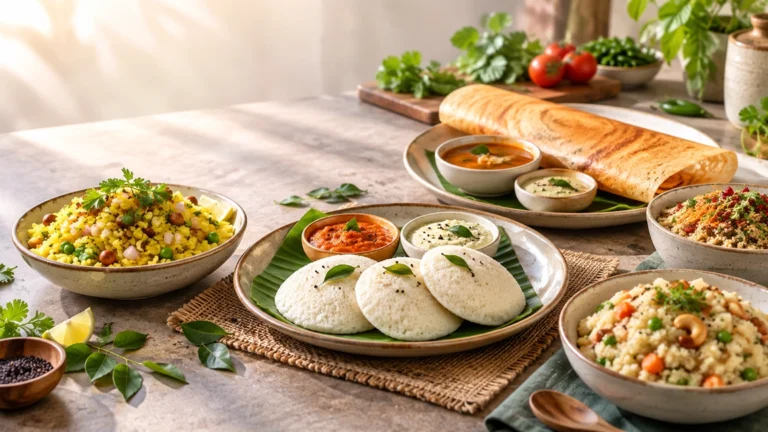
High protein Indian breakfast becomes smarter when you combine dal and grain. India has done this for generations, long before the phrase ‘protein pairing’ became trendy. Idli with sambar, dosa with lentils, poha with peanuts, or moong dal chilla with a little rice on the side all make more sense nutritionally than one isolated food trying to act like a superfood. The protein may not skyrocket in one bite, but the amino acid pattern improves across the meal.
High protein Indian breakfast does not need imported powders to work. Our own kitchen combinations already do a lot of the heavy lifting. The truth is, a balanced plate often beats a loud single-ingredient claim.
High protein Indian breakfast and amino acid balance
High protein Indian breakfast is not only about how many grams you eat. It is also about how those grams complement each other. Dal gives one amino acid profile, grains give another, and together they create a more complete food story. That is one reason traditional Indian breakfast combinations have endured for so long. They were built on common sense, not social media metrics.
When I think about my childhood in Delhi, this feels obvious. My family did not speak in macros, but the plates were cleverly balanced. That old wisdom still holds.
High protein Indian breakfast with sambar, poha, and upma
High protein Indian breakfast can look modest and still be effective. Sambar with idli, poha with peanuts, and upma with dal or milk all offer better balance than many flashy bowls. They are not extreme protein foods, but they are practical and culturally familiar. If you want to improve them, add a side of curd, boiled eggs, paneer, or soy chunks.
That is the Indian way of building meals – not perfection, but smart layering. And smart layering is often what keeps a habit alive for years.
What a 25 gram protein plate actually looks like
High protein Indian breakfast goals sound simple until you try to build a 25 gram plate with normal Indian food. In my Delhi kitchen experiment, the easiest way was not one dish but a combination. For example, three eggs and one glass of milk can bring you close. So can paneer bhurji with curd, or besan chilla plus a bowl of sprouts and a little paneer stuffing. The 25 gram target is very doable, but it usually needs assembly.
High protein Indian breakfast plates become believable when you look at actual serving sizes. A single item may give 6, 10, or 15 grams. Two or three thoughtful items together can reach the goal without making breakfast feel like punishment.
High protein Indian breakfast plate ideas for busy mornings
High protein Indian breakfast plates for busy mornings should be fast to assemble. Try two besan chillas with paneer stuffing, plus a small bowl of curd. Or three eggs with toast and a glass of milk. Or paneer bhurji with sprouts salad. None of these are flashy. All of them are real. That is why they work in everyday Indian homes where mornings are crowded and patience is low.
I like meals that let me sit for ten minutes, not thirty. Breakfast should support your day, not own your morning.
High protein Indian breakfast plate ideas for vegetarians
High protein Indian breakfast for vegetarians is fully possible at 25 grams, but it needs intention. Combine paneer, curd, milk, dal, besan, soy, or chana instead of expecting one ingredient to do everything. A paneer and besan combo is especially effective. So is tofu if you use it regularly. The point is not to imitate non-vegetarian meals. The point is to build a vegetarian meal that is strong on its own terms.
Common measurement mistakes that inflate protein claims
High protein Indian breakfast content often inflates numbers through simple measurement tricks. The first is using dry weight and presenting it as cooked weight. The second is ignoring the portion on the plate and counting the whole recipe. The third is assuming every spoonful is equal, when in reality the last spoon may be mostly water or oil. These mistakes are common, and they make ordinary breakfasts look extraordinary.
High protein Indian breakfast claims also rise when people count add-ons only when convenient. A post may include paneer, curd, and milk in the caption, but the actual bowl in the photo may not have enough of any one item. That is why I prefer weighed portions over pretty language. Numbers should describe reality, not sell fantasy.
High protein Indian breakfast and the oil problem
High protein Indian breakfast recipes can become calorie-heavy very quickly through oil, ghee, butter, and cheese, even when protein stays the same. This is not a protein lie exactly, but it changes the nutritional picture. A chilla soaked in oil is not the same as a lightly cooked chilla. A bhurji cooked in a teaspoon is different from one cooked in three. The protein may be identical, but the meal experience is not.
That is why I think people should count both protein and cooking style. Otherwise, breakfast becomes heavier than it needs to be.
High protein Indian breakfast and social media maths
High protein Indian breakfast posts often rely on audience excitement. The caption says 30 grams, but the serving is never weighed. The kitchen scale is the quiet hero here. Once you use it, exaggerated claims get exposed fast. That can feel annoying at first, but it is actually empowering. You learn how to build a plate that matches your body, your budget, and your routine.
And honestly, in Delhi life, practical truth beats glamorous confusion every single time.
Building a sustainable high protein breakfast habit
High protein Indian breakfast habits last when they are boring enough to repeat. That may sound unglamorous, but it is the truth. If your breakfast needs too many special ingredients, fancy timing, or daily motivation, it will collapse by Thursday. I have seen this in my own home and in friends’ homes across Delhi. The meals that survive are the ones you can make half-awake, on a weekday, with ingredients already in the fridge.
High protein Indian breakfast should feel like a rhythm, not a project. Choose two or three templates and rotate them. That is how habits become real. If you want more habit support, my healthy food habits guide pairs well with this mindset.
High protein Indian breakfast routines that actually stick
High protein Indian breakfast routines stick when they respect your life. Keep paneer, eggs, curd, sprouts, besan, and milk in regular rotation. Prep ahead where possible. Make the batter at night. Boil eggs in batches. Cut vegetables once. That small amount of planning can turn a rushed morning into a decent one. You do not need perfection. You need a repeatable system.
That is also how I eat in Delhi most weeks. A little planning saves a lot of regret.
High protein Indian breakfast and family cooking
High protein Indian breakfast becomes easier when the whole family understands the goal. If only one person is eating protein while everyone else keeps the same old routine, the system gets awkward. But if curd, dal, eggs, paneer, and legumes become normal household foods, breakfast improves without conflict. This is where Indian kitchens are powerful. They can adapt beautifully when the goal is simple and shared.
High protein Indian breakfast is not a solo fitness stunt. It is a family food habit that can be gentle, affordable, and honest.
Frequently Asked Questions
How much protein is actually in one besan chilla?
High protein Indian breakfast fans often overestimate besan chilla. One medium chilla made from about 25 grams besan gives roughly 5 to 6 grams of protein. Two medium chillas usually land near 11 to 12 grams, depending on size and filling. If you want a stronger breakfast, pair it with curd, paneer stuffing, or milk. The cooked serving matters more than the raw batter weight.
Is paneer bhurji enough protein for breakfast?
High protein Indian breakfast with paneer bhurji can be enough if the portion is meaningful. Around 100 grams paneer gives close to 18 grams of protein, which is solid but not always 25 grams. If you are very active or need a bigger breakfast, add curd, milk, or a second protein item. The key is to measure the cooked paneer portion, not just the raw block.
Can vegetarians get 25 grams of protein at breakfast?
High protein Indian breakfast goals are absolutely possible for vegetarians. You may need to combine paneer, curd, milk, besan, sprouts, chana, tofu, or soy instead of relying on one food. A paneer bhurji plus curd, or two besan chillas with stuffing, can get you close. The trick is to build the plate with real cooked portions, not recipe math.
Why do protein numbers online seem inflated?
High protein Indian breakfast numbers online often use raw ingredient totals, not cooked serving sizes. They may count the full recipe, ignore oil, or assume large portions that most people do not actually eat. Influencer captions also love neat round numbers. Once you weigh the finished plate, the protein is usually more modest and more believable. That honesty helps you plan better.
How many eggs should I eat for high protein breakfast?
High protein Indian breakfast with eggs is straightforward because one egg gives about 6 to 7 grams of protein. Two eggs are helpful, but if you want around 20 grams or more, three eggs is closer. Add toast, milk, or curd if needed. If you have cholesterol or medical concerns, speak to your doctor about what fits your health profile.
Is protein powder necessary for Indian breakfast?
High protein Indian breakfast does not require protein powder for most people. Indian foods like eggs, paneer, curd, milk, besan, chana, dal, and soy already do a lot of the work. Powder can be useful for convenience, but it is not mandatory. If your meals are well planned, whole foods can easily support a strong morning protein target.
What is the best vegetarian protein source for Indian breakfast?
High protein Indian breakfast choices depend on your needs, but paneer, curd, soy, tofu, and besan are among the most practical vegetarian options. Paneer is easy, curd is versatile, and soy is very protein-dense. If you want variety, rotate them. The best option is the one you can eat regularly, afford comfortably, and prepare without stress.
How much protein does the body actually need at breakfast?
High protein Indian breakfast does not have a fixed universal number. Some people do well with 15 grams, while active adults may prefer 20 to 25 grams. What matters most is your total day intake, your age, and your activity level. NIH and Mayo Clinic both stress that needs vary. Breakfast should support your overall day, not carry all responsibility alone.
Does cooking method change protein content?
High protein Indian breakfast protein content is not destroyed much by normal cooking, but cooking method changes serving size, water loss, and added fat. Boiling, scrambling, roasting, or pan cooking can change texture and calories more than protein itself. That is why cooked weight is important. A dish may look smaller after cooking, yet the protein is still there.
Which Indian breakfast has the highest protein per 100 grams?
High protein Indian breakfast foods with strong protein density include paneer, soy-based dishes, and egg preparations. Per 100 grams, paneer and soy often do well, while eggs are efficient and reliable. Legume dishes vary by water content, so cooked weight matters. The highest number depends on the recipe, but the best breakfast is the one that is accurate, filling, and repeatable.
Conclusion
High protein Indian breakfast is not about chasing influencer numbers or pretending a tiny bowl is a complete meal. It is about honesty. It is about knowing what cooked food actually weighs, what your body actually needs, and how your morning can feel both nourishing and realistic. After my own kitchen experiment in Delhi, I stopped trusting big claims and started trusting measured plates. That shift made breakfast calmer, cheaper, and far more useful.
High protein Indian breakfast works best when you build it the way Indian homes already know how to build meals: with combinations, not obsession. Paneer with chilla. Eggs with toast. Curd with sprouts. Dal with grain. These are not glamorous ideas, but they are steady, and steady is what changes health. If you want to keep building simple routines that actually last, I also recommend reading this habits guide alongside this article.
High protein Indian breakfast should feel like a friend, not a rulebook. Start with one honest meal. Weigh it once. Compare the claim to the plate. Then repeat what works. That is how myths fade and better mornings begin. High protein Indian breakfast
NIH protein facts suggest that individual needs vary. Mayo Clinic protein advice and WHO healthy diet guidance also support balanced, practical eating. This article is for general information only and not a substitute for medical advice.