Doomscrolling social media is not just a habit anymore. In Delhi, I see it everywhere, from the metro at Rajiv Chowk to late-night chai breaks after dinner, when one person says, let me check just one more reel, and suddenly twenty minutes disappear. I have done it too, with my phone glowing in the dark and my mind feeling heavier than before. That is why doomscrolling social media deserves a closer, more honest look, especially when Instagram, Twitter X, and TikTok each pull on a different nerve.
If you want the mental health side of this pattern too, I have written about sleep and anxiety in this guide on sleep and insomnia.
What makes doomscrolling social media so slippery is that it does not feel identical across apps. On Instagram, I compare. On Twitter X, I panic. On TikTok, I get trapped. However, the same person can feel all three in one evening, especially in India where news, cricket, family groups, election chatter, celebrity gossip, and city stress all live on the same screen. Moreover, our local context matters. A Mumbai user, a Bengaluru founder, a Kolkata student, and a Delhi parent may all doomscroll, but the emotional trigger changes with each country, each city, even each language feed.
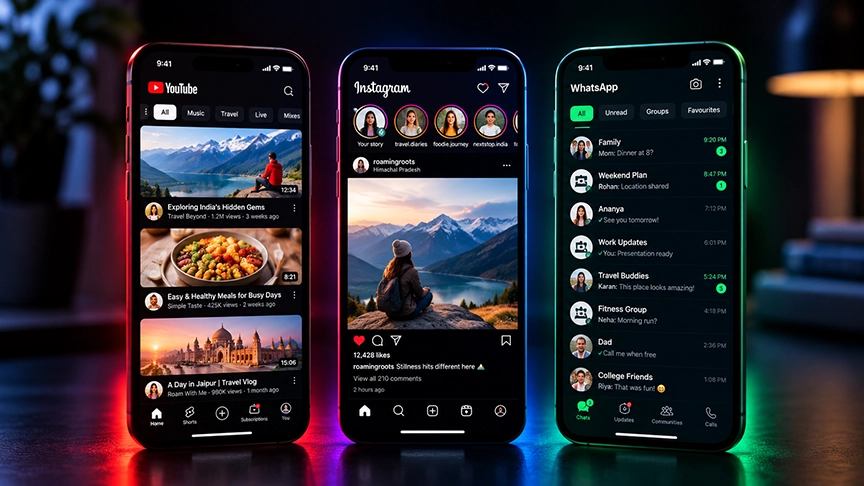
That is the real story here. Doomscrolling social media is not one habit. It is three different anxiety machines wearing the same app icon.
Doomscrolling social media feels different because each app asks a different emotional question. Instagram asks, am I doing enough. Twitter X asks, what just happened. TikTok asks, can I stop now. That difference matters because your brain reacts to each prompt in a different way. One creates comparison stress, one creates urgency stress, and one creates hypnotic overload.
In India, this split shows up clearly. A student in Delhi may scroll Instagram after exams and feel behind. A trader in Ahmedabad may refresh Twitter X during market hours and feel tense. A teenager in Pune may lose time on TikTok style feeds and not even notice the clock moving. Doomscrolling social media is therefore not a single pattern. It is a family of habits.
Three apps, three emotional hooks
Instagram is built around polished lives, so the hook is social comparison. Twitter X is built around public events, so the hook is alertness. TikTok is built around endless novelty, so the hook is momentum. I feel the difference in my own Delhi life. Instagram makes me check how everyone else is doing. Twitter X makes me feel like I must know every update. TikTok makes me forget I had a limit in the first place.
That is why doomscrolling social media should never be treated as one-size-fits-all. The cure also changes by platform.
Why your mood changes by app
Your mood changes because each app gives your brain a different kind of reward and stress cycle. Instagram rewards envy and aspiration. Twitter X rewards fear and certainty seeking. TikTok rewards surprise and repetition. Meanwhile, the body stays in the same chair, but the emotional weather keeps changing. That is the hidden cost of doomscrolling social media.
When we understand the shape of the trap, we can begin to notice which app is hurting us most.
How social media algorithms are built to keep you scrolling
Doomscrolling social media is not a personal weakness. It is also a design outcome. These platforms test what keeps you online, then feed you more of the same. The algorithm watches what you pause on, replay, like, save, or open again, and it quietly learns your emotional weak spots. If fear works, it gives more fear. If envy works, it gives more envy. If outrage works, it gives more outrage.
The smartest part is that the feed rarely feels like a trap while you are inside it. It feels like information, entertainment, or even self-improvement. However, the machine is always measuring your attention. That is why doomscrolling social media can feel so personal. The app seems to know you better than your cousin does.
How the feed learns your nerves
Every scroll teaches the system something. If you stay longer on a celebrity breakup, it serves another. If you pause on a political clip, it brings you more politics. If you watch one anxious health reel, your feed may suddenly become a parade of symptoms and warnings. In India, this can become intense very fast because festival news, exam pressure, stock market chatter, and family content all mix together.
The result is a feed that does not just entertain you. It trains you. That is the deep structure behind doomscrolling social media.
Why infinite feeds feel natural
Infinite feeds remove stopping points. There is no clean end, no final page, no natural break like a newspaper folded shut after breakfast. You keep going because the next post might be more interesting. Or worse, more urgent. That open ending is a powerful psychological trick. It makes doomscrolling social media feel like a decision you keep making, when really the design keeps remaking the decision for you.
If you want to reduce it, the first step is to respect the architecture, not just your willpower.
Instagram: the comparison anxiety machine
Doomscrolling social media on Instagram often begins with beauty, then ends with self-doubt. You open the app for one story and suddenly you are comparing holidays, outfits, food, apartments, bodies, weddings, and careers. The anxiety is not loud. It is polished. That is what makes it so hard to spot. In Delhi, I have felt it after scrolling through wedding content during season, when everyone seems to have a better venue, a better lehenga, or a better life.
Instagram turns everyday aspiration into a performance. Even the most ordinary moment can look curated there. A breakfast plate in South Delhi, a gym mirror in Bandra, a monsoon cafe in Goa, all of it arrives edited. So the stress is not fear of disaster. It is fear of falling behind.
How curated content changes your mood over time
At first, curated content feels inspiring. Then it starts to feel tiring. Then it begins to shape your self-image quietly. You may not feel bad after one reel. But after forty, your brain starts treating other people’s highlights as your baseline. That is how doomscrolling social media on Instagram becomes comparison fatigue.
In India, this is amplified by family visibility. Relatives ask about your job, your wedding, your flat, your weight, your travel plans. So Instagram does not stay online. It spills into real life. The app teaches you to measure yourself against people you know and people you have never met.
Why reels can make you feel behind
Reels are especially powerful because they compress achievement into seconds. A creator opens with a car, a flat, a glow-up, or a morning routine, and your brain fills in the gaps with your own insecurities. That is why doomscrolling social media on Instagram can leave you restless instead of informed. You are not just watching. You are ranking yourself.
I have noticed in my Delhi evenings that the more tired I am, the more dangerous Instagram becomes. Fatigue lowers resistance. Then comparison lands harder.
How curated content changes your mood over time
Doomscrolling social media on Instagram also works in stages. First comes curiosity, then admiration, then comparison, then quiet dissatisfaction. The shift is subtle, which is why many people miss it. One minute you are enjoying a travel post. The next minute your own life feels smaller. That is not random. It is the slow emotional drift created by repeated exposure to idealized content.
This is especially visible in urban India, where success is displayed publicly and constantly. A new phone, a job title, a cafe table, a gym body, a luxury vacation, all become social currency. Meanwhile, ordinary life starts to look insufficient. That does not mean Instagram is bad in every dose. It means doomscrolling social media on Instagram can reshape your mood when you stop noticing the difference between real life and presentation.
From inspiration to dissatisfaction
There is a thin line between inspiration and inadequacy. The same feed that motivates you to dress better or cook better can also make you feel like your life is late. I feel this especially when I have had a long workday and then scroll through other people’s perfect evenings. It is easy to forget that most posts are moments, not lives.
That is why time boundaries matter. Without them, doomscrolling social media on Instagram keeps moving the goalposts.
Why India makes this sharper
In India, public life is dense. We live with relatives, neighbors, colleagues, and community expectations. So curated content hits harder because the social comparison is already close to home. Instagram simply magnifies what is already there. A person in Chennai may compare career growth. A person in Delhi may compare weddings and homes. A person in Indore may compare study outcomes and family milestones.
The app does not invent the pressure. It amplifies it.
Twitter X: the real time news anxiety loop
Doomscrolling social media on Twitter X feels different because the feed is built like a live emergency room. News arrives fast, reactions arrive faster, and every thread claims to explain the moment. You open it for one update and end up chasing ten more. The anxiety here is about missing the next development. It is not comparison. It is compulsion.
In India, this can be especially intense during elections, cricket matches, court judgments, weather alerts, market swings, or any breaking national event. I have seen my own friends in Delhi refresh the app during long commutes, as if the next tweet might change their day. That is the loop. Doomscrolling social media on Twitter X makes waiting feel unsafe.
Breaking news creates uncertainty, and uncertainty makes the brain seek closure. Twitter X rarely gives you enough closure. It gives fragments, replies, counter replies, and quote tweets. So you keep checking. You want the update, then the clarification, then the correction. This is why doomscrolling social media on Twitter X can feel physically tense. Your attention is on alert.
The platform rewards urgency. The faster the reaction, the more visible the post. That structure turns concern into habit.
Why X feels more anxiety inducing than other apps
Twitter X often feels more anxiety inducing because the content is framed as immediate truth. Instagram shows polished lives. TikTok shows endless novelty. Twitter X tells you that the world is happening right now, and if you look away, you may miss the meaning. That pressure is exhausting.
For many Indians, especially professionals and students, doomscrolling social media on Twitter X becomes the news version of nail biting. You are not relaxing. You are bracing.
Doomscrolling social media on Twitter X also pulls from our natural need for certainty. When a headline feels incomplete, the mind refuses to leave it alone. You click one source, then another, then the replies. This is how anxiety becomes checking behavior. The app rewards that checking with fresh information, so the loop tightens.
In the Indian context, this is not only about politics or tragedy. It can be about exam results, train delays, weather warnings, flight disruptions, or even festival crowd updates. The feed becomes a public nervous system. Meanwhile, your own nervous system never gets a full break. That is why doomscrolling social media on Twitter X can leave you drained before lunch.
The illusion of staying informed
Many people believe more checking means better awareness. Sometimes it does. But after a point, the extra refreshes give less clarity and more distress. You start repeating the same search terms and reading the same thread in new clothes. I have done this during Delhi heatwave updates and market volatility. The screen promised certainty, but it mostly delivered repetition.
So the real question is not whether you are informed. It is whether the information is still useful.
How to break the check refresh habit
Set a few fixed check-in times instead of endless refreshing. Use trusted sources and close the app after reading. If possible, follow topic summaries rather than live reaction spirals. Doomscrolling social media on Twitter X becomes weaker when you interrupt the urge to know everything immediately.
That small pause can protect your mind more than you think.
TikTok: the algorithmic infinite scroll trap
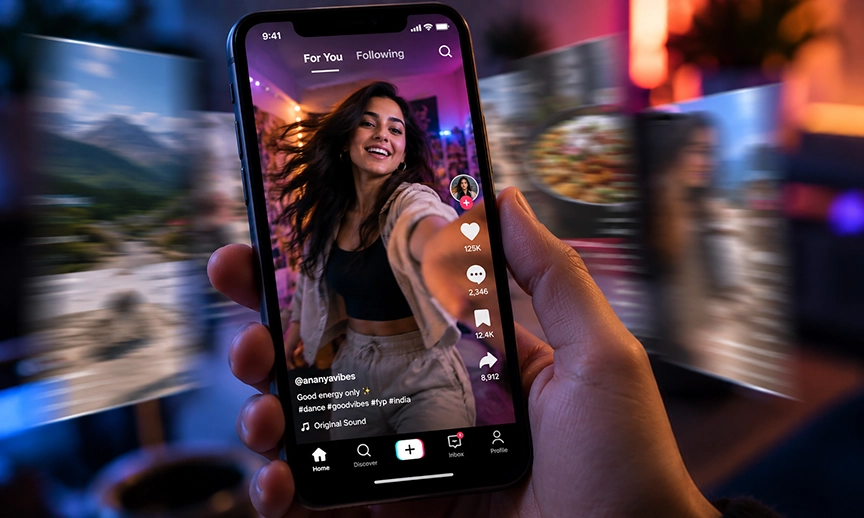
Doomscrolling social media on TikTok is different again. Here the problem is not comparison or breaking news. It is absorption. The videos arrive one after another so smoothly that your brain loses track of time. You are not chasing updates. You are falling through an endless hallway of short, highly tailored clips.
In India, TikTok itself may be gone, but the TikTok style of feed lives on through similar short-video apps and reels. That matters because the behavior stayed. The trap stayed. Only the logo changed. For many people, especially younger users, doomscrolling social media on these short-video feeds feels like a time leak. You never mean to stay long, but the app keeps handing you the next hit of novelty.
How short videos hijack attention
Short videos work because they give quick payoff with almost no effort. There is no long setup. No commitment. No pause. Your brain gets a tiny reward every few seconds, and that keeps you moving. The scroll becomes automatic. In that state, doomscrolling social media feels less like reading and more like being carried downstream.
The danger is not only wasted time. It is cognitive fatigue. Too much rapid switching leaves you scattered and oddly numb.
Why the feed feels endless
The feed feels endless because there is always another clip that matches your current mood a little better. If you are bored, it entertains. If you are sad, it distracts. If you are stressed, it numbs. That mood matching is why doomscrolling social media on short-video platforms can become a late-night habit so easily.
I see this most clearly in Delhi when people say they will sleep after one last video. One last video becomes twenty. The app does not shout. It seduces.
How country specific content shapes each app differently
Doomscrolling social media also changes by country because the feed reflects local fears, ambitions, jokes, and crises. In India, content often mixes politics, cricket, cinema, family culture, exam life, religion, and city chaos. In the United States, the mix may lean more toward politics, wellness, consumer culture, and creator economy news. In Japan, it may feel more restrained and trend focused. In Nigeria, community news and music culture may dominate differently. The same app behaves differently because the social environment is different.
This country layer is what makes the comparison so interesting. Instagram in India can feel like marriage season and job season at once. Twitter X in India can become a live national commentary box. Short-video apps in India often blend entertainment with aspiration in regional languages. Doomscrolling social media is therefore not only platform specific. It is nation specific.
Why India’s feeds feel more crowded
Indian feeds are crowded because Indian life itself is crowded. There are more social obligations, more commentary, more public opinion, and more language variation. A single post can carry regional pride, political anger, Bollywood fandom, and family expectations all at once. That density makes doomscrolling social media feel louder here than in many other places.
It is not just content volume. It is emotional overlap.
How location changes the anxiety pattern
A user in Delhi may feel civic anxiety and status pressure. A user in Bengaluru may feel career and startup pressure. A user in Kolkata may feel cultural commentary and nostalgia. A user in a smaller town may feel stronger family surveillance and social comparison. The same app lands differently because the local life around it is different.
That is why any serious discussion of doomscrolling social media has to include geography, not just psychology.
Which platform is actually the hardest to put down
Doomscrolling social media is hardest to quit on the app that matches your weakest emotional spot. For some people, that is Instagram because comparison keeps them hooked. For others, it is Twitter X because urgency feels important. For many younger users, it is short-video apps because the scroll is so effortless. There is no single winner here. There is only the app that knows how to press your specific buttons.
If I speak from my own Delhi routine, Instagram is the sneakiest, Twitter X is the sharpest, and short-video feeds are the most time dissolving. That mix changes by day. On a tired evening, TikTok style feeds win. On a tense news day, Twitter X wins. On a lonely Sunday, Instagram wins. That is the honest answer.
What makes an app stick
An app sticks when it gives you emotional relevance, not just entertainment. If it makes you feel seen, warned, validated, or included, you return. That is why doomscrolling social media often feels irrational only after the fact. Inside the moment, the app feels necessary.
Once you identify your trigger, the solution becomes much clearer.
How to choose your weak spot
Ask yourself which feed changes your mood the fastest. That is usually the one to tame first. Put it on a timer. Remove notifications. Make the app harder to open at night. Doomscrolling social media weakens when access becomes less automatic and intention becomes more visible.
The goal is not perfection. The goal is to stop letting one app steer your entire evening.
Frequently Asked Questions
What is doomscrolling on social media?
Doomscrolling social media means repeatedly scrolling through upsetting, stressful, or emotionally heavy content even when it starts making you feel worse. It often happens late at night or during idle moments. The loop is powered by curiosity, fear, and habit. On different apps, it can look like comparison, news checking, or endless short-video consumption.
Is TikTok worse for doomscrolling than Instagram?
Doomscrolling social media on TikTok can feel worse for time loss because the feed is so seamless and endless. Instagram, however, can be harsher for self-worth because it pushes comparison. So the worse app depends on your trigger. If you get anxious about your life, Instagram may hit harder. If you lose track of time, TikTok style feeds may be the bigger problem.
Why does Twitter X feel more anxiety inducing than other apps?
Doomscrolling social media on Twitter X often feels more anxiety inducing because it is built around real time updates, conflict, and incomplete information. You keep refreshing to get closure, but the feed rarely gives it. In India, this gets stronger during election season, stock market swings, cricket drama, and breaking national events. The uncertainty keeps your body on alert.
How do social media algorithms cause doomscrolling?
Doomscrolling social media grows when algorithms learn what keeps you engaged and show you more of it. If you stop on fear, comparison, or outrage, the feed gives you more of that emotion. The system is designed to reduce friction and increase time spent. That is why the content often feels uncannily personal and hard to leave.
Can changing apps reduce doomscrolling habits?
Doomscrolling social media can reduce if you change the app mix, but only if you also change the trigger. If Instagram makes you compare, replacing it with a calmer app can help. If the real issue is boredom or stress, the habit may simply move elsewhere. Changing apps works best when you pair it with time limits, notification cuts, and night routines.
Is Instagram doomscrolling different from TikTok doomscrolling?
Doomscrolling social media on Instagram is usually more social and comparison based, while TikTok style doomscrolling is more algorithmic and trance like. Instagram makes you measure yourself against people. TikTok makes you forget time. One is emotionally loud, the other is quietly consuming. Both can be harmful, but they harm in different ways.
Which social media app is most addictive?
Doomscrolling social media feels most addictive on the app that best matches your emotion in the moment. For some people it is Instagram because of identity pressure. For others it is Twitter X because of urgency. For many, short-video feeds are the toughest because the next clip arrives instantly. The most addictive app is the one that gives your brain the fastest reward loop.
Does doomscrolling look different in different countries?
Yes, doomscrolling social media looks different in different countries because the feed mirrors local culture, politics, language, and stress. In India, it may mix family expectations, cricket, cinema, and public life. In other countries, it may center on different anxieties. The platform stays the same, but the emotional script changes with the country and city.
How can I doomscroll less on TikTok specifically?
Doomscrolling social media on TikTok becomes easier to control when you add friction. Turn off autoplay where possible, set a nightly limit, and remove the app from your home screen. Use it only after a clear intention, not when you are bored in bed. Replace the late-night scroll with music, reading, or a fixed wind-down routine so the habit loses its grip.
Is doomscrolling social media linked to anxiety?
Yes, doomscrolling social media is often linked to anxiety because it keeps the nervous system in a state of alert, comparison, or overload. It may not cause anxiety on its own, but it can worsen existing stress, sleep problems, and low mood. If the habit is affecting daily function, talk to a qualified mental health professional and consider this depression guide for more context.
Conclusion
Doomscrolling social media is not one behavior with one cause. It is a set of platform shaped habits, each with its own emotional trap. Instagram pulls you into comparison. Twitter X pulls you into urgency. TikTok style feeds pull you into time loss. When you add country context on top, the story becomes even richer. In India, our feeds are not just personal. They are crowded with family, news, ambition, politics, and culture.
I think that is why this topic feels so personal to me in Delhi. I have caught myself scrolling after a long day, telling myself I am just catching up, when really I am looking for relief. The first step is honesty. The second step is noticing which app hurts you most. The third step is making one small change, not ten dramatic ones. Move the app. Mute the feed. Set a timer. Leave your phone outside the bedroom if you can. If your habits feel tangled with AI driven chat behavior too, this AI etiquette piece may also help.
We do not need to quit every app. We need to stop letting every app rewrite our mood. That is the real win, and it starts with seeing doomscrolling social media clearly. Doomscrolling social media.