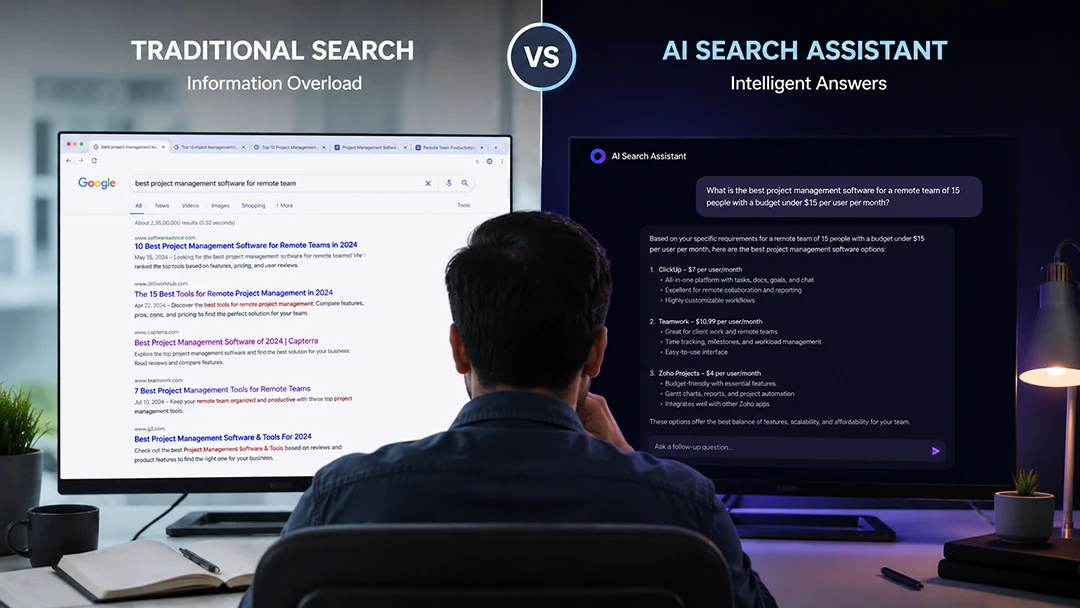
AI Search vs Google Search is becoming one of the most useful comparisons for anyone trying to work faster, think clearly, and get better answers online. The two tools look similar on the surface because both help you find information, but they solve different problems. Google is often best for discovery, while AI search is often best for explanation. Understanding that difference can save time, reduce frustration, and improve the quality of the results you trust.
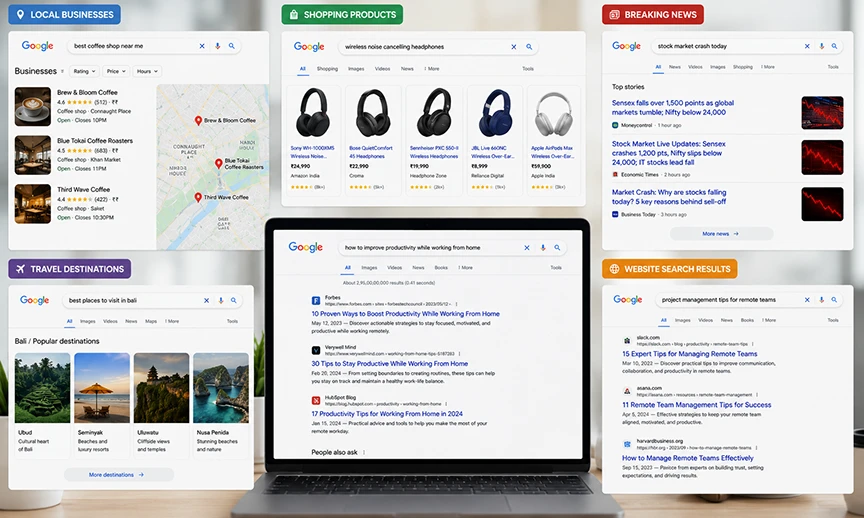
In daily life, this matters more than ever. If you need a local service, a current news story, or multiple source options, Google usually wins. If you need a plain-English summary, a comparison, or help making sense of something complex, AI search can be more useful. This article breaks down AI Search vs Google Search in a practical way so you can choose the right tool for the right task.
The reason AI Search vs Google Search is such a timely topic is simple: people no longer want only a list of links. They want answers, context, and speed. Google has spent decades becoming the default gateway to the internet, but AI search engines have changed expectations by turning search into a conversation. That shift has made many users rethink how they research, learn, and make decisions online.
For example, Google is still excellent when you want to compare product prices, check business hours, browse news outlets, or verify a claim across multiple sources. AI search tools, including conversational search systems, are often better when you want a quick explanation of a technical topic, a summary of long content, or help narrowing down your options. In practice, AI Search vs Google Search is not a battle with a single winner. It is a choice based on purpose.
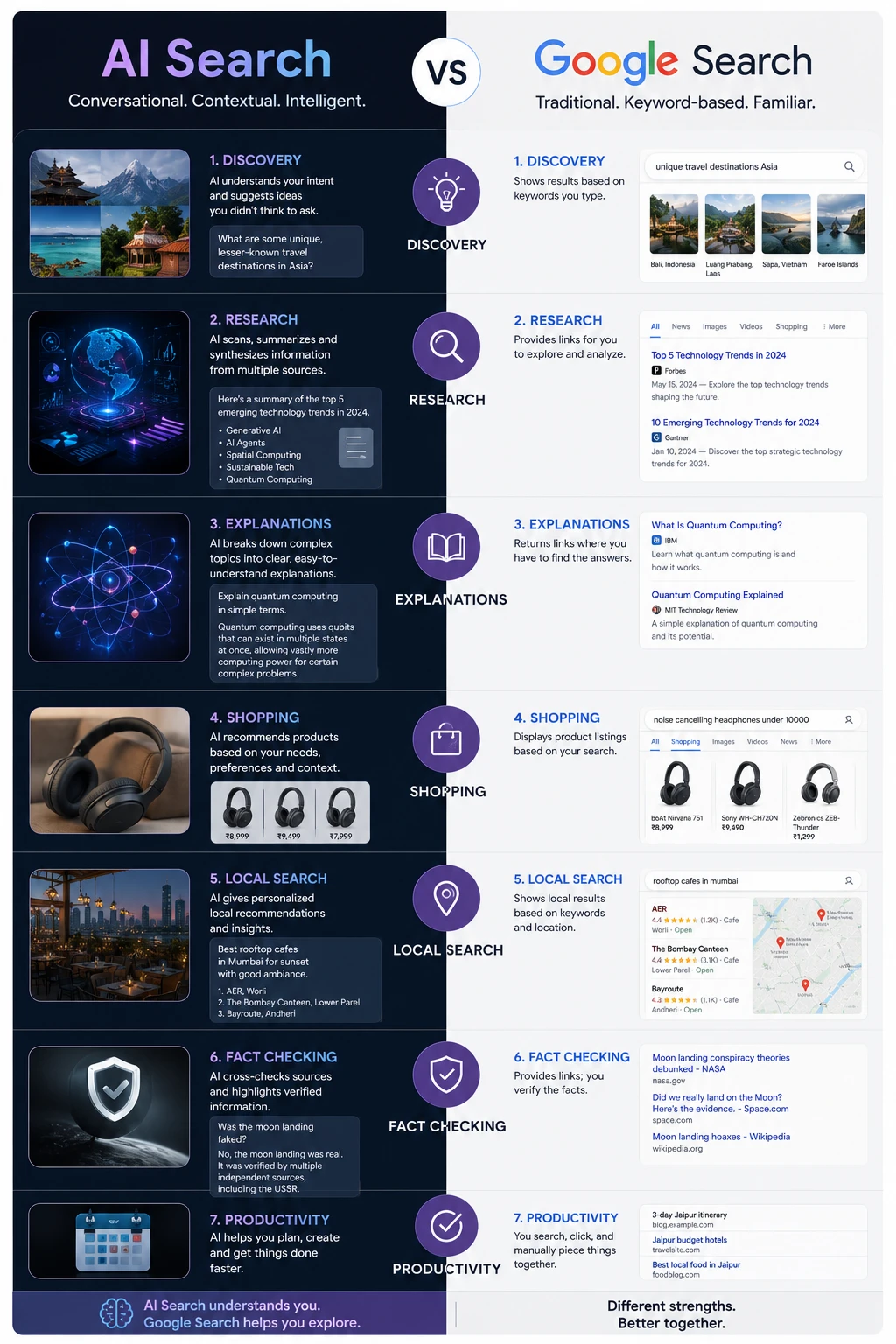
There is also a productivity angle. Professionals, students, marketers, and everyday users are blending these tools because each one reduces friction in different moments. Google discovers. AI explains. Together, they can make research more efficient and more understandable.
What Google Does Best as a Discovery Engine
Google remains the strongest discovery engine because it is built around breadth, freshness, and source variety. When you search for something, you are not just getting one answer. You are getting a map of the web. That is powerful when you do not yet know what you do not know. In many cases, the best first step in AI Search vs Google Search is still Google because it exposes the range of available information.
One practical example is buying a new laptop. If you search on Google, you can see reviews, comparisons, retailer pages, forum discussions, and video results. That lets you explore options from several angles. If you ask an AI search engine the same question, you may get a concise recommendation, but you may miss the variety that helps you make a confident choice. Google is especially strong when you need current, location-based, or highly specific details.
Google also excels at showing the original sources. For people who care about accuracy, this matters. You can read the article, inspect the author, compare multiple perspectives, and decide for yourself. That makes Google ideal for research that needs transparency.
AI Search vs Google Search for quick discovery
When the task is open-ended exploration, Google often has the edge. Think of it as a large library index that points you toward books, articles, videos, and tools. If you are planning a trip, researching a medical term, comparing software, or looking for local recommendations, Google usually gives you more paths to explore. AI search engines may shorten the process, but Google gives you more room to verify and branch out.
The practical takeaway is straightforward: use Google when you want choice, variety, and linked evidence. Use it to discover, then decide whether you need a faster explanation layer afterward.
What AI Search Does Best as an Explanation Engine
AI search is strongest when you already have a topic and need clarity. Instead of making you scan ten results, it can summarize, compare, and translate complexity into plain language. This is why many users treat AI search tools like a research assistant. They are useful for first drafts of understanding. In AI Search vs Google Search, this is where AI often feels more intuitive and less time-consuming.
For example, if you ask about the difference between index funds and ETFs, a conversational search system can explain the concept, show scenarios, and maybe even outline trade-offs. That is especially helpful for learners who do not want to read multiple finance articles before understanding the basics. The same applies to science topics, technical products, business strategy, and history. AI search can reduce information overload.
A second strength is synthesis. AI search engines can combine ideas from several sources into one response. That makes them useful for brainstorming, summarizing long documents, or turning messy notes into a structured overview. Still, users should remember that the convenience of synthesis is not the same as direct source inspection. The answer may be useful, but the supporting evidence still matters.
AI Search vs Google Search for understanding complex topics
This is where AI Search vs Google Search becomes especially important. Suppose you want to understand how the stock market works during inflation. Google may give you a range of articles, opinion pieces, and technical explanations. AI search can help you get the core idea in simpler terms, then point you toward what to verify next. The explanation engine role is powerful because it reduces cognitive load.
That makes AI search a strong choice for students, managers, creators, and busy professionals. Its real-world value comes from helping people absorb information faster, not just find it faster.
AI Search vs Google Search: A Side-by-Side Comparison
When people compare AI Search vs Google Search, they often ask which one is “better.” The more useful question is: better at what? The table below shows the practical differences.
Tool
Best For
Strength
Limitation
Google Search
Discovery, current events, local results, source comparison
The comparison shows why AI Search vs Google Search should not be treated as a winner-takes-all contest. Google is stronger for breadth and transparency. AI search is stronger for speed and interpretation. For many people, the smartest workflow is to start with AI search for understanding, then switch to Google for source checking and deeper exploration.
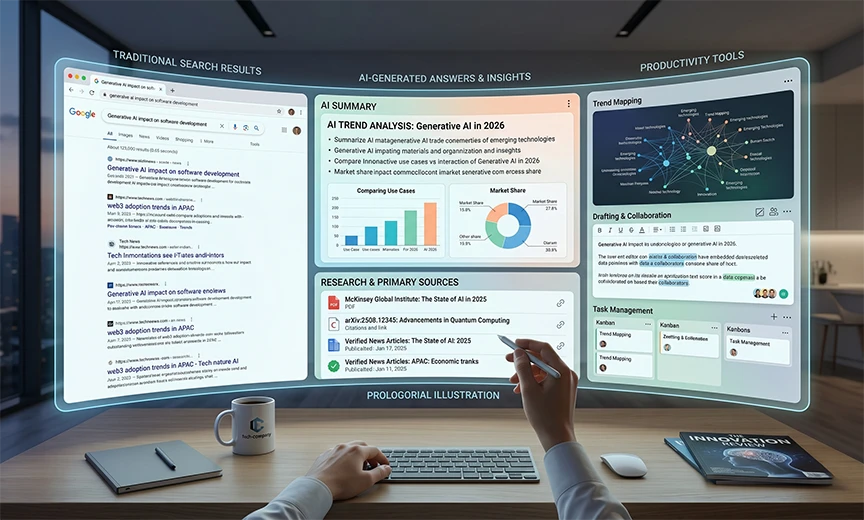
That hybrid habit is especially valuable in work settings. A marketer may use AI search to summarize a competitor’s positioning, then use Google to look up the competitor’s live pages, ads, reviews, and press coverage. The two tools become complementary instead of competing.
AI Search Accuracy: Where It Helps and Where It Fails
Accuracy is the biggest concern in AI Search vs Google Search. Google can still send you to low-quality pages, but at least it usually shows the sources. AI search accuracy depends on how well the system retrieves, summarizes, and filters information. Because it often generates answers in a polished format, errors can be harder to spot at a glance.
That does not make AI search unreliable by default. It makes it different. AI search can be highly accurate for well-defined questions, repetitive tasks, and broad explanations. It can also be less precise when the topic is fast-changing, obscure, controversial, or dependent on nuanced context. In those cases, Google’s source trail is often safer.
A real-world example is travel planning. If you ask about visa requirements, AI search may give a helpful summary, but you should always confirm with official government pages. If you ask about weekend activities in a city, Google can surface current listings, maps, and reviews that are more actionable. The key is to match the tool to the level of risk.
Use AI search for early-stage understanding.
Use Google for verification and live information.
Always double-check sensitive topics like health, finance, and legal issues.
When to Use Google, When to Use AI Search
One of the best ways to think about AI Search vs Google Search is to ask what phase of the task you are in. Are you discovering, deciding, or explaining? Google is usually best for discovering. AI search is usually best for explaining. If you are deciding, you may need both.
Here are some practical examples:
Use Google when you want local restaurants, current events, or multiple reviews.
Use AI search when you want a summary of a long report or article.
Use Google when comparing prices, shipping options, or live inventory.
Use AI search when you need help understanding jargon or a technical concept.
Use both when making a major purchase or evaluating a complex topic.
This approach is useful because it avoids false expectations. People often blame AI search for not behaving like Google, or blame Google for not behaving like a chat assistant. Once you understand the role of each, your workflow becomes smoother and faster.
For students, this can mean using AI search to understand a reading assignment, then using Google to find the original research or a professor-approved source. For professionals, it may mean using AI search to outline a project, then using Google to validate recent market data.
Future of Search: Why the Two Tools Will Keep Blending
The future of search is unlikely to be a full replacement story. More likely, it will be an integration story. Google has already added more AI-powered features, and AI search tools are increasingly trying to show links, citations, and live results. That means the line between the two is getting thinner, even though the core purpose of each remains different.
In AI Search vs Google Search, the trend points toward hybrid search experiences. Users will expect a conversational layer plus source access. They will want answers that feel human without losing the ability to inspect evidence. The best systems will probably combine retrieval, summary, and navigation in one seamless flow.
That matters for everyday users because search behavior is changing. People are asking longer questions, expecting follow-up prompts, and wanting less manual filtering. But they still care about trust. That tension will shape the future of search engines and explain why Google AI search features and standalone AI search tools are both evolving quickly.
For businesses and publishers, the implication is clear: content must be useful to humans and understandable to machines. Clear structure, direct answers, and credible sourcing will matter even more.
Real-World Scenarios That Show the Difference
AI Search vs Google Search becomes easiest to understand in real life. Imagine you are shopping for a smartwatch. Google helps you discover models, retailers, reviews, and comparison charts. AI search helps you understand which features matter most for your lifestyle, such as battery life, fitness tracking, or phone compatibility.
Now imagine you are researching a new job role. Google gives you job posts, salary data, and company pages. AI search helps you synthesize what the role actually involves and what skills you should prioritize. In both cases, one tool expands your options while the other reduces confusion.
Another example is cooking. Google can surface recipes, videos, and ingredient substitutions. AI search can help you convert a recipe for more servings, simplify steps, or explain why a technique works. That shows how AI search tools can act as a translation layer, not just a search layer.
The behavioral insight here is important. People are less patient with information overload than they used to be. They want answers that are fast, but also understandable. That is why AI Search vs Google Search is not just a technical comparison. It reflects how modern users think and work.
Pros and Cons of AI Search vs Google Search
Every tool has trade-offs, and this is one reason comparison shopping for information matters. The smartest users do not ask which tool is perfect. They ask which compromise is acceptable for the task.
Google search pros:
Excellent for discovery and breadth
Strong for current and local information
Shows source variety and original pages
Useful for fact-checking and comparison research
Google search cons:
Can require many clicks
Search results can feel cluttered
Quality varies widely across pages
AI search pros:
Fast, conversational answers
Good for summaries and explanations
Helpful for brainstorming and synthesis
Reduces time spent scanning multiple pages
AI search cons:
May oversimplify details
Can be less transparent about sources
Accuracy can vary with complex or changing topics
Using these pros and cons together makes AI Search vs Google Search much easier to apply in practice. The best choice often depends on whether speed or verification matters more in the moment.
How to Build a Smarter Search Habit
The smartest approach is not loyalty to one platform. It is a workflow. If you build a habit around AI Search vs Google Search, you can get better results with less effort.
Try this simple process:
Start with AI search when you need a quick explanation or a summary.
Switch to Google when you need sources, fresh data, or multiple viewpoints.
Return to AI search if you want the material rewritten, compared, or simplified.
Verify critical facts using trusted primary sources or official sites.
This workflow works well in professional settings, classrooms, and personal research. It is especially useful for people who consume a lot of information but have limited time. Instead of treating search as a single step, you treat it like a sequence: understand, verify, decide.
If you want more practical digital habits, you can also explore our lifestyle articles for productivity and decision-making ideas, or browse our more stories for technology trends and everyday insights. For deeper background on search technology, the evolution of search engines is also useful context.
Another helpful reference point is how conversational systems work in general. The idea of conversational search explains why many users now prefer asking follow-up questions instead of starting over with new queries.
Frequently Asked Questions
What is the main difference between AI Search vs Google Search?
The main difference is purpose. Google Search is better for discovery, browsing, and finding multiple sources. AI Search vs Google Search often comes down to whether you want links or explanations. AI search is usually better for summarizing and interpreting information, while Google is better for exploring the original web. In practice, many people use both together for faster and more reliable research.
Is AI Search vs Google Search better for accuracy?
It depends on the topic. Google can be more accurate when you need to confirm facts through original sources, especially for news, local information, or live data. AI Search vs Google Search becomes a question of trust and convenience. AI search may be accurate for general explanations, but it should be verified for sensitive or fast-changing topics. For important decisions, use both and cross-check the details.
Can AI search engines replace Google?
Not completely. AI search engines are excellent at helping people understand topics quickly, but Google still excels at discovery, freshness, and source variety. AI Search vs Google Search is more of a partnership than a replacement story. Most users will likely continue to use both, depending on whether they want a conversation or a traditional search experience. The future may blend the two, but their core strengths remain different.
When should I use AI Search vs Google Search for work?
Use AI search when you need a summary, brainstorm ideas, or simplify a complex topic. Use Google when you need recent reports, competitive research, live price checks, or official pages. AI Search vs Google Search is especially useful in work because it separates understanding from verification. That helps you save time without giving up quality. Combining the two is often the most efficient professional workflow.
Are AI search tools good for students?
Yes, if used responsibly. AI search tools can help students understand readings, compare ideas, and clarify vocabulary. But AI Search vs Google Search matters because students still need Google for source checking, citations, and original research. AI tools can be a learning aid, not a substitute for reading and verification. Students get the best results when they use AI for explanation and Google for evidence.
What are the best uses for Google search alternatives?
Google search alternatives are useful when you want a conversational response, a summary of long content, or help narrowing down a topic. In AI Search vs Google Search, alternatives to Google shine when speed and clarity matter more than browsing many pages. They are ideal for drafting, learning, and early research. For detailed verification, though, Google still remains essential for many users.
Does Google AI search change the comparison?
Yes, it does. Google AI search features bring more conversational and summary-based results into the traditional search experience. That makes AI Search vs Google Search feel less like two separate worlds and more like an evolving spectrum. Even so, Google still centers on discovery and source access, while dedicated AI search tools often focus more on direct answers. The comparison is changing, but the differences still matter.
How can I get the best results from both tools?
Use AI Search vs Google Search as a two-step strategy. Ask AI search to explain the topic, then use Google to confirm facts, compare sources, and find live links. This method reduces confusion and improves confidence. It is especially effective for choosing products, learning new skills, and researching important decisions. The best results usually come from combining explanation with verification.
Conclusion
AI Search vs Google Search is not really about choosing a winner. It is about knowing which tool fits which job. Google is the stronger discovery engine when you want options, sources, freshness, and breadth. AI search is the stronger explanation engine when you want clarity, speed, and a more conversational way to understand information. Used well, the two tools complement each other.
The practical takeaway is simple: start with the tool that matches your immediate need, then switch when the task changes. Use AI search to reduce complexity, and use Google to verify and expand. That habit can improve your research, save time, and help you make better decisions online. If you want smarter search results, the right answer is often AI Search vs Google Search together, not one at the expense of the other.