AI fatigue India is the weirdest tech mood in the country right now. We are not rejecting artificial intelligence. We are rejecting being ambushed by it. In my Delhi life, that difference feels obvious every time I open WhatsApp to find a new Meta AI prompt, then check a banking app that wants to ‘help’ me with a chatbot, then scroll LinkedIn and see yet another machine written pep talk. Meanwhile, the same people complaining about forced AI are still the ones asking ChatGPT to draft resumes, plan meals, explain tax rules, and clean up awkward work emails. That split is the real story.
I have seen this pattern up close while talking to friends across NCR, from founders in Gurugram to students in Lajpat Nagar and office workers in Noida. They are not anti AI. They are tired of AI arriving without consent, taking space they never asked it to take, and pretending that every app upgrade is a gift. That is why AI fatigue India is not a backlash against curiosity. It is a backlash against clutter. It is also why the India AI conversation needs a sharper frame, not the lazy global one. If you want the broader context of how AI is changing ordinary routines, this piece on AI in daily life helps set the stage.
At the same time, India is still one of the most eager places on earth to try tools like ChatGPT. The country can love voluntary AI and dislike forced AI in the same breath. That is not hypocrisy. That is judgment. And honestly, it is a very Indian kind of judgment.
AI fatigue India matters because it explains the country better than the usual headlines do. The real tension is not between humans and machines. It is between choice and intrusion, between useful assistance and app clutter, between a tool you invite and a tool that walks into the room unannounced.
AI fatigue India makes more sense when you start with the numbers. India is one of the biggest voluntary AI markets in the world, and ChatGPT has become a daily utility for students, workers, creators, and small business owners. People use it for English polishing, coding help, interview prep, market research, travel planning, and even rough first drafts when time is short. The appeal is simple. You ask. It answers. You control the relationship.
Why chosen AI feels different
AI fatigue India is low when the AI is chosen. That is the key. When someone opens ChatGPT on purpose, they already have a task in mind. They are not being interrupted. They are solving a problem. In India, where people often juggle commuting, side work, family chats, and deadlines, a clean tool that saves ten minutes feels magical. It does not matter whether you are a student in Delhi University or a startup operator in Bengaluru. If the tool works, people return.
Why India adopted it so fast
AI fatigue India did not stop ChatGPT from growing because the platform fits Indian behavior. We love shortcuts that still feel smart. We also like experimenting before committing. A tool like ChatGPT lets users test, compare, and discard without social pressure. That makes adoption feel light. Interestingly, the same people who mistrust auto inserted AI features in apps happily learn prompt tricks for ChatGPT because it respects agency. For a practical angle on making money with tools like this, see earn money using AI in India.
AI fatigue India becomes visible only when choice disappears. ChatGPT is a pull product. Most other AI features in India are push products. That difference explains a lot.
ChatGPT has become more than a chatbot in India. It is a default assistant for anyone trying to move faster without hiring help. That is why the weekly user base keeps growing, even while people complain loudly about AI in the wrong places.
The Meta AI Button Nobody Can Turn Off
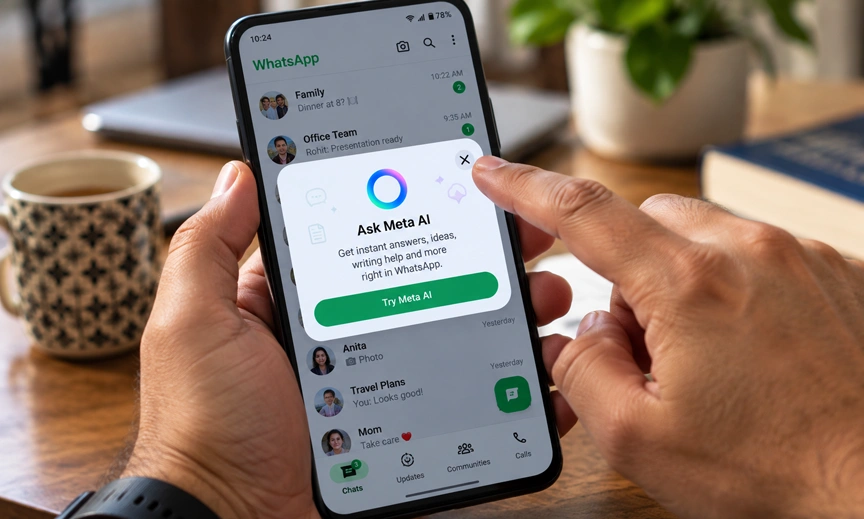
AI fatigue India sharpens the moment Meta AI appears inside WhatsApp. People did not download a separate assistant. They opened a messaging app to talk to family, office groups, school parents, and local vendors. Suddenly, a blue AI prompt sits there like it owns the room. That is why complaints are intense. The frustration is not just about the feature. It is about being forced to notice it.
WhatsApp is personal territory in India
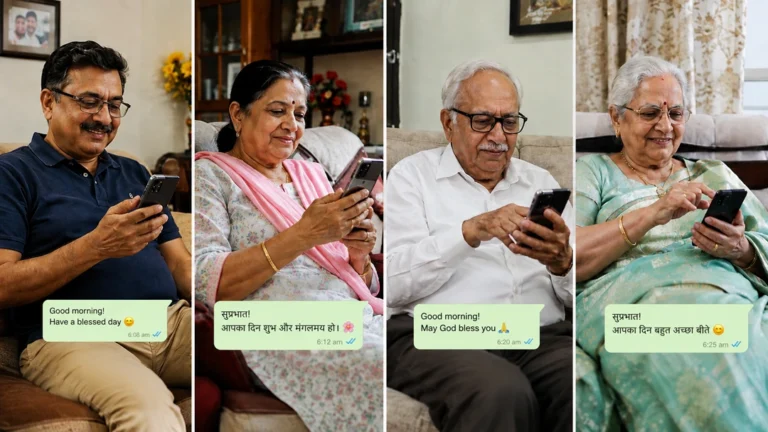
AI fatigue India hits hardest on WhatsApp because WhatsApp is not just software here. It is the family living room, the neighborhood noticeboard, the school communication line, and the work side door. When a new AI button appears inside it, people feel the invasion immediately. Nobody wants a helper squeezed into a place that already feels full. The app becomes less intimate, not more useful. And in India, where many users are less interested in product philosophy and more interested in basic clean functionality, that matters a lot.
Why people ask if it can be removed
AI fatigue India is also about control. The most common question is not whether Meta AI is intelligent. It is whether it can be turned off. That tells you everything. Indian users are not rejecting AI theory. They are rejecting optionality that is only optional in name. If the feature cannot be hidden, muted, or removed easily, it stops feeling like assistance and starts feeling like product inflation. For a more human perspective on digital behavior and stress, this piece on AI etiquette and ChatGPT behavior is a useful companion.
WhatsApp in India has survived because it stays simple. The moment it feels crowded, people notice. That is exactly where AI fatigue India becomes a product design problem, not a tech hype problem.
AI fatigue India is not about refusing innovation. It is about refusing to let innovation interrupt a space people already use for real life.
When Every App Suddenly Has An AI Sparkle Icon
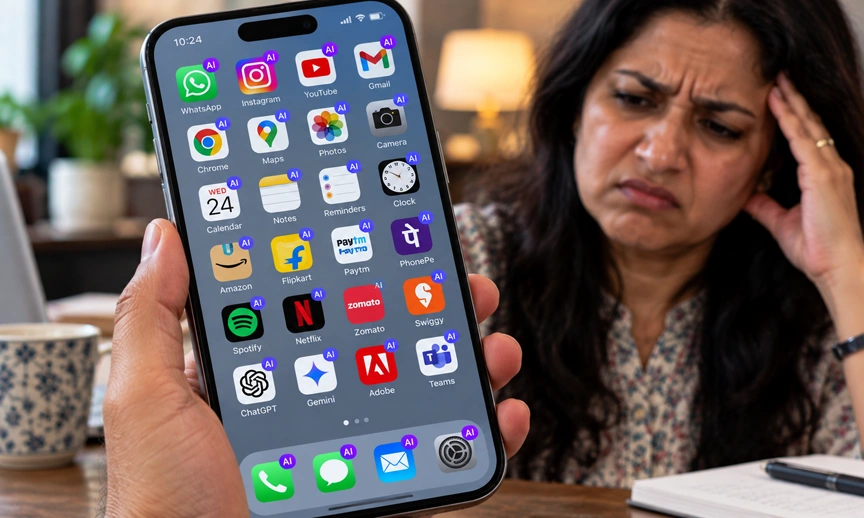
AI fatigue India grows every time another app adds a sparkle icon and calls it progress. The issue is not that AI is present. The issue is that everything begins to look the same. Banking apps, shopping apps, food apps, learning apps, and office tools all start promising smarter replies, faster summaries, and better writing. After a point, the feature list feels less like innovation and more like copied homework.
Why the sparkle icon annoys people
AI fatigue India is partly visual. The tiny icon says, ‘Look, we are modern too.’ But users see something else. They see a product team chasing trend status instead of solving a real problem. In India, where app space, phone storage, and mental bandwidth are all limited, every extra button feels like a tax. Worse, the AI feature often appears before users understand why they need it. That creates irritation faster than any bad tweet ever could.
Why Indian users still try it once
AI fatigue India does not mean people never click the feature. They do. Curiosity is high. But one try is not loyalty. If the feature is clunky, repetitive, or irrelevant, users move on. They are patient with learning curves, but not with clutter. This is especially true in tier 2 and tier 3 cities, where app trust is tied to usefulness, not branding. People want a faster bill payment, a clearer message, a cheaper transaction, or a cleaner summary. They do not want a decorative robot. The difference is subtle in a boardroom and obvious on a phone screen.
AI fatigue India is really a complaint about product laziness. If the AI sparkle does not save time, reduce effort, or remove friction, it feels like digital confetti. Nice for a second. Annoying forever.
Chosen AI Versus AI You Never Asked For
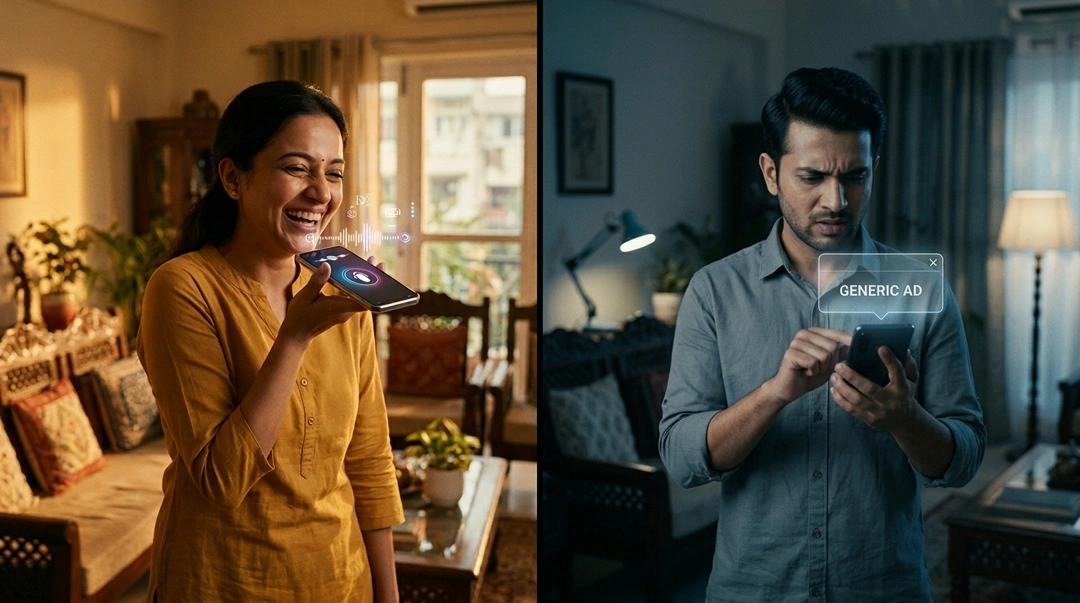
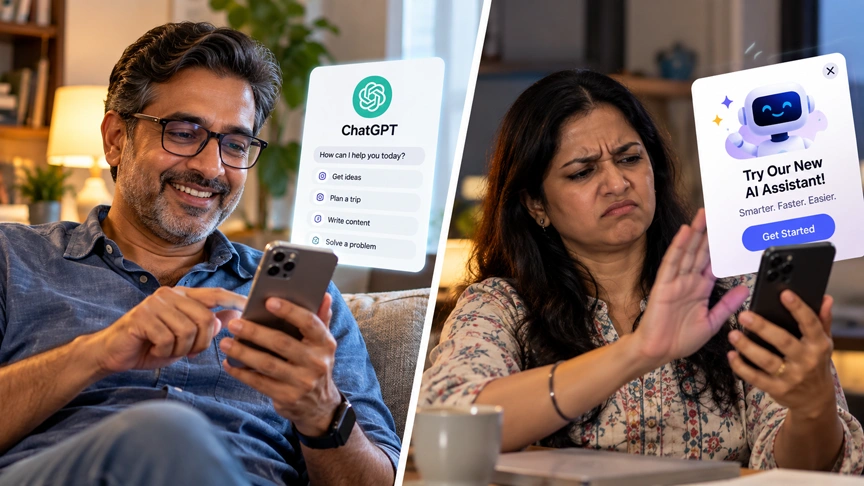
AI fatigue India is easiest to understand when you compare two experiences. In one, you deliberately open ChatGPT, ask for help, and get something useful. In the other, a platform inserts AI into your path and expects gratitude. One feels like service. The other feels like interruption. That is the entire divide.
Why consent changes everything
AI fatigue India is about consent, even if most users would not use that word. A chosen tool respects your timing. It waits until you need it. A forced feature assumes your time belongs to the app. That is what people hate. Indian users are extremely practical about technology. If it saves time, they accept it. If it wastes attention, they resist. That is why the same person can praise ChatGPT in the morning and curse a forced AI assistant by evening. Both reactions can be true.
Why trust follows usefulness
AI fatigue India also tracks with trust. If a tool helps you write a cleaner email or understand a complex form, trust rises. If a tool suddenly summarizes your message thread badly or suggests generic nonsense, trust collapses. In India, trust is earned through repeated utility, not announcements. This is where companies often miss the plot. They launch AI features as a branding story instead of a service story. Users respond by ignoring them. Sometimes that is the kindest possible reaction.
There is also a class angle here. Busy professionals may tolerate experimentation. Regular users often will not. They want the app to perform a job, not audition for a keynote. That is why AI fatigue India is not anti-tech. It is pro-respect.
Why Banking Apps Are The Worst Offenders
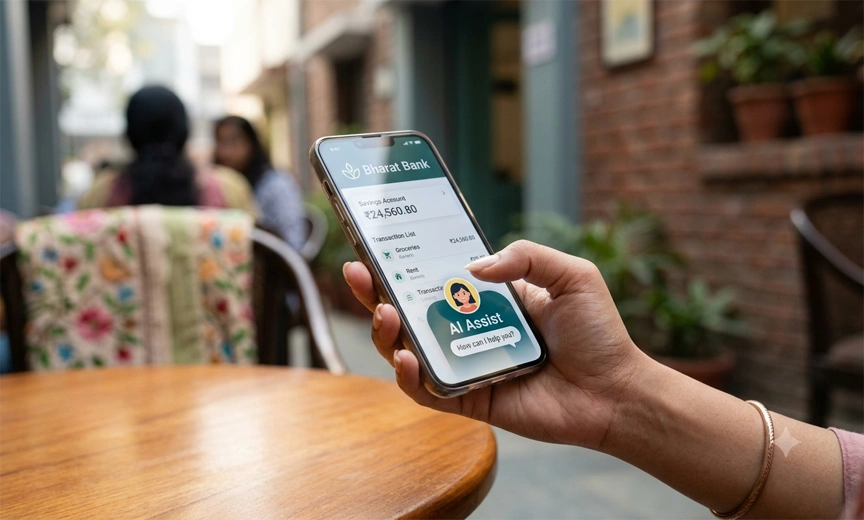
AI fatigue India becomes especially sharp in banking apps because money is serious. A banking app is not where people want playful experiments, chatty assistants, or vague ‘smart’ suggestions. They want balance checks, transfers, bill payments, and security. Simple. Reliable. Fast. When banks add AI layers, many users feel the product getting heavier instead of better.
Money needs clarity, not personality
AI fatigue India rises when a bank tries to sound friendly while handling your salary, EMI, and savings. A chatbot that cannot answer a direct question creates more stress than comfort. Worse, if the AI gets in the way of a basic task, users feel trapped by a feature they never requested. In Delhi, I have heard the same complaint from office colleagues and my own relatives. They do not want a digital mascot. They want their transaction to go through on the first try.
Why security concerns are amplified
AI fatigue India in finance is also about caution. People worry about data sharing, wrong responses, and hidden automation. Even if the AI is harmless, the fear is enough. Bank apps live on trust. Once the interface starts feeling noisy, users start questioning everything. That is especially true in India, where digital payments are huge but so is anxiety about fraud, phishing, and accidental errors. A banking app should reduce doubt, not add new kinds of it. When companies forget that, the AI feature becomes the first thing people disable in their minds, even if they cannot disable it on screen.
AI fatigue India is strongest in finance because users can forgive awkward entertainment apps. They cannot forgive uncertainty around money.
LinkedIn AI And The Rise Of Fake Enthusiasm
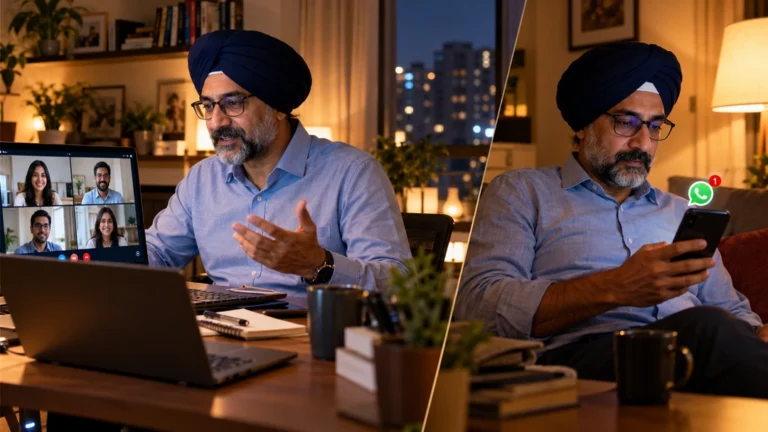
AI fatigue India has a special flavor on LinkedIn. The platform already rewards polished self presentation. Add AI writing suggestions, and the result can feel strangely hollow. Suddenly, every post sounds optimized, every comment sounds supportive, and every profile reads like it was tuned by a committee of invisible interns. Users can smell the sameness.
When every post sounds like a template
AI fatigue India is not just about bad features. It is also about tone exhaustion. On LinkedIn, AI can flatten human voice into corporate mush. People notice when a post sounds like a reheated thought with three motivational adjectives on top. In India’s job market, where young professionals are already under pressure to perform confidence, that fake enthusiasm gets old fast. The platform stops feeling like a place to think and starts feeling like a place to mimic.
Why users still want help, but not the performance
AI fatigue India does not mean people hate writing assistance. They often want help tightening a sentence or cleaning up a resume summary. What they do not want is a platform that nudges everyone toward the same upbeat style. The real problem is conformity, not support. If AI helps a candidate sound clearer, fine. If it helps every candidate sound identical, that is a problem. This is where the India conversation matters more than the global one, because our labor market is crowded, competitive, and highly sensitive to signaling. Fake enthusiasm is easy to generate. Real trust is not.
AI fatigue India keeps growing when professional platforms confuse efficiency with personality editing. People do not want to sound like robots. They do not want to sound like everyone else either.
What The Backlash Is Really Targeting
AI fatigue India is not really a rebellion against intelligence. It is a rebellion against bad product choices. People are targeting clutter, coercion, poor timing, and lazy feature placement. They are also pushing back against the assumption that every app must become an AI app. In reality, many products just need to work better.
The real enemy is friction dressed up as innovation
AI fatigue India shows that users can spot when a company is using AI as a distraction. If a payment fails, the AI button does not help. If a message is hard to search, a chatbot does not fix the core design. If a platform is bloated, more intelligence only makes the bloat smarter. That is why the backlash should be read as a quality complaint. People want better software, not more software theater. That is an important distinction, and it is very Indian in spirit because Indian users are notoriously quick to reward usefulness and equally quick to punish nonsense.
Why the backlash is selective
AI fatigue India also proves that people are selective, not cynical. They still use tools that help them write, learn, and create. They just do not want AI sprayed everywhere like perfume. The backlash is not against machines. It is against machine placement. When AI solves a real problem, users keep it. When AI is attached to an unrelated feature, users ignore it, complain about it, or quietly look for a cleaner alternative. That selectivity is healthy. It means the market is maturing.
AI fatigue India is therefore a useful signal. It tells companies that the user is not anti innovation. The user is anti nonsense.
Where Indias AI Story Actually Stands
AI fatigue India places the country in a very specific position. India is not turning away from AI. It is becoming more discriminating about it. That is a stronger story than either blind celebration or fake panic. The country is a massive user base for voluntary tools, a highly vocal critic of forced features, and a market where product design gets tested in public very quickly.
India is ahead on adoption, not patience
AI fatigue India coexists with enthusiasm because Indians are fast adopters and demanding judges. That combination matters. It means companies cannot assume curiosity will equal loyalty. If the AI is genuinely useful, India will use it. If not, the feedback will be brutal. This is why the country is so important in the global AI conversation. India does not just consume technology. It stress tests it in crowded, mobile first, cost conscious conditions that reveal weak ideas fast. For more on the earning side of this shift, see this guide on earning with AI.
What this says about the next phase
AI fatigue India suggests the next phase will reward restraint. Companies that add AI only where it meaningfully improves the experience will win trust. Companies that add it everywhere will create resentment. That is true for consumer apps, banking tools, workplace software, and social platforms. The lesson is simple. India does not want less AI. India wants better AI, and far less noise around it. Once that becomes the standard, the conversation changes from backlash to maturity.
AI fatigue India is therefore not a dead end. It is a filter. The market is telling companies to grow up.
What Changes If Companies Listen
AI fatigue India could become a competitive advantage for the companies that actually pay attention. If firms listen, they will stop mistaking feature sprawl for progress and start building cleaner products. The winner will not be the app with the most AI labels. The winner will be the app that respects time, space, and trust.
Design for choice, not surprise
AI fatigue India will ease when companies make AI discoverable instead of unavoidable. Let users opt in. Let them hide it. Let them choose when it appears. That one shift would remove a huge amount of irritation. In practice, it means better onboarding, cleaner defaults, and fewer interruptions. In Delhi terms, it is the difference between a guest who rings the bell and one who walks into your kitchen. People remember that difference instantly.
Make the feature earn its place
AI fatigue India also points to a deeper rule. Every AI feature should justify itself in plain language. What does it save? What does it simplify? What does it remove? If the answer is vague, the feature is probably unnecessary. Indian users do not need product poetry. They need visible value. That is the standard. Companies that meet it will build loyalty. Companies that ignore it will keep seeing complaints, uninstallations, and mockery. If you want the broader social lens on how people are adapting, this related piece on AI and everyday life is worth a look.
AI fatigue India is a wake-up call, not a rejection letter. If companies listen, they can turn annoyance into trust, clutter into clarity, and hype into habit.
Frequently Asked Questions
How many people use ChatGPT in India?
AI fatigue India does not reduce the scale of ChatGPT usage in the country. India has become one of the biggest audiences for the tool, with millions using it weekly for study, work, writing, and idea generation. The exact number changes over time, but the pattern is clear. Indians are not avoiding ChatGPT. They are choosing it actively because it feels useful, flexible, and under their control.
Why Is Meta AI On WhatsApp Getting Complaints?
AI fatigue India explains most of the complaints about Meta AI on WhatsApp. Users are irritated because WhatsApp feels personal and already crowded with real conversations. When an AI feature appears inside that space, it feels intrusive rather than helpful. Many people also feel they never asked for it. The issue is less about intelligence and more about unwanted placement.
Can You Remove The Meta AI Button From WhatsApp?
AI fatigue India grows when users cannot fully remove or hide unwanted features. In many cases, the Meta AI button cannot be cleanly removed by everyone in every setup, which is exactly why the irritation lasts. People want control over their interface. If an AI feature is useful, they may try it. If it is permanent and unwanted, they resent it much more.
Is AI Fatigue A Real Trend In India?
AI fatigue India is very real, but it is specific. Indians are not rejecting AI across the board. They are tired of forced AI showing up in apps, workflows, and feeds without consent. The fatigue is about overload, repetition, and clutter. So yes, it is a real trend, but it is better described as selective resistance than total rejection.
Why Do Banking Apps Keep Adding AI Chatbots?
AI fatigue India is especially strong in banking because people expect clarity, speed, and security. Banks add chatbots because they want to reduce support costs and appear modern. But users often see the chatbot as an extra obstacle. If it does not solve a real problem immediately, it feels like a distraction in a place where precision matters most.
Do Indians Actually Dislike ChatGPT?
AI fatigue India does not mean Indians dislike ChatGPT. The opposite is often true. Many people love using it because they chose it themselves and can apply it to real tasks. The dislike is aimed at AI that appears where it was never requested. Indians often separate a good tool from a bad product decision, and ChatGPT usually lands in the first category.
What Is Forced AI Versus Chosen AI?
AI fatigue India is easiest to understand through this split. Chosen AI is a tool you open because you want help. Forced AI is a feature inserted into an app or workflow without your request. Chosen AI feels empowering. Forced AI feels intrusive. That difference explains why people may enthusiastically use one AI product and still complain loudly about another in the same week.
Why Is LinkedIn Adding AI Writing Suggestions?
AI fatigue India shows up on LinkedIn because the platform wants to help users write faster and look more polished. That sounds useful, but it can also produce generic, overly optimistic posts that feel fake. Many Indian professionals want support, not uniformity. So the feature itself is not the problem. The problem is when AI makes everyone sound the same.
Is India’s AI Adoption Growth Slowing Down?
AI fatigue India does not necessarily mean adoption is slowing down. It means adoption is becoming more selective. People still use AI when it saves time or improves output. What is slowing is tolerance for bad placement and gimmicky features. That is actually a healthy sign. It shows the market is maturing and becoming more demanding about quality.
What Apps In India Have Unwanted AI Features?
AI fatigue India often shows up in messaging apps, banking apps, productivity tools, shopping apps, and social platforms that add chatbots or writing assistants without much user control. The exact list changes because companies keep experimenting. What matters is the pattern. Whenever AI is inserted into a familiar app without a clear reason, Indian users notice quickly and push back.
Conclusion
AI fatigue India is not a story of rejection. It is a story of standards. That is what I keep coming back to, both as a Delhi user and as someone watching the tech conversation get flattened into lazy takes. Indians are among the most willing people in the world to try AI when it helps them. They just do not want it shoved into every app like decorative wallpaper. I think that is a healthy instinct.
What makes this moment interesting is the split between enthusiasm and irritation. We are still asking ChatGPT to draft, explain, translate, and speed us up. At the same time, we are rolling our eyes at Meta AI in WhatsApp, chatbot clutter in banking apps, and LinkedIn posts that sound like they were assembled by a very eager machine. That split is not confusion. It is discernment. And in India, discernment usually arrives after a lot of noise.
If companies want the next phase of adoption to stay strong, they need to respect the difference between useful and forced. Make AI optional. Make it visible only when needed. Make it genuinely better, not just shinier. That is the path forward. If you want to keep reading about how AI is shaping everyday choices in India, this piece on AI impact in everyday life is a good next stop.
AI fatigue India will ease when products stop surprising users in the wrong way and start helping them in the right one. AI fatigue India is the signal, and companies should listen to it.