Indian family WhatsApp group is not just a chat thread. It is a tiny domestic nation, run on forwarded blessings, half-typed opinions, and the kind of love that arrives at 6:04 am with a flower GIF. I have grown up in Delhi hearing the same complaint at every drawing room table: ‘Bas, group mein phir se forwards aa gaye.’ And yet, nobody leaves. Nobody really can.
The Indian family WhatsApp group is where our jokes, arguments, updates, and unspoken duties all sit together in one noisy digital room. If you want a quieter version of this whole emotional ecosystem, you may also like this piece on empty nest syndrome.
I have seen this from my own family, where one cousin starts a wedding album thread, an aunt replies with five folded-hands emojis, and someone else suddenly turns the chat into a political battlefield.
The Indian family WhatsApp group is funny, exhausting, affectionate, and deeply Indian all at once. Interestingly, it is also one of the clearest mirrors of how our families actually work. We do not only share messages there. We negotiate hierarchy, affection, guilt, age, and attention.
That is why the Indian family WhatsApp group feels so silly on the surface and so serious underneath. It is a family meeting, a confession booth, a gossip desk, and a digital courtyard, all in one.
For background on the app itself, see WhatsApp and for the larger cultural idea of shared households, joint family. The strange thing is that the Indian family WhatsApp group survives because it carries both irritation and belonging. We keep muting it, not quitting it. We keep mocking it, not escaping it. That tension is the real story.
Indian family WhatsApp group culture exists because Indian families have always needed a place to stay connected, even when the old living room no longer fits everyone. In earlier generations, that place was the courtyard, the landline, the terrace, or the wedding gathering.
Today, it is a chat with too many admins and too much emotional baggage. The group becomes the digital version of the joint family system, even when everyone lives in different cities, countries, or apartments.
Indian family WhatsApp group As A New Joint Family Room
Indian family WhatsApp group is basically the new common room. Someone shares a birthday photo, someone asks for a doctor reference, and someone else forwards a temple message at the exact wrong time. Still, everyone stays because the group creates a sense of presence. You may not call your bua every week, but when she sends you a sweetly dramatic voice note, you know she is there. That matters more than we admit.
Why Leaving Feels Bigger Than Leaving
Indian family WhatsApp group is not a normal group chat because leaving it feels like making a statement about blood, loyalty, and respect. Even if nobody says it out loud, people treat silence as emotion. In Delhi, I have seen cousins stay in the group through years of nonsense because they do not want one exit to become a family dinner topic. So the chat survives. Not because it works perfectly, but because it keeps the family story together.
The 6 AM Good Morning Flowers Nobody Asked For
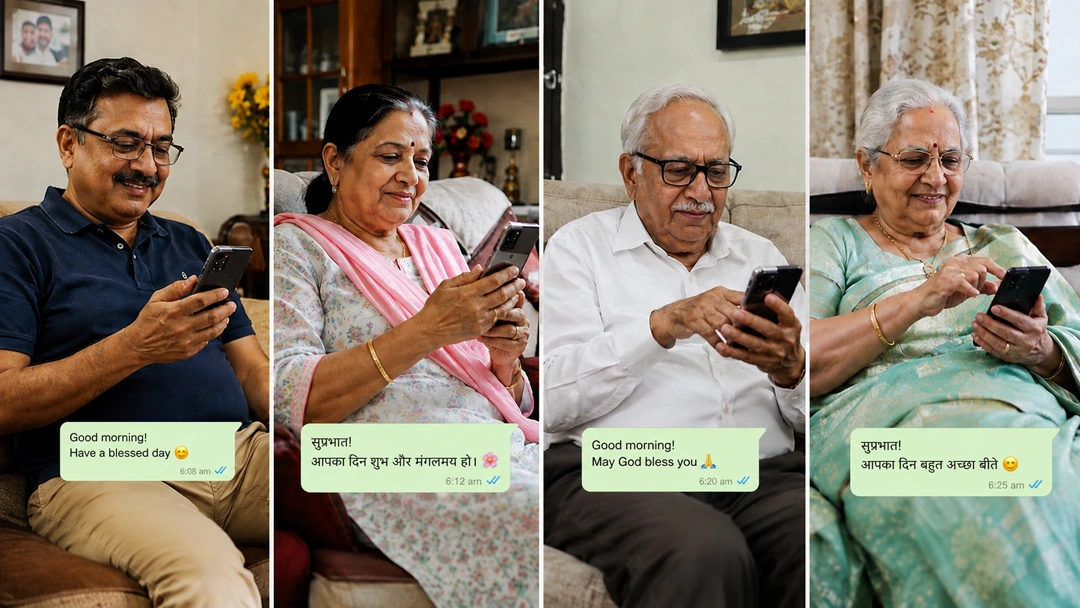
Indian family WhatsApp group mornings often begin before the kettle boils. The first message is usually a sunrise photo, a flower with glitter, or a ‘Good Morning’ written over a puppy. Then comes a prayer, then a motivational quote, then a forward about turmeric water or sugar control. Nobody asked for this package, yet it arrives every single day with confidence. The funniest part is that the sender usually believes they are giving peace.
The Love Hidden Inside The Spam
Indian family WhatsApp group spam is not always spam in the emotional sense. Often, it is a way older relatives say ‘I thought of you’. Many uncles and aunties were never taught the modern internet manners younger people expect. They use WhatsApp like they once used a family veranda. They walk in, place a message, and leave it there for everyone to see. The flowers are clumsy, yes, but they are also bids for attention.
Why Older Relatives Keep Sending Them
Indian family WhatsApp group habits come from a need to stay relevant in a changing family. When children move cities and grandchildren answer in emojis, a forward becomes a bridge. It is their way of saying that they are still part of your morning. In my Delhi home, my mother used to laugh at these messages, then quietly forward one to her sisters. The joke and the care are often the same thing.
When Political Forwards Start The Family Feud
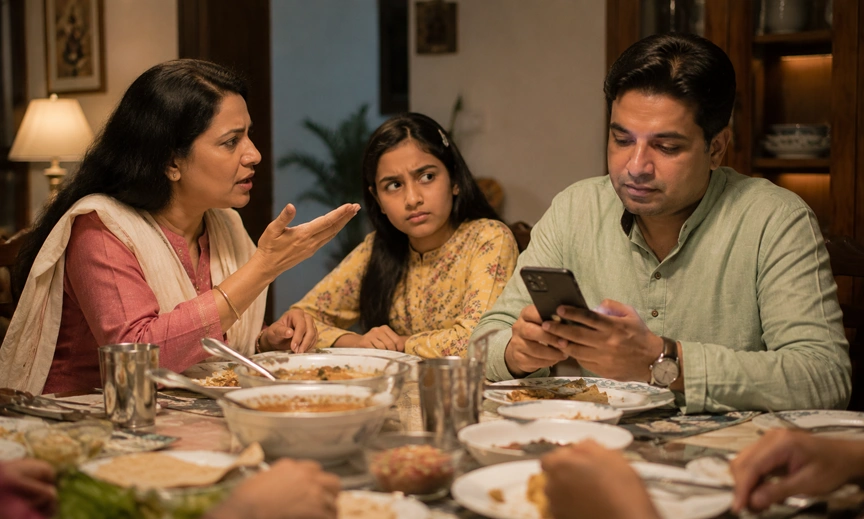
Indian family WhatsApp group peace can break in seconds once a political forward lands in the chat. Suddenly, the same people who were sharing wedding photos are debating history, taxes, and national pride. Every family has at least one member who believes the group is the perfect place for ideological correction.
Meanwhile, everyone else is just trying to eat breakfast in peace. The result is a familiar Indian chaos where nobody really wins, but everybody remembers the argument.
How A Small Message Becomes A Big War
Indian family WhatsApp group fights often begin with a single forwarded video or an aggressive slogan. One reply comes in with facts, another with sarcasm, and then an elder steps in saying ‘Please keep family group peaceful’. That sentence never ends the fight. It only pauses it until the next festival or election season. The argument is less about the topic and more about who gets to sound most certain in front of the whole clan.
Why We Keep Reading Even When We Hate It
Indian family WhatsApp group arguments are strangely addictive because they mix intimacy with conflict. You cannot ignore a fight involving your own uncle or cousin. You also cannot fully engage because you know you will see them at the next shaadi. That is why people read every message, roll their eyes, and stay silent. It is not courage. It is family management.
The Wedding Album Nobody Consented To
Indian family WhatsApp group wedding seasons can feel endless. One cousin gets engaged and the chat turns into an archive of 47 nearly identical photos. Then comes the haldi album, the mehendi album, the baraat album, and the post-wedding album with captions nobody will ever reread. The family does not just share the event. It documents itself in public, like it is trying to prove the love was real by quantity alone.
Why Weddings Become Digital Proof Of Belonging
Indian family WhatsApp group wedding spam is often less about vanity and more about inclusion. When an aunt sends every picture, she is saying ‘You were part of this too’. Even if you were not there, she wants the record to feel shared. In India, weddings are family memory factories. The chat becomes the place where that memory is assembled, forwarded, and re-forwarded until everyone has witnessed the same moment from twelve angles.
Delhi Life And The Album That Never Ends
Indian family WhatsApp group weddings have a special flavour in Delhi NCR, where every function feels one size larger than life. I remember one cousin’s wedding where my phone vibrated through dinner because three relatives were uploading the same stage photo at different times. Nobody said stop. We all just complained privately and kept opening the images. That is the pattern. We want the album, but not the flood.
Why We Complain But Never Hit Leave
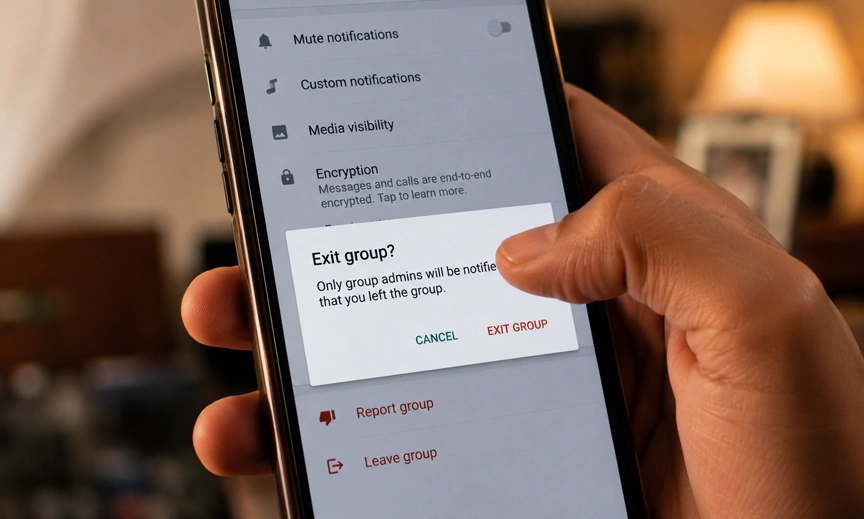
Indian family WhatsApp group annoyance is real, but leaving is rarely an option because the social cost feels too high. A family group is not a random office channel. It is tied to affection, duty, and reputation. If you leave, people notice. If you mute, nobody has to know. That is why muting has become the quiet compromise for millions of Indians who still want to be seen as present, even from a distance.
The Social Fear Behind The Exit Button
Indian family WhatsApp group leaving feels dramatic because Indian families read symbols carefully. An exit can look like anger, disrespect, or emotional withdrawal. Most people would rather tolerate twenty forwards than explain why they disappeared. The fear is not just of gossip. It is of becoming a story yourself. In family life, that is almost worse than the messages.
The Safety Of Silent Participation
Indian family WhatsApp group survival often depends on strategic silence. You skim, you react when necessary, and you never make your absence too visible. This is how many adults manage modern family life. They stay in the circle, but at a distance that protects their peace. It is a compromise, yes, but also a very Indian one.
The Silent Guilt Of Muting Your Own Family
Indian family WhatsApp group muting sounds practical, but it can carry a surprising amount of guilt. People worry that muting means they care less. It does not. It usually means they care enough to avoid becoming rude. The emotional burden is that you are still expected to know everything, reply fast, and be available when needed, while also ignoring the noise that is constant.
Why Muting Feels Like A Secret Crime
Indian family WhatsApp group muting feels sneaky because Indian families value responsiveness. When a message gets no reply, someone may ask later if you saw it. That tiny question can make you feel exposed. So even after muting, many people open the chat just to maintain the illusion of attention. It is exhausting, but also deeply familiar.
Boundaries Without Breaking Hearts
Indian family WhatsApp group boundaries work best when they are quiet and consistent. You do not need a speech. You can reply selectively, respond warmly to real news, and ignore the rest. In my Delhi life, I have found that families accept limited participation more easily than dramatic withdrawal. Respect often matters more than constant availability.
How These Groups Bridge Three Generations
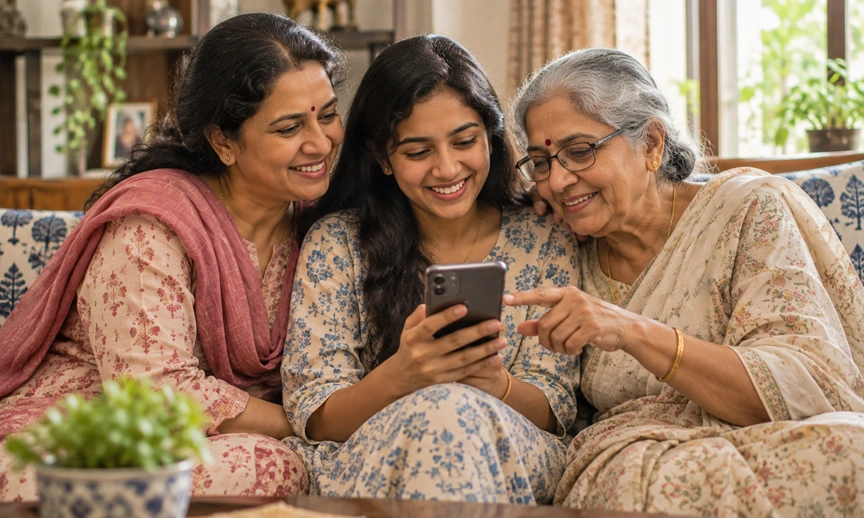
Indian family WhatsApp group life is one of the few places where grandparents, parents, and grandchildren all meet in one thread. The oldest members bring blessings and forwarded wisdom. The middle generation manages events and emergencies. The youngest respond with stickers, dry humour, or one-word answers. This creates friction, yes, but it also creates translation across generations.
Different Ages, Same Family Story
Indian family WhatsApp group messages reveal how each generation speaks love differently. For elders, love is checking in. For parents, love is coordinating. For younger people, love may look like reacting with a heart emoji and showing up when it matters. Nobody is entirely wrong. They are simply using different emotional languages. The group survives because it makes these languages visible in one place.
Why The Gap Sometimes Feels Smaller Online
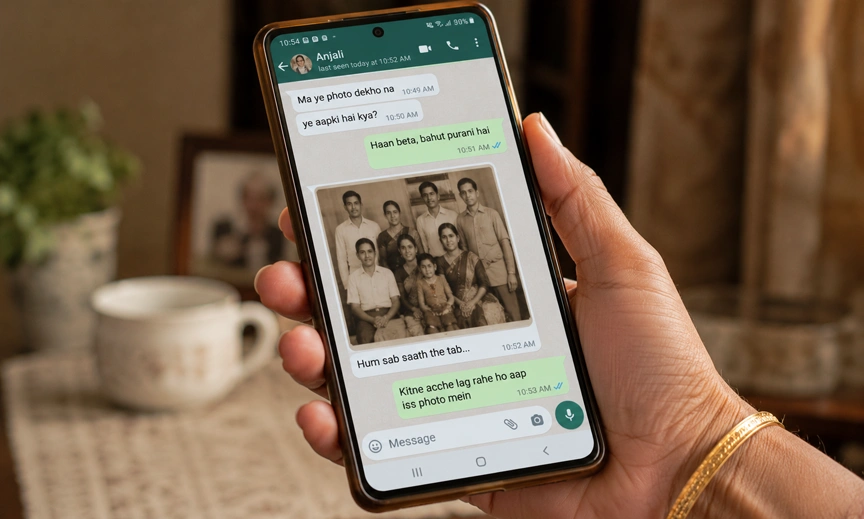
Indian family WhatsApp group chats sometimes make age gaps less intimidating. A shy grandson can speak through a meme. A grandmother can bless him with a voice note. A father who says little at home may become very active in the family thread. The screen removes some awkwardness and adds a little equality. That bridge is imperfect, but it is still a bridge.
The One Message That Actually Made Us Cry
Indian family WhatsApp group chaos can suddenly turn tender when one real message breaks through. It might be a hospital update, a job announcement, a pregnancy message, or news of a death. In those moments, the forwards stop mattering. The chat becomes what it was always secretly meant to be, a place where family gathers fast when life turns serious.
When The Group Stops Being Funny
Indian family WhatsApp group emotion becomes visible when someone shares vulnerability instead of noise. Then people who never talk much begin to type prayers, call immediately, or send practical help. The same relatives who were fighting over politics yesterday become the first ones to ask for blood donation or a hospital address today. That shift is why the group survives. It is not built only for entertainment. It is built for crisis.
Why We Remember The Serious Messages More
Indian family WhatsApp group memory tends to hold on to the emotional moments longer than the silly ones. Years later, we forget the quote forwards, but we remember the message that told us to come home, pray, or hold someone close. That is the hidden truth of the chat. Under the clutter, it keeps score of love.
What This Group Really Says About Indian Family
Indian family WhatsApp group behaviour says that Indian families are not neat, private, or silent. They are noisy, overlapping, affectionate, intrusive, and resilient. The chat exposes our contradictions better than any social study could. We crave closeness, yet need distance. We want freedom, yet fear exclusion. We mock the group, but we also depend on it for updates, care, and belonging. That is the Indian family in one notification window.
The Mess Is The Meaning
Indian family WhatsApp group life tells us that family is not only about harmony. It is also about endurance. The same chat that irritates you may one day be the first place people look for your news. That is why the mess matters. It keeps the relationship active, even when nobody is saying anything profound. In Indian homes, silence can be love, but so can a badly timed forward.
Why We Stay Anyway
Indian family WhatsApp group loyalty is not always romantic. Sometimes it is habit. Sometimes it is guilt. Often it is genuine love mixed with fatigue. However, staying means staying in the family story, with all its noise and warmth intact. And maybe that is the real lesson of these groups. They are not about perfect communication. They are about not disappearing from one another.
Frequently Asked Questions
Why Do Indian Family WhatsApp Groups Get So Many Forwards?
Indian family WhatsApp group forwards happen because many relatives use WhatsApp as a daily ritual, not just a communication tool. They share blessings, news, warnings, and opinions as a way of staying connected. For older family members, forwarding feels like participation. For younger ones, it can feel like overload, but the intent is usually inclusion, not irritation.
Is It Rude To Mute A Family WhatsApp Group?
Indian family WhatsApp group muting is usually not rude if you still respond when it matters. Most people mute to protect peace, not to reject family. The key is not disappearing completely. If there is a major update, birthday, or emergency, reply warmly. Muting is a boundary. Ghosting is what creates hurt.
Why Can’t I Leave My Family WhatsApp Group Without Drama?
Indian family WhatsApp group exits feel dramatic because families often read meaning into small actions. Leaving can look like anger, disrespect, or emotional distance, even if you just want quiet. That is why people usually choose muting instead. It preserves your peace while avoiding a family-level interpretation of your decision.
What Are The Most Common Types Of Family Group Forwards?
Indian family WhatsApp group forwards usually include good morning images, religious messages, health advice, political clips, wedding photos, and motivational quotes. Some are funny. Some are repetitive. Some are genuinely useful. The pattern reflects how different generations use the same chat for care, identity, and entertainment.
Why Do Older Relatives Send So Many Good Morning Messages?
Indian family WhatsApp group good morning messages are often a way for older relatives to start connection early in the day. Many do not see them as spam. They see them as affection, blessing, and presence. A flower image or prayer message is their way of saying they thought of you before breakfast.
How Do I Stop Political Arguments In A Family Group?
Indian family WhatsApp group political fights are hard to stop once they begin, so prevention works better than correction. Do not feed every bait. Reply late, stay neutral, or redirect to family news. If needed, privately message the most active person and ask them to keep the chat calm. Politeness works better than public confrontation.
Why Do Indian Families Create Multiple WhatsApp Groups?
Indian family WhatsApp group duplication happens because one group cannot carry every purpose. There is a group for close cousins, another for the extended family, and sometimes one just for events or travel. This reduces clutter and helps people share only what is relevant. It is a practical fix for a very emotional system.
Is Muting Notifications The Same As Leaving Quietly?
Indian family WhatsApp group muting is not the same as leaving. Muting keeps you present, even if silent. Leaving signals withdrawal and is usually noticed. If your goal is peace without drama, muting is the safer path. You remain part of the circle while reducing the mental noise.
How Can I Set Boundaries In A Family Group Without Offending Anyone?
Indian family WhatsApp group boundaries work best when they are gentle. Reply to important messages, ignore the rest, and avoid explaining yourself too much. If something truly bothers you, speak privately rather than in the group. Respectful consistency usually creates less friction than a big announcement about your limits.
Why Does Everyone Complain About The Group But Stay Anyway?
Indian family WhatsApp group frustration lives beside belonging. People complain because the chat is noisy, repetitive, and sometimes emotionally tiring. They stay because it also carries care, updates, and family continuity. The group is annoying and important at the same time. That contradiction is exactly why nobody really leaves.
Conclusion
Indian family WhatsApp group life may look like a comedy of forwarded flowers, political quarrels, and endless wedding pictures, but it is also a quiet record of how Indian families survive distance. In my own Delhi life, I have seen how these chats carry more than noise. They carry memory, obligation, affection, and the small daily proof that somebody still notices you. That is not trivial. That is family in the modern Indian shape.
I think we complain about the group because it interrupts our pace, but we stay because it interrupts loneliness too. It keeps cousins in touch, elders included, and family news moving across cities and generations. If you need healthier boundaries, muting is fine. If you need perspective, so is remembering that the same chat that annoys you may also be where your people show up first in crisis. That is why I do not see the Indian family WhatsApp group as a joke alone. I see it as a messy, living bridge.
If this feels familiar, send it to the cousin who always replies late and the aunt who sends the best blessings. Then read more family reflections like empty nest syndrome. In the end, the Indian family WhatsApp group stays because we stay, and we stay because the Indian family WhatsApp group still means home.