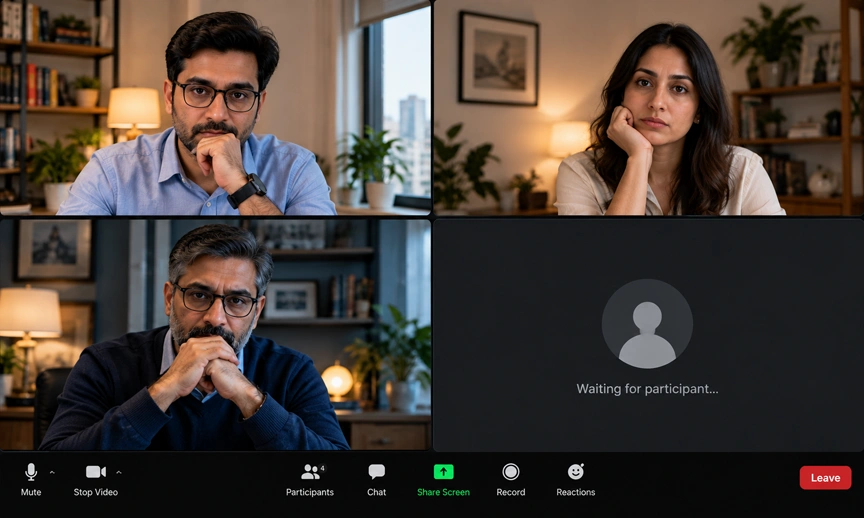
Hybrid work etiquette India is not the same as the polished advice you see floating around Western blogs. In Delhi, the rules are softer on paper and sharper in real life. A camera-off choice can read like indifference. A late-night WhatsApp can feel more binding than a calendar invite. And on a video call, the silence before a senior joins can say more than the meeting itself.
I have lived this shift from the inside, first as someone trying to look professional on Zoom while also navigating my own Delhi office habits, and then as someone watching how quickly trust gets built or broken in hybrid teams. Hybrid work etiquette India is really about reading signals correctly. It is about understanding hierarchy, timing, tone, and the strange gap between what is official and what actually runs the workplace. If you want the emotional side of that burnout, I have written about it here: burnout and hustle culture in India.
Moreover, hybrid work etiquette India is not only about not making mistakes. It is about saving your reputation in systems where managers still equate visibility with seriousness. I have seen people do great work and still look unreliable because they did not understand the unwritten code. That is why this guide is not generic. It is built for the way Indian offices actually work in 2026, with WhatsApp pings, camera pressure, status awareness, and quiet rules that nobody writes down but everyone notices.
Hybrid work etiquette India is usually learned the hard way because most onboarding talks stay formal and shallow. They tell you how to join a call, but not how to survive the social code around it. In Indian offices, people are expected to decode mood, hierarchy, and urgency from very small signals. A manager saying ‘join quickly’ can mean five different things, depending on who said it and when. That is why new employees often feel nervous even when they are doing fine.
Hybrid work etiquette India is learned by watching, not reading
Hybrid work etiquette India often gets passed through observation. You notice who speaks first, who waits, who keeps camera on, and who gets away with being informal. A fresh hire may think the meeting is about the agenda, but often it is also about posture, timing, and whether you seem invested. In many Delhi teams, people learn by copying senior behavior because nobody wants to appear too casual too soon. That creates anxiety, but it also creates a social ladder inside remote work.
Why the Indian office feels different on screen
Hybrid work etiquette India feels harder because the screen removes the small reassurances of a physical office. In person, you can smile, nod, or catch someone after the meeting. On video, silence looks heavier. If you are unsure, the gap becomes visible. The best move is not to perform confidence you do not have. It is to be clear, punctual, and respectful. That is what people remember long after the meeting ends.
Camera-On Culture and What It Signals
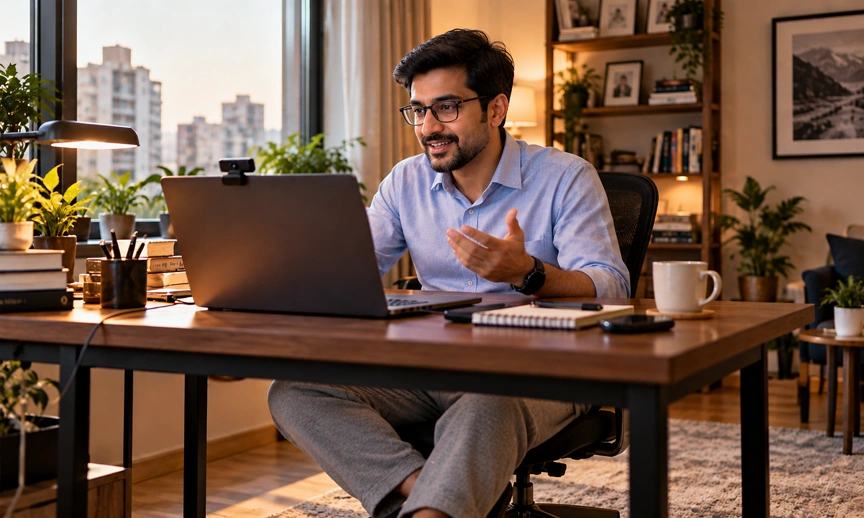
Hybrid work etiquette India has one rule that outsiders often miss: camera on is not just a technical preference. In many Indian workplaces, it is read as proof that you are present, serious, and not hiding. I know this feeling well. Once, during a long morning meeting in Delhi, I noticed everyone flicking their cameras on the moment a senior director entered. The call had been relaxed until then, almost sleepy, and suddenly every face sharpened. The shift was instant.
Camera on often means trust, not vanity
Hybrid work etiquette India treats visible presence as a trust signal. Leaders often assume that if they can see you, they can read your attention. That is why people keep their cameras on even when they are tired, dressed casually, or sitting in a noisy home. It is less about performance and more about reassurance. In India, especially in hierarchy-heavy teams, camera on says ‘I am here, I respect this call, and I am not treating it like background noise.’
When camera off becomes a problem
Hybrid work etiquette India does allow camera-off moments, but only when the context is right. If you join late, stay silent, and keep camera off through a discussion that matters, people may assume disengagement. That does not mean you must force your face on screen every minute. It means you should manage expectations. If bandwidth is weak, say so. If you need to switch off briefly, say why. Silence feels strategic in Indian offices, and that can work against you.
Why Leaders Still Do Not Trust Hybrid Work
Hybrid work etiquette India is shaped by one uncomfortable truth: many leaders still do not fully trust work they cannot see. They may say they support flexibility, but their instincts often remain old-school. In practice, they want movement, response, and visible busyness. A quick reply can matter more than a finished task. A camera on can matter more than a clean report. That is not ideal, but it is real.
Productivity anxiety is still very Indian-office specific
Hybrid work etiquette India lives inside a productivity anxiety that many managers inherited from office culture. They worry that if nobody is physically present, work will slow down or vanish. Some teams respond by tracking hours, response times, and attendance markers more than outcomes. If you want the broader mindset trap behind this, this guide on stopping procrastination helps explain why visible activity often gets mistaken for real progress. The key is to make your output easy to see.
How to build trust without overexplaining yourself
Hybrid work etiquette India rewards people who communicate early and cleanly. Share status before being asked. Send short updates. Confirm deadlines. Do not disappear for long blocks unless the team already expects it. Trust grows when your manager does not have to chase you. However, you should also avoid overperforming availability all day. That becomes its own trap and makes hybrid work feel like a surveillance room.
The Unwritten Rules of Video Call Hierarchy
Hybrid work etiquette India becomes most visible in video call hierarchy. The order in which people speak, the way they greet, and even when they unmute can change the whole mood of a meeting. In Indian teams, juniors often wait for a senior voice to enter first, even when the agenda is open. I have sat in calls where everyone was present, but nobody spoke until the oldest name on the screen arrived. The delay was not technical. It was social.
Why silence before the senior joins is so common
Hybrid work etiquette India follows a strong power-distance pattern. In simple terms, people are taught to defer upward. That is why employees wait silently until a senior joins a call. It is not laziness. It is caution. Nobody wants to accidentally start the meeting without the person who can approve, reject, or reshape the conversation. You can read more about that cultural concept here: power distance. Once you see it, the silence starts making sense.
How to join before a senior without looking rude
Hybrid work etiquette India says you can join early, but you should not act like you own the room. Keep your greeting brief. Wait a moment. Ask if you should hold for others. If the meeting starts informally, follow the tone carefully. In many Delhi offices, confidence is admired, but premature familiarity is not. The safest approach is respectful warmth. You are not shrinking yourself. You are showing that you understand the room you are in.
WhatsApp After Hours Nobody Calls It Work
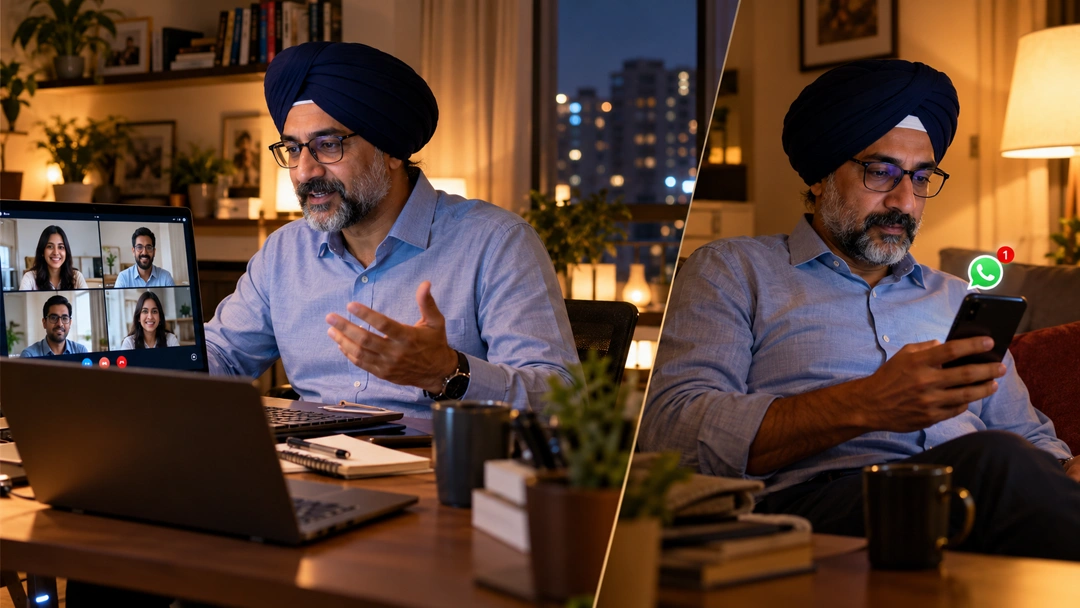
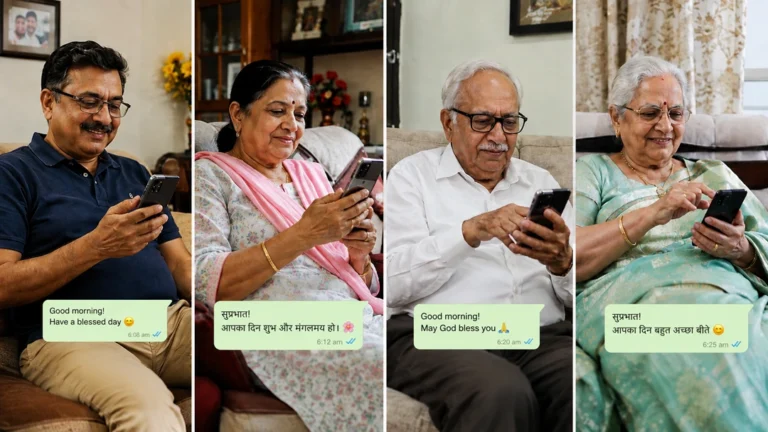
Hybrid work etiquette India has one of the least discussed realities of all: WhatsApp is often the real after-hours work channel. Officially, people say work ends at six or seven. Unofficially, the group chat keeps running. Someone forwards a file. Someone asks for a quick update. Someone says ‘just checking’. And suddenly the day is back on your shoulders. In Indian offices, this feels normal because the medium is casual, even when the demand is not.
Why WhatsApp feels more urgent than email
Hybrid work etiquette India turns WhatsApp into a pressure channel because it is personal, instant, and loud. A boss message on WhatsApp can feel harder to ignore than an email because it arrives in the same space as family plans, grocery lists, and friend updates. That is exactly why it can create guilt. If you reply immediately every time, you train the system to expect instant access. If you never reply, you may look careless. The middle path matters most.
Should you answer late night messages from your manager
Hybrid work etiquette India does not require you to answer every late-night WhatsApp message, but it does ask you to use judgment. If the message is urgent, respond. If it is informational, a reply in the morning is often enough. The real trick is consistency. If your team knows your working pattern, they stop assuming 24-hour availability. If you need boundaries, set them gently and repeat them. Most managers accept clarity better than silence.
Sir Maam Culture on Casual Internal Calls
Hybrid work etiquette India still carries a deep respect culture, even on supposedly casual internal calls. People may say ‘sir’ and ‘maam’ in meetings where Western workplaces would use first names only. This is not just habit. It is emotional insurance. It signals respect, reduces friction, and helps juniors avoid sounding too direct. In Delhi teams, I have heard even friendly managers get addressed formally when the stakes are high. The tone shifts faster than the topic does.
How informal is informal in India really
Hybrid work etiquette India uses informality carefully. A manager may say ‘call me by my name’, but the team may still avoid doing it too quickly. That is because workplace intimacy in India is gradual, not instant. On video calls, this becomes even more visible. A joke can be welcomed from one person and ignored from another. The lesson is simple: read the room, then lower the formality slowly rather than all at once. It saves embarrassment for everyone.
What to say when you do not know the right address
Hybrid work etiquette India gives you a safe path when you are unsure. Start with the more respectful version. Let the senior invite informality if they want it. That is safer than assuming closeness. If you are new, nobody expects you to be effortless. They expect you to be careful, attentive, and polite. In Indian offices, that usually reads better than forced coolness ever will.
What Changes When You Are the Senior One
Hybrid work etiquette India changes completely when you become the senior person in the room. Suddenly your pauses matter. Your jokes matter. Your camera habits matter. The things juniors read as small become signals of permission or pressure. I have seen meetings where one relaxed senior made everyone breathe easier, and others where one sharp comment froze the entire team. Leadership in hybrid work is not loud. It is atmospheric.
How seniors shape the hidden tone of hybrid work
Hybrid work etiquette India expects seniors to lower uncertainty. If you join late every time, others will wait nervously. If you answer messages instantly at midnight, you make that normal. If you speak only in criticism, you create fear. The best seniors are not the most visible. They are the most predictable. They set a rhythm that makes the team feel safe enough to work well without guessing every move.
Respecting boundaries without losing authority
Hybrid work etiquette India does not ask leaders to become soft in a vague way. It asks them to become clear. A senior who respects working hours, clarifies priorities, and does not create WhatsApp panic gains more trust, not less. People rarely leave because a leader was too calm. They leave because the system felt chaotic. If you are senior, your example becomes the etiquette.
What I Got Wrong Before Anyone Told Me
Hybrid work etiquette India was not something I understood instantly. I made the classic mistakes. I once thought keeping my camera off while multitasking was harmless. I also assumed a WhatsApp reply could wait until morning if the message did not look urgent. In Delhi offices, those choices can be read very differently from how you intended them. People were not offended in dramatic ways. They simply noticed. That is the part nobody warns you about.
The mistake of treating hybrid like remote abroad
Hybrid work etiquette India is not the same as the remote-work advice you read from American or European blogs. Those guides often assume flat hierarchy, low formality, and strong boundaries. Indian workplaces are more layered. A small delay can be interpreted as carelessness. A casual tone can feel like overfamiliarity. Once I understood that, I stopped trying to copy imported rules and started watching the actual room I was in. That helped more than any productivity hack.
What changed after I paid attention
Hybrid work etiquette India became easier once I stopped guessing and started noticing patterns. I learned to send cleaner updates, keep the camera on during key moments, and respect the invisible timing of seniority. I also became calmer because I understood that not every tense silence meant trouble. Sometimes it was just hierarchy speaking. That lesson alone saved me a lot of unnecessary anxiety.
The Rules Worth Actually Following
Hybrid work etiquette India is not about being perfect. It is about being readable in a system that depends on signals. If you want the short version, be visible when it matters, responsive when the message is truly urgent, and respectful of hierarchy without becoming stiff. That combination works better than trying to act like a Western remote worker in an Indian office. It also protects you from the most common misunderstandings.
How to protect your reputation without burning out
Hybrid work etiquette India should not become a 24-hour performance. You do not need to answer every ping in seconds. You do not need to keep your camera on for every minute. You do need to communicate clearly, set expectations early, and avoid disappearing in ways that force others to chase you. That balance keeps your name clean without turning your life into a nonstop office extension. If you struggle with overworking, the habits in this burnout piece may help you reset.
The simple checklist I wish I had earlier
Hybrid work etiquette India gets easier when you remember five things. Show up on time. Keep camera on for important calls. Respect senior cues. Use WhatsApp carefully after hours. And never assume silence means agreement. Those five habits will not make every office easy, but they will make you safer, calmer, and more credible. That is a real career advantage in India.
Frequently Asked Questions
Is it rude to keep your camera off during work calls in India
Hybrid work etiquette India does not make camera off automatically rude, but context matters a lot. If it is a short check-in, a bandwidth issue, or a low-stakes update, people may not mind. However, on important meetings, especially with seniors present, camera off can be read as low interest. If you need it off, say why briefly. Clarity prevents awkward assumptions and keeps trust intact.
Should you reply to WhatsApp messages from your boss after hours
Hybrid work etiquette India treats WhatsApp after hours as a gray zone, not a legal rulebook. If the message is urgent or tied to a live issue, reply. If it is just a non-urgent update, replying the next working morning is usually fine. The safest approach is consistency and context. If you want stronger boundary habits, this internal guide can help: stop procrastinating.
Why do Indian offices still prefer camera on for hybrid meetings
Hybrid work etiquette India often links camera on with presence, seriousness, and trust. Many managers feel more confident when they can see faces, especially in hierarchy-heavy teams. It reduces the fear that someone is multitasking, absent, or mentally checked out. This is less about surveillance in theory and more about reassurance in practice. In many Indian offices, visible attention still signals professional respect.
What is the etiquette for joining a video call before a senior
Hybrid work etiquette India says it is fine to join early, but do not take over the room. Greet politely, wait for the senior to arrive if the meeting is clearly hierarchical, and avoid forcing casual talk too soon. If the organizer has asked everyone to begin without waiting, follow that cue. The main thing is to avoid looking impatient, overly familiar, or unaware of rank.
Is it okay to ignore late night WhatsApp messages from your manager
Hybrid work etiquette India allows you to ignore non-urgent late-night WhatsApp messages, but not every message should be treated the same. If it concerns a deadline, a client issue, or tomorrow morning’s priority, a reply may be wise. If it is a casual note, morning is acceptable. The real skill is judging urgency without becoming permanently available, because that destroys boundaries fast.
Why do employees wait silently until a senior joins a call
Hybrid work etiquette India is shaped by power and respect. Waiting silently is often a way of showing deference and avoiding accidental disrespect. Employees may not want to start without the person who approves decisions or sets tone. It also prevents awkward small talk before the real agenda begins. This behaviour is common in many Indian teams and is usually not about shyness alone.
Do Indian companies track productivity during hybrid work
Hybrid work etiquette India often sits inside a stronger monitoring culture than many employees expect. Some companies track attendance, response time, task completion, and meeting presence. Others focus more on outcomes but still care about visible engagement. The exact system varies, but many workplaces still mix trust with observation. That is why reliable communication matters so much in hybrid settings.
What does power distance mean in Indian workplace culture
Hybrid work etiquette India is easier to understand when you know the idea of power distance. It means people in a culture often accept unequal power as normal, especially at work. In India, that can show up as deference to seniors, formal language, and hesitation to challenge authority openly. It does not mean people lack opinions. It means they often express them more carefully.
How should you address a senior on an informal video call
Hybrid work etiquette India suggests starting politely, even if the call feels relaxed. Use sir or maam if that is standard in your team, or use the title the person prefers. If they invite first-name use, you can follow that later. The key is not to force casualness because the call looks informal. Tone in India changes more slowly than the interface does.
What are the biggest hybrid work mistakes new employees make in India
Hybrid work etiquette India shows that new employees often make three mistakes. They assume camera rules are universal, they reply too casually or too slowly on WhatsApp, and they ignore hierarchy on calls. Many also overthink every message and end up sounding unsure. The best fix is to watch senior behavior, ask simple questions, and keep your communication clean. Indian hybrid work rewards awareness more than style.
Conclusion
Hybrid work etiquette India is really about understanding the hidden grammar of Indian offices. Once you see it clearly, the anxiety reduces. Camera on is not vanity. WhatsApp after hours is not just chat. Silence on a call is not empty. These are all signals, and they shape how your work is read long before your actual output is reviewed. I wish someone had explained that to me earlier, because I spent too long trying to fit foreign advice into an Indian reality that simply works differently.
What I have learned, living and working around Delhi, is that good etiquette here is not about being stiff or submissive. It is about being readable, respectful, and steady. You do not have to be available all the time. You do not have to overperform. But you do need to know what your office considers trust, what it considers delay, and what it considers carelessness. That awareness protects both your peace and your career. If you want to keep sharpening the practical side of your working habits, this internal guide may help too: burnout and hustle culture in India.
My honest advice is simple. Watch first. Then speak. Then set boundaries with respect. That is the safest path in most Indian hybrid teams, and it is the one that will save you from the mistakes that damage trust fastest. Hybrid work etiquette India is not glamorous, but it is powerful. Hybrid work etiquette India.