Indian snacks can mean a hot samosa with chutney, a plate of poha before work or jalebi still warm from the syrup. The same snack can taste quite different from one shop to the next. A vada pav’s heat might come from dry garlic chutney, while a kachori’s filling might be dal, onion or green peas.
Here are ten favourites you can order at a stall, pick up at a sweet shop or serve at home. Start with Mumbai’s vada pav if you want a substantial bite, Gujarati dhokla if you want something steamed, or Indori poha with jalebi if you want to try a savoury-sweet breakfast.
Ask when the next batch is coming out if you are after a crisp samosa or pakora. For bhel or golgappe, the equivalent is to have the vendor assemble it when you order. A plate meant to be eaten standing at a stall has different timing from a box of snacks for a train ride or an evening at home.
10 iconic Indian snacks and how to order them
1. Samosa
Split a hot samosa at the seam and you get two textures at once. The shell should crack, and the potato filling should hold together loosely enough to eat with the pastry. A familiar North Indian version uses spiced potato and sometimes peas. Fillings vary, so ask what is inside if that matters to you.
Order one straight from a fresh batch if you want to taste the shell on its own. Try it with coriander chutney for a herbal bite or tamarind chutney for something sweeter and sharper. For a more filling plate, order samosa chaat, where the pastry is broken up and topped with ingredients such as chickpeas, curd and chutney. Expect the shell to soften under those toppings.
2. Chaat, from bhel puri to dahi bhalle
Chaat is a family of dishes. Mumbai-style bhel puri uses puffed rice and sev for crunch, with chopped onion and chutney added to order. A spoonful that is mostly puffed rice will taste quite different from one that catches onion and tamarind together. Incredible India’s Mumbai food guide points to bhel puri as one of the city’s street snacks.
Eat wet bhel soon after it is mixed. If you are carrying it home, ask for the chutney on the side so the puffed rice stays crisp. For a softer chaat, try lentil dumplings dressed with chilled curd, roasted cumin and tamarind. PicknStory’s dahi bhalle guide explains how to keep the dumplings tender and when to add the toppings.
3. Pakoras with chai
An onion pakora has more ridges to crisp up than a flat potato slice. Brinjal turns soft inside its coating, while paneer keeps a firmer centre. Besan, or gram flour, is a common starting point for the batter, but seasonings and additions vary. If a vendor has several kinds, ask for a mixed plate and taste the onion one first while the edges are still crisp.
Pakoras are among the Indian snacks that are best eaten close to the kadai. If you make them at home, fry manageable batches and serve with masala chai or a green chutney. For takeaway, let steam escape before closing the container tightly. PicknStory’s monsoon pakora article looks more closely at the pairing with tea on rainy days.
4. Vada pav in Mumbai
A batata vada is a seasoned potato fritter in a besan coating. In vada pav, it goes into a soft roll with chutney. The potato can be fairly mild on its own. Dry garlic chutney, green chutney or a fried chilli on the side may supply most of the heat. Pav bhaji uses a similar roll, with a mashed vegetable preparation served alongside.
When comparing two vada pavs, pay attention to where the heat comes from and whether the bun still feels soft around the hot fritter. If you are sensitive to chilli, ask what has already gone into the potato and order the side chilli separately. Incredible India’s guide to Mumbai food covers vada pav alongside the city’s other local dishes.
5. Dhokla and khaman in Gujarat
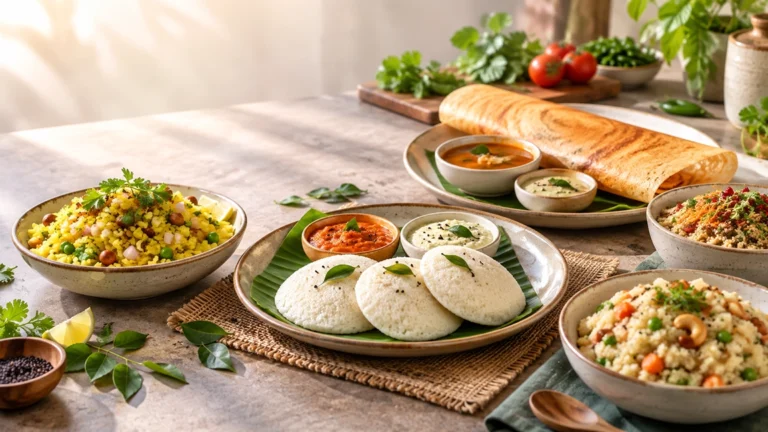
At a farsan shop, a menu may use “khaman dhokla” for yellow, spongy squares. Gujarat Tourism distinguishes gram-flour khaman from dhokla. Traditional dhokla can use a fermented rice-and-dal batter. For a 2026 example from Surat, see Sanjeev Kapoor’s sandwich idada, which uses rice, urad dal and thick poha. If the shop offers both, order a piece of each and compare the texture and sourness before adding chutney.
Mustard seeds and curry leaves can be part of the tempering. Coconut or coriander may appear on top. For a tea plate, serve the steamed pieces with green chutney and put a fried snack such as a samosa beside them. The soft, porous crumb takes up the tempering in a way a flaky pastry cannot.
6. Poha for breakfast
Poha here means flattened rice cooked as a savoury breakfast. The flakes soften with moisture and should stay distinct on the plate. A quick tempering may include mustard seeds and curry leaves. Peanuts, onions, potatoes and lemon can appear in home versions, depending on the cook. If you are preparing it yourself, check the thickness of the flakes before soaking. Thin ones soften quickly.
In Indore, ask for poha with sev and jeerawan, the tangy seasoning sprinkled over the top. Incredible India’s Malwa food guide describes the familiar combination of poha, sev and jalebi. A good way to taste it is to try the poha before squeezing in lemon or following it with a bite of jalebi.
7. Aloo tikki on the tawa
Aloo tikki is a potato patty browned on a tawa or in a shallow pan. The outside should hold its shape when you cut into it. The centre can be plain seasoned potato or, in some versions, contain a filling. Ranveer Brar’s aloo tikki recipe gives a starting point if you want to try the pan-fried version at home.
Order it plain with chutney if you want to judge the crust. As tikki chaat, it can arrive split open and dressed with curd and tamarind, or alongside chickpeas. If a stall sells both tikki and samosa chaat, order whichever base you prefer. The tikki gives you crisp browned potato. The samosa contributes a flaky pastry shell.
8. Kachori with lentil, onion or pea filling
A kachori is a round filled pastry with a crust that flakes when you break it. The filling tells you more about what you are ordering than the shape. Try a spiced dal filling for a drier, crumbly centre or pyaaz kachori for a more substantial onion filling. Incredible India’s Jodhpur guide includes pyaaz kachori among the city’s snacks.
Indore has its own variation. The Indore street-food guide describes batla kachori filled with green peas. Break open a hot kachori before spooning on chutney so you can see how much filling it has and let trapped steam escape. Serve it with chutney on the side if you want the pastry to stay crisp.
9. Jalebi, warm from the syrup
Jalebi is the sweet entry on this list of Indian snacks. A batter, often wheat-based, is piped into spirals, fried and dipped in sugar syrup. Thin loops give you more crisp edge. Thicker crossings can hold extra syrup. If you have a choice at the counter, ask for a small portion from the most recent batch and taste it while it is still warm.
In Indore, order it with poha for breakfast. For a festive pairing in Gujarat, try it with crisp fafda. Gujarat Tourism describes fafda as a gram-flour snack particularly associated with Dussehra. At home, a plate of jalebi can follow a savoury tea spread. Keep the syrup away from the fried snacks until you serve.
10. Golgappe, pani puri and puchka
The thin hollow puri gets cracked open, filled and dipped or topped with seasoned water. Across regions you may hear golgappe, pani puri or puchka, and the names can signal a different filling or a different balance of sweet, sour and hot. Potato and chickpeas are common options. Ask what the vendor puts inside rather than assuming your usual order will taste the same.
Eat each puri as it is filled, before the shell softens. If you are unsure how hot the pani will be, ask to start with a milder one. At home, keep the puris, filling and pani in separate dishes and let people assemble their own. Use safe drinking water for the pani and any ice, and keep the prepared filling covered and chilled until serving.
How to taste Indian snacks in one market stop
If you are sharing, order one portion first. Some vendors serve pieces by number, while a plate of chaat may already contain enough for two people to sample. Ask what comes with it and whether the chutney is mixed in. Then split one hot item at the counter and save room for something with a different texture.
Mumbai for bread, crunch and chutney
Start with vada pav while the potato fritter is hot. Follow it with a small bhel so you can compare the dry garlic chutney on the pav with the tamarind and fresh onion in the bhel. If you order both at once, ask for the bhel to be mixed after the vada pav is ready. Once the chutney goes in, the puffed rice starts to soften.
Indore for breakfast and a pea-filled pastry
Order a small poha with sev and a jalebi. Take a bite of the poha on its own, then try it with the sweet spiral. If you have time for a second stop, ask whether the kachori is filled with dal or green peas. A pea-filled batla kachori adds something different to a breakfast that already has a fried sweet.
Gujarat for steamed farsan and a sweet finish
At a shop that serves both khaman and dhokla, ask for a small piece of each before ordering a box. Taste the plain corner first, then add chutney. If the counter also has fafda and jalebi, share that pairing while the fafda is crisp. It gives you two distinct ways to start tasting Indian snacks in Gujarat.
Buying Indian snacks in 2026
In September 2026, FSSAI and the Brihanmumbai Municipal Corporation held a street-food safety training session in Andheri for about 50 vendors. It covered clean preparation areas, safe storage and serving. A separate 2026 registration reform treats street vendors registered with eligible municipal bodies or Town Vending Committees as registered with FSSAI. Registration and training describe the vendor’s status or participation. Look at how the food is handled at the stall you visit.
The FSSAI Clean Street Food checklist covers potable water, hygienic handling and clean equipment. Look for protected ingredients and clean serving utensils. For golgappe, check the water source if you are unsure, and choose a freshly cooked item such as samosa or tikki if you cannot verify it. For curd-based chaat, look for curd kept chilled until serving.
A snack plate for sharing
For a tea spread of Indian snacks, pick one hot item, one item you can serve without frying at the last minute, and a small sweet. Samosas, dhokla and jalebi work together because the pastry, steamed crumb and syrupy spiral each give the plate a different texture. Put green and tamarind chutneys in separate bowls so guests can adjust their own portions.
If you are setting out golgappe or bhel instead, lay out the dry components first and bring the chilled ingredients out near serving time. Small batches stay crisp longer. For a larger festive spread, PicknStory’s make-ahead Diwali sweets guide offers ideas that leave the stove free for the snacks you want to serve hot.
Packing Indian snacks to take home
Tell the vendor how soon you plan to eat. For a short walk home, ask for samosas, kachoris or pakoras in a paper bag or a box that lets steam escape. Keep wet chutneys in separate containers and ask the vendor to pack jalebi on its own. Sticky syrup can soften the dry snacks before you get the box open.
For Indian snacks that are assembled at the counter, buy the components separately if the shop offers that option. Keep the bhel’s puffed rice and sev dry. For golgappe, carry the puris in a rigid container so they survive the trip, then add the filling and pani when everyone is ready to eat.
If you are picking up chilled chaat for later, make it your last stop before going home and refrigerate it promptly. For a longer outing without a way to keep it chilled, choose Indian snacks you can serve promptly or buy the chilled portion closer to mealtime. When sharing with a group, keep dahi on the side and serve each chutney with its own spoon.
FAQs about Indian snacks
Which Indian snacks are steamed or cooked with a tempering?
Dhokla and khaman are steamed. Poha softens with moisture and is typically tossed with a cooked tempering. If your aim is to avoid deep-frying, start with one of those dishes and ask what comes on top. Sev, fried chilli and other garnishes can change the dish you actually eat.
Can I make Indian snacks ahead of time?
For bhel, store the puffed rice and sev dry and add dressings at the table. For golgappe, prepare the puris, filling and pani separately. For a hot snack, finish cooking close to serving time so the crust stays crisp. Keep moist fillings and curd chilled until needed.
Which of these Indian snacks can be vegan?
Potato samosas, onion pakoras and bhel can be made without animal products. Ask about ghee in the pastry or frying fat, and about curd in chaat. Besan batter may cover a vegetable or paneer, so check the filling too. For vada pav, check the bread and whether it has been buttered.
Can I order these Indian snacks without wheat?
Plain poha and some besan-based Indian snacks can be made without wheat. Ask the cook about batter blends, seasonings, toppings and shared frying oil. Pav and many samosa, kachori and golgappe shells contain wheat. If you need to avoid gluten strictly, use a kitchen that can confirm ingredients and explain how it prevents contact with wheat.