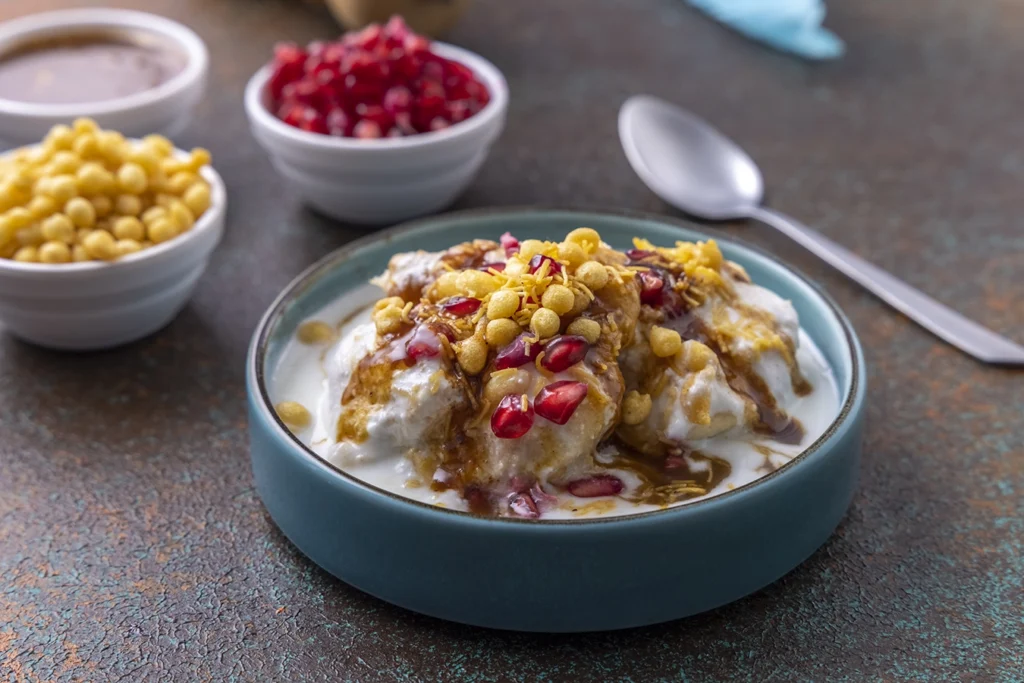
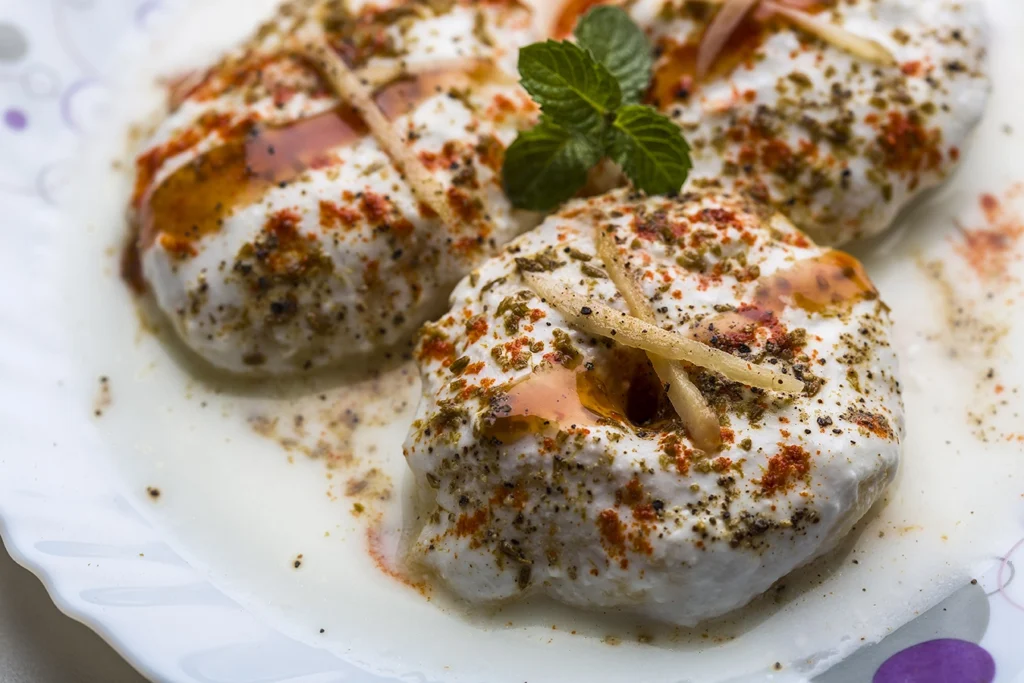
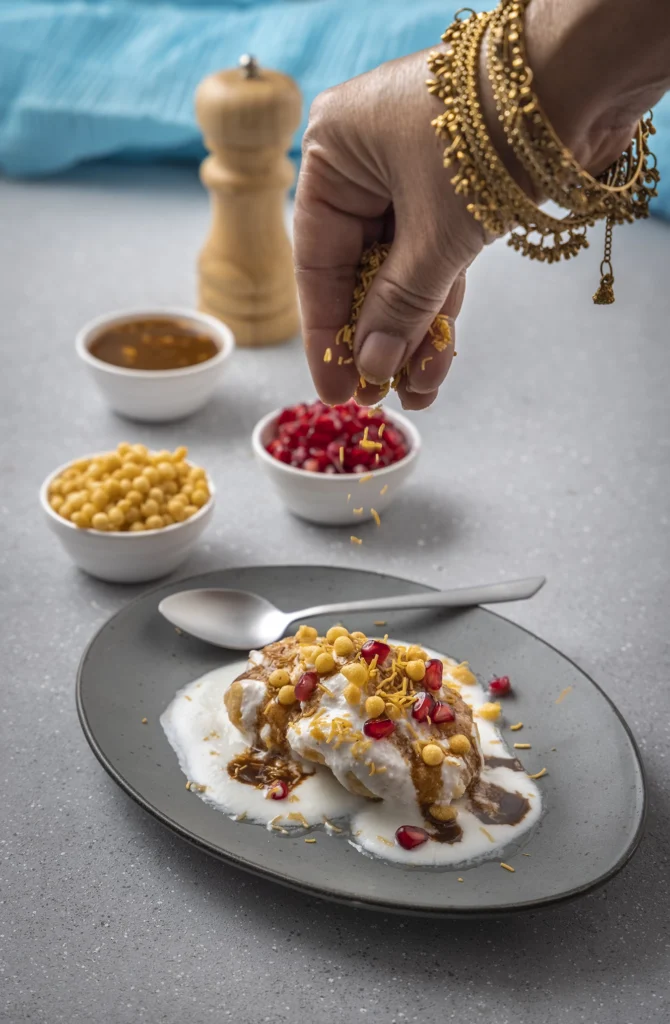
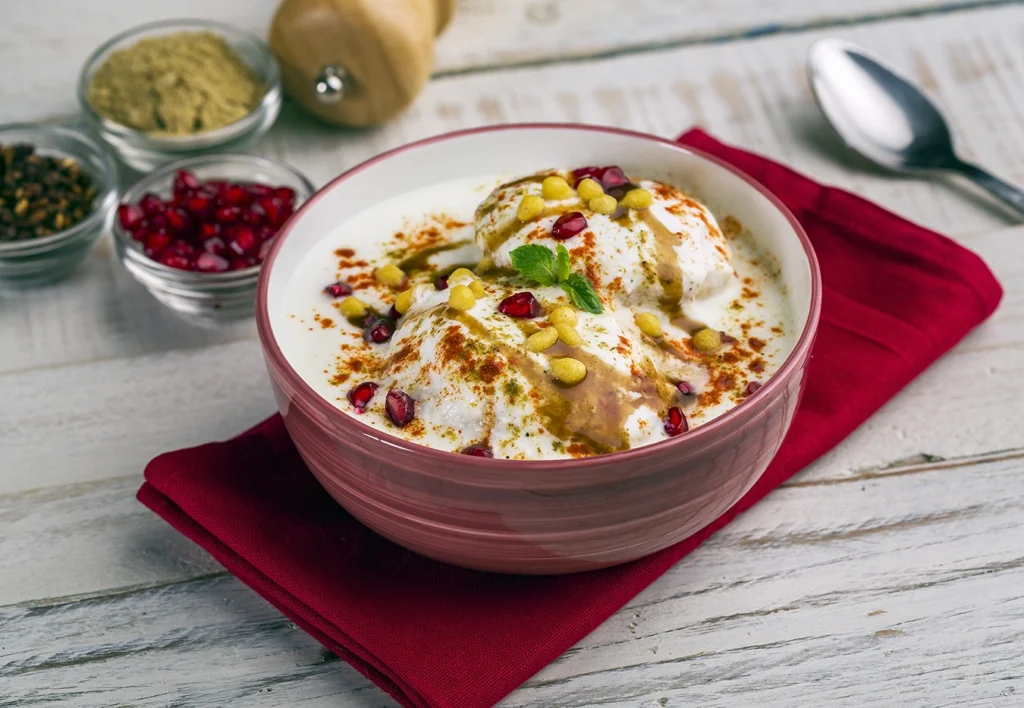
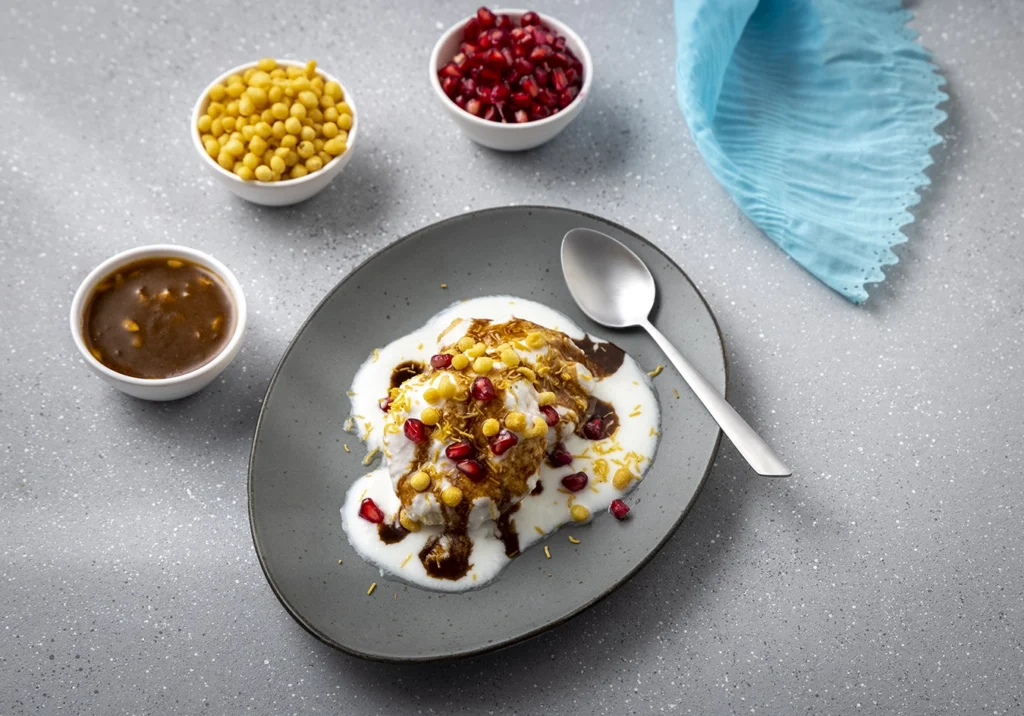
Dahi bhalle starts with a simple contrast: soft urad dal dumplings under cold, whisked dahi, finished with sweet tamarind and roasted cumin. Make one tray of bhalle and you can serve eight different bowls from it. Keep one classic, then try the others with toppings such as mint, mango, ginger or smoky chipotle. The dumplings stay the same, so there is only one batch to fry.
In the Punjabi-style chaat in this article, the bhalla is a fried lentil dumpling that is softened in water before it goes under the dahi. The same family of dishes is often called dahi vada. Names and toppings vary by region and household. Some bowls are little more than dumplings, curd and spice. Others include papdi, chickpeas or potatoes. This guide uses the simpler bowl so the eight toppings can be compared easily. Navdanya’s collection of Indian pulse recipes includes a version with cumin, ginger and green chilli in the batter.
How to make a classic dahi bhalle base
Start with a cup of split, skinless urad dal, also sold as dhuli urad. Set out about two cups of plain unsweetened dahi, plus salt, roasted cumin powder, sweet tamarind chutney, green chutney and a neutral frying oil. Sanjeev Kapoor’s recipe uses two cups of yoghurt for one cup of dal. Treat that as a shopping guide and adjust to the size of your dumplings and the amount of dahi you like on each plate. A little ginger and green chilli can go into the batter if you want the dumpling itself to have some heat. The quantities for the eight toppings below are starting points for two bhalle. Spoon on more dahi if the dumplings are large.
Rinse the dal and soak it until the grains soften enough to grind smoothly. If you are soaking overnight, cover the bowl and keep it in the fridge. Drain well before grinding. Add water a spoonful at a time if the blades stall. The paste should mound briefly on a spoon. If it pours like dosa batter, it will be harder to shape in the oil.
Transfer the paste to a bowl and beat it until it looks lighter. Work the spoon or whisk through the whole bowl, including the thicker paste at the bottom. A food processor can grind the lentils, but beating the ground paste separately gives you a chance to check the texture before you fry.
Fry one bhalla and check the centre
Drop a small spoonful into hot oil and fry until golden and cooked through. Split this first one open. If the outside browns before the centre cooks, lower the heat and try a smaller spoonful. If the batter spreads on contact, check its consistency and let the oil recover its heat before adding the next one. Fry in small batches so you can turn and lift the bhalle without crowding the pan.
Soften the bhalle before adding dahi
Transfer the fried bhalle to warm drinking water and let them soften. Press one lightly between your palms. If the middle still feels firm, give it a little more time. Lift the softened bhalle and press out excess water gently. Stop while they still hold their shape. Water left in the dumpling will dilute the dahi, so this step matters as much as choosing a thick curd.
Whisk plain chilled dahi until smooth. If it is thick enough to sit in clumps, loosen it with a little cold drinking water. It should coat the back of a spoon and still flow over the dumplings. Taste the dahi and chutneys together before salting the whole batch. Black salt, chaat masala and packaged chutneys can each bring enough salt on their own.
Eight flavours to try
Each combination starts with two softened bhalle and enough chilled dahi to cover them. Add chutneys a teaspoon at a time. The strength of shop-bought imli or green chutney varies, so taste a spoonful with dahi before dressing the whole plate.
1. Punjabi-style tamarind and cumin
Spoon a teaspoon each of sweet tamarind chutney and green chutney over the dahi. Finish with roasted cumin and a pinch of red chilli powder. Taste one bite with both chutneys before adding black salt. This is the bowl to make first if you want a reference for the other versions. It gives you the tartness, sweetness and heat that the fruitier and smokier combinations play with.
2. Mint, coriander and lemon
Whisk a teaspoon of mint-coriander chutney into a spoonful of dahi, then streak it over the bowl. Add a few drops of lemon if the curd is mild. When the chutney is already sharp, finish with mint leaves alone. This is a useful option if you want the herbs to come through clearly without adding a sweet sauce.
3. Pomegranate and papad
Scatter a tablespoon of pomegranate arils over the dahi, then crumble a small piece of roasted papad on top just before serving. Use cumin and a light drizzle of tamarind chutney. Papad softens quickly once it touches the curd. For a gathering, put it in a dry bowl beside the platter so guests can add it at the table.
4. Mango and ginger
Dice a tablespoon of firm ripe mango and mix it with a little freshly grated ginger. Spoon it over the dahi and add a small drizzle of tamarind chutney if the fruit is very sweet. If you are using tart raw mango, grate a smaller amount and taste before adding the tamarind. Both versions work best when the fruit stays in small pieces, so it comes through in individual bites.
5. Cucumber and dill
Dice a little cucumber, pat it dry and fold a pinch of chopped dill into a spoonful of dahi. Add the cucumber just before serving. Mint works if dill is hard to find. Keep the roasted cumin and taste before adding lemon. Dill is easy to find in many supermarkets outside India. Start with a pinch, since its flavour becomes more noticeable once it sits in the dahi.
6. Avocado and chipotle
Mash a tablespoon of ripe avocado with a squeeze of lime and a small dab of chipotle sauce. Spoon it alongside the dahi so you can pick up both in one bite. Chipotle sauces range from mild and salty to quite hot. Start with a few drops and increase after tasting. Make this topping close to serving to keep the avocado fresh-looking.
7. Chilli, ginger and crisp sev
Slice a little ginger into fine matchsticks, add a few drops of lime and let it sit while you plate. Sprinkle the ginger and a small handful of fine sev over the bhalle just before eating. Add green chilli only if the table wants the extra heat. Serve the sev separately at a buffet. Check the ingredient list if you are cooking for guests with a wheat or other food restriction.
8. Coconut dahi, coriander and tamarind
Use plain unsweetened coconut yoghurt in place of dairy dahi. Whisk it first and season it with roasted cumin. Finish with coriander and a small drizzle of tamarind chutney. Check that the batter, chutneys and toppings also meet your guests’ dietary needs. If the yoghurt already has a pronounced coconut flavour, taste it with the tamarind before adding a second chutney.
How to serve several dahi bhalle flavours from one batch
For three flavours, divide the softened dumplings among three shallow dishes. Cover each with plain seasoned dahi so you can finish them individually. Put the tamarind and cumin on one dish, mint on the second and a dry topping such as papad on the third. Keep a small spoon in each chutney so guests can control the heat and sweetness.
If you want to offer all eight, serve one bhalla per tasting bowl and start with roughly half the topping suggested for a two-bhalla portion. Label the chipotle bowl so guests can spot the hotter option, and use a separate serving spoon for the coconut version. Hold the avocado and the crunchy toppings until the last minute. If the dahi thins as it sits, spoon a little freshly whisked dahi over the next portions just before serving.
For a meal with several dishes, plan fridge space before making dahi bhalle. Two shallow containers are easier to chill and serve from than one large platter. If you are also preparing dessert for a gathering, see PicknStory’s guide to making Diwali sweets ahead for ideas you can prepare on a separate schedule.
Make ahead and serve cold
For a party, prep the chutneys, roast the cumin and chop sturdy toppings separately. Cool cooked bhalle promptly and refrigerate them covered. Keep the dahi cold and assemble small plates as needed. It helps to divide the dumplings and curd between two containers, so you can put the first tray out and leave the next portion in the fridge. Keep papad and sev dry until they’re needed. When transporting the dish, pack the cold components in an insulated bag with ice packs and assemble at the destination.
Keep perishable components refrigerated at about 4°C or colder. As a practical household buffet rule, discard perishable food left out without temperature control for more than two hours, or one hour when it is above about 32°C. On a hot day, set a small serving bowl over ice and swap it for a fresh chilled batch when it runs low. Use a fresh serving spoon with each batch. FDA guidance for home buffets explains the time and temperature limits.
Ingredient swaps and dietary needs
Plain dahi is the easiest starting point. Thick Greek-style yoghurt can work if you whisk in a little cold water. Set curd varies in tang and thickness, so season a small spoonful before adding salt or sweet chutney to the rest. For a dairy-free bowl, choose unsweetened plant-based yoghurt and check the full ingredient list if you are catering for a milk allergy. Keep separate utensils for the dairy-free portion when preparing both versions together.
Urad dal is the usual base. A gluten-free serving also depends on the rest of the plate and how you prepare it. Check compounded hing, packaged chutneys, spice blends and crunchy toppings for wheat or cross-contact information. Use clean utensils and oil that has not been used for wheat-based foods when preparing a gluten-free portion. For more on how cross-contact can occur, see the FDA’s gluten-free guidance. For a separate look at plain curd and nutrition, see PicknStory’s guide to curd and weight loss.
Conclusion
Serve the classic tamarind-and-cumin version alongside two bowls with clearly different toppings. Pomegranate and papad add crunch, while cucumber and dill give guests a milder option. Keep a portion of plain dahi and bhalle in the fridge so the next round can be dressed to order.
FAQs
Why are my bhalle hard in the middle?
Start with the batch you just fried. Split one to check whether the centre has cooked through. Next time, try a smaller spoonful, grind the soaked dal more evenly and beat the paste before frying. Once the dumplings are cooked, give them time to soften in warm water before pressing and dressing them.
Can I make dahi bhalle the day before?
Yes. Make the bhalle a day ahead, cool them promptly and refrigerate them covered. Keep the dahi and chutneys separate. When you are ready to assemble, check one dumpling after softening and pressing it. If the centre is still firm, give the rest more soaking time before adding the dahi. Return the assembled platter to the fridge if you are serving later, and add the crunchy toppings at the table.
What if the dahi is too sour?
Taste the dahi with the chutney you plan to use. A little sweet tamarind chutney can balance a tangy curd. If the curd dominates even with chutney, mix it with some milder plain yoghurt. Adding more water alone can make the bowl thin.
Can I freeze dahi bhalle?
If you are making a batch ahead to freeze, freeze the plain cooked dumplings separately. Thaw them in the refrigerator and add fresh dahi and toppings when serving. Assembled bowls are better refrigerated and eaten promptly because the curd and crunchy toppings can change texture in the freezer.
What goes well with a plate of dahi bhalle?
Try mint chaas with the classic bowl or serve it as a starter alongside a meal. For a chaat spread, offer papad and sev separately so guests can choose how much crunch to add.