Kargil Vijay Diwas is not just a date on the calendar for me. It quietly changes the mood of a home, a newsroom, and even a Delhi evening tea conversation. I still remember the solemn tributes on the radio and the patriotic posts flooding every feed, but many of those posts repeat the same neat story without checking the facts underneath it. That is why this piece exists today, written with care and with research. Kargil Vijay Diwas deserves more than copied captions and half-remembered claims.
If you have ever wondered why the Kargil War still feels emotionally raw in India, you are not alone. Living in Delhi, where military memorials, school assemblies, and family conversations often bring history close, the real story feels more layered than the tribute version. Some popular claims flatten it into a simple tale of militants versus soldiers. Others treat it as a full conventional war in the same sense as 1971. Both framings miss important details, and this piece corrects five of them, with facts rather than slogan energy.
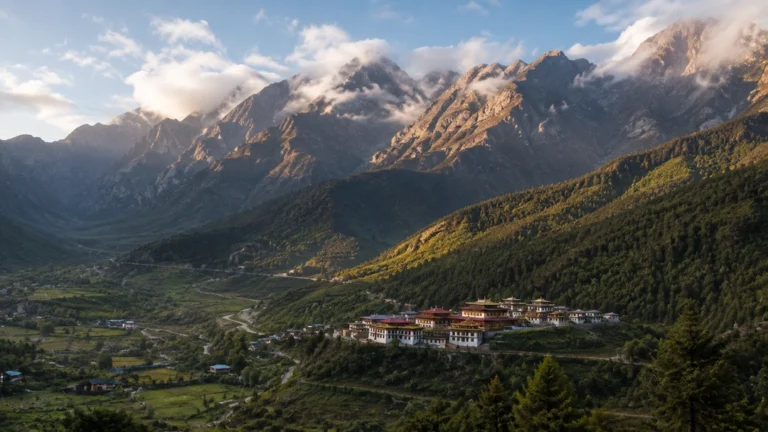
If you want the gentler landscape behind this harsh history, this Kashmir travel story offers that context. But here, the focus stays on the facts, because memory hardens into myth quickly, and once a myth goes viral, it can drown out the actual bravery, the command decisions, and the diplomacy that shaped the outcome. That is where this begins.
Kargil Vijay Diwas began in public memory with a very simple story, and that simplicity is where the trouble starts. The common myth says India was attacked by vague “intruders” and the rest played out in a straightforward sweep. In reality, the initial confusion came from how the heights were occupied, how reports trickled in from the ground, and how hard it was to tell exactly who held those ridgelines. Even the documented timeline of the Kargil War shows this took weeks to clarify, not hours. This day deserves a cleaner reading than the one-line social media version most people carry around.
Why the First Reports Were Confusing
The event is often remembered as if the enemy was obvious from day one. However, the first Indian reports in early May 1999 did not instantly reveal a clear picture. The rugged terrain, the altitude, and the unusual positioning of the infiltrators made it difficult for local patrols to understand the scale of what they were facing. That confusion is documented history, not a failure to acknowledge. It explains why the campaign unfolded in phases rather than one dramatic sweep.
The Public Story Versus the Real One
Kargil Vijay Diwas became a national symbol quickly, and symbols always simplify. In Delhi, this pattern shows up with many national events: a complex history gets compressed into a tribute line because it travels easier on social media. The stronger truth is that India won not through easy storytelling but through hard mountain fighting, intelligence work, and disciplined escalation control. That is a far more durable lesson than any slogan.
Who Were the Infiltrators Really
Kargil Vijay Diwas is where one of the biggest myths needs direct correction. The infiltrators were not mainly untrained militants wandering in from nowhere. Multiple declassified and widely cited accounts point to regular Pakistan Army soldiers, including Northern Light Infantry personnel, occupying the heights with limited identifying insignia. That distinction matters, because the nature of the operation changes once you understand who was actually present on those ridgelines.
Regular Soldiers, Not Random Militants
The event is often simplified into a battle against militants. That framing is inaccurate. Pakistani regulars and Northern Light Infantry elements were central to the operation, supported by logistics chains built for a state-backed campaign, not a loose insurgent adventure. Military analysts treat Kargil as a cross-border intrusion backed by organized force. Words matter here, because they shape how we understand intent, planning, and accountability decades later.
Why This Misconception Still Spreads
The militant narrative sounds cleaner and morally simpler, so it survives in speeches, school lessons, and forwarded messages. The soldier reality is harder to sit with, especially given the wider India-Pakistan history. Understanding the war honestly means accepting it was a regular military challenge carried out under deceptive conditions. That is the fact many Indians still get wrong, and correcting it changes nothing about the courage shown in response.
Tiger Hill and the Kargil Vijay Diwas Recapture Timeline
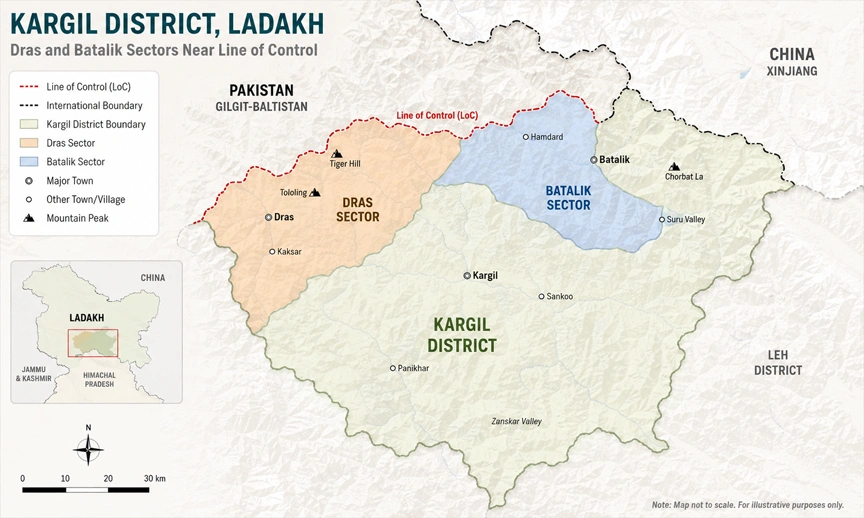
No account of Kargil Vijay Diwas is complete without Tiger Hill, which became the face of India’s mountain counteroffensive during Operation Vijay. It was not just a peak. It was a strategic vantage point controlling observation and movement over crucial routes. The fight there was intense, high altitude, and costly, and the timeline behind its recapture shows how difficult that result actually was.
The Timeline Was Not Instant
Tiger Hill is sometimes narrated as though it fell in one heroic rush. That is not accurate. The battle involved weeks of reconnaissance, artillery preparation, climbing in brutal weather, and repeated assaults before Indian forces retook the positions systematically. The recapture happened only after sustained effort, not a single headline moment, which is exactly what makes the achievement remarkable rather than simply dramatic.
What Tiger Hill Symbolised in India
Tiger Hill became linked to national confidence because once Indian forces recaptured key heights, public morale rose sharply. In Delhi, the way people discussed those reports felt like the whole city was holding its breath with every update. The significance was not only tactical. It was emotional, showing that mountain warfare could be won with patience, planning, and extraordinary endurance.
Why Some Call It Not a War
Kargil Vijay Diwas is officially a day of victory remembrance, but some scholars and military historians still use the word conflict rather than full-scale war. That is not disrespect toward the soldiers who fought. It is classification. Wars can be declared, limited, undeclared, conventional, or hybrid, and Kargil sat in a difficult middle space with restricted geography and strong pressure to avoid wider escalation.
Conflict, War, and Political Limits
Kargil Vijay Diwas sits in a tense category because both countries had nuclear capability by 1999, and that changed how decisions got made. The operation was severe, but India had to respond carefully to avoid widening the battlefield beyond the Kargil sector. That restraint is one reason some analysts avoid the term full conventional war. Conflict, in this framing, reflects a limited, geographically concentrated episode with major political consequences, not a downgrade of what soldiers faced on the ground.
Why the Language Still Matters in 2026
Language still shapes public memory today. Calling everything a war can obscure the diplomatic restraint and altitude-specific tactics that defined the response. Calling it only a conflict risks understating the sacrifice involved. The honest answer sits between the two labels: a fierce, limited, war-like confrontation, and that distinction helps explain both the battlefield and the statecraft behind it.
The Diplomatic Endgame Behind Kargil Vijay Diwas
The story is often remembered through soldiers alone, but the endgame was deeply diplomatic too. On 26 July 1999, India announced the completion of Operation Vijay after Pakistan withdrew its forces and India regained the occupied positions. That date is the reason this remembrance day falls on July 26 every year, and the battlefield victory worked in tandem with sustained diplomatic pressure.
How Pressure Built on Pakistan
The intrusion turned into a political test for Pakistan as international pressure mounted steadily. India made its case that forces had crossed the Line of Control, and diplomatic engagement, particularly with the United States, raised the cost of continued occupation. The withdrawal was not accidental. It followed sustained military resistance paired with diplomatic isolation on the world stage.
Vajpayee’s Careful Balance
This chapter also belongs to Atal Bihari Vajpayee’s political leadership during the crisis. He had to balance grief, resolve, and restraint without letting anger blur statecraft. That balance helped India hold its moral position internationally while keeping the larger escalation risk under control, one of the more underrated lessons of the entire episode.
What the Casualty Numbers Actually Show
Kargil Vijay Diwas is often marked by slogans, but casualty numbers tell a quieter truth. India lost over 500 soldiers in the conflict, with many more wounded. Exact counts vary slightly by source, but the scale of loss was significant and deeply personal for hundreds of families across the country. The numbers should never become a competition, yet they help correct exaggerated or casual claims that circulate every July.
Why Numbers Are Hard to Simplify
Kargil Vijay Diwas is remembered in numbers too, though war data rarely stays neat. Different sources count deaths differently depending on categories such as battle deaths, missing personnel, or later complications from injuries. Still, the broad picture stays consistent: India paid a heavy human cost to regain its positions. That cost is part of the truth, not an uncomfortable footnote to skip past.
Real Loss, Real Families
Kargil Vijay Diwas becomes far more human once you think beyond medals and headlines. Every name on a memorial belonged to somebody’s son, husband, brother, or friend. Families gathering at memorial functions in Delhi carry a silence that speaks louder than any speech. Understanding the war properly means respecting the scale of sacrifice without turning it into sentimental noise.
Vajpayee and the Political Backdrop
Kargil Vijay Diwas cannot be separated from the politics of 1999. Vajpayee was navigating a fragile regional environment, coalition pressures at home, and the larger India-Pakistan equation, all while the country was cautiously exploring peace processes. That made the intrusion feel like a sharper betrayal to the public, which is why this is political history as much as military history.
Delhi Felt the Mood Shift
Kargil Vijay Diwas had an immediate emotional effect across Delhi that year. Newsrooms, bus stops, offices, and college canteens all carried the same tension, and even ordinary family conversations turned unusually serious around the evening news. People wanted answers, but they also wanted dignity, and that atmosphere shaped how the nation responded to both the conflict and its leaders.
Operation Vijay as a State Message
Kargil Vijay Diwas is tied to Operation Vijay, and the name carried intent from the start. Vijay meant victory, but it also signaled that India would not accept silent occupation of its territory. The operation communicated capability, restraint, and national resolve at once, which is why the day matters beyond a single battlefield: it shows how a democracy can answer aggression without losing institutional discipline.
Why Kargil Vijay Diwas Still Matters in 2026
This still matters in 2026 because misinformation now travels faster than memory itself. In an era of short videos and recycled captions, it is tempting to accept the easiest version of history available. The Kargil story instead teaches us to pause, verify, and respect complexity, because it is not only about the past. It is also about the habits we build while remembering that past.
Memory Needs Accuracy
Around Kargil Vijay Diwas, a mistaken story can harden into national common sense. Get the actors wrong, and the lesson gets distorted. Misread the diplomacy, and the value of restraint disappears. Forget the mountain warfare, and the courage of the troops gets flattened into cliché. Accuracy is not a cold correction here. It is a form of respect, especially in a country as large and emotionally invested as India.
What Modern India Still Debates
Kargil Vijay Diwas continues to feed live debates about intelligence gaps, border surveillance, military readiness, and civil-military communication. Those are healthy debates that help India improve its preparedness. For readers curious about how difficult terrain affects daily physical resilience, this piece on mountain sickness in India is a useful companion read on the same high-altitude conditions soldiers faced.
Lessons Modern India Still Debates
Kargil Vijay Diwas leaves India with lessons still painfully relevant today. Terrain matters. Intelligence gaps can become national crises overnight. Diplomacy and military action often move together rather than in sequence. And public memory must be actively protected from lazy mythmaking, because the country still faces border sensitivity and the ongoing need for disciplined national conversation.
The Lesson of Preparedness
Kargil Vijay Diwas shows that preparedness is not only a military word. It is a civic habit that extends to border awareness and media literacy alike. The war teaches us not to assume simple answers exist for complicated situations. Preparedness, at its core, means asking better questions before a crisis turns into panic.
The Lesson of Memory
This also teaches how to remember without recycling empty tribute language. Kargil Vijay Diwas teaches that real tribute includes facts. Real patriotism includes honesty. Real respect for soldiers includes understanding the conditions under which they actually fought. If you want a lighter cultural shift after this heavier subject, cricket often becomes that shared Indian language, and you can read more in this IPL culture story. Even so, the Kargil story stays with us because it asks for seriousness first.
Frequently Asked Questions
What Is Kargil Vijay Diwas and Why Is It Celebrated on July 26
Kargil Vijay Diwas marks the day in 1999 when India officially announced the successful completion of Operation Vijay and the recovery of positions in Kargil. It falls on July 26 because that is when the military campaign ended on India’s terms. The day honours the soldiers who fought in the high-altitude battle and reminds readers that territorial defence came at a severe human cost.
Was the Kargil War Fought by Militants or Pakistan Army Soldiers
This is often misunderstood because many people repeat the word militants. Stronger evidence points to regular Pakistan Army soldiers and supported personnel being central to the intrusion, alongside some disguised or irregular support. Getting this fact right changes how we understand state responsibility, planning, and the actual character of the intrusion rather than a loose insurgent narrative.
How Many Indian Soldiers Died in the Kargil War
The conflict carried a heavy toll, with over 500 Indian soldiers killed and many more wounded. Exact figures vary slightly across sources depending on how casualties are counted. The scale of loss was real and deeply painful for the families involved, and Kargil Vijay Diwas is not only a victory marker. It is also a day to remember the men whose names deserve more than a passing tribute post.
Why Is Kargil Sometimes Called a Conflict Not a War
Some historians use the word conflict because the engagement was geographically limited, politically constrained, and carefully managed to avoid wider escalation between two nuclear powers. Others still use war in the popular sense given the intensity of the fighting. The terminology reflects strategy and classification, not a denial of sacrifice or seriousness on either side.
What Role Did Tiger Hill Play in the Kargil War
Tiger Hill held strategic value as a vantage point that let occupiers observe and threaten Indian movement in the sector. Indian forces had to reclaim it through difficult mountain assaults over several weeks. Its recapture during Kargil Vijay Diwas remembrance showed both tactical skill and extraordinary endurance under extreme high-altitude conditions.
How Did the Kargil War End Diplomatically
The war ended through a combination of military pressure and diplomacy. India’s response, combined with mounting international pressure, made the intrusion harder for Pakistan to sustain politically. The withdrawal followed rising global attention and diplomatic isolation. On July 26, 1999, India announced the success of Operation Vijay, marking both a military and political closure to the episode.
Who Was the Indian Army Chief During the Kargil War
General Ved Prakash Malik served as Chief of Army Staff during the war, and his leadership became part of the public memory of the conflict. Kargil Vijay Diwas also reminds us that such campaigns are never the work of one person alone. Command structure, field officers, and soldiers on the ground all played a role in India’s response to the intrusion.
What Is the Significance of Operation Vijay
Operation Vijay was the Indian military response that regained the occupied heights, and its significance lies in the clarity of its purpose. It showed India would defend its territory while trying to control wider escalation. The operation remains an example of disciplined military action carried out under extreme pressure and difficult terrain.
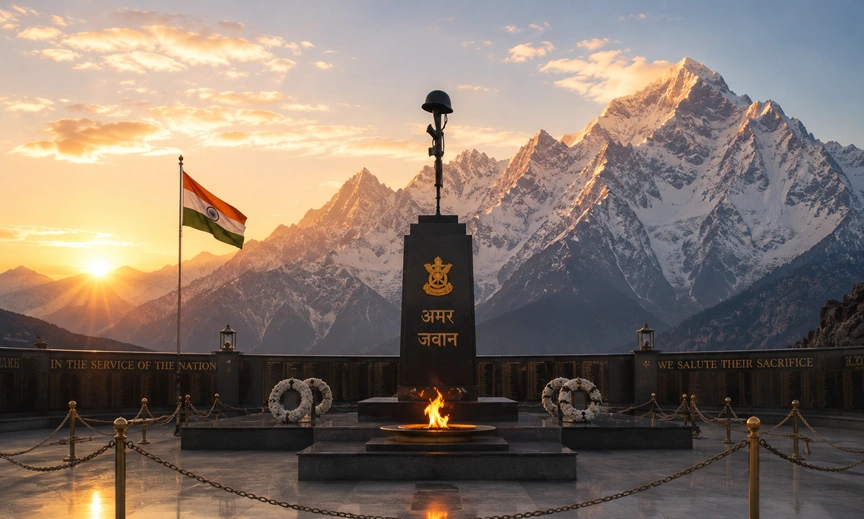
Where Is the Kargil War Memorial Located
The Kargil War Memorial stands at Dras in Ladakh, near the Tololing sector, and remains one of the most important sites of remembrance for the conflict. The surrounding landscape itself tells a powerful story of altitude, isolation, and courage for anyone who visits. For more travel context on the wider region, our Kashmir lakes piece covers nearby geography.
Is the Kargil War Different from the 1971 India Pakistan War
Kargil should not be confused with 1971. That earlier war was full-scale and broader in objective, leading to the creation of Bangladesh. Kargil was a limited high-altitude intrusion and counteroffensive confined to a narrow sector. The scale, objectives, geography, and diplomatic context were all distinct from the 1971 war in meaningful ways.
What Common Myths About Kargil Vijay Diwas Should Be Corrected First
The most important corrections involve who the infiltrators actually were, how long the Tiger Hill recapture genuinely took, and why some historians avoid calling Kargil a full-scale war. Each myth simplifies a more complicated reality, and correcting them strengthens rather than weakens the respect owed to the soldiers who fought.
Conclusion
Kargil Vijay Diwas brings up two things at once: pride, because Indian soldiers held the line in brutal mountain conditions, and responsibility, because those soldiers deserve better memory than careless myths. Living in Delhi, it is easy to see how quickly public history turns into shorthand, and how easily shorthand turns into misinformation. This piece was written not as a tribute post but as a truth-first note from one Indian to another.
Correcting the record does not reduce the emotion attached to this day. It makes that emotion more honest. The infiltrators were not simply random militants. Tiger Hill was not taken in a single dramatic moment. The ending was not only military but also diplomatic, and the language used to describe all of it shapes how the next generation learns this history. Keep exploring India’s layered stories, and keep asking better questions of the ones you already think you know. That is how memory stays alive, and how Kargil Vijay Diwas stays true to what actually happened.
Editorial Note: This article is a historical and editorial account compiled from publicly available sources, including declassified accounts, journalistic reporting, and government-published timelines. Casualty figures and operational details vary across sources and official records; readers seeking authoritative statistics should consult the Indian Ministry of Defence directly. This piece takes no political position on India-Pakistan relations, ongoing border matters, or current defence policy, and is intended solely to correct commonly circulated historical misconceptions with editorial care. It does not reflect insider, classified, or officially verified military information.