Kerala Bengal football fandom is one of those Indian culture stories that looks simple from the outside and feels almost spiritual once you grow up around it. I have seen this split in Delhi too, especially during World Cup seasons, when one friend in our group swears by Argentina, another by Brazil, and a third still wants to debate Mohun Bagan over chai.
If you want the deeper story, my earlier note on Indian sports identity in this cricket piece gives useful context, but football in Kerala and Bengal runs on a different emotional fuel. Kerala Bengal football fandom is not just about teams. It is about memory, class, migration, media, rebellion, and the way one broadcast can change a state for decades while another state carries a century of club pride in its bones.
Kerala Bengal football fandom also explains why India never had one single football heartland. In Bengal, football was already stitched into the city through club grounds, local rivalry, colonial resistance, and a habit of gathering around the game. In Kerala, a mass passion was seeded later, but it spread fast because the state already had a strong sporting culture, worker communities, and a public hungry for spectacle. Interestingly, that is why a single Doordarshan telecast in 1986 mattered so much. Kerala Bengal football fandom gives us two different paths to the same devotion. One was inherited through institutions. The other was sparked by a satellite-era miracle. And once that switch flipped, it never really switched off.
The Confusion Every Non-Fan Feels
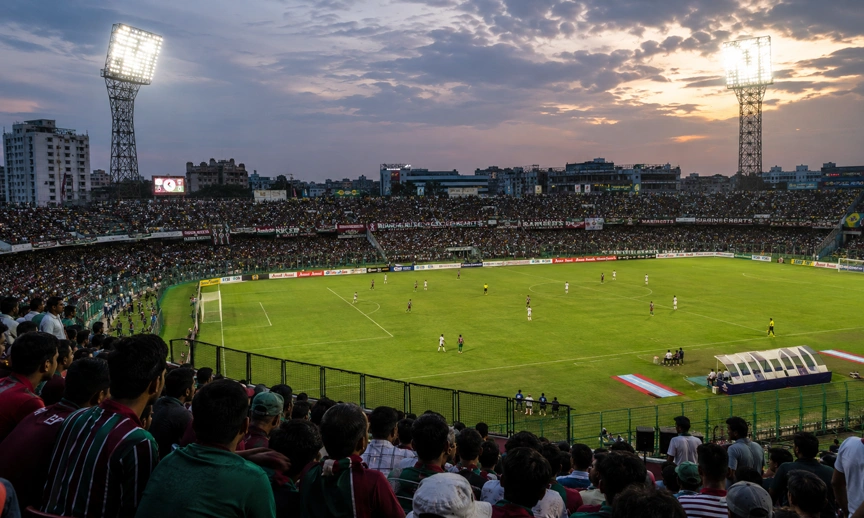
Kerala Bengal football fandom confuses outsiders because both states look equally obsessed, but the reasons are not the same. I live in Delhi, and every time I hear a Mallu uncle and a Kolkata friend argue about football loyalty, I realize how easily Indians flatten culture into one stereotype. Kerala Bengal football fandom is not one story of loud supporters. It is two separate histories that happen to sound alike from the outside. In Kerala, the passion often feels modern, visual, and broadcast-driven. In Bengal, it feels older, denser, and tied to club lanes, maidans, and political memory. That difference is the whole point.
Why The Same Passion Looks Different
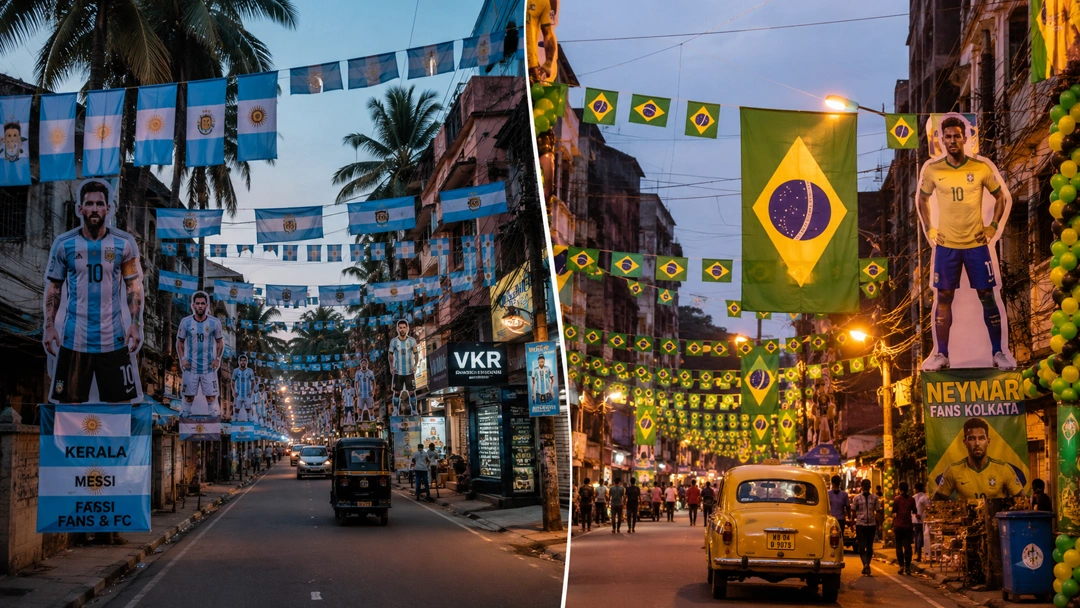
Kerala Bengal football fandom looks similar on Instagram because both places love giant cutouts, flags, chants, and dramatic World Cup rituals. However, the energy underneath is different. Bengal’s football culture grew from neighbourhood clubs and the city’s long relationship with the game. Kerala’s fandom grew faster through television, Gulf migration, and a shared identification with underdog nations. So when you see both cheering with the same intensity, you are not looking at copies. You are looking at two Indian routes to belonging.
Why Non-Fans Misread The Rivalry
Kerala Bengal football fandom is often mistaken as a state versus state contest, but that misses the real emotional map. Bengal is split by clubs, especially Mohun Bagan and East Bengal. Kerala is split by World Cup loyalties, street-level fan groups, and local football cultures. The visible passion is the same. The roots are not. That is why the argument never ends, and why it is so fascinating for anyone trying to understand Indian fandom beyond cricket.
1911 – Bengal’s Football Story Begins
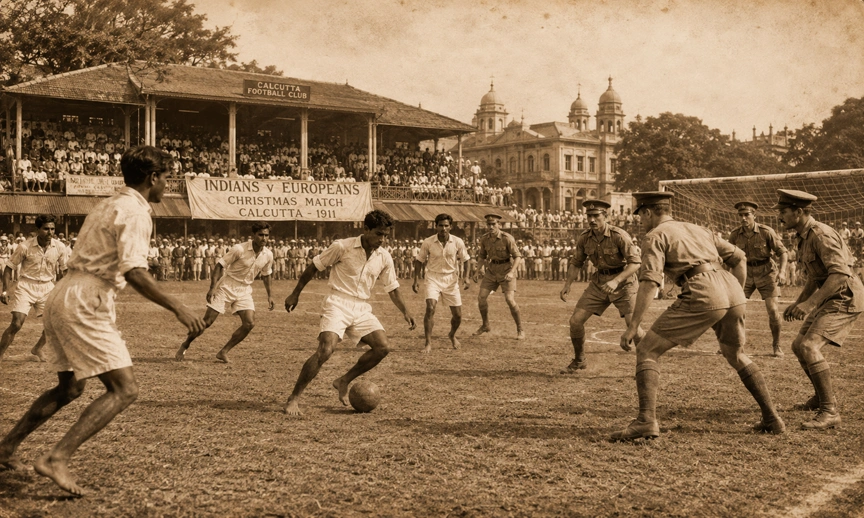
Kerala Bengal football fandom only makes sense if you begin in Bengal, where football had already become part of public life long before television entered Indian homes. In 1911, Mohun Bagan defeated the East Yorkshire Regiment in the IFA Shield, and the victory became bigger than sport. It was about Indians beating colonial power on a playing field that had been designed to exclude them. Kerala Bengal football fandom inherits this moment because Bengal had already made football meaningful in a political and emotional sense. The sport was not introduced there as a novelty. It was absorbed into an existing urban culture of clubs, para pride, and anti-colonial symbolism.
The 1911 Win And Its Social Charge
Kerala Bengal football fandom in Bengal draws strength from the fact that the 1911 Mohun Bagan victory became a public myth. The club was never only a club. It became a symbol of Indian capability at a time when dignity itself was contested. That emotional inheritance still matters in Kolkata. Even today, older fans speak of football with the same seriousness others reserve for politics or literature. The memory of winning against empire gave football moral weight.
Clubs Before Screens
Kerala Bengal football fandom in Bengal was built on physical places first. Maidan grounds, neighbourhood clubs, railway colonies, and factory communities formed a living ecosystem around the game. By the time national television became powerful, the city already had a football language. That is why Bengal did not need one broadcast to fall in love. It had been practicing devotion for generations, and the broadcast only widened the audience.
The Mohun Bagan East Bengal Rivalry Explained
Kerala Bengal football fandom becomes clearer once you understand the Mohun Bagan and East Bengal rivalry. This is not a polite sporting disagreement. It is a social identity split that has lasted for generations. Mohun Bagan carries the old Calcutta club tradition and the symbolism of 1911. East Bengal became deeply tied to migration, especially after Partition, and that made the club feel personal for many displaced families. Kerala Bengal football fandom in Bengal therefore lives inside rivalry, not above it. It is built through loyalty, neighborhood pride, and family habit.
Two Clubs, Two Emotional Worlds
Kerala Bengal football fandom often sounds unified from a distance, but Bengal itself contains a sharp internal line. Mohun Bagan supporters and East Bengal supporters do not just pick teams. They inherit family history, local memory, and social position. One household may have three generations in one camp and a marriage into the other. That is why derby days feel like festivals and feuds at the same time. The game is football, but the meaning is social.
Why The Derby Still Matters
Kerala Bengal football fandom survives because the Kolkata derby has never become a dead museum piece. People still treat it as a live event because the clubs represent competing ways of imagining Bengal. One side leans into legacy and old prestige. The other grew from movement, migration, and belonging found through football. The rivalry is not a distraction from Bengal football. It is the engine that kept it alive for decades.
How Partition Deepened Bengal’s Football Identity
Kerala Bengal football fandom in Bengal was reshaped by Partition in ways that still echo today. The movement of people from East Bengal into Calcutta brought trauma, uprooted identity, and a need for belonging. Football became a language for that search. East Bengal, in particular, absorbed the feelings of displacement and turned them into collective pride. Kerala Bengal football fandom therefore includes not only sporting loyalty but also the emotional geography of migration, home loss, and rebuilding. In a city like Kolkata, football was never separate from social history. It sat right inside it.
Migration Became Memory
Kerala Bengal football fandom in Bengal changed because Partition made identity feel urgent. Families that had lost land, neighbourhoods, and old routines found club support as a way to stay connected to themselves. Football stands became places where people could say, without saying it aloud, that they still belonged somewhere. This gave the game a tenderness and anger that outsiders often miss. Loyalty was not casual. It was inherited through survival.
Why Kolkata Stays Different
Kerala Bengal football fandom in Bengal remains strong because Kolkata never treated football as a seasonal mood. The city built institutions around it, and those institutions carried emotional history across decades. Even now, when I visit Kolkata from Delhi, I feel that football there is woven into conversation in a way cricket is in many other Indian cities. It is old, but not dusty. It is deeply local, yet strangely universal.
1986 – Kerala’s Story Begins With Doordarshan
Kerala Bengal football fandom in Kerala has a very different birth story. For many households, the turning point was the 1986 FIFA World Cup and the unforgettable visual of Diego Maradona on Doordarshan. That broadcast mattered because it reached ordinary homes and created a shared sporting memory across Malayalam-speaking families. Kerala Bengal football fandom in Kerala was not grafted onto colonial club history. It was sparked by television, image, and emotion. Once people saw that tournament, football became a family conversation, a street conversation, and eventually a community ritual.
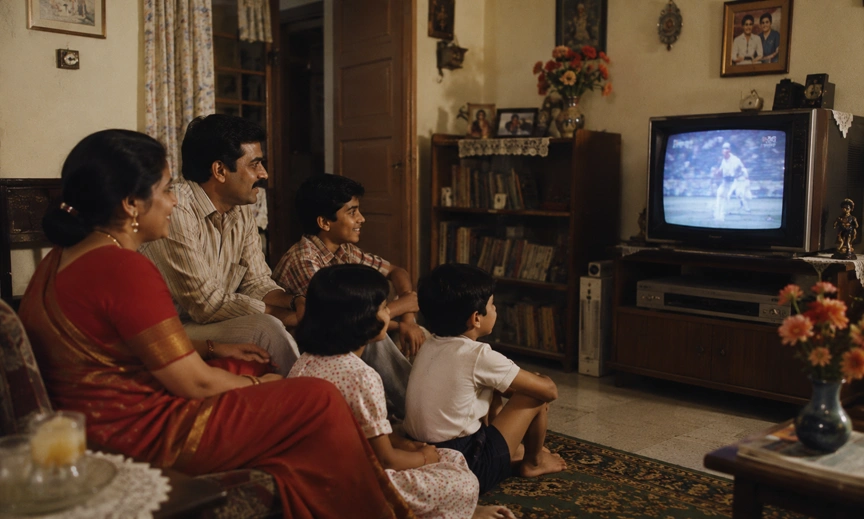
The Power Of One Broadcast
Kerala Bengal football fandom in Kerala shows how media can build culture almost overnight when the soil is already ready. The state had strong literacy, political awareness, Gulf connections, and a taste for international sport. Doordarshan did not invent interest from nothing. It lit a match. Maradona became a symbol of creativity, defiance, and joy, and many Kerala fans never left him behind. That is why the emotion feels so personal even today.
Why Kerala Chose Argentina So Deeply
Kerala Bengal football fandom in Kerala often leans Argentina because Maradona felt human, rebellious, and brilliant in a way many fans could immediately recognize. The connection was emotional, not technical. Argentina became the team of drama, beauty, and working-class pride. Meanwhile, Brazil attracted fans who loved style, flair, and winning energy. The split grew from taste, memory, and family habit. Once the identity settled, it became part of Kerala’s public life.
Why Cricket Never Took Over Either Region
Kerala Bengal football fandom is interesting because it survived in two places where cricket could easily have dominated. Instead, football kept its cultural space. In Bengal, cricket certainly became important, but football retained its older urban base, especially in Kolkata and surrounding districts. In Kerala, cricket found fans too, yet football offered a more communal and dramatic experience for many households. Kerala Bengal football fandom proves that Indian sports culture is never one-size-fits-all. Regions build loyalty differently, and the older emotional infrastructure often decides what lasts.
Bengal Had A Head Start
Kerala Bengal football fandom in Bengal survived cricket because football arrived earlier as mass urban culture. Clubs, rivalries, and public grounds already gave the game a social architecture. Cricket came later as a national obsession, but football never disappeared from the local bloodstream. I saw this clearly in Delhi when a Bengali colleague spent half lunch analyzing derby results while the rest of us discussed the IPL. That old habit is not nostalgia. It is structure.
Kerala Had Another Kind Of Public
Kerala Bengal football fandom in Kerala also lasted because football matched the state’s public culture. Local clubs, sevens tournaments, and international identity made it easy for people to stay invested. Cricket may have bigger sponsorships, but football often feels more participatory in Kerala. Families know the players. Streets paint the flags. Siblings argue over nations and not just franchises. That kind of intimacy is hard for cricket to replace.
Sevens Football vs Para Football Culture
Kerala Bengal football fandom in Kerala owes a lot to local formats and street-level football life. Sevens football in north Kerala created its own rhythm, heroes, and crowd culture. At the same time, para football and neighbourhood tournaments in both Kerala and Bengal kept the sport alive away from elite stadium narratives. Kerala Bengal football fandom therefore is not only about watching the game. It is about playing it, discussing it, and turning it into a local social event. That matters in India, where informal sports culture often sustains what official systems ignore.
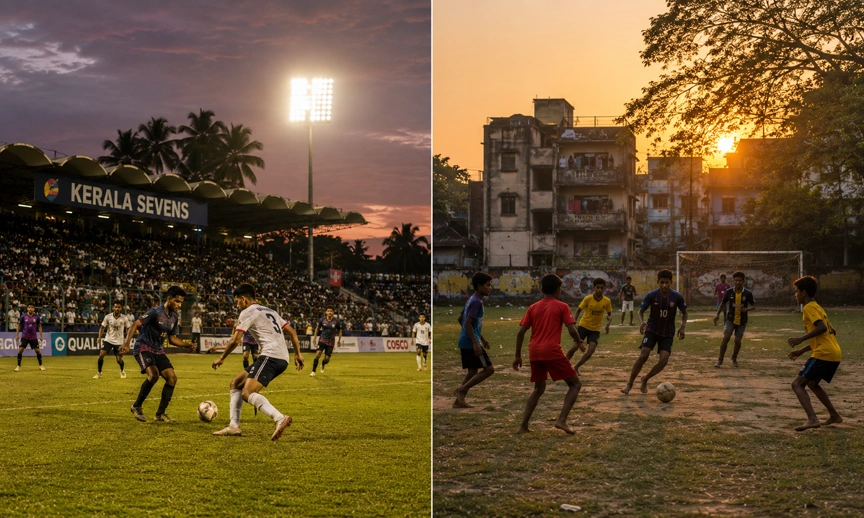
Sevens As A Cultural Engine
Kerala Bengal football fandom in Kerala got extra intensity from sevens football because the format was fast, dramatic, and community-friendly. It fit local festivals, late evenings, and packed grounds. People did not need a giant stadium to care. They needed a match, a crowd, and a reason to shout. The emotional reward was immediate, and that built lifelong attachment. The game became part of social calendar, not just entertainment.
Para Football And Everyday Belonging
Kerala Bengal football fandom in both regions also depends on para and neighborhood football culture. These are the spaces where boys become lifelong fans and elders become analysts. In Delhi, I grew up seeing how colonies can build their own small sporting worlds, and the same logic applies in Kolkata and Kerala. The smaller the ground, sometimes the bigger the feeling. That is why football remains so resilient in these places.
Argentina or Brazil – Why The Split Happened
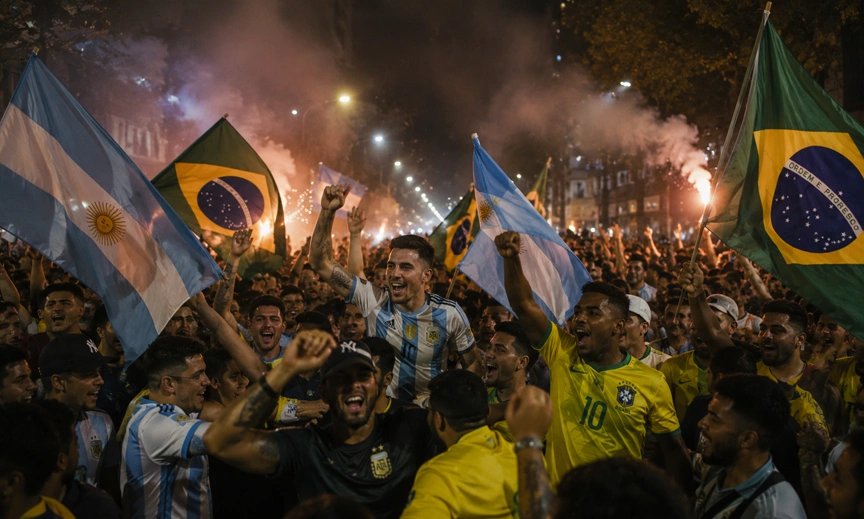
Kerala Bengal football fandom becomes especially visible during World Cups, when India suddenly looks split between Argentina, Brazil, and the occasional neutral. Bengal has long carried a strong Brazil following in many circles, while Kerala became famously associated with Argentina. The reasons are not random. Kerala Bengal football fandom reflects different emotional models of the game. Brazil often stands for joy, artistry, and winning. Argentina, especially through Maradona and later Messi, stands for struggle, genius, and raw emotional connection. People choose what feels closest to their inner story.
Style Versus Struggle
Kerala Bengal football fandom explains why one region may love Brazil while another leans Argentina. The choice is rarely only about trophies. It is about the feeling a team gives you. Brazil has often represented beautiful, flowing football. Argentina has represented drama, heartbreak, and redemption. For many Indian fans, those emotional codes matter more than the statistics. Football becomes a mirror, not a spreadsheet.
Why Families Split Themselves
Kerala Bengal football fandom often passes inside homes, and that is why even siblings can support different teams. One uncle starts with Brazil, the son drifts toward Argentina, and the daughter may simply inherit the household noise. This is how identity gets made in Indian living rooms. In my Delhi home, World Cup nights have always felt like mini-parliaments, with every opinion treated as final until the next goal. That is the real beauty of fandom.
What Two States Reveal About Indian Identity
Kerala Bengal football fandom tells us something important about India. We are not one sports nation with one emotional pattern. We are many publics living inside one country. Kerala Bengal football fandom shows that a state can fall in love through a broadcast, while another can carry football across a century of club history. Both are equally authentic. Both are Indian. And both remind us that culture does not always arrive through institutions. Sometimes it arrives through memory, migration, family, and one unforgettable evening in front of a television set.
Two Routes To The Same Devotion
Kerala Bengal football fandom proves that passion can be imported or inherited. Bengal inherited football through clubs, politics, and urban social life. Kerala imported a global football mood through television and then made it local. The result is the same noise, the same cutouts, the same tears, but the route is different. That difference matters because it explains why India is not a copy-paste sports culture.
Why This Matters Beyond Football
Kerala Bengal football fandom is really a story about how Indians build identity from available tools. Sometimes a region keeps a century-old ritual alive. Sometimes it turns a broadcast into a tradition. I think that is why this topic feels so human to me as a Delhi writer. We all inherit some things and choose some things, and both can become sacred. Football simply makes that truth easier to see.
Frequently Asked Questions
Why Does Kerala Support Argentina?
Kerala Bengal football fandom often points to Argentina because of Maradona, Doordarshan, and the emotional style of Argentine football. Many fans connected with the drama, defiance, and human side of the team. Kerala Bengal football fandom in Kerala grew from feeling, not just results. Once that bond formed, it became part of family identity and World Cup ritual.
Why Does Bengal Support Brazil?
Kerala Bengal football fandom in Bengal does include many Brazil fans because Brazil has long stood for flair, joy, and attacking football. However, Bengal is not one-sided. Many supporters back Mohun Bagan, East Bengal, or different international teams. Kerala Bengal football fandom and Bengal fandom are both layered, so Brazil is only one part of a bigger culture.
What Is The Mohun Bagan East Bengal Rivalry?
Kerala Bengal football fandom becomes easier to understand once you know that Mohun Bagan versus East Bengal is one of India’s deepest club rivalries. It is tied to history, migration, class memory, and city pride. Kerala Bengal football fandom in Bengal exists inside this old split, which gives local football its emotional charge and annual drama.
When Did Football Fandom Start In Kolkata?
Kerala Bengal football fandom is younger in Kerala, but in Kolkata football fandom goes back more than a century. The 1911 Mohun Bagan victory over a British regiment made football a public symbol of pride. Kerala Bengal football fandom in Bengal then grew through clubs, grounds, and neighbourhood loyalty long before television changed anything.
When Did Football Fandom Start In Kerala?
Kerala Bengal football fandom in Kerala became truly mass in the 1986 World Cup era, when Doordarshan brought Maradona into living rooms. Of course, football existed before that, but the modern fan wave came later. Kerala Bengal football fandom was sparked by broadcast culture and then reinforced by sevens football and community support.
Why Do Kerala Fans Build Giant Player Cutouts?
Kerala Bengal football fandom is very visual because fans express emotion through cutouts, flags, wall art, and public displays. Giant player cutouts are a way to turn love into something visible and communal. Kerala Bengal football fandom uses spectacle as identity, especially during tournaments, because the fandom wants to be seen as well as felt.
Is Kolkata Derby Older Than The World Cup Fandom?
Kerala Bengal football fandom in Kolkata is definitely older than the World Cup-era fandom in Kerala. The Kolkata derby tradition dates back to club culture rooted in the early 20th century. Kerala Bengal football fandom in Kerala gained its modern shape much later, especially after 1986, so the timelines are very different.
Why Did Bengal Choose Football Over Cricket?
Kerala Bengal football fandom in Bengal did not replace cricket entirely. However, football arrived earlier as a mass urban sport and became tied to clubs, identity, and politics. That early structure helped it survive even after cricket became national. Kerala Bengal football fandom and Bengal football culture stayed strong because football already belonged to daily life.
How Did Partition Affect Bengal Football Fandom?
Kerala Bengal football fandom in Bengal was deeply shaped by Partition because migration made football a home for displaced communities. East Bengal in particular absorbed this emotional history and turned it into loyalty. Kerala Bengal football fandom therefore includes memory, pain, and rebuilding, not just matchday excitement.
Do Kerala And Bengal Support The Same Teams?
Kerala Bengal football fandom overlaps in love for football, but not always in the same teams. Both regions may support Argentina, Brazil, or European clubs, yet their local anchor points differ. Kerala Bengal football fandom leans toward broadcast-born international loyalty, while Bengal still lives heavily through club-rooted identity and historic rivalry.
Conclusion
Kerala Bengal football fandom is one of the clearest examples of how Indian passion grows in different soils and still blooms into something equally intense. I love this story because it refuses easy clichés. In Delhi, we often assume fandom spreads the same way everywhere, but these two regions prove otherwise. Bengal built football through institutions, rivalry, and anti-colonial memory. Kerala turned a televised World Cup into a lasting emotional inheritance. Kerala Bengal football fandom is not about which state is more loyal. It is about how loyalty is born.
That is why this story feels bigger than football to me. It is about what happens when a community receives a symbol at exactly the right time. It is about old cities and new screens, inherited rituals and sudden conversions. If you enjoyed this deep dive, I would also suggest reading more cultural pieces on picknstory, especially the one at this link, because Indian sport is really many regional histories stitched together. Kerala Bengal football fandom teaches us that identity is not one stream. It is many streams running side by side, and that is exactly what makes Indian football so alive. Kerala Bengal football fandom
Disclaimer: This article is for cultural and informational reading only, not medical or legal advice.