Ethanol blending India is no longer just a policy story. It is now a wallet story, an engine story, and in many cities, a health story too. I was standing near a Delhi petrol pump recently, watching families fill up before a weekend drive, and I kept thinking how few of us really know what E20 means for our cars, bikes, and budgets. We hear clean energy slogans. We hear self-reliance claims. However, the person paying the fuel bill is still you and me, and that is where the real conversation begins. If you want the bigger Delhi context around fuel, pollution, and daily life, my earlier note on air pollution in Delhi is a useful companion.
Ethanol blending India is often sold as a simple win. Put alcohol in petrol, cut oil imports, support farmers, and call it green. That sounds neat on paper. Yet the pump does not show the full story, and your odometer certainly does not care about press releases. I have spent enough time in Delhi traffic to know that small percentage changes become big monthly expenses when you drive every day. Ethanol blending India deserves honesty, not slogans. It also deserves plain language, because most Indian vehicle owners are not policy analysts. They are parents, office commuters, delivery riders, small business owners, and college students. They need the truth now, not later.
What follows is my attempt to explain the trade-offs without drama and without pretending the science is settled in favor of everyone. I am using institutional sources, not social media noise, and I am keeping the numbers simple enough for you to judge for yourself. Ethanol blending India may still have a place in India’s energy mix, but only if we stop hiding the costs from consumers.
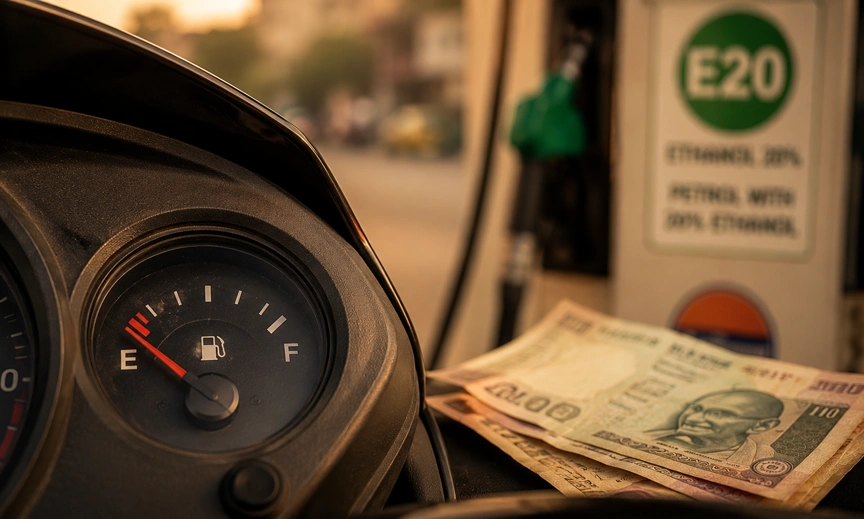
What E20 Fuel Actually Means At The Pump
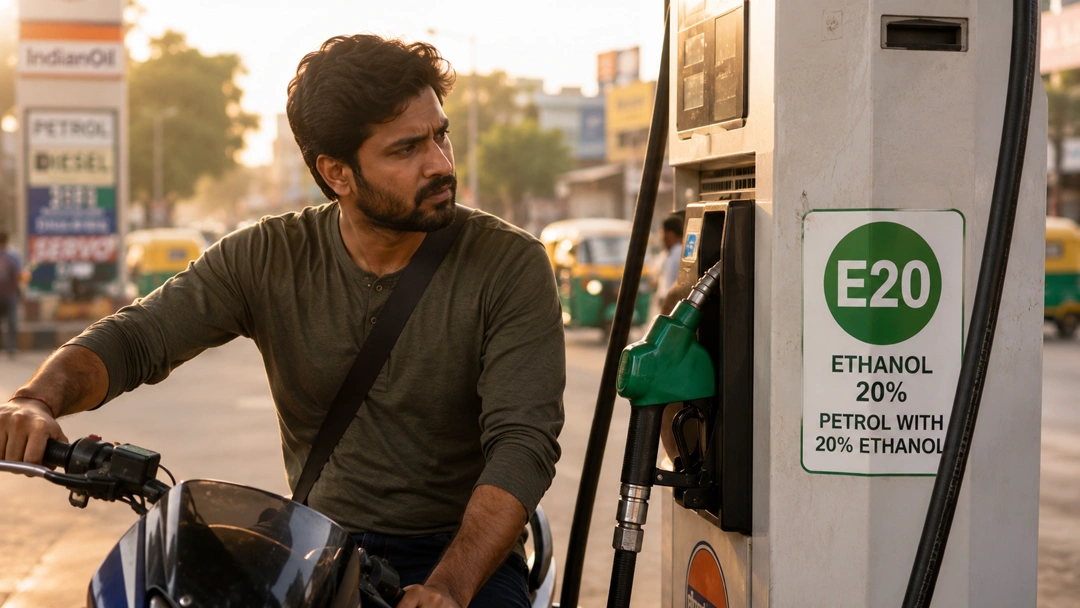
Ethanol blending India at the pump means petrol is no longer plain petrol. E20 means 20 percent ethanol and 80 percent gasoline in the fuel you buy. For newer engines designed for it, that can be manageable. For older vehicles, the story is less comfortable. Ethanol has lower energy density than petrol, so every litre carries less usable energy. That is why drivers often notice a drop in mileage even when the sticker price looks similar.
Ethanol Blending India And The Pump Label
Ethanol blending India is confusing because the pump price and the road result are not the same thing. You may pay roughly the same or slightly less per litre, but you are also buying fewer kilometres per litre. That is the hidden tax. In Delhi, where stop-start traffic already crushes efficiency, the difference is even more visible. The government highlights blending targets, but the consumer sees the fuel gauge fall faster.
The official blending push also depends on refinery logistics, procurement, and crop output. That means the fuel story is tied to agriculture, industry, and state policy all at once. If you want a neutral backgrounder on the program, this overview of ethanol fuel in India gives a basic timeline. But the pump experience is what matters to you every morning.
Ethanol Blending India And Real Vehicle Behaviour
Ethanol blending India also changes how engines behave under heat, load, and age. Ethanol absorbs water, can affect rubber and metal parts, and may stress fuel systems not built for it. In Delhi summer, that matters. In NCR traffic, that matters. In a two-wheeler or a high-mileage family car, it can matter a lot. So when someone says E20 is just petrol with a greener label, they are skipping the part where chemistry meets daily use.
That is why the policy debate should start at the pump, not in a PowerPoint. Ethanol blending India has a real-world cost, and consumers deserve to see it clearly.
The Mileage Math That Changes Everything
Ethanol blending India becomes very real when you do the math. If your car gave 15 km per litre on regular petrol, an E20 blend can reduce mileage by roughly 3 to 10 percent depending on vehicle design, driving style, and traffic. That means your 15 km per litre can slide to around 13.5 to 14.5 km per litre, sometimes lower in older engines. On a Delhi office commute, that difference stacks up fast over a month.
Ethanol Blending India And Monthly Cost
Ethanol blending India is often defended by saying the blend price is lower than imported crude. Fine. But the consumer does not buy crude. The consumer buys kilometres. If you drive 1,000 km a month and your mileage drops by 8 percent, you need more fuel to travel the same distance. That extra fuel can easily eat away any small pump price advantage. For many middle-class households, that means hundreds of rupees more every month, and sometimes more if the car is older or poorly tuned.
I know this feeling well from Delhi life. When petrol prices change, so does the whole month. School runs, office runs, market runs, all start to feel tighter. Ethanol blending India quietly shifts the burden from national accounting to your wallet.
Ethanol Blending India And Hidden Fuel Math
Ethanol blending India also changes the math for ride-hailing drivers, delivery workers, and small traders who live on thin margins. A 5 percent mileage hit may sound small in a press note. In the real world, it can mean one less trip, one more refill, and one more argument with your family about expenses. That is why fuel policy should be judged by per-kilometre cost, not just per-litre price. The motorist is paying for the blend twice, once at purchase and again in reduced efficiency.
The government should publish simple city-wise cost estimates for common vehicles. Until then, every Indian driver should do the calculation themselves. Ethanol blending India only looks cheap until you count the kilometres.
Who Really Benefits From Ethanol Blending
Ethanol blending India has winners, but not all of them are the people paying at the pump. Sugar mills, distilleries, some farmers, and parts of the fuel supply chain benefit directly. The state also benefits from lower oil import dependence on paper. That is the argument. However, the gains are spread out, while the costs are concentrated on vehicle owners, especially those with older cars and bikes.
Ethanol Blending India And Farm Politics
Ethanol blending India is deeply tied to sugarcane economics. When sugar stocks are high, ethanol becomes a useful outlet. When cane prices, procurement rules, and distillation capacity align, the policy looks brilliant. But that does not mean every Indian region benefits equally. States with heavy sugarcane production get more leverage, while dry regions get less. The political economy is obvious once you look closely.
That said, support for farmers is a legitimate goal. The problem is honesty. If the policy is partly a farm income policy, say so. If it is partly an import substitution policy, say so too. Consumers should not be told only half the story. Ethanol blending India needs transparency, not a marketing campaign.
Ethanol Blending India And Corporate Gain
Ethanol blending India also creates steady demand for industrial players who can process, store, and transport the blend. This is not a scandal by itself. Every fuel system has winners. But the public deserves to know who gains, who pays, and who carries the risks. When a policy changes the market, it should not hide behind environmental language alone.
As a Delhi consumer, I want the plain version. Show me the beneficiary list. Show me the consumer loss estimate. Show me the vehicle impact. Until that happens, ethanol blending India will keep feeling like a policy made for balance sheets, not for drivers.
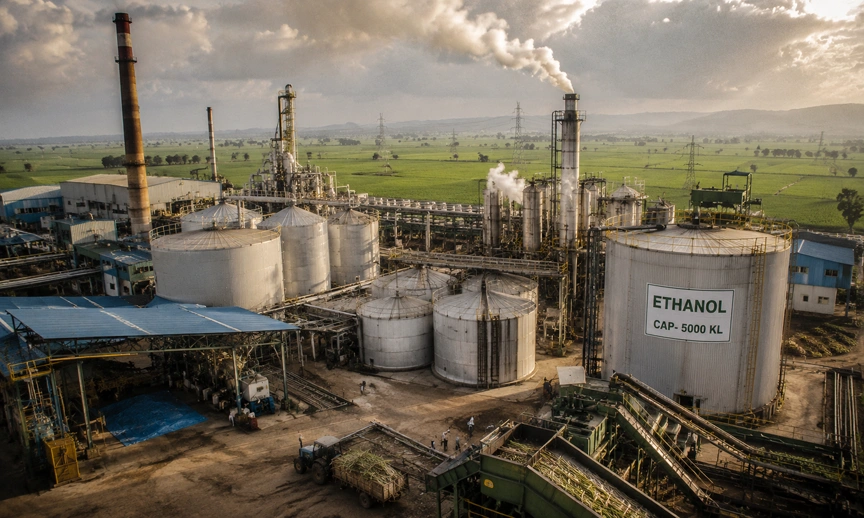
Which Engines Are At Real Risk From E20
Ethanol blending India is not equally safe for all vehicles. Older cars and bikes, especially those built before flexible fuel materials became common, are more vulnerable to seal swelling, corrosion, fuel pump stress, and poorer cold start behaviour. Two-wheelers, small carbureted engines, and high-mileage older cars are the biggest worry. If your vehicle manual does not explicitly approve E20, caution is sensible.
Ethanol Blending India And Older Indian Vehicles
Ethanol blending India hits older Indian vehicles hardest because many were designed around petrol with little ethanol. Rubber hoses, gaskets, and fuel system components can age faster with higher ethanol exposure. A new vehicle may tolerate the blend better. An old one may not. That does not automatically mean every engine will fail tomorrow. It means the risk is uneven, and the owner carries it.
This is where consumer honesty matters most. If your mechanic says your bike will survive, maybe it will. If he says it may need extra care, believe him. Ethanol blending India should come with clearer compatibility labels at sale, not after the damage is done.
Ethanol Blending India And Repair Bills
Ethanol blending India can turn into a repair story when fuel system parts age faster than expected. Fuel pumps, injectors, gaskets, and plastic components can cost real money. For a middle-class owner, even a few thousand rupees matters. For a daily-use scooter or an old sedan, that bill is not theoretical. It is school fee money, grocery money, rent money.
The worst part is the uncertainty. If the damage is gradual, many owners never connect it to fuel. They just think the vehicle is getting old. That is why compatibility, testing, and warranty clarity must be front and centre. Ethanol blending India should not punish the people who kept older vehicles running in good faith.
Brazil Did It Right And India Is Getting It Wrong
Ethanol blending India is often compared with Brazil, and yes, Brazil has decades of ethanol experience. But the comparison is too often lazy. Brazil built a broader flex-fuel ecosystem, matched vehicle design with fuel availability, and supported a more mature market transition. India is trying to move fast, but speed without matching consumer protection can create problems.
Ethanol Blending India And The Brazil Lesson
Ethanol blending India should learn from Brazil’s strengths, not just copy its headline numbers. Brazil has had consistent policy signals, large-scale flex-fuel adoption, and engines built for that reality. India still has a large legacy fleet. That matters. A policy that works for a country with different vehicle stocks, climate patterns, and fuel infrastructure cannot simply be pasted here.
Meanwhile, the government narrative often skips over these differences. That is a mistake. When policy is imported without full context, people pay in reduced mileage, uncertain maintenance, and confusion at the pump. Ethanol blending India needs adaptation, not imitation.
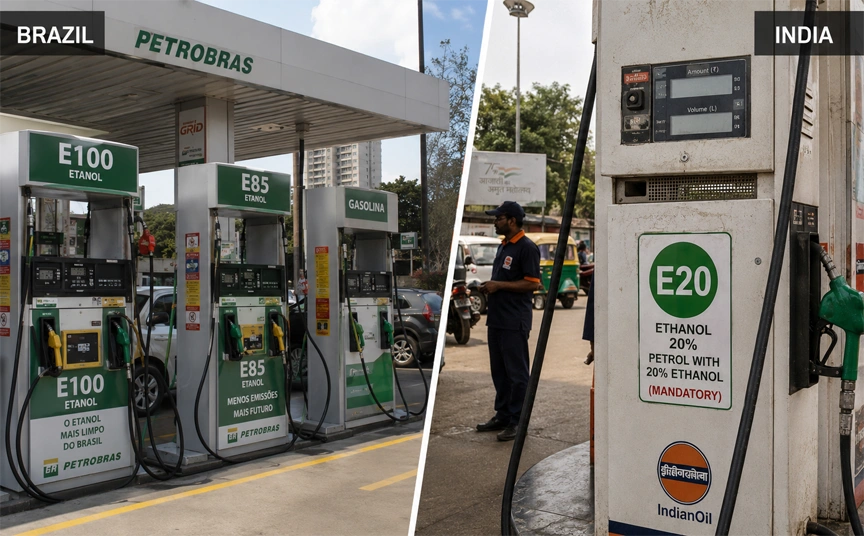
Ethanol Blending India And Local Conditions
Ethanol blending India also has to survive Indian heat, dusty roads, traffic jams, and uneven maintenance habits. Brazil’s success does not erase the fact that India has many older, smaller, and less standardized vehicles. In Delhi NCR, where summer temperatures are brutal, fuel volatility and engine stress matter more than brochures admit. The local reality is harder than the policy language suggests.
If India wants a Brazil-style outcome, it must first build Brazil-style vehicle readiness and consumer support. Until then, the comparison remains incomplete. Ethanol blending India should be measured against Indian roads, not just international aspirations.
The Environment Promise Vs The Ugly Reality
Ethanol blending India is sold as a climate solution, but the full environmental picture is messier. Yes, blending can reduce some fossil fuel use. However, the upstream emissions from agriculture, distillation, transport, and land use can complicate the net benefit. When sugarcane is the main feedstock, the environmental case becomes even more debated because cane is water intensive and resource heavy.
Ethanol Blending India And Pollution At The Factory
Ethanol blending India also creates a serious industrial pollution issue through spent wash. Distilleries generate a high-volume, high-COD wastewater stream that is difficult and expensive to manage. If poorly handled, it can contaminate water bodies and soil. India has seen enough industrial pollution already. We do not need another one hidden behind green branding.
This is where chemical safety matters too. The World Health Organization has clear guidance on chemical exposure and safety risks in industrial settings, and you can read the general framework at WHO chemical safety facts. Ethanol blending India should not pretend spent wash is a tiny side issue. It is central to the environmental debate.
Ethanol Blending India And Air Quality
Ethanol blending India may lower some tailpipe pollutants under certain conditions, but the story is not automatically clean. Better combustion does not erase the wider pollution burden from production. In cities already choking on traffic emissions, more honest accounting is needed. If you live in NCR, you already know that cleaner fuel promises have to be judged by the air we actually breathe, not by labels.
For a broader health lens on pollution, see air pollution in India and respiratory health. Ethanol blending India should be part of a broader emissions strategy, not a magic trick.
The Water Crisis Hidden Behind Every Litre
Ethanol blending India hides a brutal water question. Sugarcane is a thirsty crop, and ethanol made from cane carries a serious water footprint. In drought-prone parts of Maharashtra and Karnataka, this matters deeply. Water used for fuel is water not available for farms, households, and local ecosystems. That is not a small trade-off.
Ethanol Blending India And Sugarcane Water Use
Ethanol blending India becomes controversial when you ask how much water goes into each litre. Estimates vary by region, irrigation method, and distillation setup, but the combined crop and processing footprint can be very high. In a dry year, this becomes politically and ethically sensitive. If a fuel policy depends on a water-stressed crop, the cost is not just economic. It is ecological and human.
I have seen how Delhi residents react to water shortages every summer. Imagine that pressure multiplied in farming belts. Ethanol blending India cannot be called sustainable if it shifts scarcity from oil fields to water tables without acknowledging it.
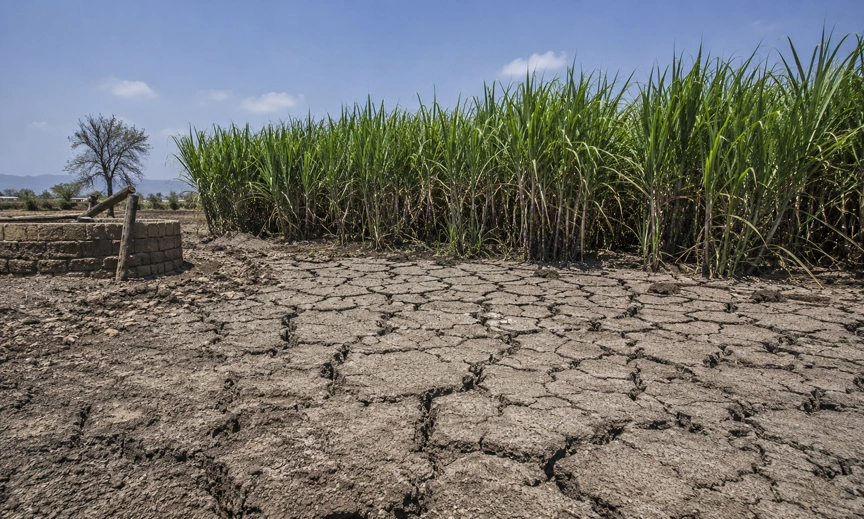
Ethanol Blending India And Drought States
Ethanol blending India should worry anyone who follows Maharashtra and Karnataka drought cycles. These states have seen repeated stress on reservoirs, agriculture, and rural supply. When cane expansion is incentivized for fuel, the water equation gets tougher. The policy may look clever in central planning. On the ground, it can deepen local strain.
This is why India needs crop-smart fuel planning. Not every feedstock is equal. Not every state can afford the same production model. Ethanol blending India must be judged against monsoon reality, not wishful thinking.
The Consumer Protection Void Nobody Talks About
Ethanol blending India has a glaring legal gap. If an older vehicle suffers damage, who pays? In many cases, the answer is unclear. Fuel companies may point to standards. Dealers may point to manufacturer advisories. Manufacturers may blame misuse or age. The ordinary owner is left carrying the uncertainty and the bill.
Ethanol Blending India And Warranty Confusion
Ethanol blending India needs hard warranty rules, not vague assurances. If your car maker approves E20 only for certain model years, that should be printed clearly. If your two-wheeler is not fully compatible, the warning should be impossible to miss. Today, many consumers only discover the issue after a service visit. That is not consumer protection. That is consumer confusion.
In Delhi, where many households keep vehicles for years, this issue is not minor. Older cars are often maintained carefully and used responsibly. They deserve explicit liability rules. Ethanol blending India should not create a silent risk transfer from industry to owner.
Ethanol Blending India And Legal Responsibility
Ethanol blending India also exposes a missing accountability chain. If a fuel blend is mandated or normalized, then a clear redress system should exist. Fuel station records, batch testing, compatibility labels, and complaint escalation should be simple. Right now, the average motorist has too little power. The system is built for policy rollout, not for damage claims.
That is why consumer groups, insurers, and regulators must step in. The burden cannot rest on a family to prove chemistry in court. Ethanol blending India needs a liability framework before it needs more slogans.
What India Should Actually Do Instead
Ethanol blending India should not be treated like the only path forward. A smarter approach would mix cleaner fuel standards, stricter vehicle compatibility rules, better public transport, and realistic feedstock planning. If the goal is energy security, then India should reduce demand as well as change supply. That means efficient cars, electric mobility where suitable, and stronger transit systems in cities.
Ethanol Blending India And Better Policy Design
Ethanol blending India can improve only if the government tells the whole truth. Publish vehicle-wise mileage impact. Publish feedstock-wise water footprint. Publish distillery pollution data. Publish liability rules. That would build trust. Without transparency, even a potentially useful policy will keep sounding like PR.
I think of Delhi commuters again. We do not need another grand promise that breaks under real use. We need practical change that respects our budgets and our vehicles. Ethanol blending India can be part of that, but only as one tool among many.
Ethanol Blending India And The Real Consumer Choice
Ethanol blending India should give people choice, not confusion. Older vehicle owners need a clear transition path. New buyers need honest compatibility labels. Farmers need feedstock policies that do not worsen water stress. And cities need cleaner air, not just different fuel chemistry. That is the real test.
If India gets this right, the policy can mature. If not, it will remain a story of hidden costs. Ethanol blending India should be improved, not blindly defended.
Frequently Asked Questions
Is E20 Petrol Safe For My Old Bike Or Car In India?
Ethanol blending India is not equally safe for every older vehicle. If your bike or car was not designed or certified for E20, there can be risks such as seal wear, rubber degradation, fuel pump stress, and lower mileage. Check your owner manual, service bulletin, or manufacturer note before assuming it is fine. For a deeper Delhi angle on vehicle-related air issues, see this Delhi air pollution guide.
Does Ethanol Blended Petrol Reduce Mileage And By How Much?
Ethanol blending India usually reduces mileage because ethanol has lower energy content than petrol. For many vehicles, the drop can be around 3 to 10 percent, though the exact figure depends on engine design, driving habits, traffic, and maintenance. Older vehicles often feel the loss more sharply. The right comparison is not litre price alone. The real number is cost per kilometre, and that is where the blend often looks less attractive.
Why Is The Indian Government Pushing Ethanol Blending So Aggressively?
Ethanol blending India is being pushed hard because it supports oil import reduction, sugar industry demand, and farm-linked industrial policy. It also helps the state present a cleaner fuel narrative. However, the push is more complex than the slogans suggest. Consumers, vehicle owners, and water-stressed regions may carry hidden costs. The policy may serve macro goals, but that does not automatically mean it is painless for households.
What Is Acetaldehyde And Why Is It A Concern With E20 Fuel?
Ethanol blending India can increase certain exhaust compounds, including acetaldehyde, which is a toxic chemical of concern in air pollution and occupational exposure. It is not the only issue, but it matters because combustion chemistry changes with higher ethanol content. The NCBI toxicology overview is a useful starting point for understanding chemical hazards. The key idea is simple. More ethanol does not automatically mean cleaner in every real-world condition.
Is Sugarcane Ethanol Production Actually Good For The Environment?
Ethanol blending India is not automatically green if the feedstock is sugarcane. Cane can require heavy irrigation, fertiliser, land, and industrial processing. That means emissions and ecological costs can appear before the fuel is even burned. In drought-prone regions, the water issue becomes especially serious. A clean label at the pump does not cancel the footprint upstream, so the full life-cycle view matters a lot.
How Much Water Is Used To Produce One Litre Of Ethanol In India?
Ethanol blending India has a water footprint that varies widely by crop, irrigation, and plant efficiency. There is no single magic number that fits all Indian plants, but cane-based ethanol can be especially water intensive once farming and processing are combined. In thirsty districts, that is a major policy concern. The right question is not only how much fuel we make, but how much water we burn to make it.
Does The Brazil Ethanol Model Actually Work And Can India Copy It?
Ethanol blending India should learn from Brazil, but not copy it blindly. Brazil succeeded because it built flex-fuel vehicles, stable policy, and an ecosystem matched to local conditions. India still has a large fleet of older vehicles and very different climate and traffic realities. So yes, the Brazil model works in its own context. No, India cannot simply paste it onto our roads and expect the same outcome.
Which Vehicles Are Not Compatible With E20 Ethanol Blended Petrol?
Ethanol blending India is more risky for older cars, older bikes, and vehicles whose manuals do not mention E20 compatibility. Carbureted engines, high-mileage legacy models, and vehicles with older fuel system materials should be checked carefully. Compatibility depends on the manufacturer, model year, and certified test data. Do not rely only on hearsay at the pump. Ask the service centre for written confirmation if you are unsure.
Who Is Legally Responsible If E20 Fuel Damages My Older Vehicle?
Ethanol blending India currently leaves many owners in a grey zone. Responsibility may be disputed between fuel suppliers, manufacturers, dealers, and regulators. In practice, that means the consumer often struggles to prove fault. This is why clear labeling, warranty rules, and complaint pathways are essential. Without them, the owner bears the legal and financial pain, even when the policy was publicly imposed.
What Are The Real Alternatives To Ethanol Blended Petrol In India?
Ethanol blending India is only one option. Better public transport, cleaner diesel enforcement, hybrid vehicles, electric mobility where suitable, improved fuel efficiency, and smarter city planning are all part of the answer. In some cases, reducing travel demand is more effective than changing fuel chemistry. If you care about the broader health impact, read this respiratory health guide and my Delhi heat note on heatwave 2026 safety tips.
Conclusion
Ethanol blending India is not a scam, and it is not a miracle either. It is a policy with real goals, real trade-offs, and real consumer consequences. As someone who lives in Delhi, fills fuel like everyone else, and watches every rupee in the monthly budget, I do not want more noise. I want cleaner arithmetic, clearer labels, and honest responsibility. If the government wants trust, it has to stop treating vehicle owners like passive recipients and start treating us like informed citizens.
The mileage loss, the older vehicle risk, the water pressure on cane belts, the spent wash pollution, and the legal grey zone are not side notes. They are the story. Ethanol blending India can still have a future if India chooses transparency over celebration. That means compatibility standards, consumer compensation rules, regional water limits, and a broader mobility plan that does not put all the burden on drivers. Until then, every petrol bill will carry a hidden conversation that nobody at the pump is telling you.
I will keep following this closely because fuel policy is now household policy. If you drive in Delhi or anywhere else in India, stay alert, read your manual, and ask the hard questions. Ethanol blending India needs public honesty more than public applause. Ethanol blending India
Disclaimer Note: Vehicle compatibility assessments in this article are based on publicly available statements from SIAM and vehicle manufacturers. Readers should verify their specific vehicle model’s ethanol fuel compatibility directly with the manufacturer or authorised service centre before drawing conclusions for their own vehicle. Environmental and health data is attributed to institutional sources as cited. This article is consumer journalism based on publicly available research and does not constitute automotive engineering, legal, or financial advice.