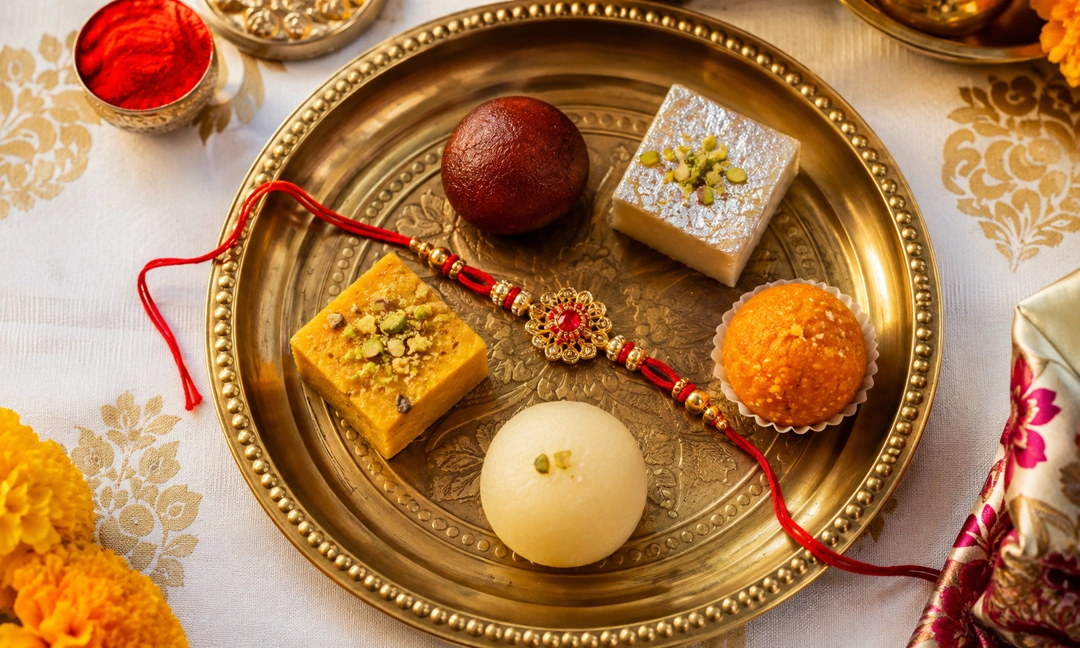
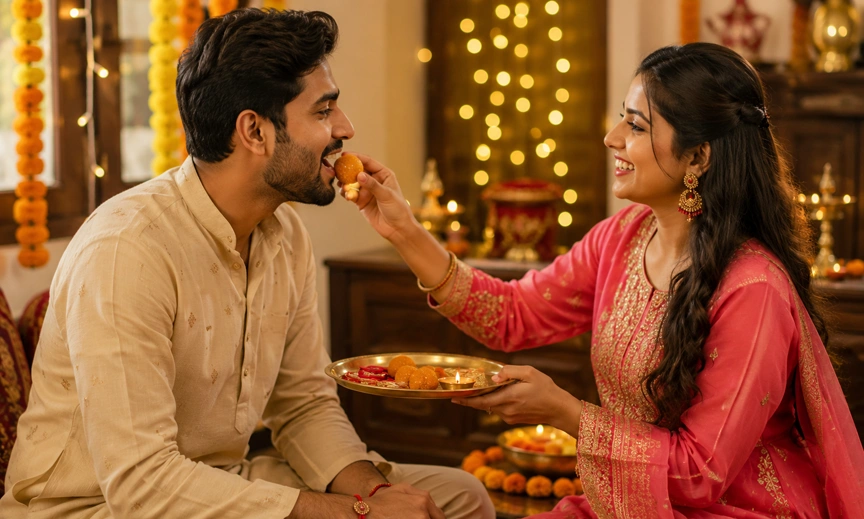
Regional rakhi sweets still feel personal to me because they carry the smell of home, not just sugar. In Delhi, Raksha Bandhan mornings often begin with a tray, a thali, and that one sweet everyone expects without asking. I have seen how quickly the city turns every festive counter into the same polished row of kaju katli, dry fruit barfi, and chocolate boxes. It is neat, efficient, and somehow forgetful. That is why I keep coming back to regional rakhi sweets, because they remind us that India never had one sweet language. It had many.
When I write about food for picknstory.com, I am always drawn to the dishes that survive in family memory before they survive on Instagram. Jalebi’s long journey is one such reminder that our mithai history is older and richer than the mall sweet shop display. Regional rakhi sweets belong to that same story. They tell you which side of North India your family came from, what grain your grandmother trusted, how much ghee your home considered normal, and whether your Rakhi plate was meant to impress guests or feed cousins until they stopped fighting.
I grew up seeing this flattening happen in real time. In Delhi, commercial halwais learned that kaju katli travels well, looks premium, and photographs beautifully. Slowly, it became the default answer to every festival question. However, your family’s real Rakhi sweet may be something far more rooted, like pinni, til ladoo, ghevar, peda, khurchan, or a ghee-heavy Haryana special. This article is my small attempt to bring regional rakhi sweets back into the conversation, not as nostalgia alone, but as living food culture. If you want the festival’s deeper backstory too, you can read Raksha Bandhan history alongside this piece.
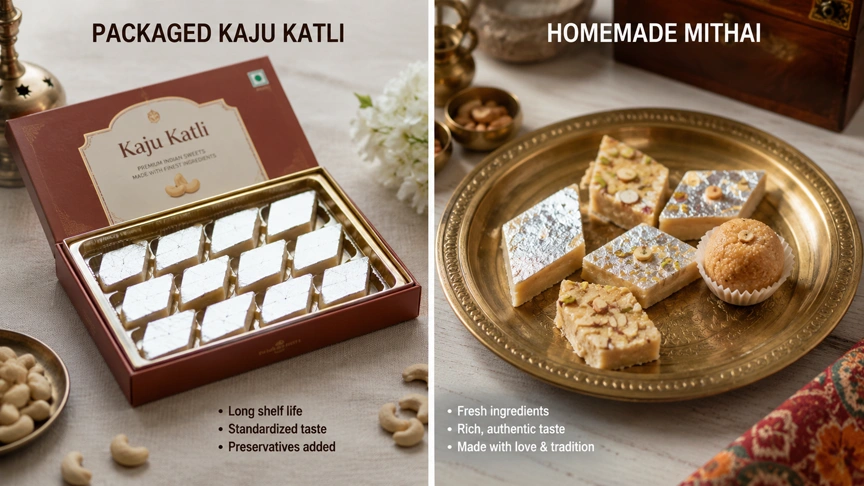
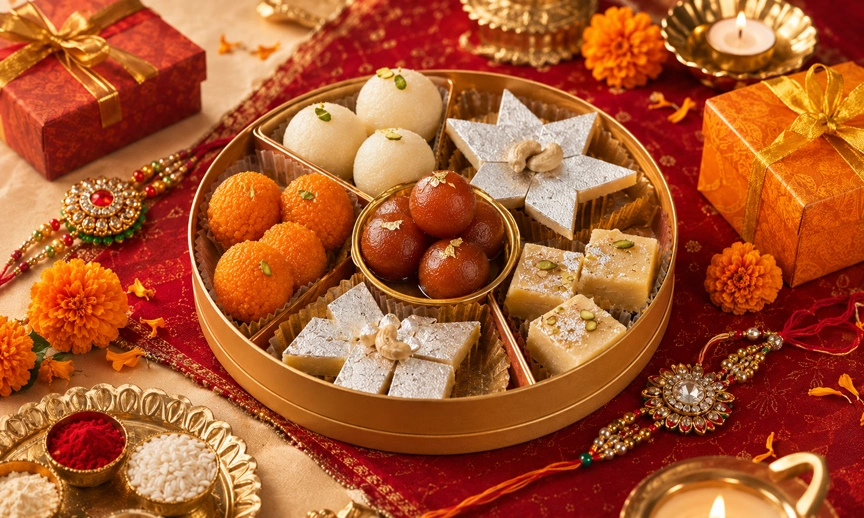
Regional rakhi sweets began disappearing from city thalis when mithai became a gift product instead of a household ritual. Kaju katli won because it is tidy, expensive-looking, and safe for transport across Delhi traffic, NCR offices, and airport security. It also fits the modern idea of respectability, where a shiny silver square seems more ‘premium’ than a rustic ladoo. That shift may look harmless, but it quietly made one sweet speak for many regions. Regional rakhi sweets lost space to one standard tray.
The Delhi halwai market played a huge role here. As showrooms expanded and packaging became part of the celebration, families started buying what looked elegant in a box rather than what tasted like home. Meanwhile, recipes that depended on freshness, grain, or heavy ghee became harder to sell at scale. That is why the city now associates Rakhi with kaju katli more than with its own old household sweets. Regional rakhi sweets deserve better than that corporate neatness.
Regional Rakhi Sweets And Delhi’s Gift Culture
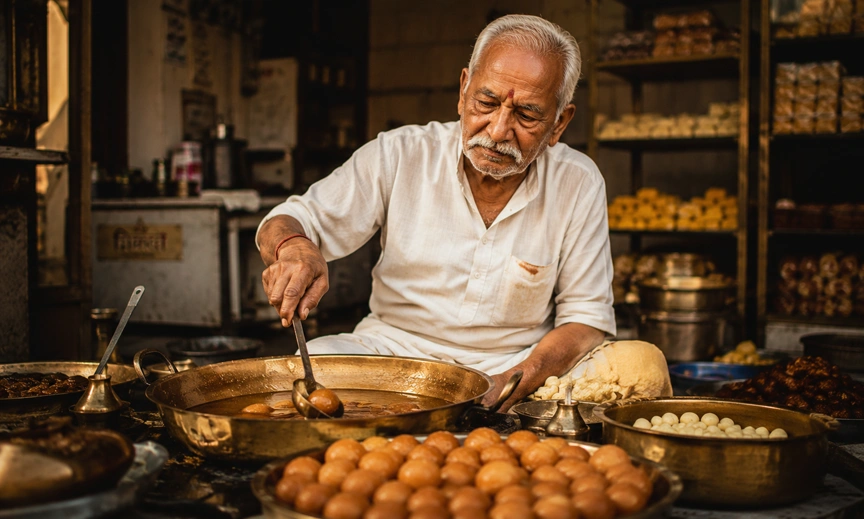
Regional rakhi sweets changed in Delhi because the festival became performative in apartments, offices, and societies. A box had to look good on a desk, survive Metro travel, and be accepted by someone who may not even eat much sugar. Kaju katli fits that role perfectly. However, the old Delhi of lanes, halwais, and joint families knew a more varied sweet map. My own memory of old city visits is full of pedas, laddoos, and trays that smelled of ghee before they even opened.
That is where the loss happened. Once mithai became an exchange item, regional identity got replaced by brand identity. We started asking for the sweet that looked ‘best’ rather than the one that belonged. Regional rakhi sweets were not inferior. They were simply less convenient for modern packaging.
What We Lost When Sweet Boxes Became Status Symbols
Regional rakhi sweets also lost because we began reading sweetness through class markers. Kaju katli became the default because cashew felt luxurious, even when the older sweets were more seasonal and culturally meaningful. This is not just about food. It is about the way Delhi and urban India reward polish over memory. The sweet box became a status symbol, and the family recipe quietly stepped aside.
Interestingly, the moment you ask older relatives about Rakhi, they rarely say kaju katli first. They remember what was made at home, what was available in the local market, and what could be shared with neighbours. That memory is the real archive of regional rakhi sweets.
Punjab’s Pinni And Til Ladoo Regional Rakhi Sweets Legacy
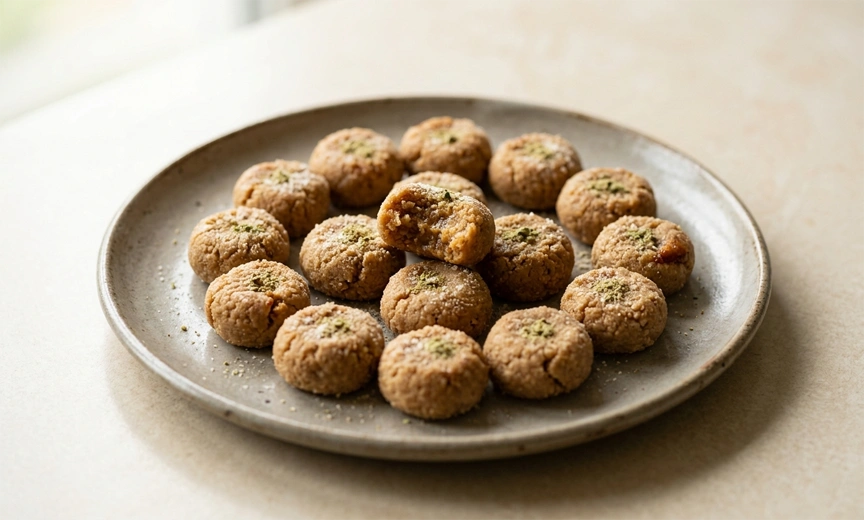
Regional rakhi sweets in Punjab have always been deeper, denser, and far more practical than the glossy boxes we now buy. Pinni and til ladoo were never created for display. They were made for energy, endurance, and the kind of family life where festivals still had to fit around work in the fields, the kitchen, and long monsoon afternoons. When I hear older Punjabi relatives talk about Rakhi, they often mention sweets that could sit for days without losing their soul. Regional rakhi sweets like these were a household strategy as much as a celebration.
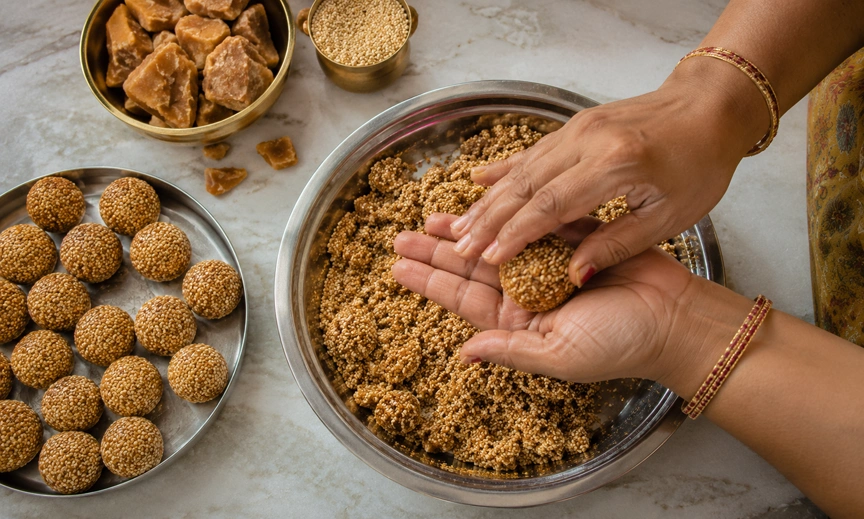
Pinni usually combines atta, ghee, jaggery or sugar, and dry fruits. Til ladoo leans on sesame seeds and jaggery, which gives it a warm, earthy profile that feels especially right during late monsoon and early winter overlaps. These sweets were rarely made alone. One cousin roasted, another stirred, and somebody always watched the ghee carefully. That shared labour mattered. Regional rakhi sweets were part of the festival’s social glue.
Why Punjab Chose Ghee Over Glitter
Regional rakhi sweets from Punjab reveal a simple truth. Families valued nourishment and longevity more than sparkle. A pinni could feed a child after a long day, or sustain a new mother, or travel across villages in a tin. It was festive, but it was also functional. That balance is beautiful, because it shows how food can be generous without being decorative.
In Delhi’s Punjabi households, I still see traces of this logic. My neighbours sometimes keep store-bought mithai for guests, but the real family sweet may be homemade pinni. It is a small act of memory. Regional rakhi sweets survive when someone still believes the kitchen matters more than the showroom.
Til Ladoo, Pinni, And The Family Archive
Regional rakhi sweets such as til ladoo also carry seasonal wisdom. Sesame and jaggery belong to a climate where warmth, energy, and portability matter. Pinni has a stronger winter association, yet many families keep it in the Rakhi rotation because the ritual is about abundance, not strict calendar rules. That flexibility is very Indian. We do not always follow food borders neatly, and that is part of the charm.
When a Punjabi family offers these sweets on Rakhi, they are not only feeding the sibling bond. They are also passing down the story of how a household understood resilience. Regional rakhi sweets like these remind me that the best recipes are often the ones that never needed a fancy name.
Ghevar: The Rajasthani Sweet North India Adopted
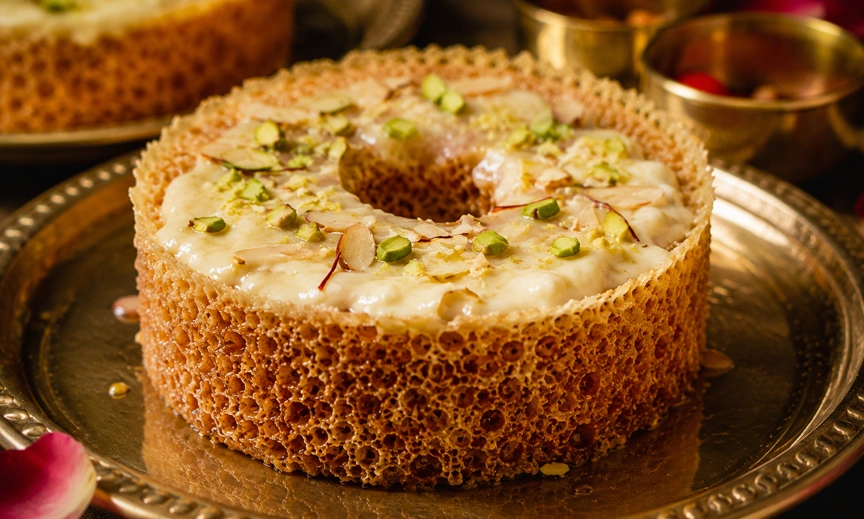
Regional rakhi sweets became more exciting once Rajasthan entered the conversation through ghevar. This disc-shaped sweet, with its honeycomb texture and syrupy finish, has a clear seasonal and festive identity. It is especially associated with Teej and Rakhi, and over time, North India adopted it with enthusiasm. Yet many people now eat ghevar as a generic festival dessert without knowing its Rajasthani heart. Regional rakhi sweets often travel this way. They leave home, enter city markets, and lose part of their story.
I still remember the first time I saw ghevar properly stacked in a Delhi sweet shop window. It looked almost architectural. The shape was fragile, but the presence was grand. That contrast is exactly why it caught on so widely. It felt festive in a way that even kaju katli could not. Regional rakhi sweets like ghevar offer drama, but it is a drama built on craft, not packaging.
Is Ghevar Rajasthani Or North Indian Now?
Regional rakhi sweets like ghevar are a good example of cultural migration. The answer is both Rajasthani and North Indian now. It began in Rajasthan, where climate, festivals, and dairy culture shaped its development. Then it moved across North Indian cities through sweet shops, family marriages, and festive gifting. Once Delhi adopted it, the sweet stopped belonging to only one state.
That said, regional rakhi sweets do not become rootless just because they travel. Ghevar still tastes of Rajasthan’s artisanal precision. The best ones are crisp, soaked, and topped with malai or nuts in a way that feels unmistakably local. Its journey mirrors how India shares food without erasing origin.
Why Ghevar Still Feels Like Rakhi Rain
Regional rakhi sweets gain emotional power when they fit the season. Ghevar does exactly that. Its lightness, syrup, and texture echo the monsoon mood of Rakhi. There is something poetic about eating a sweet that looks like rain frozen into a circle. It reminds us that festivals are not only dates on a calendar. They are sensations.
In many Delhi homes, ghevar is now as expected as kaju katli, but it still carries more regional character. If you want a sweet that feels festive without becoming generic, ghevar is one of the best answers. Regional rakhi sweets should feel like this. Distinct, layered, and impossible to confuse with anything else.
Mathura’s Peda: Uttar Pradesh’s Original Mithai
Regional rakhi sweets from Uttar Pradesh often begin and end with peda, and Mathura peda is the most iconic of them all. It is rich, grainy, deeply dairy-led, and inseparable from the temple-town milk economy that shaped it. This is not a trendy dessert. It is an old, stubborn, devotional sweet that has survived because people still trust its simplicity. Regional rakhi sweets like Mathura peda carry the flavour of milk reduced slowly, patiently, and with respect.
The beauty of Mathura peda is that it does not try to be delicate. It is meant to be satisfying. Ghee, khoya, sugar, and that slow cooked depth create a bite that feels almost ceremonial. On Rakhi, it works perfectly because it is both humble and festive. Regional rakhi sweets do not need novelty when they have this much history behind them.
What Is Mathura Peda Made Of?
Regional rakhi sweets such as Mathura peda are usually made from khoya or mawa, sugar, ghee, and cardamom, though every halwai has a slightly different method. The defining feature is the long cooking process that gives the peda its signature texture and caramelised depth. Some versions include a little milk powder in modern kitchens, but purists prefer the old method. That difference matters because texture carries memory.
Mathura peda also connects directly to the wider dairy culture of Uttar Pradesh. It feels especially fitting on Rakhi because it is rich enough to feel ceremonial, yet familiar enough for everyday family sharing. Regional rakhi sweets often need this balance to stay alive.
Why Uttar Pradesh Never Needed Kaju Katli To Feel Premium
Regional rakhi sweets from UP prove that premium is not always imported from nuts and silver leaf. Mathura, Agra, and nearby towns have long built their prestige around milk, not cashews. That is an important Indian lesson. Luxury can come from local ingredients when skill and patience are high enough.
My own Delhi bias disappears when I eat a good peda. It reminds me that the best sweets do not always look neat in a box. They often look handmade, slightly irregular, and far more honest. Regional rakhi sweets like this are not old-fashioned. They are simply not designed for shallow first impressions.
Lucknow’s Khurchan Nobody Outside Awadh Knows
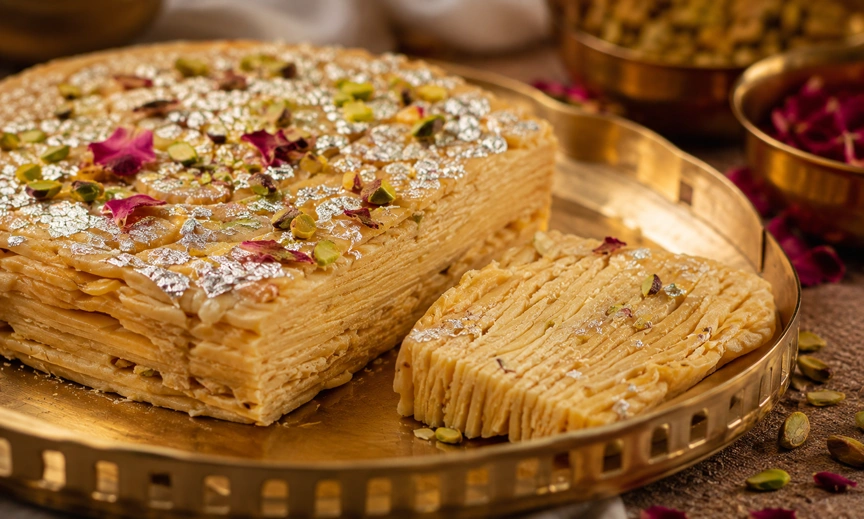
Regional rakhi sweets from Lucknow are a delicious reminder that Awadhi food culture has always had layers most of India never sees. Khurchan is one of those sweets that feels almost secret, because it is made from the malai or cream that forms on milk during boiling, then collected, sweetened, and cooked down further. It is a dessert of patience and wastefulness turned into beauty. Regional rakhi sweets rarely get more local than this.
Khurchan is not the kind of mithai you find in every airport box. It is softer in memory than in marketing. In Lucknow, it belongs to a culture that has always treated milk with ceremony. That is why it matters so much in this article. Regional rakhi sweets are not only about what survived commercially. They are about what survived emotionally inside one city or one family.
Why Khurchan Feels Like An Awadhi Secret
Regional rakhi sweets like khurchan feel secret because they do not travel well in the way market sweets do. They need freshness, careful handling, and a cook who knows how to turn collected cream into something elegant. The result is often soft, mildly sweet, and intensely dairy-rich. It does not shout. It lingers.
Awadh has always been excellent at food that rewards attention. Khurchan belongs to that tradition. It is one of those sweets you learn about from a relative, not a billboard. Regional rakhi sweets often live in this private family network.
How Lucknow Keeps Milk At The Centre
Regional rakhi sweets in Lucknow show how milk can become memory, ritual, and hospitality all at once. Khurchan is part of a larger culinary attitude where nothing good is rushed. Milk is simmered, watched, and turned into layers of flavour. That care is visible in the final sweet.
When I think of Lucknow, I think of restraint meeting richness. Khurchan does that beautifully. It belongs to a city that knows how to be generous without being loud. Regional rakhi sweets can learn a lot from that discipline.
Haryana’s Ghee-Heavy Rakhi Sweet Traditions
Regional rakhi sweets in Haryana are often misunderstood because people focus too much on thalis and not enough on farm kitchens. The food culture here tends to be robust, seasonal, and unapologetically ghee-forward. Rakhi celebrations can include home-made laddoos, besan sweets, and grain-based preparations that feel closer to daily sustenance than ceremonial display. Regional rakhi sweets in Haryana are built for the real rhythm of life.
I have had many conversations with Haryanvi friends in Delhi who describe festival food as a family negotiation. Someone wants more ghee, someone wants something faster, and someone insists that the recipe must taste like their grandmother’s version. That is exactly why regional rakhi sweets remain meaningful. They are not fixed products. They are household arguments turned edible.
How Rakhi Looks In Haryanvi Homes
Regional rakhi sweets in Haryana often reflect a direct, practical celebration style. The festival is warm, community-driven, and less about elaborate display than about feeding siblings, cousins, and neighbours well. Sweetness often comes from besan laddoos, moong dal preparations, or ghee-rich homemade items that can be made in batches. The emphasis is on abundance rather than decoration.
This is where Delhi and Haryana overlap beautifully. Many NCR homes still keep the old habit of making something at home even if they buy extra sweets outside. Regional rakhi sweets survive in these middle spaces, where tradition is adapted instead of frozen.
Ghee As A Cultural Language
Regional rakhi sweets in Haryana also reveal how ghee works as a cultural language. It signals care, nourishment, and respect for the person being fed. A sweet made with generous ghee does not apologise for its richness. It declares it. That confidence is deeply regional.
That said, not every home will make the same sweet, and that is the point. Some will do til-based treats, some besan laddoos, and some family specials that never make it to the market. Regional rakhi sweets are strongest when they stay tied to the kitchen that raised them.
How Migration Flattened North India’s Mithai Map
Regional rakhi sweets changed most dramatically when migration, malls, and packaged gifting turned food into something portable and anonymous. As families moved from cities like Lahore, Amritsar, Kanpur, Mathura, Jaipur, and Lucknow into Delhi and NCR, their sweets entered a shared market. That should have created more diversity. Instead, commercial supply chains encouraged sameness. Regional rakhi sweets became interchangeable with whatever sold fastest and looked cleanest in a box.
Delhi sits at the centre of this flattening. It absorbs people from everywhere, then asks them to adapt to its pace. Sweet shops respond by producing a handful of high-volume favourites. The result is a myth of North Indian mithai that is far narrower than reality. Regional rakhi sweets were not erased by lack of taste. They were compressed by logistics.
Why Delhi Made Everything Look Like Kaju Katli
Regional rakhi sweets began to resemble kaju katli because urban gifting rewards neatness. A perfect square is easier to stack, sell, and ship than a soft peda or a syrupy ghevar. Delhi’s commercial sweet culture learned this quickly. It also learned that some ingredients signal status more loudly than others. Cashew became shorthand for celebration.
I see this all the time in the city during Rakhi. Shops fill with polished trays, and families, even very traditional ones, buy what feels safest for guests. That safety has a cost. Regional rakhi sweets need room to look imperfect.
What Migration Took, And What It Can Still Return
Regional rakhi sweets did lose visibility, but migration also preserved recipes inside homes. A grandmother in Delhi may still make the sweet from her village even if the local shop does not stock it. That private continuity matters more than market presence. It means the recipe is still alive.
If you want to understand North Indian food fully, do not stop at the city sweet shop shelf. Ask families what they make, not what they buy. Regional rakhi sweets will appear in those answers immediately.
Reviving One Regional Sweet In Your Own Kitchen
Regional rakhi sweets are easiest to protect when you make one at home, even if the result is imperfect. Start small. Pick one sweet your family remembers, buy the best ingredients you can, and accept that the first batch may not look like a mithai shop tray. That is fine. The point is to restore a habit, not to perform perfection. Regional rakhi sweets come alive through repetition.
In my Delhi kitchen, I have noticed that family cooking always changes the mood of a festival. Even a simple til ladoo feels more emotional when someone roasts the flour themselves. The smell spreads through the house. Someone starts telling stories. Someone else sneaks a taste. That is how regional rakhi sweets make their way back into modern life.
Simple Kitchen Rules That Actually Work
Regional rakhi sweets usually need three things. Good raw material, steady heat, and patience. Do not rush ghee-based sweets on high flame, because they can taste raw or bitter. Measure carefully if you are new, especially for jaggery or sugar syrups. Let the mixture cool enough before shaping it, or you will lose texture and burn your hands.
If your family sweet is something like pinni or peda, make a little extra. Homemade sweets disappear faster than you think, especially when siblings, cousins, and neighbours get involved. Regional rakhi sweets are not just recipes. They are shared timing.
Why Homemade Still Tastes Like Memory
Regional rakhi sweets taste different at home because the kitchen context is part of the flavour. The same ingredients can feel warmer when made by a sister, aunt, or mother who remembers the older version. This is why home cooking matters even in a city full of excellent sweet shops. It protects emotional specificity.
One of the best things you can do this Rakhi is choose one regional sweet and make it yours again. It may not look fancy. It may not even travel well. But it will belong to you. Regional rakhi sweets should feel like belonging.
What Your Family’s Rakhi Sweet Says About You
Regional rakhi sweets reveal family history in a way no greeting card can. If your home reaches for pinni or til ladoo, you may come from a household that values nourishment, seasonality, and practicality. If ghevar is central, your family likely has a stronger monsoon and Rajasthani influence. If peda rules the table, there is a good chance dairy, temple culture, or a town-based sweet memory shaped your food life. Regional rakhi sweets are tiny cultural fingerprints.
I love this question because it is so personal. In Delhi, where families mix languages, states, and customs so freely, a Rakhi sweet can tell you which grandparent’s habits survived the move. It can also tell you what your household chose to keep, even after commercial mithai tried to simplify everything. Regional rakhi sweets are not just desserts. They are identity, softened by sugar.
Why Family Sweet Memory Matters
Regional rakhi sweets matter because memory is often more truthful than trend. People forget the marketing, but they remember the smell of ghee, the shape of the plate, and who made the first batch. That is why food historians and family cooks often agree. Recipes outlive categories.
When a family remembers its own Rakhi sweet, it is also remembering migration, marriage, and changing city life. That is cultural continuity. Regional rakhi sweets keep those links visible.
Choosing Tradition Without Becoming Nostalgic
Regional rakhi sweets do not require us to reject every modern sweet box. They only ask us to remember what came before convenience. You can buy kaju katli and still make pinni. You can serve ghevar and still keep peda from your hometown. The point is choice, not purity.
If you want a richer festival table, start with one family story and one regional sweet. That is enough to make Rakhi feel less generic and more yours. Regional rakhi sweets are the easiest way to do that.
Frequently Asked Questions
What Is The Traditional Sweet For Raksha Bandhan In India?
Regional rakhi sweets vary widely, so there is no single traditional sweet for the whole country. In many North Indian homes, families choose kaju katli today because it is easy to gift, but older traditions include pinni, til ladoo, ghevar, peda, and homemade dairy sweets. The real answer depends on the family, state, and season. Regional rakhi sweets are more local than national.
Why Is Kaju Katli The Default Rakhi Sweet In Delhi?
Regional rakhi sweets got overshadowed in Delhi because kaju katli looks premium, travels well, and fits modern gifting habits. It is neat, box-friendly, and widely accepted across communities. That convenience made it the city default. However, it replaced a far richer sweet map that once included local pedas, laddoos, ghevar, and homemade recipes. Regional rakhi sweets deserve more visibility.
What Sweets Do Punjabi Families Make For Rakhi?
Regional rakhi sweets in Punjabi homes often include pinni, til ladoo, besan laddoos, and other ghee-rich homemade treats. Many families also buy shop sweets, but the emotional centre still lies in the household recipe. These sweets are usually dense, nourishing, and made to last. They fit the practical, festive rhythm of Punjabi kitchens beautifully. Regional rakhi sweets here are deeply family-based.
Is Ghevar A Rajasthani Sweet Or A North Indian Sweet?
Regional rakhi sweets like ghevar began in Rajasthan, where the sweet remains strongly tied to Teej and Rakhi. Over time, it spread across North India through sweet shops and family celebrations, especially in Delhi and NCR. So the most accurate answer is both. Its roots are Rajasthani, but its festive life is now broader. Regional rakhi sweets often travel this way. Ghevar shows that perfectly.
What Is Mathura Peda Made Of?
Regional rakhi sweets like Mathura peda are usually made from khoya or mawa, sugar, ghee, and cardamom. The signature taste comes from slow cooking and dairy richness. Some modern versions use milk powder, but the classic recipe relies on patient reduction of milk solids. It is one of Uttar Pradesh’s most recognisable sweets. Regional rakhi sweets rarely get more rooted than this.
What Is Khurchan Mithai From Lucknow?
Regional rakhi sweets from Lucknow include khurchan, a sweet made from the collected cream or milk skin that forms when milk is boiled slowly. It is then sweetened and cooked further into a rich dairy dessert. It belongs to Awadhi food culture and is far less common outside the region. That rarity is part of its charm. Regional rakhi sweets like khurchan feel intimate and local.
How Is Rakhi Celebrated With Food In Haryana?
Regional rakhi sweets in Haryana usually show up as homemade, ghee-heavy items like laddoos, besan sweets, or grain-based preparations shared among family and neighbours. The celebration is practical but warm, often rooted in household cooking rather than only shop-bought mithai. Food is a way of showing care, especially for siblings and visiting relatives. Regional rakhi sweets here are generous and direct.
Can Regional Rakhi Sweets Be Made At Home?
Regional rakhi sweets are absolutely possible at home, and many taste better that way because the family memory is part of the recipe. Start with one sweet your elders remember, such as pinni, til ladoo, or peda. Keep the method simple, use fresh ghee, and do not rush the process. The goal is not perfection. Regional rakhi sweets become meaningful through home repetition.
What Is The Difference Between Pinni And Til Ladoo?
Regional rakhi sweets such as pinni and til ladoo may look similar in their use of jaggery and ghee, but they are not the same. Pinni usually uses roasted atta or whole wheat flour with ghee, sugar or jaggery, and dry fruits. Til ladoo is built mainly around sesame seeds and jaggery. Pinni feels heavier and more sustaining, while til ladoo is nuttier and warmer in texture. Regional rakhi sweets have these subtle differences.
Which North Indian Region Has The Most Distinct Rakhi Sweets?
Regional rakhi sweets are especially distinct across Punjab, Rajasthan, Uttar Pradesh, and Haryana, each with its own memory of Rakhi. Punjab offers pinni and til ladoo, Rajasthan gives ghevar, UP gives peda and khurchan, and Haryana keeps the ghee-rich home tradition alive. If I had to pick the most visually and texturally varied region, Rajasthan and UP together make a very strong case. Regional rakhi sweets are richest where home traditions still survive.
Conclusion
Regional rakhi sweets matter to me because they remind us that Indian food culture was never meant to be one-note. In Delhi, I have watched festive tables become more polished and less personal over the years, and I do understand why. Convenience is real. Packaging is easy. Guests expect something familiar. However, the cost of that familiarity is invisibility for the sweets that actually carried our family histories. Regional rakhi sweets are those histories, made edible.
If you grew up with pinni, til ladoo, ghevar, peda, or khurchan, do not let that memory get buried under a generic box. Make it again. Ask your mother, aunt, or nani for the old method. Buy from the small halwai who still respects season and texture. Tell your children why that sweet mattered. That is how food survives. That is how festivals stay honest.
I hope this Rakhi, you choose one sweet that belongs to your region or your family and bring it back to the centre of the thali. If you want more festive food memory, read these nostalgic Indian comfort food recipes. Your Rakhi table does not need to look like everyone else’s. It only needs to feel like yours. Regional rakhi sweets deserve that place.