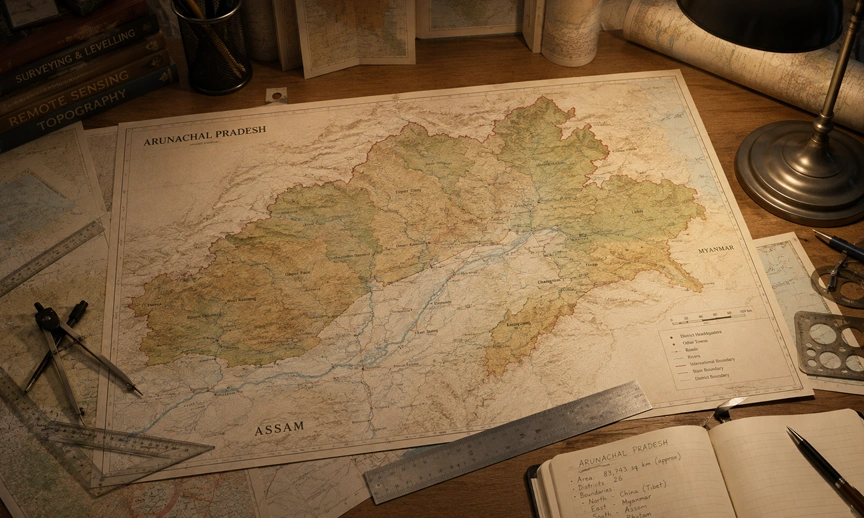
Arunachal Pradesh China dispute has always felt larger than a border map to me, because it sits right where Indian memory, Himalayan geography, and everyday politics meet. In Delhi, we grow up hearing about the Northeast in fragments – a news clip here, a headline there, and then silence until the next flare-up. That is why I wanted to write this piece for PicknStory India stories in a way that is calm, factual, and human.
The Arunachal Pradesh China dispute is not a new drama, and it is certainly not just about names on signs. It has roots in 1914, changed shape after the 1962 war, took a constitutional turn in 1987, and entered a sharper renaming phase from 2017 onward. If you have only seen breaking news around new Chinese place names, you may have missed the older timeline that explains why those announcements keep returning.
Arunachal Pradesh China dispute matters because it affects how both countries speak, document, and symbolically claim the same land. Meanwhile, ordinary people in Arunachal Pradesh continue living, farming, studying, and travelling across a landscape that is Indian in administration and identity. I remember a winter morning in my Delhi neighbourhood when a neighbour from Tawang spoke about home with such quiet certainty that it stayed with me. She did not speak like someone living in a headline. She spoke like someone from a place with memory, weather, faith, and roads.
That is the spirit of this explainer. Before we go further, if you enjoy grounded India context, you may also like our India geography stories. The Arunachal Pradesh China dispute deserves that kind of patient reading.
Arunachal Pradesh China dispute entered another public phase on August 7 2026, when India counter named 27 places in response to China’s repeated renaming attempts. The move was symbolic, official, and rooted in India’s assertion that these places already have Indian names, histories, and administrative reality. This is important because naming is not the same as control, but it is often used as a political signal. The Arunachal Pradesh China dispute therefore became a story about recognition, record keeping, and state messaging as much as geography.
In practical terms, India’s list did not change any roads, villages, or borders on the ground. What it did change was the conversation. It reminded readers that the dispute is active, not archived. The Arunachal Pradesh China dispute is often treated like a sudden headline, yet the August 2026 naming was only the latest reply in a much older exchange. Interestingly, this kind of response also shows how modern disputes live in databases, gazettes, and digital maps, not just in military posts.
Why The 2026 Naming Matters
Arunachal Pradesh China dispute became more visible because India chose to respond in the same symbolic language China has used for years. That means names, lists, and official announcements. For many Indians, the details feel technical. For border policy watchers, they are not technical at all. Each named place is part of a wider contest over memory and legitimacy. The Arunachal Pradesh China dispute, in this sense, is about who gets to write the first line in the official record.
For readers in Delhi, this may sound abstract, but it is not. We see the same idea in domestic arguments over districts, maps, and old names versus new names. The scale is different, but the human instinct is similar. The Arunachal Pradesh China dispute shows that names can carry power even when soldiers are not moving.
Counter Naming Is Not Border Change
Arunachal Pradesh China dispute needs one clear fact repeated often. Renaming does not transfer territory. It does not shift a ridge, a river, or a village boundary. It is a political statement, not a legal handover. That is why both sides can issue names while the line of actual administration stays where it is.
This is also why public reaction can become emotional very quickly. People hear a list and assume a new reality has been created. It has not. The Arunachal Pradesh China dispute is better understood as a long contest of claims, documentation, and strategic messaging. If you want a broader background on the state itself, see our Arunachal Pradesh travel guide.
The 1914 Simla Convention Explained Simply
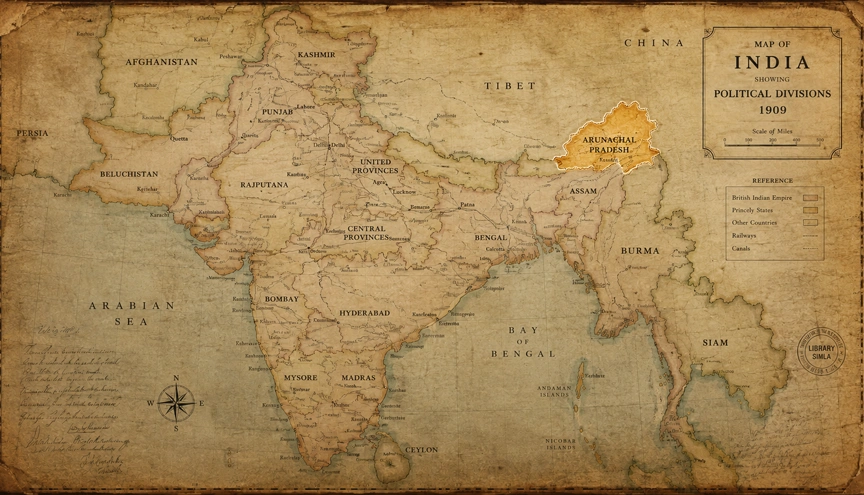
Arunachal Pradesh China dispute begins, in modern diplomatic terms, with the 1914 Simla Convention. This conference involved British India, Tibet, and representatives linked to China, and it produced the McMahon Line, which later became central to the border argument. The line was drawn to separate territories in the eastern Himalayas, including the area that is now Arunachal Pradesh. India treats the agreement as a valid historical basis for its border, while China rejects it. That single difference still shapes the dispute today.
The Simla Convention matters because it shows that the disagreement did not begin in 1962 or in 2017. It was already present in colonial-era diplomacy. The Arunachal Pradesh China dispute is therefore tied to the way imperial borders were negotiated, accepted, disputed, and inherited after independence. For many Indians, this is where the story becomes complicated. However, the basic idea is simple. India inherited a border framework it considers legitimate. China does not accept the same framework.
The McMahon Line In One Plain Explanation
Arunachal Pradesh China dispute often turns on the McMahon Line, which is the name given to the boundary proposed at Simla. It runs across a rugged mountain region where villages, monasteries, and valleys were not always mapped in the modern sense. Supporters of India’s position say that the line was part of an official international process. Critics on the Chinese side say the convention was flawed and lacking proper acceptance.
The reason the McMahon Line remains famous is simple. It sits at the centre of sovereignty arguments between two nuclear-armed neighbours. In Delhi, even casual political conversation can drift back to this line when foreign policy comes up. The Arunachal Pradesh China dispute keeps showing that old agreements never fully disappear if both sides keep invoking them.
Why 1914 Still Shapes 2026
Arunachal Pradesh China dispute is still tied to 1914 because the historical paper trail matters in diplomacy. Governments like to argue from documents, signatures, maps, and conventions. The Simla Convention provides one such document for India. For China, the same document is evidence of a flawed process.
That disagreement has never been resolved by a fresh bilateral treaty. Instead, it has been carried forward by wars, patrols, protests, and naming campaigns. The Arunachal Pradesh China dispute is therefore not only about where the border lies. It is also about which historical moment gets to define that border for the future.
Why China Rejects The McMahon Line
Arunachal Pradesh China dispute cannot be understood without asking why China rejects the McMahon Line. The short answer is that China does not accept the 1914 framework as binding on it. Beijing has long argued that Tibet was not empowered to sign such an arrangement in a way that created a final boundary acceptable to China. So, from the Chinese position, the line is historically and legally contested.
That rejection is central to the Arunachal Pradesh China dispute because it affects how China describes the entire state. Rather than calling it Arunachal Pradesh, China often uses the term Zangnan, which means southern Tibet. This language is not just geographic. It is political. It suggests that the territory belongs within a Tibetan historical frame, not an Indian state frame. As a Delhi resident, I find this especially striking because the words chosen in diplomacy can feel colder than the mountains they describe, yet they carry real weight.
China’s Legal Argument In Brief
Arunachal Pradesh China dispute reflects China’s view that colonial agreements should not settle postcolonial borders automatically. Beijing says the McMahon Line came from an unequal imperial process and therefore lacks legitimacy. In other words, China sees the line as a product of British-era diplomacy that did not properly include Chinese consent.
That view has persisted through decades of bilateral talks. Even when trade, tourism, and people-to-people contact improved, the border question remained separate. The Arunachal Pradesh China dispute is therefore a rare case where economic cooperation and territorial disagreement coexist at the same time.
Why India Does Not Accept That Rejection
Arunachal Pradesh China dispute also needs India’s side of the story. India accepts the McMahon Line as part of the inherited boundary after independence. It does not see the line as optional simply because China disputes it. India’s position is that its sovereign administration over Arunachal Pradesh is real, constitutional, and continuous.
This is why the border issue rarely disappears from diplomatic meetings. The two sides are not merely disagreeing over a small patch of land. They are disagreeing over the legitimacy of the historical document itself. The Arunachal Pradesh China dispute survives because both states begin from different legal starting points.
From Nefa To Statehood In 1987
Arunachal Pradesh China dispute also makes more sense when you follow the region’s administrative journey inside India. Before statehood, the area was known through the North East Frontier Agency, or NEFA. This was a frontier arrangement under Indian administration, shaped by geography, security concerns, and limited infrastructure. Later, in 1972, it became a Union Territory, and in 1987 it was granted full statehood as Arunachal Pradesh.
That 1987 moment is crucial. The Arunachal Pradesh China dispute did not end because a state was formed, but statehood strengthened India’s institutional claim. Once a place becomes a state, its representation, budget, elections, and governance become more deeply woven into the national structure. For ordinary residents, this is not abstract. It affects schools, roads, health centres, and political voice. The dispute may sit at the border, but governance sits at the centre of daily life.
Why Statehood Changed The Conversation
Arunachal Pradesh China dispute took on a different tone after 1987 because India was no longer treating the region merely as a frontier zone. It had become part of the federal map in a stronger way. That does not erase China’s objection, but it changes how India frames the issue domestically and internationally.
For many Indians, statehood also humanised the region. Once people started seeing Arunachal Pradesh through elections, development debates, and local leaders, the place stopped being only a strategic term on a map. The Arunachal Pradesh China dispute remains serious, yet the state itself is lived reality, not just border rhetoric.
Delhi, Distance, And The Feeling Of Far Away
Arunachal Pradesh China dispute can feel distant from Delhi, and I admit that even I sometimes had to work to connect the dots. But distance is misleading. A dispute that begins in the eastern Himalayas eventually reaches Parliament, foreign policy rooms, and school textbooks. That is how geography works in India.
When I first heard a colleague from Itanagar speak about office delays caused by weather and road access, I realised how much of India remains unseen from the capital. The Arunachal Pradesh China dispute sits over that larger landscape of invisibility and recognition. It is also a reminder that statehood means more than a line on paper.
What Zangnan Means And Why China Uses It
Arunachal Pradesh China dispute often confuses readers because of the word Zangnan. In Chinese usage, Zangnan means southern Tibet, and it is the name China applies to the area it claims within Arunachal Pradesh. This is not a neutral label. It is an expression of historical and territorial position. By using Zangnan, China signals that it sees the region as part of a Tibetan cultural and political continuum.
The Arunachal Pradesh China dispute becomes more understandable when you realise that names carry narratives. Zangnan is not simply a translation. It is an argument. It tells the audience that the territory belongs in a Chinese historical frame. India, naturally, rejects that framing and insists on Arunachal Pradesh as an Indian state with its own people, institutions, and identity. The language gap is therefore part of the conflict itself.
Why Naming Is A Diplomatic Tool
Arunachal Pradesh China dispute shows how states use names to shape public perception. A government can not move mountains by renaming them, but it can influence maps, databases, and media references. That is why China’s renaming lists get attention each time they appear.
For readers outside policy circles, this may feel cosmetic. But diplomatic language is rarely cosmetic. It prepares arguments, hardens claims, and creates repeatable official positions. The Arunachal Pradesh China dispute therefore lives in the small details of language as much as in the large details of security.
Why Indians React Strongly To Zangnan
Arunachal Pradesh China dispute draws strong Indian reactions because Zangnan sounds like a denial of local identity. People in Arunachal Pradesh do not live in some blank border zone. They live in towns, villages, and communities with history and belonging. When an external power uses a name that erases that reality, it feels personal.
That emotional response matters. It explains why renaming headlines travel so quickly across India. The Arunachal Pradesh China dispute is not only a state-to-state issue. It is also about how people are named, imagined, and recognised by those outside their home.
The Renaming Campaign From 2017 To 2026
Arunachal Pradesh China dispute has been kept alive by a steady renaming campaign from 2017 to 2026. China began publishing lists of renamed places in Arunachal Pradesh, often after diplomatic tensions or major political events. Each list tended to include mountains, rivers, passes, or settlements with Chinese spellings and categories. India rejected all of them as meaningless in legal terms, but the repetition itself became the story.
There is an important pattern here. The Arunachal Pradesh China dispute did not intensify because of one single name list. It escalated because the lists kept coming. Every new batch created another cycle of denial, rebuttal, and commentary. By 2026, the accumulation of these actions had made the naming dispute almost routine, which is precisely why the August 7 Indian counter naming mattered so much. It broke the one-sided rhythm.
What Repetition Achieves In Diplomacy
Arunachal Pradesh China dispute shows that repetition can be a diplomatic tactic. If a government repeats a claim often enough, it builds familiarity around that claim, even if others reject it. China’s naming campaign works in that way. It keeps the territorial argument visible and documented in official channels.
That does not make the claim valid to the other side, but it does make it harder to ignore. In India, each new list becomes a reminder that the dispute is not frozen in time. The Arunachal Pradesh China dispute remains active because both sides keep returning to it through official words.
What Changed By 2026
Arunachal Pradesh China dispute in 2026 looks different from the older decades because digital mapping, social media, and instant reporting spread each announcement faster than before. A small administrative list can now travel from Beijing to Delhi to global headlines in minutes. That speed amplifies the symbolic impact.
However, speed does not equal substance. No list can replace administration, no rename can replace governance, and no spelling change can settle sovereignty. The Arunachal Pradesh China dispute is still a political standoff, even if it arrives to us through modern screens.
Tawang And The Tibetan Historical Claim
Arunachal Pradesh China dispute often focuses on Tawang because it sits at the intersection of strategic geography and Tibetan history. China has repeatedly shown interest in Tawang due to its proximity to Tibet and its religious and cultural ties to Tibetan Buddhism. The region’s monastery culture, trade routes, and historical links are often used in Chinese arguments about southern Tibet.
Tawang matters because it is not merely a map point. It is a living place with spiritual depth and local identity. Many Indians know it first through travel photos and winter scenes, but the Arunachal Pradesh China dispute makes it also a place of strategic symbolism. This is where history, faith, and geopolitics meet in a very tight space. The combination is why the name appears so often in border discussions.
Why Tawang Is So Sensitive
Arunachal Pradesh China dispute becomes sharper around Tawang because of its historical Tibetan connections. China often points to these links to support its southern Tibet claim. India, meanwhile, sees those cultural links as part of the broader Himalayan heritage without accepting Chinese sovereignty over the land.
That distinction matters. Cultural connection does not automatically equal political control. Many Indian regions have cross-border history without becoming part of a neighbour’s territory. The Arunachal Pradesh China dispute therefore reveals how historical memory can be used differently by different states.
The Local Reality In Arunachal Pradesh
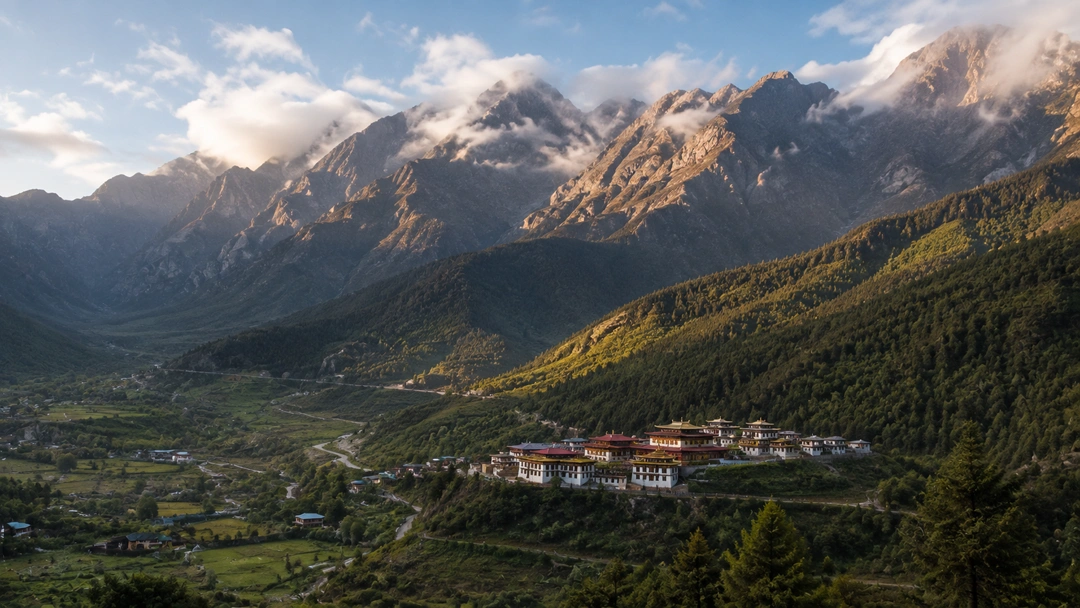
Arunachal Pradesh China dispute should not erase the daily life of people in Tawang and beyond. Families live there with work, schools, festivals, and travel routines. The place is not an empty strategic zone. It is home. When border claims dominate the conversation, that human reality can get pushed aside.
I have noticed in Delhi that we often talk about remote places as if they were symbols first and homes second. The Arunachal Pradesh China dispute is a reminder to reverse that habit. People live there before diplomats discuss there.
The 1962 War And What Changed After
Arunachal Pradesh China dispute cannot be separated from the 1962 India-China war. The conflict took place across both the western and eastern sectors of the border, and the eastern theatre had direct relevance to the area now called Arunachal Pradesh. The war ended quickly, but its psychological and strategic impact lasted far longer. For many Indians, 1962 became the moment when border vulnerability turned from theory into memory.
After the war, India strengthened its military posture, border infrastructure, and diplomatic caution. China, too, kept its claim alive in different forms. The Arunachal Pradesh China dispute therefore moved from paper disagreement to strategic permanence. That is why the war remains such an essential reference point even in 2026. It did not settle the dispute. It deepened it.
What 1962 Changed On The Ground
Arunachal Pradesh China dispute changed after 1962 because India became more focused on frontier administration and defence preparedness. Roads, posts, and surveillance slowly became more important. The war also made the border a national issue in a way it had not been before.
People in Delhi still mention 1962 when discussing China, even if they do not know every detail. The memory is part of India’s foreign policy vocabulary. The Arunachal Pradesh China dispute continues to carry that historical weight every time the border question resurfaces.
Why The War Still Shapes Public Feeling
Arunachal Pradesh China dispute is emotionally charged partly because 1962 left a sense of unfinished history. Wars create maps, but they also create memory. And memory tends to outlive formal statements. That is why each new border-related announcement is read against the older backdrop of conflict.
Yet the lesson from 1962 is not only about defence. It is also about the limits of force in resolving identity and sovereignty disputes. The Arunachal Pradesh China dispute shows that once history becomes layered, it is difficult to simplify it again.
Where The Two Positions Stand Today
Arunachal Pradesh China dispute in 2026 remains unresolved, even though both sides have had years of talks, exchanges, and carefully worded statements. India treats Arunachal Pradesh as an integral part of the country, fully represented in its constitutional and administrative system. China continues to reject the border line India accepts and keeps using names such as Zangnan for the area. That is the core of the current standoff.
What makes the Arunachal Pradesh China dispute unusual is that it is both stable and active. Stable, because the basic positions have not changed much. Active, because naming, patrols, and diplomacy keep renewing attention. Neither side has surrendered its claim, and neither has created a final settlement. That means the dispute remains politically alive even when day-to-day life in Arunachal Pradesh continues normally.
What Has Not Changed
Arunachal Pradesh China dispute has not been solved by counter naming, by repeated denials, or by official statements. The border remains disputed at the diplomatic level. The state remains part of India in practice and law. Those two facts can coexist, even if they are incompatible in political terms.
For ordinary readers, the key takeaway is simple. A territorial dispute can remain open for decades without changing the lived reality of the people inside the territory. The Arunachal Pradesh China dispute is exactly that kind of case.
What To Watch Going Forward
Arunachal Pradesh China dispute will likely keep appearing whenever either side wants to send a message. Watch for renaming lists, official maps, border talks, and references to Tawang or southern Tibet. These are the recurring signals. They do not always mean escalation, but they do mean the issue is still alive.
If you want to understand India-China relations honestly, you have to follow these signals without panic and without denial. The Arunachal Pradesh China dispute is not fiction. It is a long, documented contest that has moved from convention to war to statehood to naming campaigns.
Frequently Asked Questions
What Is Zangnan And Why Does China Call Arunachal Pradesh That?
Arunachal Pradesh China dispute often uses the word Zangnan because China uses it to mean southern Tibet. It is a political label, not a neutral geographic term. China applies it to Arunachal Pradesh to support its territorial claim and historical narrative. India rejects this naming completely and treats Arunachal Pradesh as an Indian state. The label is part of the broader Arunachal Pradesh China dispute, not a separate issue.
What Was The 1914 Simla Convention?
Arunachal Pradesh China dispute is tied to the 1914 Simla Convention, a colonial-era meeting that produced the McMahon Line. Britain, Tibet, and related representatives discussed border arrangements there. India treats the outcome as a valid historical basis for the boundary. China rejects the convention and does not accept the same legal outcome. That disagreement is one of the oldest roots of the Arunachal Pradesh China dispute.
Why Does China Reject The McMahon Line?
Arunachal Pradesh China dispute continues because China says the McMahon Line came from an unequal imperial process and lacked proper Chinese consent. Beijing argues that Tibet could not validly settle the boundary in a way that bound China. India does not accept that argument and treats the line as part of the inherited border. This legal disagreement is central to the Arunachal Pradesh China dispute.
When Did Arunachal Pradesh Become An Indian State?
Arunachal Pradesh China dispute is often discussed without remembering the statehood timeline. The region became a Union Territory in 1972 and a full state in 1987. That transition strengthened India’s administrative and constitutional claim. It did not end the dispute, but it made Arunachal Pradesh’s place within India more formal and visible. The Arunachal Pradesh China dispute still exists despite that statehood.
How Many Places Has China Renamed In Arunachal Pradesh Since 2017?
Arunachal Pradesh China dispute has seen multiple rounds of renaming by China since 2017, with the number growing over time through repeated official lists. By 2026, China had published several batches that together covered many locations. India rejects all of them as meaningless in legal terms. The Arunachal Pradesh China dispute is therefore also a dispute over symbolic naming, not just land.
What Did India Do On August 7 2026?
Arunachal Pradesh China dispute got a new response on August 7 2026, when India counter named 27 places in Arunachal Pradesh. The move was symbolic and official, aimed at answering China’s repeated renaming campaign. It did not change territorial control on the ground. It did, however, keep the Arunachal Pradesh China dispute at the centre of public attention.
Why Does China Claim Tawang Specifically?
Arunachal Pradesh China dispute often focuses on Tawang because China sees it as historically connected to Tibet and therefore useful to its southern Tibet argument. The monastery culture and regional history make Tawang especially sensitive. India sees Tawang as part of Arunachal Pradesh and rejects the Chinese claim. That is why the Arunachal Pradesh China dispute keeps returning to this town.
What Happened In The 1962 India-China War?
Arunachal Pradesh China dispute cannot be separated from the 1962 war, which saw fighting in the eastern Himalayas and changed India’s security thinking. The conflict ended quickly, but it left a lasting impact on policy and public memory. It did not settle the border issue. Instead, it made the Arunachal Pradesh China dispute more serious and permanent.
Does Renaming Places Actually Change Territorial Control?
Arunachal Pradesh China dispute shows that renaming does not change real control. Names can influence perception, official records, and diplomatic messaging, but they do not move borders. Administration, policing, and governance matter much more. The Arunachal Pradesh China dispute is therefore about symbolism and sovereignty claims, not actual transfer of land.
Is India And China’s Border Dispute Still Active In 2026?
Arunachal Pradesh China dispute is still active in 2026 because the core positions have not changed. India continues to treat Arunachal Pradesh as its own state, while China continues to question that status through naming and historical claims. Talks continue, but no final settlement has been reached. So yes, the Arunachal Pradesh China dispute remains live.
Conclusion
Arunachal Pradesh China dispute is one of those issues that looks simple only if you see a headline and move on. Once you trace the full arc from the 1914 Simla Convention, through the 1962 war, to Arunachal Pradesh’s 1987 statehood, and then into the 2017 to 2026 renaming cycle, the picture becomes far more grounded. That is what I wanted to do here. Not shout. Not pick a side. Just connect the facts the way a careful reader would want them connected.
From my Delhi lens, I find this dispute fascinating and sobering at once. Fascinating, because it shows how history survives in official language for more than a century. Sobering, because the people living in Arunachal Pradesh are often reduced to symbols when they are actually citizens with daily lives, routines, and belonging. The Arunachal Pradesh China dispute is not fiction, but neither is it only about maps. It is about memory, statehood, diplomacy, and the stubborn life of borders.
If this kind of clear, India-centred explanation helps you, read more on our India politics stories and keep following the facts, not the noise. The Arunachal Pradesh China dispute will likely stay in the news, but you now have the timeline to read it better. The Arunachal Pradesh China dispute remains active in 2026.