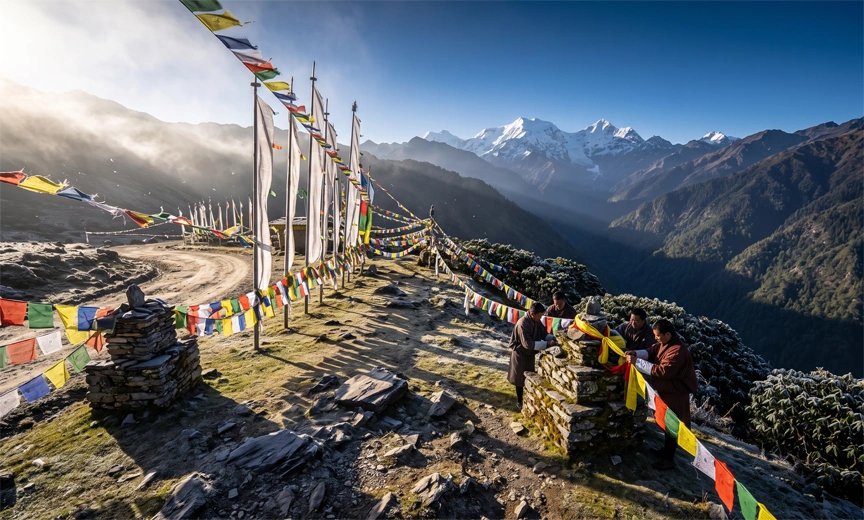
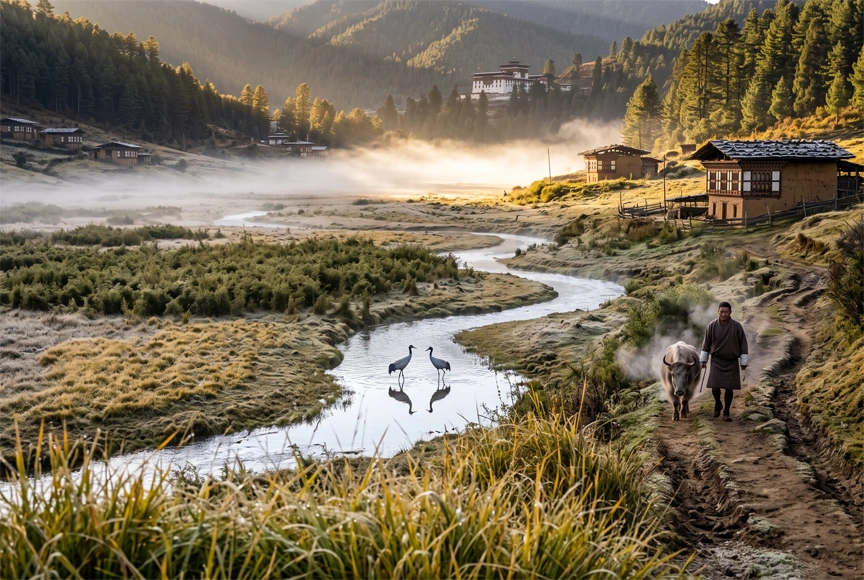
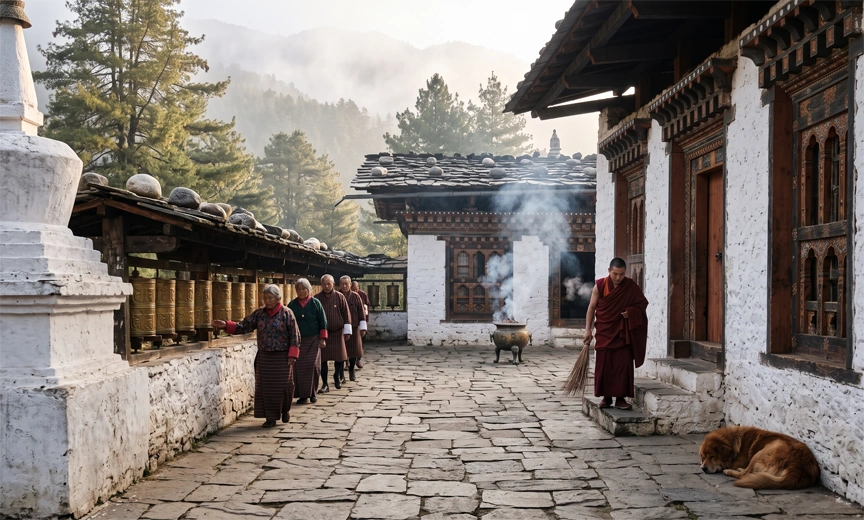
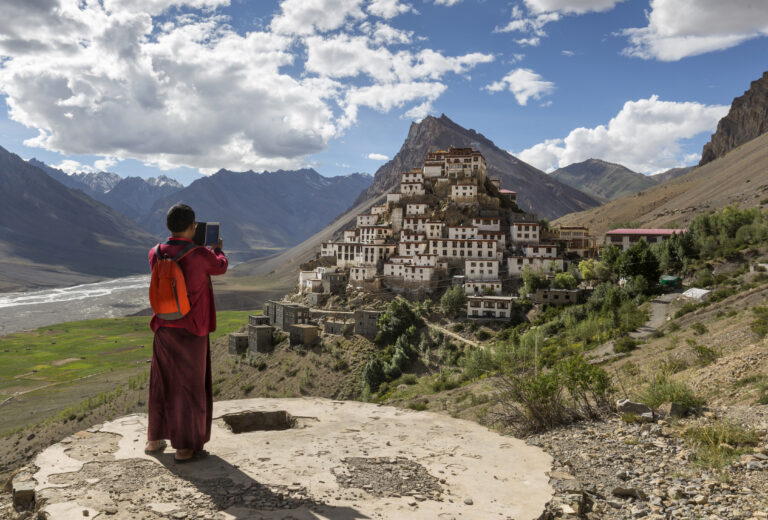
Bhutan Travel Guide: Imagine driving through winding Himalayan roads where colorful prayer flags flutter in the crisp mountain breeze, monks in crimson robes quietly walk toward centuries-old monasteries, and every turn reveals another postcard-worthy valley. There are no flashing billboards demanding your attention, no frantic city rush, and no race to see everything in a single day. Instead, Bhutan gently encourages you to slow down, breathe deeply, and appreciate the journey itself.
That first impression stays with almost everyone who visits.
Some travelers remember Bhutan for the breathtaking hike to the iconic Tiger’s Nest Monastery. Others fall in love with peaceful valleys like Haa or the magnificent Punakha Dzong standing gracefully between two rivers. But ask people what they truly brought home from Bhutan, and many will tell you it wasn’t just photographs—it was a feeling. A rare sense of calm that quietly follows you long after you’ve returned home.
Unlike most destinations that compete to attract as many tourists as possible, Bhutan has chosen a different path. Here, preserving culture, protecting nature, and maintaining a balanced way of life matter just as much as welcoming visitors. This thoughtful approach has helped Bhutan remain one of the most authentic destinations in the Himalayas, where traditional architecture still defines city skylines and forests blanket much of the landscape.
If you’re planning your first trip from India, this guide will help you discover not only the country’s most beautiful monasteries, valleys, and mountain passes, but also how to plan your journey, estimate your budget, choose the right itinerary, understand local customs, and experience Bhutan in a way that respects its unique philosophy of happiness.
So before packing your bags, let’s understand what truly makes Bhutan unlike anywhere else on Earth.
Many countries are known for beautiful scenery. Others are famous for ancient history or impressive architecture. Bhutan quietly combines all three while adding something few destinations can offer—an entire philosophy built around living well rather than simply growing fast.
Nestled in the eastern Himalayas between India and China, Bhutan has carefully protected its identity while much of the modern world has rapidly urbanized. Rather than measuring national success purely through economic growth, Bhutan became internationally known for introducing the idea of Gross National Happiness (GNH)—a development philosophy that emphasizes the well-being of people alongside sustainable progress, cultural preservation, environmental conservation, and good governance.
It’s important to understand that Gross National Happiness isn’t a marketing slogan created for tourism. It influences public policy and reflects the country’s long-standing effort to balance modernization with tradition. While Bhutan isn’t officially ranked as the world’s happiest country by global happiness reports, its commitment to GNH has made it a symbol of mindful living and responsible development.
For visitors, this philosophy isn’t something you’ll find displayed on roadside signs—it reveals itself through everyday experiences.
You’ll notice remarkably clean towns where litter is rare, forests that cover much of the country, traditional Bhutanese architecture preserved even in modern buildings, and monasteries where spirituality remains a living practice rather than a tourist attraction. Roads are rarely overcrowded, and journeys often feel as rewarding as the destinations themselves.
One of Bhutan’s greatest achievements is its commitment to the environment. More than 70% of the country remains under forest cover, and Bhutan is widely recognized as one of the few carbon-negative nations in the world. This means its forests absorb more carbon dioxide than the country emits, making environmental conservation a core part of national policy rather than an afterthought.
Traveling through Bhutan, you’ll quickly understand why this matters. Dense pine forests, crystal-clear rivers, snow-capped Himalayan peaks, and carefully protected wildlife create landscapes that feel remarkably untouched. It’s not uncommon to drive for miles without seeing heavy commercial development, allowing nature to remain the main attraction.
Another pleasant surprise for many first-time visitors is Bhutan’s pace of life.
Unlike destinations where sightseeing becomes a checklist, Bhutan encourages travelers to pause. Whether you’re sipping butter tea in a quiet café overlooking Paro Valley, listening to prayer wheels spin outside a monastery, or watching clouds drift across the mountains at Dochula Pass, you’ll often find that the most memorable moments happen when you simply slow down.
This slower rhythm changes the way you travel. Instead of rushing from one landmark to another, you begin to appreciate conversations with locals, roadside viewpoints, hidden temples, and peaceful walks through villages that rarely appear in guidebooks.
Perhaps that’s why so many travelers describe Bhutan not just as a destination, but as an experience.
Bhutan Travel Guide: Things That Surprise First-Time Visitors
Before exploring Bhutan’s famous monasteries and mountain valleys, there are a few delightful surprises that almost every first-time visitor notices.
There Are No Traffic Lights
Despite being the capital city, Thimphu has no permanent traffic lights. Instead, elegantly designed traffic booths are staffed by police officers who direct vehicles with remarkable precision. It’s a charming reminder that Bhutan often prefers tradition over unnecessary modernization.
Traditional Dress Is Part of Everyday Life
In many offices, schools, government buildings, and formal occasions, Bhutanese people proudly wear their national dress—the Gho for men and the Kira for women. Rather than being reserved for festivals, these garments remain an important part of daily life, giving Bhutan’s streets a distinctive cultural identity.
Forests Dominate the Landscape
Driving across Bhutan often feels like traveling through one enormous national park. Thick pine forests, waterfalls, alpine meadows, and winding mountain roads create scenery that changes with every valley. Nature isn’t confined to protected reserves—it surrounds everyday life.
Monasteries Are Living Spiritual Spaces
Places like Tiger’s Nest aren’t museums built for tourism. They remain active monasteries where monks live, meditate, and worship. Visitors are welcome, but respectful behavior, modest clothing, and quiet observation are expected.
Happiness Isn’t Just a Concept
You may not immediately see Gross National Happiness, but you’ll feel its influence. It appears in the slower pace of life, the emphasis on community, the respect shown toward nature, and the balance between tradition and modernity that shapes everyday Bhutanese society.
Travel Takes Longer—And That’s a Good Thing
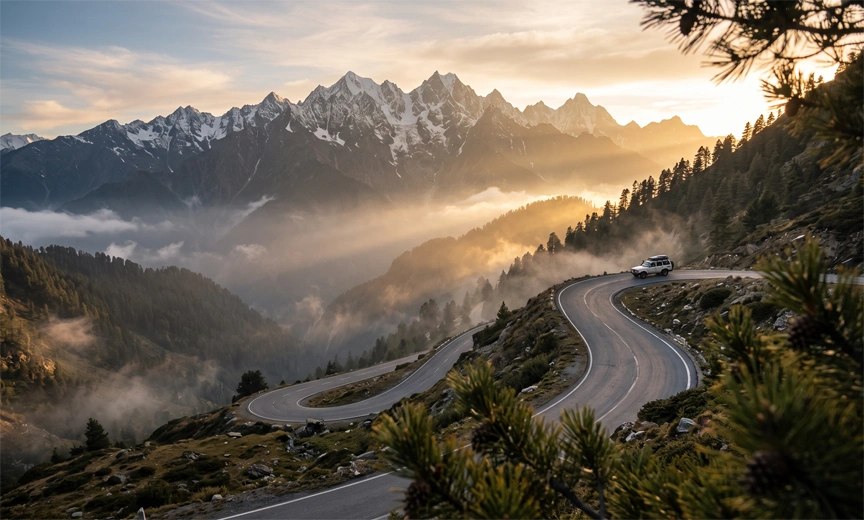
Mountain roads naturally slow every journey, but that’s part of Bhutan’s charm. Rather than treating travel time as an inconvenience, embrace it as an opportunity to admire Himalayan landscapes, stop at scenic viewpoints, photograph fluttering prayer flags, or simply enjoy the peaceful rhythm of the road.
Bhutan Travel Guide: Best Places to Visit
One of the greatest joys of traveling through Bhutan is that every destination has its own personality. Paro welcomes you with dramatic mountain scenery and the country’s most iconic monastery. Thimphu blends tradition with modern Bhutanese life. Punakha slows everything down with rivers, rice fields, and magnificent architecture, while hidden valleys like Haa and Phobjikha reveal a quieter side of the kingdom that many travelers never experience.
Rather than trying to see everything, plan your itinerary around a handful of places and give yourself enough time to enjoy the journey between them. In Bhutan, the road itself is often as memorable as the destination.
Paro – Where Every Bhutan Journey Begins
If Bhutan had a front door, it would be Paro.
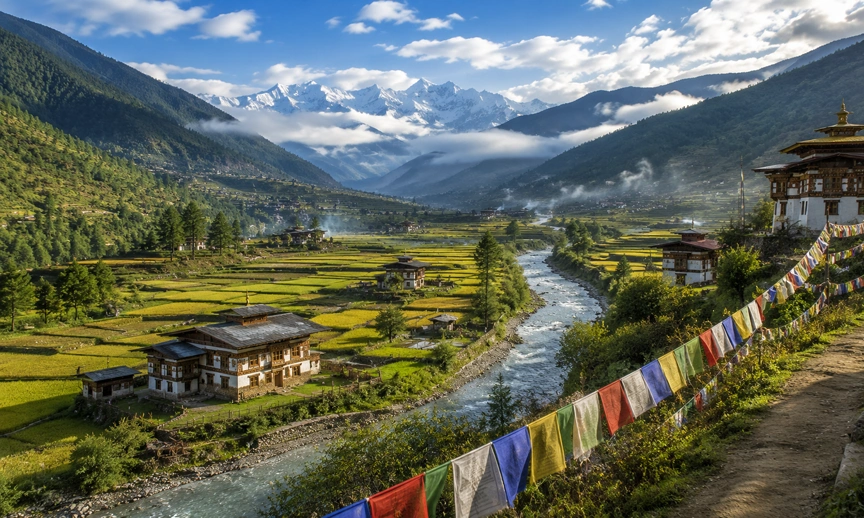
Nestled in a broad Himalayan valley surrounded by pine-covered mountains, Paro is usually the first place travelers experience after landing at Bhutan’s only international airport. The approach itself is unforgettable. As your aircraft descends between towering mountains, you’ll catch glimpses of traditional farmhouses, prayer flags fluttering on ridgelines, and emerald fields stretching across the valley floor.
Unlike many airport towns, Paro doesn’t feel busy or commercial. Instead, it introduces visitors to Bhutan’s slower pace of life almost immediately.
Spend at least two nights here. This allows enough time to explore the valley, recover from travel, and prepare for the hike to Tiger’s Nest without rushing.
Highlights
Tiger’s Nest Monastery (Paro Taktsang)
Rinpung Dzong
National Museum of Bhutan
Traditional wooden bridge
Paro town and cafés
Photography Tip
Bhutan Travel Guide: Visit Paro Valley just after sunrise when soft golden light illuminates the surrounding mountains and mist often lingers over the fields.
Why You’ll Remember It
Paro isn’t simply your arrival point—it’s where Bhutan gently teaches you to slow down. Long after the trip ends, many travelers remember its peaceful mornings and mountain air as vividly as its famous landmarks.
Tiger’s Nest Monastery (Paro Taktsang)
No photograph truly prepares you for your first view of Tiger’s Nest.
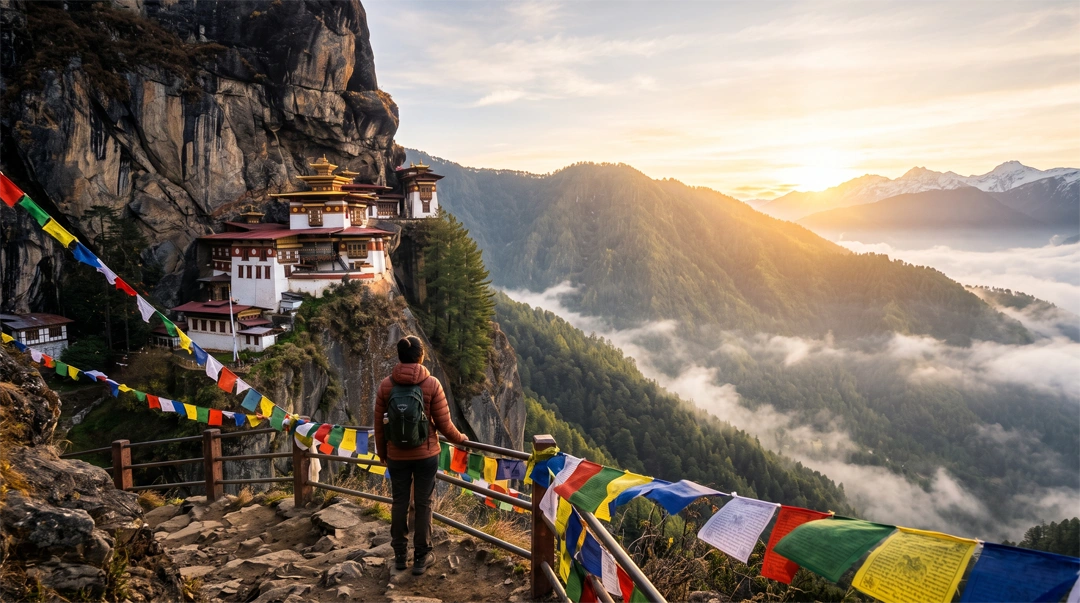
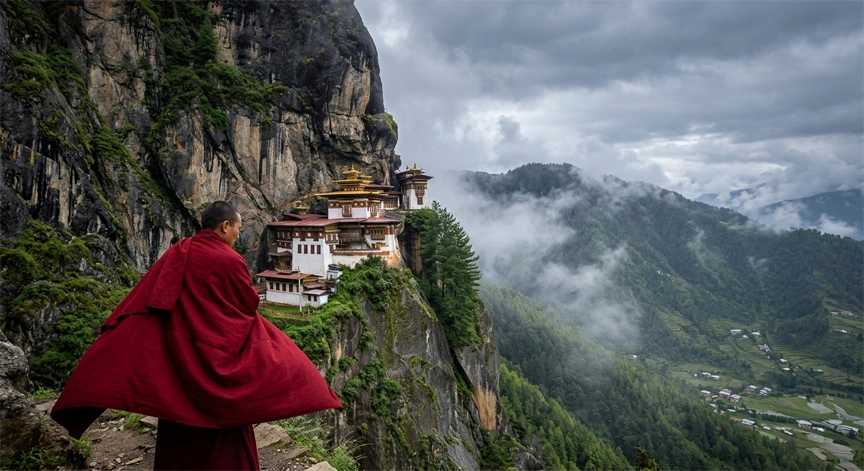
Perched dramatically on a sheer cliff approximately 900 metres above the Paro Valley, the monastery seems almost impossible to build, let alone reach. As the trail winds through fragrant pine forests decorated with colorful prayer flags, each turn reveals a slightly different angle of one of the world’s most extraordinary monasteries.
According to Bhutanese tradition, Guru Padmasambhava meditated here in the 8th century after arriving on the back of a flying tigress, giving the monastery its legendary name.
The hike is challenging but rewarding. Expect to spend 4–6 hours for the round trip, depending on your pace and the time spent exploring the monastery.
The climb isn’t a race. Frequent breaks allow you to enjoy changing views of the valley below, while the famous cafeteria viewpoint offers one of the best panoramic photo opportunities before the final ascent.
Quick Facts
Altitude: ~3,120 m
Hiking time: 4–6 hours
Difficulty: Moderate
Best time: Early morning
Allow: Half a day
Insider Tip
Carry water, wear comfortable hiking shoes, and start early. Morning temperatures are cooler, crowds are smaller, and the lighting is far better for photography.
Why You’ll Remember It
The achievement isn’t reaching Tiger’s Nest—it’s the journey. Every step through the forest builds anticipation until the monastery finally appears in full, suspended between cliffs and clouds. It’s the moment many travelers remember most vividly from Bhutan.
Thimphu – A Capital Unlike Any Other
Most capital cities announce themselves with skyscrapers, traffic, and noise.
Thimphu quietly does the opposite.
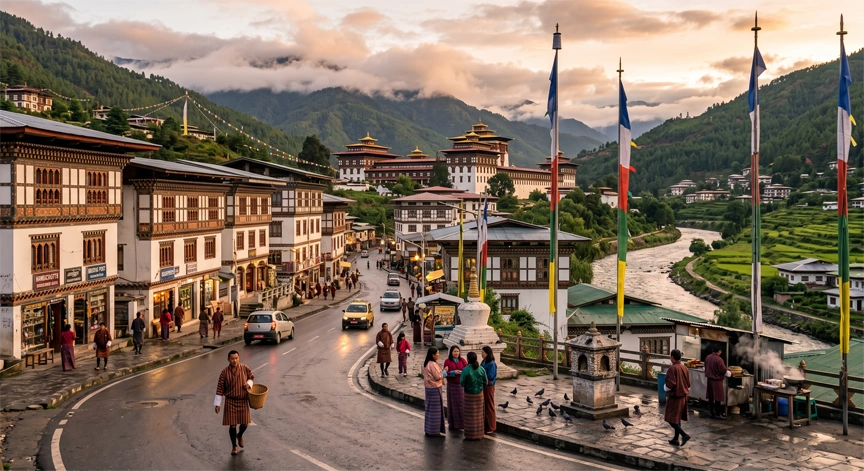
Although it serves as Bhutan’s political and cultural centre, the city has managed to preserve its traditional character. Buildings follow Bhutanese architectural styles, prayer flags flutter above neighbourhoods, and monks frequently share sidewalks with office workers.
One of the city’s most charming quirks is the absence of permanent traffic lights. Instead, uniformed police direct vehicles from beautifully decorated traffic booths, a small detail that perfectly reflects Bhutan’s blend of tradition and modernity.
Bhutan Travel Guide: Spend one to two days here.
Must-Visit Attractions
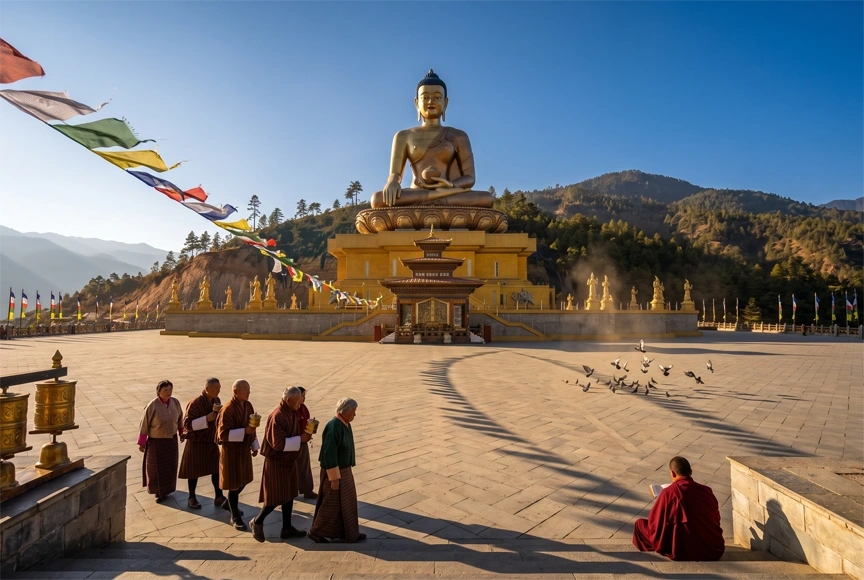
Buddha Dordenma
Memorial Chorten
Tashichho Dzong
Folk Heritage Museum
Weekend Market
Motithang Takin Preserve
Best Time
Late afternoon provides beautiful city views as sunlight begins to soften across the valley.
Photography Tip
The Buddha Dordenma viewpoint offers sweeping panoramas over Thimphu and is particularly stunning around sunset.
Why You’ll Remember It
Thimphu proves that a modern capital doesn’t have to sacrifice culture. It’s one of the few cities where tradition still feels like part of everyday life rather than a performance for visitors.
Bhutan Travel Guide to Punakha Valley
If Paro introduces you to Bhutan, Punakha invites you to stay longer.
The drive from Thimphu crosses the spectacular Dochula Pass before descending into a warmer valley filled with rice terraces, jacaranda trees, and winding rivers.
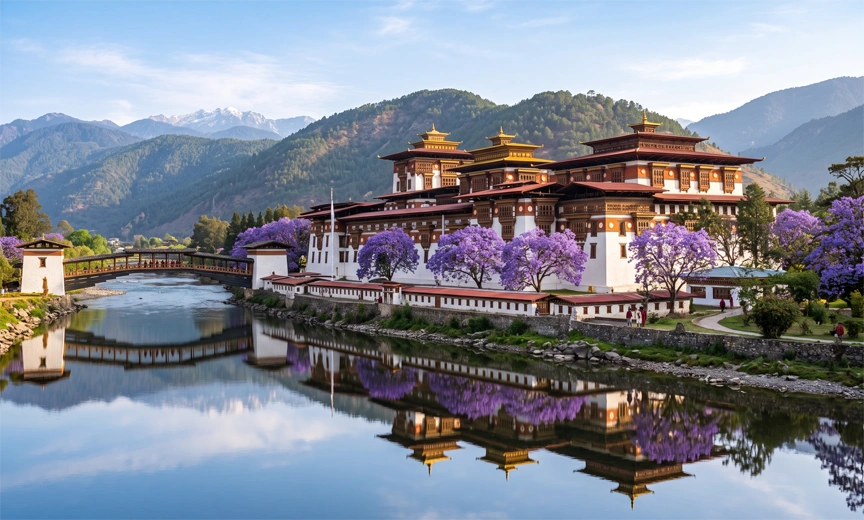
At its heart stands the magnificent Punakha Dzong, often regarded as Bhutan’s most beautiful fortress-monastery. Built at the meeting point of the Pho Chhu and Mo Chhu rivers, the whitewashed walls and intricate wooden balconies create one of the country’s most photographed landmarks.
Allow one to two nights here.
Highlights
Punakha Dzong
Suspension Bridge
Chimi Lhakhang
River walks
Rafting (seasonal)
Photography Tip
Bhutan Travel Guide: Visit the dzong early in the morning or just before sunset for softer light and fewer visitors.
Why You’ll Remember It
Punakha feels slower than almost anywhere else in Bhutan. Surrounded by rivers and mountains, it’s the kind of place where lingering over a cup of tea somehow becomes part of the itinerary.
Dochula Pass – Where the Himalayas Unfold
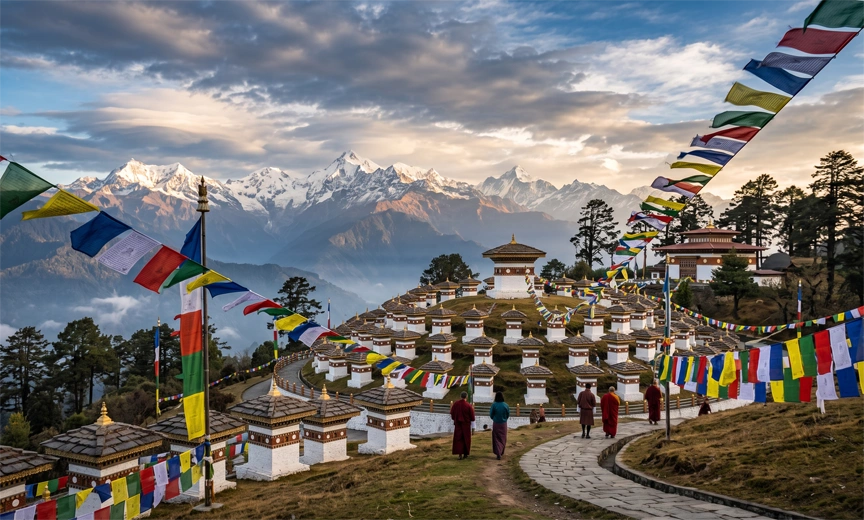
At an altitude of about 3,100 metres, Dochula Pass is much more than a mountain crossing.
On clear days, the viewpoint reveals a breathtaking panorama of the eastern Himalayas, while 108 white chortens create one of Bhutan’s most iconic landscapes.
Prayer flags flutter continuously in the mountain breeze, adding movement and colour to an already unforgettable setting.
Allow
30–60 minutes.
Longer if skies are clear.
Best Time
October to December for Himalayan visibility.
Why You’ll Remember It
Sometimes the most memorable stop isn’t a destination at all. Dochula Pass reminds travelers that Bhutan’s roads can be just as spectacular as its monasteries.
Haa Valley – Bhutan Travel Guide Secret
Hidden beyond Chele La Pass, Haa Valley remains one of Bhutan’s least-visited regions.
Instead of famous monuments, you’ll find peaceful villages, traditional farmhouses, grazing yaks, and winding roads that seem to disappear into endless pine forests.
Travelers seeking authentic rural Bhutan often describe Haa as the highlight of their journey.
Spend one night if your itinerary allows.
Why You’ll Remember It
Haa doesn’t impress with famous landmarks—it quietly wins you over with silence, scenery, and simplicity.
Chele La Pass – Touching the Sky
Standing at approximately 3,988 metres, Chele La Pass is one of Bhutan’s highest motorable roads.
The drive itself is unforgettable, winding through dense forests before opening onto alpine meadows decorated with thousands of colourful prayer flags.
On exceptionally clear days, you’ll even glimpse Mount Jomolhari, one of Bhutan’s most sacred peaks.
Photography Tip
A wide-angle lens works beautifully here to capture the dramatic landscape and prayer flags against the Himalayan skyline.
Best Time
Spring and autumn.
Why You’ll Remember It
Chele La feels like standing on the roof of Bhutan, where every direction offers another postcard view.
Phobjikha Valley – A Paradise for Nature Lovers
Wide, peaceful, and remarkably untouched, Phobjikha Valley offers a completely different side of Bhutan.
Every winter, endangered black-necked cranes migrate here from the Tibetan Plateau, turning the valley into one of South Asia’s most important birdwatching destinations.
Even outside crane season, its open grasslands, traditional villages, and quiet walking trails make it an excellent escape from busier tourist routes.
Bumthang – Bhutan’s Spiritual Heart
Often described as the cultural heartland of Bhutan, Bumthang is home to some of the country’s oldest monasteries and sacred temples. Travelers with extra time will find that Bumthang offers deeper insight into Bhutanese history, spirituality, and rural life than almost anywhere else. Allow two to three days if including central Bhutan in your itinerary.
Bhutan Travel Guide: Best Time to Visit Bhutan
One of the biggest advantages of visiting Bhutan is that every season offers a different experience. Rather than asking “What’s the best time?”, it’s better to ask “What kind of Bhutan do I want to experience?”
Some travelers dream of crystal-clear Himalayan views, others want blooming valleys, colorful festivals, or peaceful winter landscapes. Choosing the right season can shape your entire journey.
Season
Weather
Best For
Things to Keep in Mind
Spring (March–May)
Pleasant, blooming flowers
Hiking, photography, festivals
One of the busiest seasons
Summer (June–August)
Warm with monsoon showers
Lush green valleys, fewer tourists
Rain can affect mountain views
Autumn (September–November)
Cool, dry, clear skies
Mountain scenery, trekking
Peak travel season
Winter (December–February)
Cold mornings, sunny days
Peaceful travel, snow-capped peaks
High passes can be chilly
Editor’s Recommendation
If you’re visiting Bhutan for the first time, October and November usually provide the clearest Himalayan views, while April combines comfortable temperatures with blooming rhododendrons and vibrant landscapes.
Bhutan Travel Guide Itinerary: How Many Days Do You Need?
A common mistake among first-time visitors is trying to see too much.
Bhutan isn’t a destination where you’ll rush between attractions. Mountain roads naturally slow travel, and that’s part of the experience.
Here’s what we recommend:
3 Days
Perfect if you’re short on time.
Suggested Route
Day 1 – Arrive in Paro, explore Rinpung Dzong and local cafés
The cost of a Bhutan trip depends on your travel style, accommodation choices, and transport. The ranges below are intended as realistic planning estimates for Indian travelers and should be checked against current prices before booking.
Travel Style
Approximate Budget (per person)
Budget
₹30,000–₹45,000
Mid-range
₹50,000–₹75,000
Premium
₹1,00,000+
Typical Cost Breakdown
Expense
Budget Estimate
Accommodation
₹2,000–₹6,000 per night
Meals
₹500–₹1,500 per day
Local Transport
Varies by itinerary
Flights
Depends on departure city and season
Shopping
Personal preference
Money-Saving Tips
Travel during shoulder seasons for better accommodation prices.
Spend more nights in fewer destinations to reduce transport costs.
Book flights several months in advance where possible.
Share transport costs if traveling with family or friends.
Keep a small amount of local currency for places where digital payments may not be accepted.
Bhutan Travel Guide: How to Reach Bhutan
Although Bhutan feels wonderfully remote, getting there is relatively straightforward for Indian travelers.
By Air
The country’s international gateway is Paro International Airport, one of the world’s most scenic airports.
Flights are available from selected Indian cities, subject to airline schedules and seasonal availability.
Common departure points include:
Delhi
Kolkata
Guwahati
Bagdogra (seasonal/depending on carriers)
The landing itself is often considered part of the Bhutan experience due to the dramatic mountain approach.
By Rail
Bhutan has no railway network.
The nearest Indian railway stations include:
Hasimara
New Alipurduar
New Jalpaiguri (NJP)
From these stations, travelers continue by road to the Bhutan border at Jaigaon–Phuentsholing.
By Road
Road travel is one of the most rewarding ways to enter Bhutan.
Many Indian travelers choose to cross via:
Jaigaon (India) → Phuentsholing (Bhutan)
From there, onward travel continues to Paro, Thimphu, Punakha, and beyond.
Available options include:
Private taxi
Hired vehicle with driver
Tour operator transport
Self-drive (subject to current permit and documentation requirements)
Approximate Drive Times
Route
Driving Time
Paro → Thimphu
1.5 hours
Thimphu → Punakha
2.5–3 hours
Paro → Haa Valley
2–3 hours
Thimphu → Phobjikha
5–6 hours
Food You Must Try
Bhutanese cuisine reflects the country’s mountain climate and love for simple, hearty ingredients.
Ema Datshi
Bhutan’s national dish made with chilies and cheese. Expect plenty of heat—it’s delicious but surprisingly spicy.
Kewa Datshi
A comforting potato and cheese dish that’s ideal if you’re not ready for the intensity of Ema Datshi.
Phaksha Paa
Slow-cooked pork with red chilies, offering rich flavors and a taste of traditional Bhutanese home cooking.
Red Rice
Nutty, wholesome, and served with many meals.
Momos
Steamed dumplings filled with vegetables or meat, familiar to many Indian travelers but with a Bhutanese twist.
Suja
Traditional butter tea that’s especially welcome on chilly mountain mornings.
Bhutan Travel Guide: Essential Travel Tips
A little preparation makes Bhutan even more enjoyable.
Documents
Carry all required travel documents and verify the latest entry requirements before departure.
Money
Digital payments, including UPI, are becoming more common in Bhutan, but acceptance varies. Carry some local cash for smaller shops and rural areas.
Internet
Mobile connectivity is generally good in towns, though remote valleys may have limited coverage.
Clothing
Dress in layers. Mountain weather changes quickly, especially at higher elevations.
Monastery Etiquette
Dress modestly.
Remove hats where appropriate.
Speak softly.
Follow photography rules.
Respect prayer areas.
Health
Stay hydrated, especially during hikes. If you’re not accustomed to altitude, take it easy on your first day and allow time to acclimatize.
Bhutan Travel Guide FAQs
Is Bhutan worth visiting?
Absolutely—especially if you’re looking for a destination that values nature, culture, and meaningful travel over fast-paced sightseeing. Bhutan isn’t about collecting famous landmarks in a hurry. It’s about slowing down, connecting with local traditions, and experiencing one of the few countries where environmental conservation and cultural preservation remain central to everyday life.
If you enjoy mountain landscapes, monasteries, road trips, photography, or peaceful destinations, Bhutan is likely to exceed your expectations.
Is Bhutan expensive for Indian travelers?
Bhutan can cost more than some neighboring destinations because tourism is carefully managed, but it doesn’t have to be a luxury trip.
For most first-time visitors:
Budget: ₹30,000–₹45,000
Mid-range: ₹50,000–₹75,000
Premium: ₹1 lakh+
Your final budget depends on travel season, accommodation, transportation, and the length of your itinerary.
How many days are enough for Bhutan?
For most travelers:
3 days: Paro + Tiger’s Nest
5 days: Paro, Thimphu & Punakha (recommended)
7 days: Add Haa Valley or Phobjikha Valley
10+ days: Explore Bumthang and central Bhutan
If this is your first visit, five to seven days offers the best balance between sightseeing and relaxation.
Can Indians drive in Bhutan?
Yes, Indian citizens can drive into Bhutan, subject to current entry, vehicle, insurance, and permit requirements. Before planning a self-drive trip, always verify the latest regulations with the relevant Bhutanese authorities.
For many first-time visitors, hiring a local driver is often the easier option. It allows you to enjoy the mountain scenery without worrying about unfamiliar roads or administrative formalities.
Which monastery should I visit if I have limited time?
If you can visit only one monastery, make it Tiger’s Nest (Paro Taktsang).
If your itinerary allows more time, also consider:
Punakha Dzong
Gangtey Monastery
Tashichho Dzong
Chimi Lhakhang
Each offers a different perspective on Bhutan’s spiritual and architectural heritage.
Is Bhutan suitable for families?
Yes.
Bhutan is one of the safest destinations in South Asia for families.
Children usually enjoy:
Buddha Dordenma
Easy valley walks
Wildlife in Phobjikha
Traditional markets
Scenic road journeys
Families should simply allow enough travel time between destinations to keep the pace relaxed.
Is Bhutan a good honeymoon destination?
Very much so.
Instead of crowded beaches or nightlife, Bhutan offers couples peaceful mountain landscapes, luxury lodges, intimate cafés, scenic drives, and unforgettable hikes. Many honeymooners appreciate the slower pace, privacy, and natural beauty.
When is the best time for photography?
Photographers generally prefer:
Spring (March–May) for flowers and fresh landscapes.
Autumn (September–November) for crystal-clear Himalayan views.
Early mornings usually provide the softest light, fewer crowds, and the best chance of capturing valleys wrapped in mist.
Can I use UPI or cards in Bhutan?
Digital payments are becoming increasingly common, particularly in larger towns and tourist areas. However, acceptance varies by business and region.
It’s wise to carry:
Some local cash
An internationally accepted debit or credit card
A payment app where supported
Before traveling, confirm the latest payment options and banking guidance, as availability continues to evolve.
What should I pack for Bhutan?
Essentials include:
Comfortable walking shoes
Warm layers
Lightweight rain jacket
Sunglasses
Sunscreen
Reusable water bottle
Personal medications
Power bank
Camera
Universal travel adapter (if required)
If you’re planning to hike Tiger’s Nest, trekking shoes and a small daypack are highly recommended.
Bhutan Travel Guide Checklist Before You Go
Before leaving for Bhutan, make sure you’ve:
✔ Checked current entry requirements for Indian travelers.
✔ Confirmed any applicable travel fees or permits.
✔ Booked flights or planned your road journey.
✔ Reserved accommodation.
✔ Purchased travel insurance if desired.
✔ Packed layered clothing.
✔ Downloaded offline maps.
✔ Informed your bank about international card usage if necessary.
✔ Saved emergency contact numbers.
✔ Left room in your itinerary to simply enjoy Bhutan’s slower pace.
More Bhutan Travel Guide Resources
Continue planning your Bhutan journey with these in-depth guides:
Tiger’s Nest Monastery: Complete Hiking Guide
7-Day Bhutan Travel Guide for First-Time Visitors
Bhutan Road Trip from India
Best Time to Visit Bhutan
Bhutan Food Guide: What to Eat and Where
Bhutan Photography Guide
Punakha Travel Guide
Hidden Places to Visit in Bhutan
These supporting articles can help you dive deeper into specific aspects of your trip while keeping this guide focused as the central planning hub.
Final Thoughts on Bhutan Travel Guide
Bhutan isn’t the kind of destination that overwhelms you with constant excitement.
Instead, it quietly changes the way you experience travel.
You’ll notice it while standing outside a monastery listening to distant prayer chants carried by the wind. You’ll feel it as prayer flags dance above a mountain pass, or while watching the first rays of sunlight illuminate Tiger’s Nest after a rewarding hike. Even the long drives between valleys become moments to appreciate rather than simply endure.
Long after you’ve forgotten hotel names or the exact route between towns, you’ll probably remember something much simpler: the feeling of unhurried mornings, clean mountain air, welcoming smiles, and a country that has chosen to protect what makes it unique.
Perhaps that’s why Bhutan leaves such a lasting impression.
It doesn’t ask you to see more.
It gently encourages you to slow down, notice more, and discover that the most memorable journeys aren’t always measured by the number of places you visit—but by the way those places make you feel.
If you leave Bhutan carrying a little more patience, a little more appreciation for nature, and a renewed sense of balance, then you’ve experienced something far more valuable than a holiday.
You’ve experienced the spirit that makes Bhutan unlike anywhere else in the world.