Spiti Valley in late winter: snow, monasteries and a slower journey
Winter changes the way you look at Spiti Valley. Snow draws attention to the shape of a roof, the bend of a river and the dark outline of a monastery against a pale mountainside. For a photographer, the appeal is often in these small contrasts as much as in the grand view. For a traveller, it is the chance to move slowly through Kinnaur and Spiti, with time to notice how the landscape and daily life change.
This journey focuses on late February and March, the window described in the original story. It suits travellers prepared for cold, delays and a flexible plan. It is not a promise of clear roads or fresh snow every day. If you need a predictable circuit covering every famous stop, a winter departure may be the wrong choice.
The essential route correction: approach through Shimla and Kinnaur and plan to return the same way. Do not build a February–March itinerary around crossing Kunzum Pass, visiting Chandratal and exiting to Manali. Those western approaches are seasonal. The route stages below retain the original photographic journey while allowing for the realities of winter.
Before you embark: check the route, weather and overnight stops
Start with the district administration’s access guidance and road-status page. Kinnaur provides the approach from the Shimla side; the western connection depends on Kunzum Pass. An accessible approach road does not establish that every village branch road is open.
Check IMD Shimla’s forecasts and warnings alongside local advice from your driver and hosts. Ask which section was actually driven recently, whether restrictions apply and where you can safely wait if movement stops. A forecast for Shimla alone cannot describe the whole journey.
Read the stages as a route framework, not nine consecutive driving days. Add acclimatisation stops and spare days before fixing accommodation or your journey home. Sangla is an optional detour, and the return through Kinnaur takes time of its own. When leave is limited, reduce the number of places rather than compressing every stop into a shorter trip.
Who should reconsider a winter departure?
Reconsider if everyone in your group needs reliable room heating, uninterrupted connectivity or an exact return date. A first Himalayan drive is also a poor setting for learning to handle snow and ice. Choose an experienced local operator and discuss what happens if a road closes, a passenger becomes unwell or the group must turn back.
Essential checklist for a winter expedition
Clothing: pack thermals, insulating layers, a wind-resistant outer layer, warm socks, gloves and footwear with reliable grip. Keep a dry change accessible rather than buried under luggage.
Food and water: carry drinking water and a reserve of food you can eat without cooking. Ask your host what meals will be available and avoid planning a long day around an unconfirmed café.
Documents and money: keep identification, booking details and necessary permissions available offline, with cash for places where payments or cash withdrawals are unavailable.
Power and communication: bring charged power banks, cables, offline maps and a written contact list. Agree on a check-in plan with someone at home before entering areas with unreliable reception.
Health and contingency: bring prescribed medicines and a first-aid kit, and discuss your itinerary with a clinician when needed. Know your nearest practical medical-help and evacuation options.
Vehicle arrangements: ask the operator about suitable tyres, traction equipment, recovery arrangements and experience on this route. Four-wheel drive does not make ice harmless.
Confirm the details of each overnight stay: working heating, bedding, hot water, toilet arrangements, meals and charging. Ask what happens during a power cut and whether cancellation or extra-night charges change during a closure. A photograph of a comfortable room in summer does not answer these winter questions.
Foreign travellers should check applicable protected-area permit requirements before departure using the district’s foreigner information and relevant authorities. Do not assume that arrangements for an Indian traveller apply to everyone in the group.
Allow time for altitude, not just distance
Altitude illness can affect fit travellers too. The CDC’s high-altitude guidance recommends gradual ascent, time to adjust and avoiding heavy exertion on arrival. Plan overnight progression carefully; a road journey is not automatically an adequate acclimatisation schedule.
Do not continue to a higher sleeping altitude with symptoms. Worsening symptoms despite rest, confusion, poor coordination or breathlessness at rest need urgent medical attention and descent when safely possible. Ask a clinician about personal risks and medicines before travelling; do not use someone else’s prescription as a substitute for a plan.
Stage 1: Shimla to Narkanda, beginning without a rush
The approach through Shimla and Narkanda introduces the winter landscape gradually: buildings give way to mountain slopes, and familiar road scenes begin to look different under snow. Treat this stretch as part of the journey rather than a transfer to get out of the way before the photographs start.
Leave room for a short walk or a roadside composition only where the vehicle can stop safely. A forest edge, a line of roofs or the contrast between snow and exposed earth can tell the story without stepping into traffic. If conditions deteriorate, an early stop is a useful decision, not a failed day.
Stage 2: Sangla and Rakchham, an optional Kinnaur detour
Sangla’s Baspa Valley offers a different setting from the open mountain desert farther ahead. Rakchham belongs to this Kinnaur valley, rather than to Spiti itself. Himachal Tourism’s sanctuary guide places Rakchham and Chitkul in the Sangla area and describes the diversion from the main Kinnaur highway at Karchham.
Use Sangla as an optional branch of the winter journey, not a guaranteed gateway to Chitkul. Ask specifically about the road beyond your booked stay. If Rakchham, Chitkul or a local viewpoint is inaccessible, do not let an attractive photograph persuade you to push past a restriction. Kamru and village walks also depend on conditions and local access.
For photographs, give the setting time: the relationship between a house, a field and the surrounding slopes often makes a stronger frame than a rushed collection of viewpoints. Ask before photographing residents or entering private spaces. A quiet village is still someone’s home.
Stage 3: Kalpa and the changing light on Kinnaur Kailash
Kalpa shifts attention back towards the mountain skyline. The Kinnaur Kailash range remains the visual centre of this part of the story, but the quality of the view depends on cloud and visibility. A longer stay gives you another chance at the light without making a pre-dawn drive the only way to succeed.
Choose a few compositions close to your accommodation and watch how shadows separate the ridges. Include a village detail when it helps show scale, but keep clear of roof edges and icy steps. Kalpa can also be a pause for checking the next road section and reviewing how everyone is coping before continuing.
Stage 4: Nako and Tabo, without rushing the ascent
The journey towards Nako and Tabo introduces the spare textures that make Spiti Valley so compelling: rock faces, isolated settlements and a broader sense of distance. Nako Lake may be frozen, partly frozen or obscured by snow; the appearance depends on the conditions you encounter. Photograph from a safe shore position rather than assuming a frozen surface can bear weight.
Choose overnight stops for their suitability to your group’s altitude plan and confirmed accommodation. A stop to see Nako does not require sleeping there. Avoid turning a long road day into a list of compulsory visits, particularly when arrival is running late.
Tabo offers a different kind of attention. Its monastery is a living religious place, with an old complex whose foundation the district’s Buddhist-circuit guide dates to 996 CE. Let the visit be more than a quick photograph of the exterior.
Ask which areas are open, whether photography is permitted and how to move around respectfully. Do not assume that permission in a courtyard extends to an interior. If an area is closed or in use, accept that limit and spend time with the village setting instead.
Stage 5: Dhankar and Pin Valley, when the branches are accessible
Dhankar’s cliffside setting is one of the strongest visual ideas in the original journey: built forms seem to answer the shape of the mountain beneath them. Look for that relationship from an established, safe viewing position. A dramatic angle is not a reason to approach an unstable edge or cross an icy slope.
Treat Pin Valley as a separate, conditional excursion rather than an automatic continuation of the same day. Ask about the exact destination and return route before leaving the main road. Reaching the valley entrance does not mean that every settlement, walking route or wildlife location farther inside is accessible.
The landscape has room for wildlife, but a sighting is never part of the booking guarantee. If wildlife photography is a priority, arrange a responsible specialist plan rather than adding an improvised search to a driving itinerary. Keep your distance, avoid baiting and never chase an animal for a closer frame.
Stage 6: Kaza, Key Monastery and a conditional Hikkim visit
Kaza provides a practical base for discussing onward plans with hosts and drivers. Confirm the next day’s road conditions there instead of assuming that an earlier report still applies. Leave time to rest, organise supplies and make a shorter day if the group needs one.
Key Monastery’s position above the valley gives photographers a strong subject, but its everyday religious purpose comes first. Ask about visiting arrangements, observe any photography restrictions and keep the road clear when stopping. A wide view can work beautifully without entering a restricted area.
Hikkim’s post office is an appealing part of the original story because it connects a remote landscape with an ordinary act: sending a letter. Treat the visit as conditional on the road and the office being open. Carry a postcard if you like, but do not promise a particular postal collection time or delivery date.
Stage 7: Komic and Langza, without chasing a superlative
Komic and Langza sit high above the main valley and belong on the itinerary only when access and the group’s condition allow. Describing Komic simply as a high-altitude village is more useful than repeating an unqualified claim about the world’s highest motorable settlement.
At Langza, the Buddha statue and surrounding terrain offer a sense of scale that is central to this photographic journey. Look at the changing relationship between the statue, village and mountain background. Keep to permitted areas and leave fossils where they are; photographs can record the place without removing part of it.
Stage 8: Leave Kunzum Pass and Chandratal for another season
This is where a winter route must depart from the original circuit. Kunzum Pass and Chandratal are not dependable February–March sightseeing stops. The Spiti Wildlife Division describes Chandratal’s road access as typically limited to July–mid-October, with camping also seasonal. Actual opening dates vary.
The Atal Tunnel does not establish that the separate road over Kunzum is open. Avoid treating access into Lahaul as permission or proof of a through-route to Kaza. If you want Chandratal and a Manali exit, plan a separate trip after the relevant roads officially reopen and conditions are suitable.
Stage 9: Return through Kinnaur, with room for delays
For this winter journey, plan to retrace the Kinnaur approach rather than make Manali the compulsory endpoint. Book realistic return stages and preserve time between leaving Spiti and a flight, train or important commitment. A closure can affect the way home as well as the outward drive.
A spare day is useful only if you have somewhere suitable to stay and enough money for it. Agree on extra-night and vehicle charges in advance. If the weather requires a shorter journey, returning with fewer destinations visited is preferable to pushing a tired group towards a connection.
Photographing winter light without losing the journey
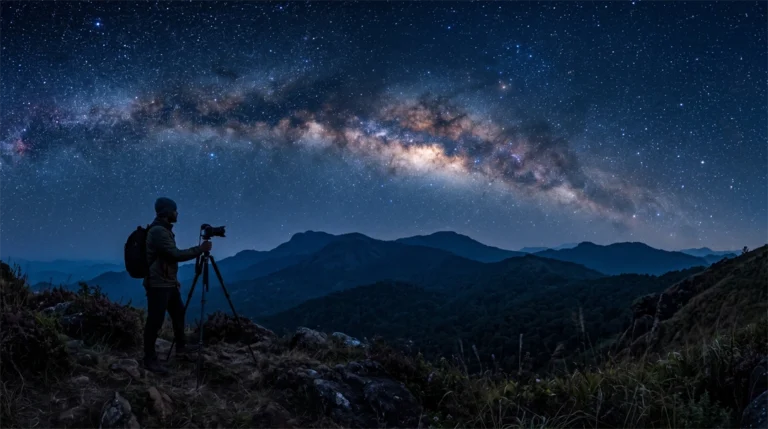
Build each outing around one photographic purpose: a monastery against the valley, village detail, snow texture or a sequence showing the changing terrain. This keeps the story coherent and reduces the temptation to keep driving simply because another location appears on a list. For a broader visual approach, see our Spiti Valley photographer’s journey.
Review a frame after making it. Snow can hide important texture when highlights are overexposed, while deep shadow can make a settlement disappear into the background. Use the camera’s histogram or highlight warning as a check, then adjust for the scene you want to show. No single exposure setting suits every snowy landscape.
Keep spare batteries protected from the cold and carry a simple backup plan for files. Before taking a cold camera into a warm room, follow the maker’s condensation precautions. Canon’s handling guidance explains letting equipment adjust gradually in a sealed bag. Consult your own camera manual for its operating limits.
Photograph with gloves you can work in, secure loose straps and stop before cold hands make equipment handling clumsy. Keep the kit small enough that you can put it away promptly if conditions change. A photograph of winter should not depend on ignoring how winter feels.
Conclusion: the winter journey is worth giving time
The appeal of Spiti Valley in late winter remains the one at the heart of the original story: snow-shaped landscapes, monasteries, villages and the slow accumulation of photographs and memories. What makes the journey workable is accepting that access and comfort change from place to place.
Choose the Kinnaur approach, leave space for acclimatisation and delays, and allow the conditions to decide which side trips belong in the final story. Kunzum and Chandratal can wait for another season. If you are comparing Himalayan winter trips, our Ladakh in winter article offers another perspective; its logistics are different.
Frequently asked questions
Is late February or March the best time to visit Spiti Valley?
It can suit a winter photography journey, but it is not the easiest window for a complete sightseeing circuit. Choose it for the season’s character and accept closures, cold and flexible plans. Reconfirm conditions for your dates.
Can I drive from Kaza to Manali in February or March?
Do not plan on it. The western connection depends on Kunzum Pass, whose winter closure is separate from access through the Atal Tunnel. Plan a return through Kinnaur unless authorities confirm otherwise for your dates.
Can Chandratal be included in this winter itinerary?
Not as a routine sightseeing stop. It belongs in a separate seasonal plan with confirmed access, rather than a promised February–March excursion.
Are Chitkul, Pin Valley and the villages above Kaza guaranteed?
No. Check each branch road locally, even if the main approach is open. Be ready to omit an excursion when access, weather or the group’s health makes it unsuitable.
How many days should I allow?
There is no reliable fixed number for every winter departure. Count outward and return stages, appropriate acclimatisation stops, optional detours and a delay allowance. Reduce the route if your available time cannot accommodate those needs.
Can a beginner photographer enjoy this journey?
Yes, if the travel plan matches their experience and needs. A manageable camera kit, careful observation and a few unhurried compositions matter more than carrying every lens. Travel safety and comfort come before the shot.
A request from the blogger: leave the Himalayas as you found them
My request to fellow travellers remains simple: carry out your rubbish, respect local decisions and leave people, buildings and natural features undisturbed. Do not move prayer objects for a composition, walk onto a field without permission or treat a resident as part of the scenery.
Pay fairly for local services and use water, warmth and electricity thoughtfully. These are shared resources, especially in winter. The most worthwhile memory of Spiti Valley is not proof that you reached every stop; it is a journey that the people hosting it would welcome again.