Routine ear wax cleaning inside the ear canal is usually unnecessary. Wax protects the canal and normally moves out on its own. If an ear gradually feels blocked, a pharmacist or clinician can help you decide whether wax softening or an examination makes sense. If your hearing drops suddenly in one or both ears, seek urgent medical assessment. Skip the trial of wax drops while you wait to be seen.NHS earwax guidance · NICE hearing loss guideline.
Ear wax, or cerumen, is made in the ear canal. It helps protect the skin and catches debris as it moves towards the opening. If you notice wax on the visible outer ear and have no symptoms, wipe the outside gently with a soft cloth. Leave the canal alone. There is no need to schedule routine ear wax cleaning when your ears are comfortable and hearing is unchanged. NHS earwax guidance · AAO-HNSF earwax guideline.
2. A blocked feeling needs context
A build-up of wax can cause muffled hearing, a sense of fullness or ringing. Those symptoms can have other causes. A clinician can look in the canal with an otoscope and check whether wax is blocking it or obscuring the eardrum. Wax can need removal even without discomfort if it prevents a necessary examination or hearing-aid fitting. NHS earwax guidance · NICE hearing loss guideline.
Before you seek care, make a note of when the change began, whether one ear or both are affected, and whether you have pain, fluid from the ear or dizziness. A gradual change and a sudden drop call for different decisions. Share any products or tools you’ve already tried.
If you wake up with a noticeable loss of hearing in one ear, the fact that it feels full does not tell you the cause. Call for urgent medical assessment and say that the hearing changed suddenly. An appointment for routine ear wax cleaning can wait. A clinician can examine the ear and decide whether you need a hearing test or urgent referral. NIDCD guidance on sudden hearing loss.
For a gradual blocked feeling, tell the pharmacist or clinician whether this has happened before and how it was treated. A blocked feeling after a cold, pain after putting something in the ear and a hearing aid that suddenly sounds quieter give different clues. If you have a hearing aid, bring it or describe the problem. The appointment may involve checking both the ear and the device.
When you book professional ear wax cleaning, ask whether the appointment includes an examination and what to do before you arrive. A service may ask you to soften the wax first, depending on the method and your medical history. Tell them about any previous surgery or perforation before using drops. If you had a painful removal or became dizzy during a previous visit, mention that too.
During microsuction, the practitioner looks into the ear while using a small suction probe. The sound can feel loud and some people experience discomfort or dizziness. Ask how to signal if you need a pause, and tell the practitioner immediately if you feel pain or need to move or cough. The practitioner can stop and discuss the next step if removal is difficult. UCLH patient guide to ear microsuction.
Before leaving, ask what the practitioner found and whether the canal is clear enough to see the eardrum. If you came in because of muffled hearing, tell them whether that feeling has changed. If it continues after the ear wax cleaning, ask about the next assessment. Repeating a home treatment can delay checking for another cause. AAO-HNSF earwax guideline.
3. Ask before using drops for ear wax cleaning
A pharmacist can help you choose a wax softener if the symptoms came on gradually and there are no signs of an ear problem that needs examination. Use the product as directed. Seek medical advice first if you have a known or suspected hole in the eardrum, grommets, past ear surgery, pain or discharge. If symptoms persist after a few days of treatment, arrange an examination. NHS earwax guidance · NHS Borders earwax guidance.
4. Cotton buds, candles and gadgets carry risks
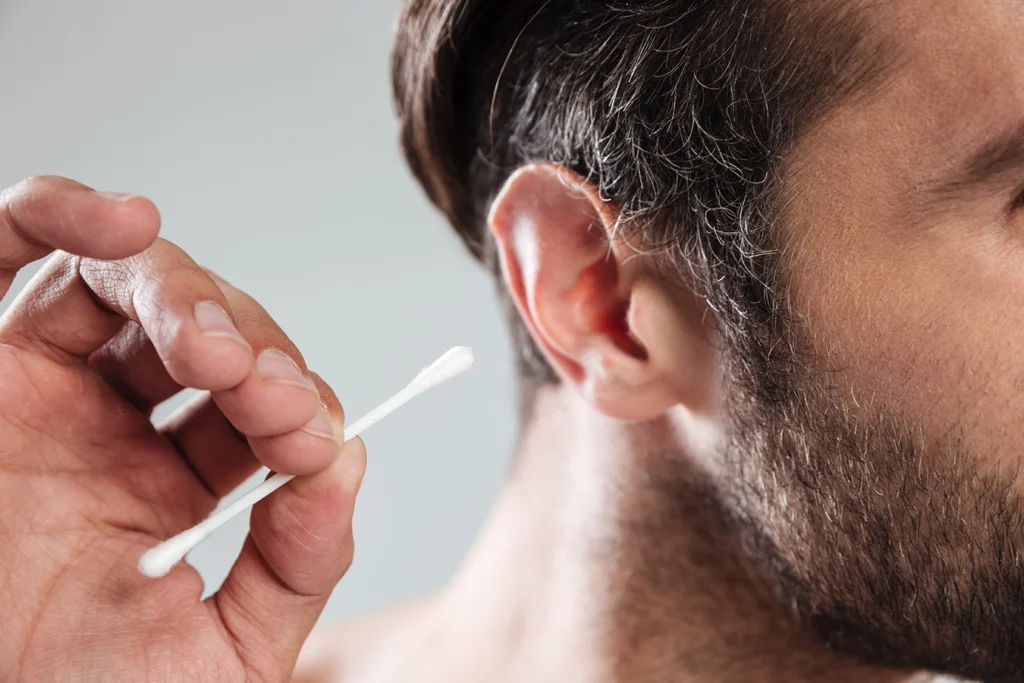
Cotton buds and tools inserted into the canal can push wax deeper or injure the ear. The NHS also advises against relying on ear candles or ear vacuums to clear wax. Even when a tool comes out with a little wax on it, there may still be a blockage further inside. NHS earwax guidance · NICE hearing loss guideline.
In a 2025 randomised trial, adults with moderate to excessive wax used one of four devices once. The devices included an irrigator, two spiral tools and a shortened cotton swab. After use, 130 of 147 participants (88%) had the same or a worse wax grade. Wax was pushed deeper in 17% of participants. The study tested a single use and excluded ears with the highest grade of blockage, so its results apply to the devices and conditions studied. 2025 randomised trial of home earwax devices.
5. Professional removal starts with an examination
A trained practitioner can check the canal and eardrum and choose a method based on what they see and your medical history. Options can include electronic irrigation, microsuction or removal with a small instrument under direct vision. NICE advises against manual syringing in adults. A perforation, active infection or previous ear surgery can affect whether irrigation is appropriate. This is why an examination matters before attempting to flush an ear. NICE hearing loss guideline · NHS Borders earwax guidance.
Tell the practitioner if you take blood thinners, have diabetes or have a condition or treatment that affects your immune system. These details can change how the practitioner approaches removal. If hearing is still muffled after the wax has been cleared, ask what further assessment is appropriate. AAO-HNSF earwax guideline.
6. Sudden hearing loss needs urgent assessment
A sudden drop in hearing can feel like a plugged ear. Seek urgent care even if the ear feels full or you have had wax before. NICE advises adults whose hearing loss developed over three days or less within the past 30 days to be seen within 24 hours when an outer- or middle-ear cause has not been established. An ENT service or hospital emergency department can assess a sudden change. NICE hearing loss guideline.
Seek medical advice promptly for new ear pain, discharge or bleeding, particularly after using a tool. If the hearing loss is sudden, treat that as urgent in its own right. NICE hearing loss guideline · NHS earwax guidance.
7. Repeated blockage is worth discussing
If you wear hearing aids and keep noticing muffled sound, follow the manufacturer’s instructions for checking the device’s wax filter. If the change persists, ask your hearing-care provider to check both the device and your ears. For a young child with suspected blockage or a change in hearing, arrange an examination and ask what is appropriate for their age before using a home product. AAO-HNSF earwax guideline.
Common questions about ear wax cleaning
Can I tell from the colour of the wax?
Visible wax can vary in appearance. Whether you need care depends more on symptoms, how quickly they started and what a clinician sees inside the ear.
What if I see wax at the entrance?
You can wipe the outside with a soft cloth. If the wax is inside the opening, leave it to move out naturally. If you feel blocked or your hearing has changed, get advice based on how the symptoms began.
What should I tell the clinic when I call?
Say when you first noticed the hearing change and whether it happened suddenly. Mention the affected ear, any pain or discharge, and any ear surgery or grommets. Those details help the clinic decide how quickly you need to be seen.