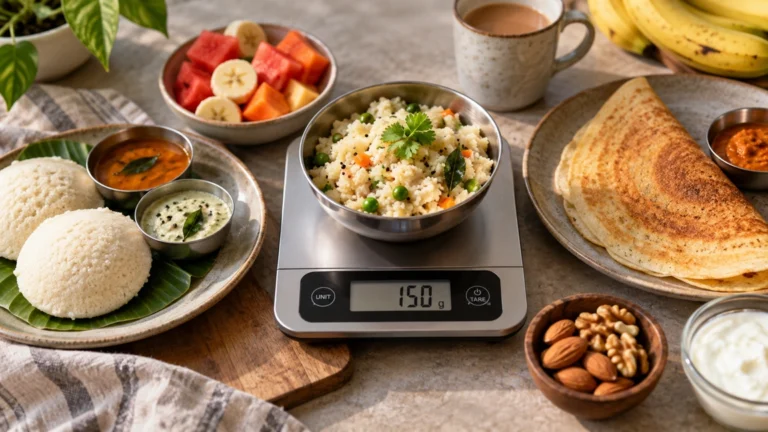
Yes, white rice can fit into a diet for weight loss. A bowl of steamed rice with dal and bhindi can stay on the menu if the portion fits the rest of what you eat. Research on white rice and weight loss gives no basis for promising a 15% drop in body fat from eating rice. Sustainable weight loss generally depends on an eating pattern that reduces energy intake over time and that you can keep up. NIDDK guidance on weight management.
Rice is a staple in many Indian homes, and the useful idea behind the white rice effect is that you can keep a familiar food while changing how you serve it. Start with the meal you actually eat. If lunch is mostly rice with a little gravy, make room for a serving of dal, egg, fish or tofu and a vegetable you enjoy. That gives you a more varied plate without rebuilding the whole menu.
Glycaemic index and blood sugar
The glycaemic index, or GI, describes the blood glucose response to a standard amount of available carbohydrate in a food. It is different from the amount of carbohydrate in your serving. Rice appears across low, medium and high GI categories in the international tables. The variety and processing matter, so the word ‘white’ alone cannot tell you how a particular rice will behave. International tables of glycaemic index and load.
As your body digests rice, its starch supplies glucose. The rise in blood glucose after a meal is a separate question from changes in body fat over weeks or months. The rice studies below give no basis for using a glucose or insulin spike as a fat-loss strategy. If you are managing diabetes, consider both the portion of rice and the rest of the meal. CDC guidance on diabetes meal planning.
What studies say about white rice and weight loss
Brown rice retains the bran and germ, so it generally provides more fibre than polished white rice. That makes it one way to add whole grains. If the extra cooking time or texture puts you off, try a small swap at a meal you already like, or add fibre through vegetables and pulses while keeping your usual rice.
A review of randomised trials found some differences in weight and waist size in favour of brown rice, but the studies varied substantially and the authors rated the evidence low or very low in certainty. A separate review found an association between higher white rice intake and type 2 diabetes in cohort studies, while trials that substituted brown rice had mixed findings on metabolic risk factors. These studies answer different questions. Neither provides a reliable body-fat target for someone changing the rice on their plate. Review of randomised rice trials and body measurements · Review of rice intake and diabetes risk.
What research in India found
A crossover trial in Chennai compared parboiled brown rice with white rice over three months per diet in 166 adults. Across the study group, the researchers found no significant differences between the diets in their main glucose and lipid measures or in body-fat percentage. Some subgroups had different results. For someone choosing a staple, the trial gives reason to be cautious about predicting a specific result from changing rice alone. Chennai randomised rice substitution trial.
The 2025 ICMR–INDIAB analysis used dietary and metabolic data from 18,090 adults. People reporting the highest carbohydrate intakes had higher odds of several outcomes, including newly diagnosed type 2 diabetes and abdominal obesity, than those reporting the lowest intakes. The study captured diet and health at a point in time and looked at the wider diet. It cannot tell us how one serving of white rice would change an individual’s weight. ICMR–INDIAB dietary analysis.
How to portion white rice in an Indian meal
Use the same ladle or katori for a few meals so you can see how much cooked rice you usually serve. A half-cup and three-quarters of a cup look close in a wide bowl, but the larger portion contains 50% more of the same rice. This is a way to compare portions at home. The right amount depends on the person, the meal and any dietary advice they already follow.
Build the rest of the plate before taking a second helping. In the CDC’s diabetes plate method, non-starchy vegetables take up half of a 9-inch plate, a protein food one quarter and a carbohydrate food one quarter. ICMR–NIN’s Indian model plate is a daily guide and also includes pulses, grains, vegetables and other food groups. For a thali, the basic idea is to give the dal and sabzi a place of their own instead of letting rice fill most of the plate. CDC guidance on diabetes meal planning · ICMR–NIN Dietary Guidelines for Indians.
At a dal-chawal lunch, put a portion of rice on the plate with a bowl of dal and a generous serving of bhindi or cabbage. For fish curry and rice, add a vegetable side and look at how much oil went into the curry as well as how much rice you served. With rajma-chawal, remember that rajma supplies both carbohydrate and protein. A dietitian can help you count the whole meal if you track carbohydrates for diabetes.
Plain dahi or cucumber raita can be a side if you enjoy dairy. For more on portions and how to compare plain and sweetened dahi, see PicknStory’s guide to curd and weight loss.
Use cooked portions when comparing meals
If you measure rice at home, decide whether you are recording the dry rice that went into the pot or the cooked portion on your plate. Water adds weight and volume during cooking, so 100 g of dry rice and 100 g of cooked rice refer to different quantities of grain. Use a cooked-rice entry if you weigh it after cooking. If you use a packet’s dry-rice nutrition values, record the dry amount and divide the cooked batch into the portions you actually serve.
For example, if you cook 200 g of dry rice and divide the finished pot evenly into four containers, each container holds the equivalent of 50 g dry rice. If one container gets an extra ladle, the portions are no longer equal. A simple way to get a reliable comparison is to use the same ladle each time and record second helpings too.
Count rice and the other carbs on the plate
The CDC’s carb-choice guide uses about 15 g of carbohydrate for one-third of a cup of cooked rice. Using that estimate, two-thirds of a cup is about 30 g. These are reference portions for counting, and the exact amount can vary with the rice and preparation. A katori may hold more or less than a standard measuring cup. If you count carbs for diabetes, measure the bowl you use rather than assuming they hold the same amount. CDC carb-choice reference.
In a meal with rice and aloo sabzi, count the potato as another source of starch. If you also want roti, make room for both when you serve them. A vegetable such as cabbage or bhindi gives you a different side to choose from. In khichdi, the rice and dal are already mixed, so use the recipe and the size of the portion when you need to estimate its carbohydrate content.
Make the same rice work for a packed lunch
If you pack lunch, use one container for cooked rice and another for dal, egg curry or tofu with vegetables. Separate containers make it easier to tell whether the rice is crowding out the rest of the meal. If the canteen serves a large mound of rice with a small amount of dal, you can ask for a smaller scoop and more dal or sabzi. That changes the balance of lunch without asking you to give up the rice you prefer.
Make the change fit your kitchen
If the household cooks one pot of rice, use the same rice and change what goes on your plate. Keep a portion of dal ready or plan a vegetable that can cook while the rice rests. If you want to try brown rice, start with a dish where you like its firmer texture. A change that fits your schedule and budget is easier to repeat through a busy week.
At a buffet, decide whether you want rice, roti or a little of each before serving. If you enjoy biryani, take the portion you want to eat and consider what else will accompany it. The same volume of plain steamed rice and biryani can contain different amounts of energy because of the oil, ghee and other ingredients.
White rice if you have diabetes
The 2026 ADA guidance advises people with diabetes or prediabetes to eat more whole grains, legumes and non-starchy vegetables and to limit refined grains. If you include white rice, the amount of carbohydrate in your whole meal matters. Ask your care team how rice fits your meal plan, particularly if you use mealtime insulin or take medicines that can cause low blood sugar. American Diabetes Association’s 2026 Standards of Care · CDC guidance on diabetes meal planning.
Questions about white rice and weight loss
Can I eat rice at dinner?
Choose the timing that fits your routine and any plan from your care team. The evidence reviewed here gives no reason to move rice to breakfast or eat it around a workout for a special fat-loss effect. If dinner is when you usually have rice, start by looking at the size of that serving and what goes with it.
Do I have to switch to brown rice?
Brown rice is one option for adding whole grains. You can also vary the grain across meals, for example by having whole-wheat roti at one meal or a millet you already cook at another. If you prefer white rice with a particular curry, look for fibre elsewhere in the meal and across the day.
Is parboiled rice the same as brown rice?
Parboiling is a processing step. Brown and white describe how much of the grain’s outer layers remain after milling. Parboiled rice can still be polished. A 2025 review found preliminary evidence of a smaller blood glucose rise after some parboiled rice meals compared with non-parboiled rice. That finding concerns glucose after eating. The review did not establish a weight-loss effect. 2025 review of parboiled rice and glycaemic response.
Does cooling cooked rice make it better for weight loss?
Cooling cooked rice can change how some of its starch is digested. Short-term studies have had mixed findings on the blood glucose response, and the studies cited here did not test long-term weight loss. If you are keeping leftovers, the UK Food Standards Agency advises cooling rice quickly, ideally within one hour, refrigerating it and using it within 24 hours. Reheat it only once, until it is steaming throughout. Cooling and glucose response in adults with type 1 diabetes · Cooling trial in healthy adults · Food Standards Agency guidance on leftover rice.
Start with one meal you already eat
Try the next lunch you would normally serve with rice. Measure the cooked portion once, add a vegetable and a protein food you like, and see whether the meal carries you comfortably to the next one. If you want more variety, change the grain at a different meal where the swap is easy.