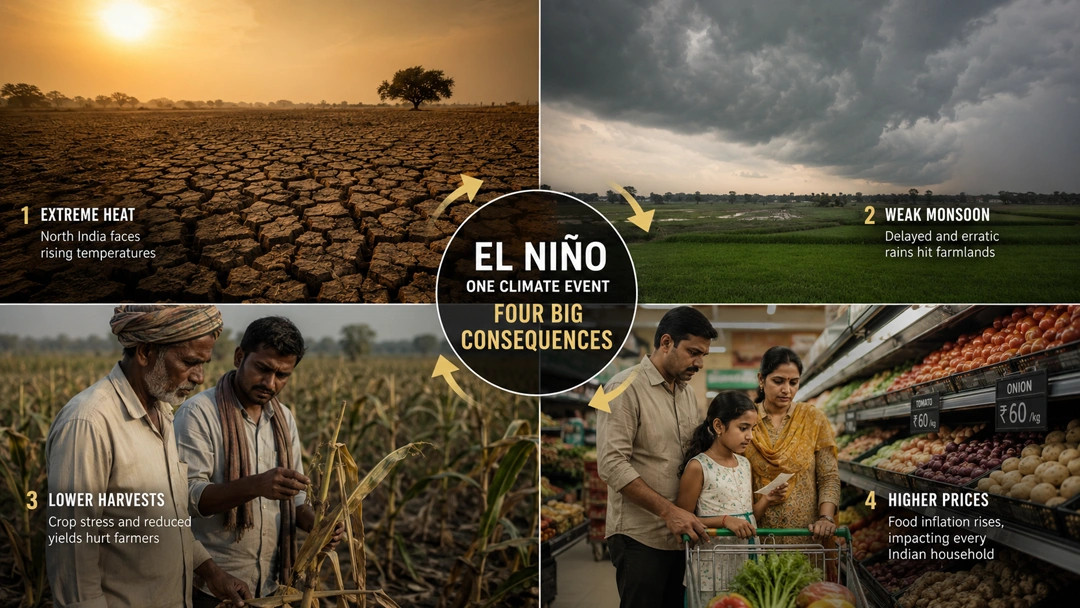
El Niño Forecast India is more than a weather headline. It is a signal that can shape rainfall, heat, farm output, food prices, rural incomes, and even the pace of consumer spending across the country. When El Niño develops in the Pacific, the ripple effects can reach Indian households quickly, especially during the monsoon months. That is why every El Niño Forecast India discussion matters not just to meteorologists, but also to farmers, businesses, policymakers, and investors.
India’s economy is deeply linked to the monsoon. A weak rain season can reduce crop yields, raise vegetable and grain prices, and squeeze rural demand. A stronger season, by contrast, can support farm income, improve food supply, and stabilise consumption. The El Niño Forecast India outlook therefore becomes a practical guide to understanding weather risk and economic risk at the same time.
In this analysis, we break down how El Niño affects North India heat waves, monsoon timing, rural earnings, inflation, FMCG sales, agriculture production, and overall growth. We also explain what official forecasts from the India Meteorological Department mean in practice, and how households and businesses can prepare. For broader national context, readers can also refer to our stories section and .
El Niño Forecast India refers to the expected weather and economic consequences of an El Niño event on India. El Niño is a warming of the central and eastern Pacific Ocean that changes atmospheric circulation patterns across the globe. In India, the most important effect is often a disruption in monsoon rainfall, though the picture is never identical every year.
El Niño does not automatically mean drought. However, it can increase the probability of below-normal rainfall, uneven distribution of rain, and longer dry spells. This matters because Indian agriculture, especially rain-fed agriculture, still depends heavily on seasonal rainfall. According to the India Meteorological Department, seasonal forecasts are updated regularly and should be tracked alongside sea-surface conditions.
The El Niño Forecast India outlook is therefore best understood as a probability statement. It says risk is higher, not certain. That distinction matters for farmers deciding crops, traders setting prices, and companies planning inventory. The more clearly people understand that uncertainty, the better they can respond.
Why the El Niño signal matters for India
India’s monsoon is not only a weather event. It is also a national economic stabiliser. When the monsoon performs well, the result is often better reservoir levels, higher farm output, lower food inflation, and stronger rural spending. When it performs poorly, the effects can spread from fields to factories and from grocery bills to GDP growth.
That is why El Niño Forecast India is closely watched by economists. A small shortfall in rain can quickly affect sowing decisions, crop yields, seasonal labour demand, and household purchasing power. In an economy where food carries major weight in consumer budgets, these effects are amplified rapidly.
How El Niño Shapes the Indian Monsoon
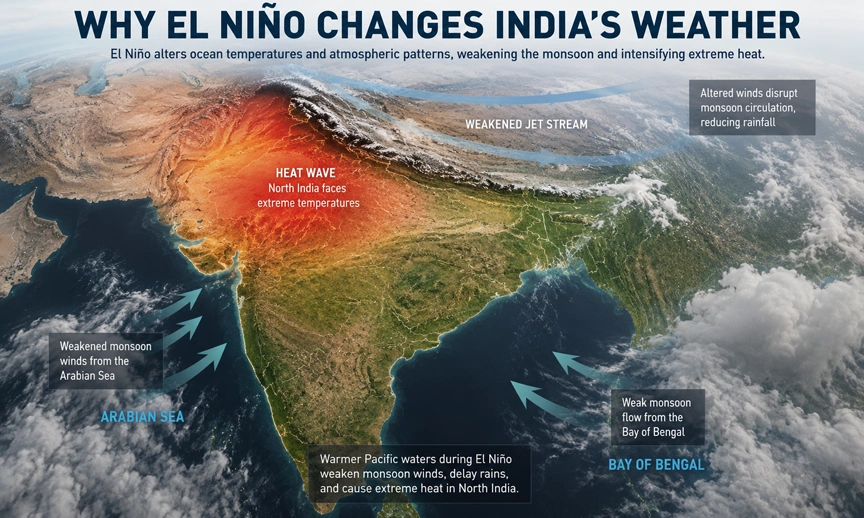
The most direct path from El Niño Forecast India to the real economy runs through the monsoon. El Niño can weaken the monsoon circulation that normally draws moisture from the oceans into the Indian subcontinent. The result may be delayed onset, patchy rainfall, or a weaker overall distribution of rain across states.
However, rainfall responses are uneven. Some regions may see near-normal rain while others suffer large deficits. That is why blanket statements about “good” or “bad” monsoons can be misleading. The more useful approach is to examine state-level and cropping-zone impacts. The IMD’s seasonal outlooks, temperature projections, and rainfall updates are essential reading for anyone monitoring El Niño Forecast India.
It also helps to distinguish between total rainfall and rainfall timing. Even if seasonal totals look acceptable, long dry spells during sowing or flowering periods can still hurt crops. For agriculture, timing often matters as much as quantity. This is one reason El Niño Forecast India can have outsized economic consequences even when the national rainfall number does not look disastrous.
Weather factor
Potential El Niño effect
Economic implication
Onset of monsoon
Possible delay
Late sowing and lower early farm activity
Rainfall distribution
Uneven showers
Crop stress and irrigation pressure
Heat before rains
Higher temperatures
Water demand rises, productivity falls
Dry spells
More frequent in some years
Lower yields and higher food prices
North India Heat Wave Risks During El Niño
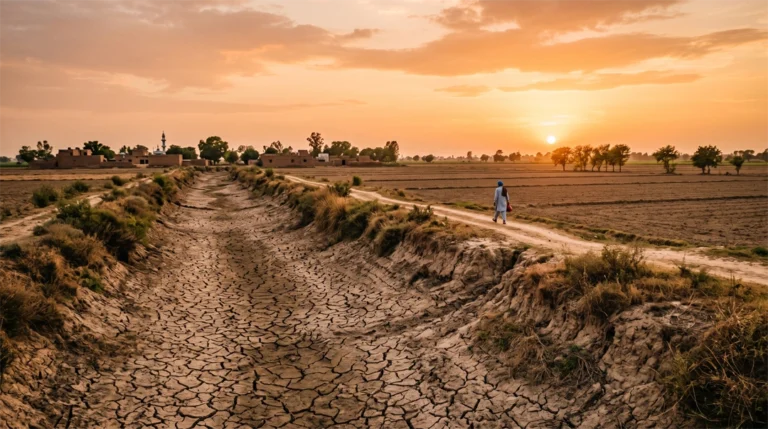
One of the most visible parts of El Niño Forecast India is the risk of severe heat in North India. During El Niño years, many regions can experience hotter pre-monsoon conditions. This does not happen everywhere and not in the same way each time, but the risk profile becomes more worrying.
North India heat wave episodes are especially damaging because they affect dense populations, urban labour, power usage, and water supply. High temperatures reduce work capacity, especially for outdoor workers, construction crews, delivery staff, and farm labourers. They also increase electricity demand as households and businesses rely more on cooling.
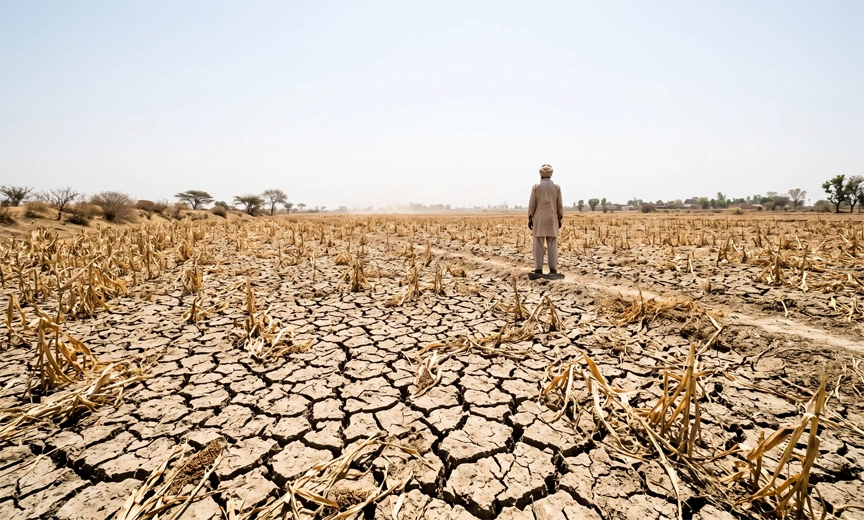
For agriculture, heat waves can be even more harmful. Mango, wheat, vegetables, and dairy supply chains may all be affected. Livestock stress rises too. For vulnerable households, heat can raise health expenses and cut earnings at the same time. In that sense, the El Niño Forecast India impact goes far beyond the weather page of a newspaper.
What households can do during extreme heat
Households can respond in practical ways. Hydration, shade, staggered work hours, and checked storage of food and medicines all matter. Farmers may need to adjust irrigation timing and protect seedlings. Urban employers can reduce outdoor work during peak afternoon heat. These are small measures, but they reduce vulnerability when the El Niño Forecast India signal points to higher heat risk.
El Niño Impact on India Agriculture Production
The biggest economic link in the El Niño Forecast India story is agriculture. India’s farm sector still supports a large share of livelihoods, directly and indirectly. If rainfall weakens, crop production can fall, especially in rain-fed areas that lack reliable irrigation.
Rice, pulses, oilseeds, coarse cereals, sugarcane, and vegetables can all be affected differently depending on weather timing and location. A weak monsoon may reduce acreage, lower yields, or force farmers to switch to less water-intensive crops. In some cases, the immediate effect is not a collapse in output, but a shift in crop mix and quality. That still matters for market prices and farm income.
The El Niño Forecast India outlook also affects input costs. Farmers may spend more on diesel, pumping, fodder, and supplemental irrigation if rains are erratic. If output falls while costs rise, margins weaken sharply. This is why even a moderate weather shock can become a large rural income shock.
Experts often note that irrigation infrastructure and crop diversification reduce vulnerability. States with better irrigation coverage or stronger procurement systems tend to absorb climate shocks more effectively. That makes long-term resilience as important as short-term forecasting.
Rural Economy India: Income, Jobs, and Spending
When farmers earn less, the effects travel quickly into the rural economy India depends on. Inputs, transport, storage, local retail, two-wheelers, and small-ticket purchases can all slow down. The rural economy is deeply tied to harvest expectations and seasonal cash flow, so El Niño Forecast India can influence much more than farming alone.
Lower farm income reduces demand for discretionary items first, then for essentials if stress persists. Households may postpone appliance purchases, cut non-essential travel, or reduce spending on branded goods. Migrant workers can also feel the pressure if agricultural labour demand falls. This creates a feedback loop: weaker farm incomes lead to weaker spending, which then affects local enterprises and jobs.
A positive monsoon, by contrast, can stimulate the rural economy India relies on for broad-based consumption growth. Better harvest expectations encourage spending on durable goods, motorcycles, consumer finance, fertiliser, and home improvement. That is why analysts track rainfall forecasts as closely as earnings reports.
For businesses, the key is timing. Rural demand does not change overnight. It typically shifts in phases: first through crop sentiment, then through harvest receipts, and later through household spending decisions. El Niño Forecast India therefore acts like a slow-moving indicator with fast consequences.
Food Inflation India and Consumer Prices
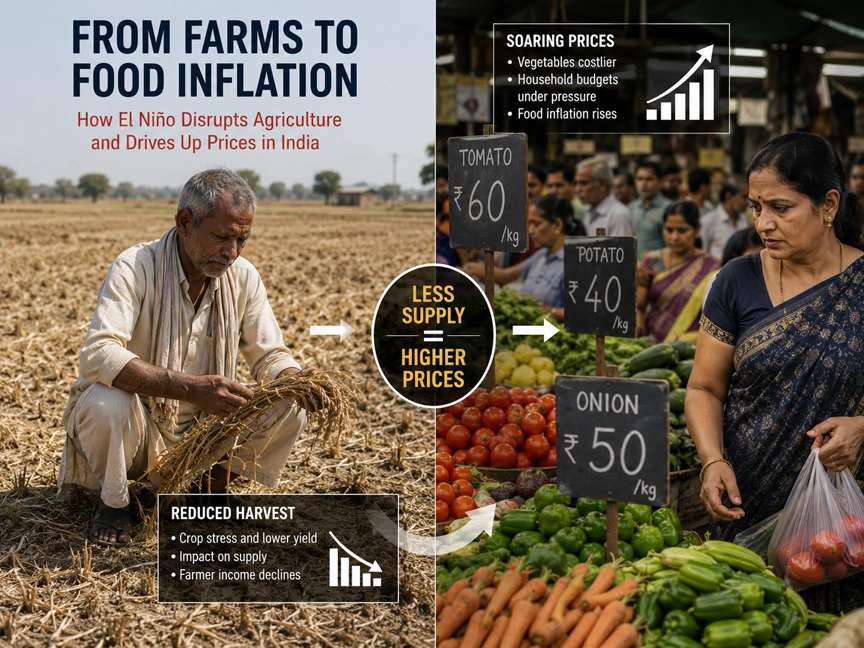
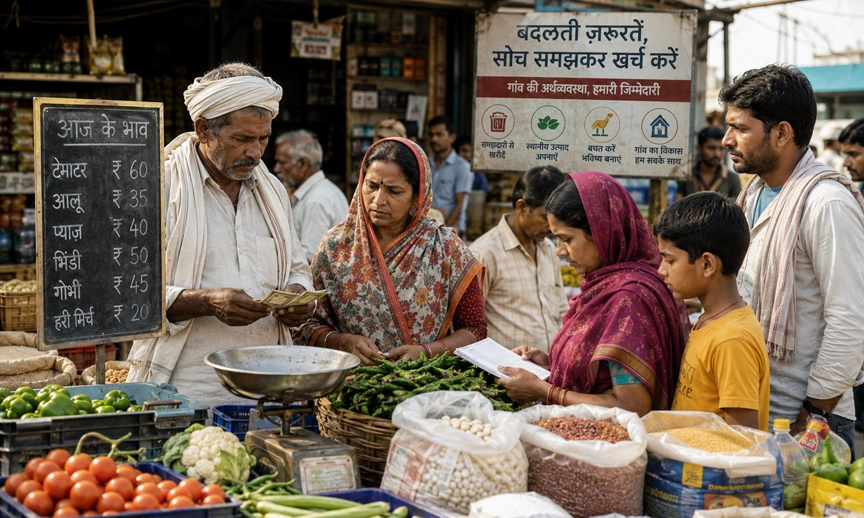
Food inflation India is one of the most direct channels through which El Niño Forecast India affects urban and rural households alike. If rain falls short, supplies of vegetables, cereals, pulses, and milk can tighten. Prices can rise quickly because food markets often react faster than broader inflation measures.
Vegetables are especially volatile. A short rain deficit can disrupt sowing and transport, while heat can speed spoilage. Cereals and pulses may take longer to show effects, but they can still become expensive if crop output falls or government stocks do not fully cushion supply. This is why food inflation India often becomes a central policy concern in weak monsoon years.
Higher food prices hit low-income households hardest because they spend a larger share of income on essentials. They also influence wage demands, retail sentiment, and interest rate expectations. For policymakers, managing inflation during an El Niño year becomes a balancing act between supporting growth and controlling prices.
For practical comparison, the effect can be summarised like this:
Scenario
Farm output
Food prices
Consumer spending
Healthy monsoon
Stronger
Stable to moderate
Broader recovery
El Niño with weak rain
Weaker
Higher and more volatile
Shift toward essentials
El Niño with good regional rain
Mixed
Localized pressure
Uneven demand
FMCG Rural Demand and Consumer Spending India
Companies closely monitor FMCG rural demand because it is one of the first corporate metrics to reflect weather stress. Rural households buy soaps, detergents, packaged foods, personal care products, and small household items consistently when incomes are healthy. When farm earnings weaken, volume growth often slows.
El Niño Forecast India can therefore affect consumer spending India in a very practical way. If farmers expect a weak harvest, they may delay purchases or choose smaller packs. If monsoon conditions are favourable, the opposite tends to happen. Even urban sales can be influenced indirectly as higher food prices leave less disposable income for other items.
FMCG firms often respond by adjusting pack sizes, focusing on value products, and increasing rural distribution support. They may also emphasise seasonal marketing and local inventory management. In other words, weather forecasting becomes business forecasting. The best-performing companies are usually those that translate the El Niño Forecast India signal into commercial action early.
Why consumer behaviour changes quickly
Consumer behaviour changes because incomes and expectations change quickly in rural India. A farmer who expects lower output spends differently from one who expects a strong harvest. This psychological effect matters almost as much as the actual crop outcome. As a result, El Niño Forecast India can influence consumption even before the final production data arrives.
Economic Growth, Policy, and Market Sensitivity
At the macro level, El Niño Forecast India can affect GDP growth through agriculture, inflation, rural demand, and policy response. If farm production slows, agriculture’s contribution to growth weakens. If food inflation rises, households spend more on essentials and less on discretionary goods. If the central bank worries about prices, interest rate cuts may be delayed.
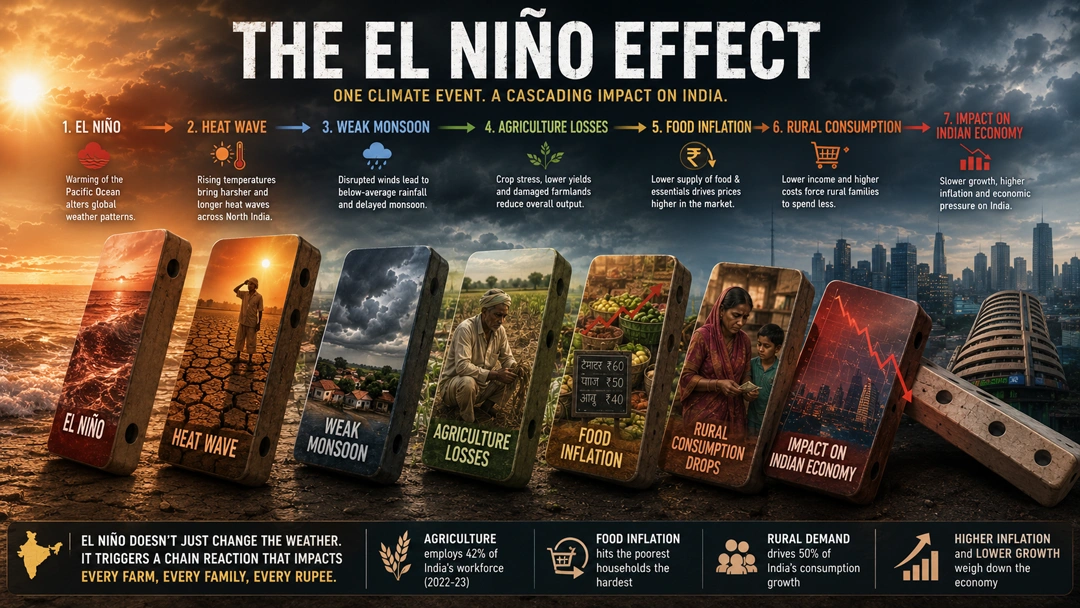
This creates a chain reaction. Weak rain can reduce output. Higher prices can slow consumption. Slower consumption can hurt corporate earnings. That is why analysts often look at El Niño not as a weather story alone, but as a growth risk variable. India’s economy is more diversified than it used to be, yet weather still has a powerful influence on sentiment and margins.
The policy response also matters. Government food stock releases, import decisions, crop insurance payouts, irrigation support, and relief measures can soften the blow. So can better forecast dissemination and state-level planning. El Niño Forecast India becomes manageable when warning systems, procurement, and farmer awareness are aligned.
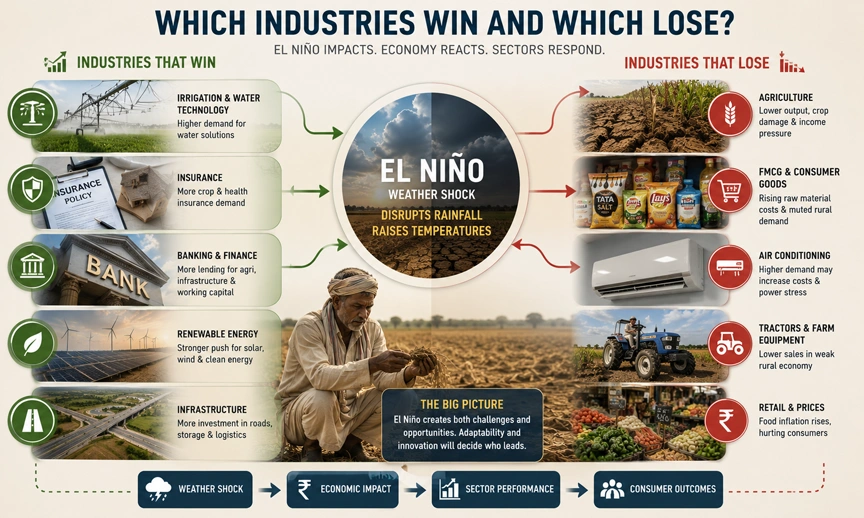
For investors, one useful approach is to compare sectors on sensitivity to weather shocks.
Sector
Sensitivity to El Niño
Typical effect
Agriculture inputs
High
Demand shifts with sowing and moisture
FMCG
Medium
Rural volume growth may slow
Restaurants and discretionary retail
Medium
Consumption weakens if food inflation rises
Utilities and cooling
High during heat
Power demand rises
Banks and NBFCs
Indirect
Rural credit stress may rise
How Businesses and Farmers Can Prepare
Preparation is the most practical response to the El Niño Forecast India outlook. Farmers can diversify crops, improve water use efficiency, and stagger sowing based on updated rainfall expectations. Where possible, drip irrigation, mulching, and soil moisture conservation can reduce losses. Crop insurance also becomes more valuable in a volatile year.
Businesses can prepare just as actively. FMCG firms can strengthen rural stock planning. Retailers can monitor category shifts. Lenders can review repayment stress in weather-sensitive districts. Logistics companies can plan for heat-related disruptions. Even urban employers may need heat-management policies if North India heat wave conditions intensify.
The best response is not panic. It is planning. El Niño Forecast India should trigger a checklist: monitor IMD updates, map vulnerable regions, protect margins, and adjust inventories. The sooner this is done, the more effective the response will be. A forecast only becomes useful when it changes decisions.
Pros and Cons of the El Niño Forecast Signal
Forecasts are useful, but they are not perfect. The El Niño Forecast India signal has clear strengths and real limitations. Understanding both helps readers avoid overreacting or underreacting.
Pros
Cons
Gives early warning of monsoon risk
Does not predict exact district-level rainfall
Helps farmers and businesses plan ahead
Local weather patterns can differ sharply
Improves inflation and policy awareness
Forecast confidence changes over time
Supports resilience planning
May be misunderstood as certainty
The key is to treat El Niño Forecast India as a decision support tool. It is best used with updated data, local knowledge, and sector-specific planning. Forecasts are strongest when combined with preparedness.
What to Watch in the Coming Months
Readers tracking El Niño Forecast India should watch four things closely. First, the IMD monsoon updates and rainfall distribution reports. Second, reservoir levels and sowing progress. Third, food market prices, especially vegetables and pulses. Fourth, rural demand indicators from companies that sell into the countryside.
It is also useful to watch heat conditions in North India before peak monsoon arrival. Excessive heat can worsen stress on people, cattle, and crops. Meanwhile, any signs of a more even rainfall pattern can quickly improve sentiment. In short, the forecast story evolves month by month, not all at once.
For broader climate context, the IPCC explains how climate variability and long-term warming can interact, making extreme fluctuations more disruptive. NASA also provides useful material on global ocean and atmosphere patterns through its climate resources at NASA Climate.
Frequently Asked Questions
What is the basic meaning of El Niño Forecast India?
El Niño Forecast India refers to an assessment of how an El Niño event may affect India’s weather, monsoon, farming, prices, and economy. It is not a guarantee of drought. Instead, it points to a higher risk of weaker or uneven rainfall, hotter conditions, and pressure on agriculture and inflation. The forecast is most useful when read as a probability-based warning, not a fixed outcome.
Does El Niño always mean a weak monsoon in India?
No. A weak monsoon is more likely in some El Niño years, but not every El Niño produces severe rainfall deficits in India. Regional rainfall can differ widely, and local weather systems still matter. This is why El Niño Forecast India should always be read alongside IMD updates and crop-zone forecasts. The relationship is important, but it is not deterministic.
Why is North India heat wave risk higher during El Niño?
El Niño can alter atmospheric circulation in ways that increase pre-monsoon heat and dryness in parts of North India. That may raise the risk of heat waves, especially before seasonal rains arrive. The impact can be serious for outdoor workers, livestock, water supply, and energy demand. El Niño Forecast India therefore matters not only for rainfall, but also for temperature extremes.
How does El Niño affect agriculture production India depends on?
It can reduce soil moisture, delay sowing, limit crop growth, and raise irrigation costs. The effect is strongest in rain-fed areas and during key crop stages such as germination or flowering. Agriculture production India depends on can suffer even if the national rainfall shortfall appears modest, because the timing and distribution of rain often matter more than the total amount.
How does food inflation India react to a poor monsoon?
Food inflation India can rise when supplies of vegetables, cereals, pulses, or milk tighten after weak rains or heat stress. Prices may increase quickly because food markets are sensitive to weather, transport costs, and storage losses. If harvest expectations worsen, traders and households may also react early, which can amplify price pressure before the full crop data is known.
Why do FMCG rural demand trends change during El Niño years?
Because rural incomes often depend on farm output, and farm output depends heavily on rainfall. When El Niño Forecast India points to a weaker monsoon, rural consumers may delay purchases, choose lower-value packs, or spend less on non-essential goods. FMCG companies watch these shifts closely because rural demand often signals broader household stress or recovery.
Can consumer spending India slow even in cities because of El Niño?
Yes. If food prices rise, urban households may spend more on essentials and less on discretionary items. That leaves less room for restaurants, travel, apparel, and other non-essential purchases. So consumer spending India can be affected indirectly by El Niño through inflation, even in regions that do not experience the worst weather.
What should farmers and businesses watch most closely?
They should track IMD forecast updates, rainfall distribution, reservoir levels, market prices, and local sowing progress. Farmers should also monitor soil moisture and crop-stage vulnerability. Businesses should pay attention to rural demand, food inflation, and heat-related disruptions. In an El Niño year, timely information is often the difference between adjust-and-manage and react-too-late.
Conclusion
El Niño Forecast India is ultimately a story about connected risks. Weather shifts can influence monsoon rainfall, North India heat wave intensity, agriculture production India relies on, food inflation India households feel, and FMCG rural demand companies depend on. Those changes then flow into rural incomes, consumer spending India, policy decisions, and market sentiment. The effect may not be the same in every district or every sector, but the overall chain is clear.
The smart way to read El Niño Forecast India is with balance. Do not assume disaster, but do not ignore warning signs either. Watch official IMD updates, check how rainfall is distributed, and track signs of stress in food prices and rural sales. For farmers, that means preparing crops and water use carefully. For businesses, it means planning inventory, demand, and pricing with more caution. For households, it means keeping an eye on heat, essentials, and spending priorities.
In a country where climate and the economy are so closely linked, El Niño Forecast India is not just a forecast. It is a guide to risk management, resilience, and better decisions. The more seriously it is read, the better India can adapt when the weather turns uncertain.