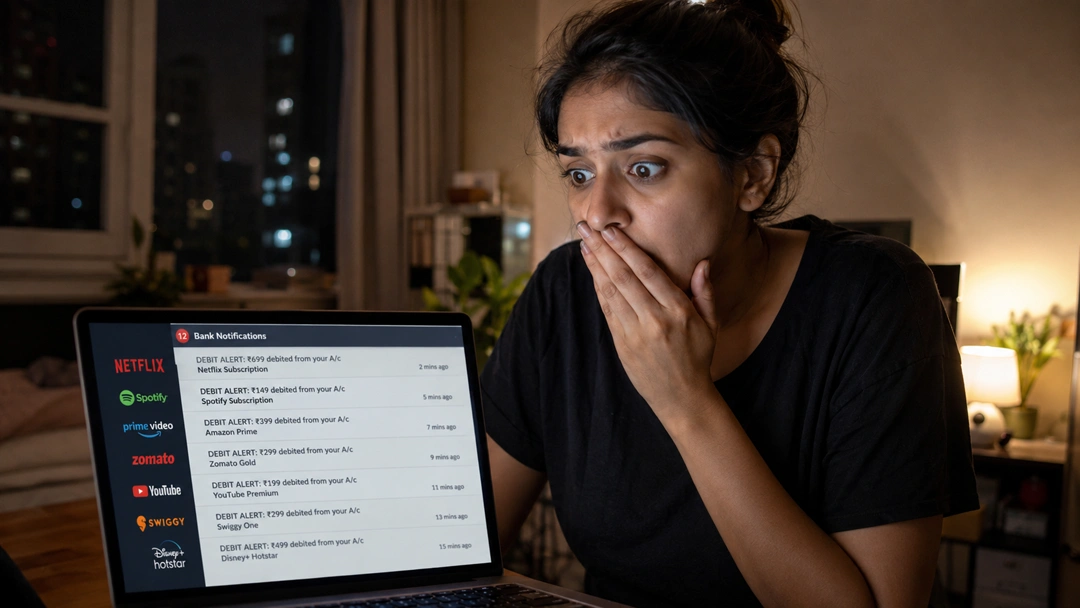
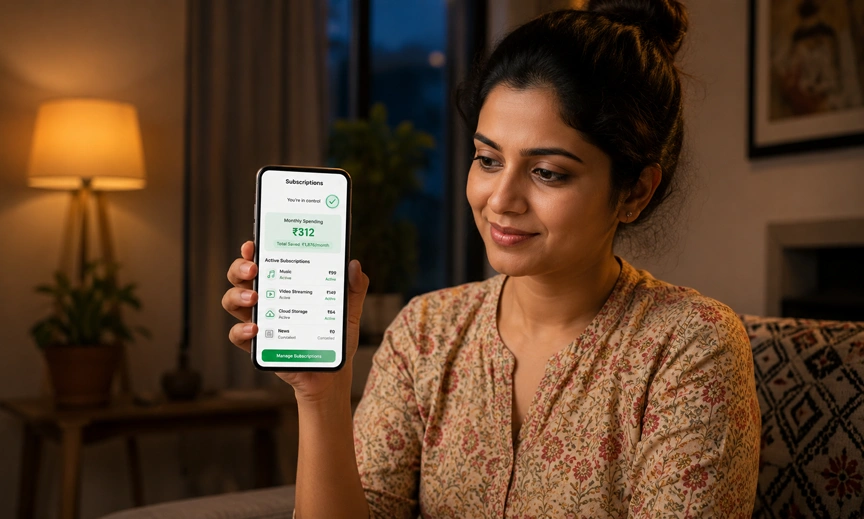
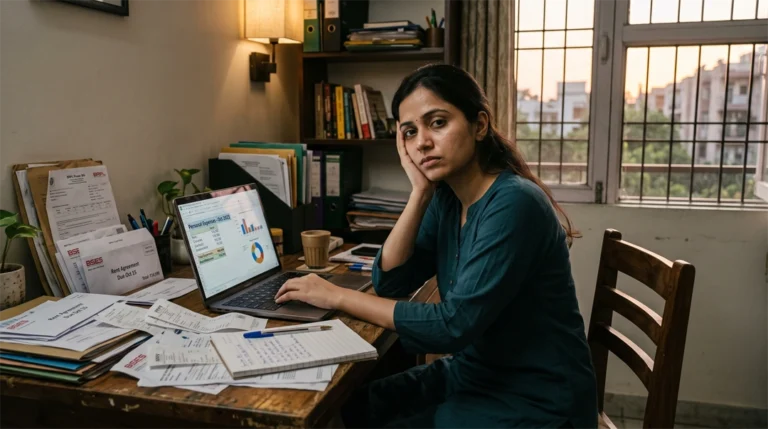
Subscription trap India is the quiet money leak most of us ignore until the bank balance looks thinner than it should. I noticed it on a Tuesday evening in Delhi, while checking my phone after metro chaos, chai, and one more late office call. My salary had arrived, and before I could even breathe, auto debits had already shaved off little amounts for OTT, cloud storage, food apps, music, and a fitness trial I had forgotten entirely. That is the strange thing about the subscription trap India. It does not feel dramatic. It feels like convenience.
However, convenience becomes expensive when you are paying for seven apps and actually using two. I have seen this in my own life and in friends who live across NCR, from Gurugram to Noida, where everything from cab rides to groceries is one tap away. The subscription trap India grows quietly because each charge looks small, but the total is not small at all. If you want to see how hustle culture and burnout make us spend without thinking, read this piece on burnout in India.
Moreover, India has a hidden advantage many people do not use. Bank-linked auto debits through RBI systems can be tracked and cancelled more deliberately than most of us realise. In this article, I will show you how the subscription trap India works, how to audit your recurring spends in 30 minutes, and how to stop paying for dead weight without guilt. I will also show you where the real money disappears, because subscription fatigue is not just a lifestyle problem. It is a monthly financial habit problem, and in 2026, that matters more than ever.
Subscription trap India starts with the money you do not notice. A rupee here, 299 there, 999 somewhere else, and suddenly your ‘net savings’ are smaller than you expected. In Delhi, I have watched this happen to people who are otherwise smart with money. They negotiate rent, compare cab fares, and still forget the recurring charges that hit after payday. The problem is not only spending. It is not seeing the spending at all.
Subscription trap India and the illusion of small charges
Subscription trap India works because every charge feels too small to stop. That is the trap. A music plan looks harmless. A food delivery membership looks like savings. A cloud backup looks like safety. Meanwhile, the bank statement becomes a list of automated decisions you did not actively make this month. The recurring billing model is designed to reduce friction, which is great for convenience and terrible for memory. If you never review the list, you will keep paying for old decisions.
Subscription trap India in city life
Subscription trap India is worse in urban India because city life rewards speed. We book, stream, order, store, and subscribe because everything is busy. I felt this most in South Delhi when I was juggling work, family calls, and late dinners. The more tired I was, the easier it became to click yes. That is why the first savings win is not a salary hike. It is attention. Your money often leaks not because you are careless, but because you are exhausted.
Why We Keep Paying for Apps We Stopped Using
Subscription trap India survives on inertia. Once you sign up, your brain treats the app like a fixed utility. That is why you keep paying after the trial ends, after the one intense month passes, and after the festival binge is over. I have done this myself with fitness apps, language apps, and one OTT plan I used only for a single cricket series. The payment stayed. My usage did not.
Subscription trap India and the psychology of inertia
Subscription trap India taps into our love for future self-image. We pay for the version of us who will wake up at 5 am, cook healthy meals, watch documentaries, and read every day. Then real life arrives. Work gets messy. Traffic happens. The app icon sits there like a promise. If this pattern feels familiar, you may also enjoy this guide on stopping procrastination. The subscription is not always a need. Often, it is a small hope we keep financing.
Subscription trap India and the guilt of cancellation
Subscription trap India also stays alive because cancelling feels emotionally expensive. People think, ‘Maybe I will use it next month.’ That sentence has cost India professionals a lot of money. We also confuse cancellation with failure, especially if the app promised productivity, fitness, or self-improvement. But if you are not using it, there is no moral value in keeping it. Canceling is not quitting. It is editing your life so your money follows your actual habits.
7 Subscription Categories Urban Indians Overspend On
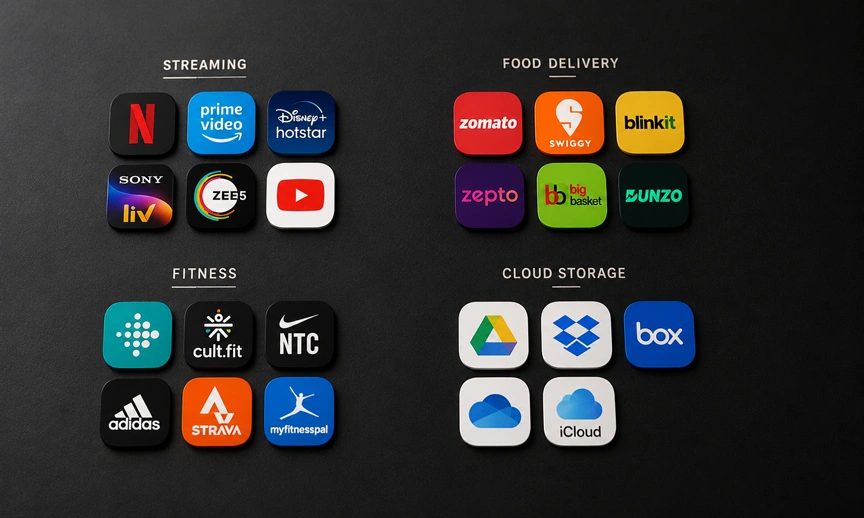
Subscription trap India shows up across seven common buckets. First, OTT platforms. Second, food delivery memberships. Third, cloud storage. Fourth, music and audiobook apps. Fifth, productivity tools. Sixth, fitness and meditation apps. Seventh, shopping and cashback memberships. Each one seems useful in isolation, but together they become a parallel tax on city living. In Delhi NCR, many professionals are paying for all seven while using only two regularly.
Subscription trap India in OTT, food and fitness
Subscription trap India is easiest to see in OTT and food apps. One platform for Hindi films, one for international shows, one for sports, and suddenly your entertainment budget is larger than your electricity bill. Food memberships are similar. They feel smart during office weeks and festive rushes, but if you order only twice a month, the math may not work. Fitness apps are the final emotional spend. They sell consistency, but consistency cannot be subscribed into existence.
Subscription trap India across utility and vanity buys
Subscription trap India is not only about fun. It also hides in storage plans, note apps, and premium memberships that promise efficiency. Some are useful. Some are vanity buys dressed as productivity. The digital economy rewards all of them because convenience is profitable. But your job is to separate utility from aspiration. If an app saves you time only once a month, it may not deserve a monthly fee. That is where the savings begin.
The RBI E-NACH Rule You Did Not Know You Had
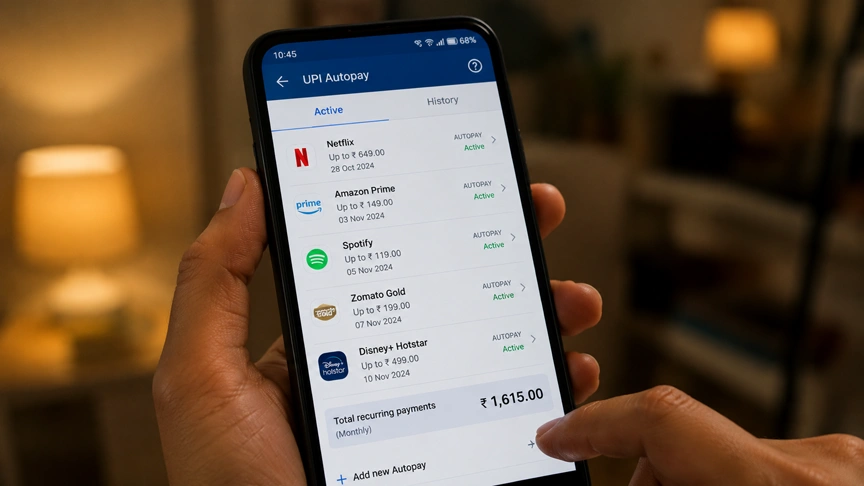
Subscription trap India becomes much easier to fight when you understand RBI E-NACH style auto-debit control. Many professionals do not realise they have more control than the app companies make it seem. If a recurring payment is linked to your bank mandate, you can usually inspect, disable, or revoke it through your bank or payment settings. The key is to stop treating auto-debit as permanent.
Subscription trap India and bank mandate rights
Subscription trap India is not just an app issue. It is a bank mandate issue too. If a recurring debit was set through an e-mandate, your bank app or net banking portal may show it under mandates, standing instructions, or recurring payments. This matters because the cancellation should happen at the source, not only inside the app. If you want a clean reset, review the mandate first and then cancel in the service. This is where the RBI framework helps ordinary users act with confidence.
Subscription trap India and why this saves real rupees
Subscription trap India stops costing money when you stop assuming the company owns your card forever. I have seen friends in NCR keep paying because they believed cancellation would be impossible. It is not impossible. It just needs a little patience and paperwork. Moreover, once you know your rights, you can stop one debit and save for months. That is real rupee savings, not abstract finance talk.
How to Audit Your Subscriptions in 30 Minutes
Subscription trap India is easiest to fix with one focused audit. Put 30 minutes on your calendar, open your bank app, card app, and email, and search for recurring words like renewal, subscription, auto debit, mandate, and payment succeeded. I do this once a month in my Delhi routine, usually with chai beside me and a notepad open. It is boring, yes. It is also powerful.
Subscription trap India audit method
Subscription trap India audit method starts with listing every recurring charge. Then mark each one as use weekly, use monthly, or forgot it exists. Anything in the last category goes first. Anything in the monthly category must earn its place. Anything you use weekly probably deserves to stay. The point is not to become extreme. The point is to make each debit conscious again. If you are trying to build better habits, this early-rising article may help too.
Subscription trap India and the one screen rule
Subscription trap India becomes manageable when you keep one screen or one note for all subscriptions. Write the app name, price, renewal date, and cancel path. That tiny list becomes your monthly truth sheet. When renewal dates are visible, surprise charges drop. This is especially useful for urban professionals who use multiple cards and UPI apps. If you cannot name why you are paying, that payment is probably too easy to cut.
Which OTT Is Actually Worth Keeping in 2026
Subscription trap India hits hardest with OTT because we keep everything ‘just in case’. In 2026, the best value usually comes from choosing one main platform and rotating the rest only when a show or sports season demands it. If your household watches different content, then one platform for films, one for sports, and one shared family plan may be enough. Paying for five is usually not.
Subscription trap India and the rotation strategy
Subscription trap India is easier to control with rotation. Keep one OTT active for two to three months, finish the shows you really want, then pause it and switch to another. This is much better than holding all subscriptions all year. In Delhi apartments, I know families who finally started doing this after realising half their plans were duplicate. The key is planning entertainment like a seasonal habit, not a permanent rent.
Subscription trap India and local value checks
Subscription trap India should be judged against actual use in Indian households. Ask yourself if you watch enough to justify the fee in a month. If not, use the free layer or wait for the next season. Music apps, sports packs, and OTT bundles should all face the same test. The cheapest platform is not the one with the lowest sticker price. It is the one you actually use without guilt.
Hidden Costs – Annual Plans Add-Ons and Price Creep
Subscription trap India grows through hidden costs, not only the base price. Annual plans look cheaper because they reduce monthly pain, but they also lock you in before habits are proven. Add-ons then arrive quietly, such as extra screens, premium support, storage upgrades, and tax. A plan that looked affordable in January can feel heavy by July.
Subscription trap India and annual plan regret
Subscription trap India often starts with the sentence ‘It is cheaper if I pay yearly’. Sometimes that is true. Often it is just prepayment. If you are not sure about long-term use, monthly billing may be safer because it preserves flexibility. I have regretted annual plans more than once, especially for tools I used intensely for one week and then abandoned. The larger payment only made the regret louder.
Subscription trap India and creeping price rises
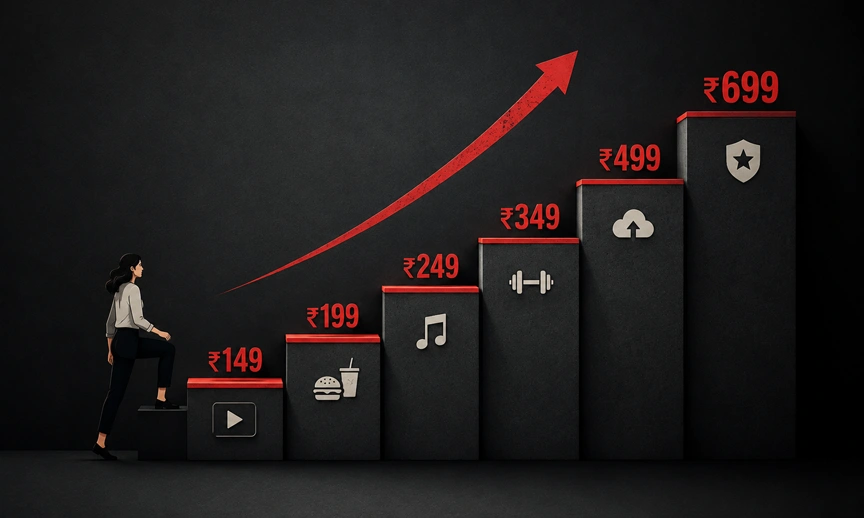
Subscription trap India also survives on price creep. A plan rises by 20 rupees, then another by 40, then another service adds a convenience fee, and nobody notices. That is why you need a fixed ceiling. If a category crosses your limit, it must justify itself or leave. The biggest saving is not finding a cheaper app. It is refusing automatic price acceptance year after year.
The 10 Percent Salary Rule for Subscription Budgeting
Subscription trap India needs a simple rule, and I like the 10 percent salary rule for subscriptions. Take your monthly in-hand salary, and keep all recurring digital, entertainment, delivery, and app spends below 10 percent. If you earn more, the number rises, but the discipline stays the same. That keeps convenience from eating your savings.
Subscription trap India and the spending ceiling
Subscription trap India becomes predictable when you use a ceiling. Once the limit is crossed, something must go. This is especially important for young professionals in metro cities who already carry rent, EMI, commuting, and family support. Recurring subscriptions should fit inside the life you already have, not compete with essentials. A clean ceiling creates calm because every new app has to earn space.
Subscription trap India and monthly review habits
Subscription trap India works against people who never review. So make the review ritual part of salary week. Check renewals, delete unused trials, and decide what stays. This is the same mindset that helps with procrastination and burnout, because money decisions are habit decisions. If you need a nudge on productivity, this picknstory guide can help anchor the routine.
Step-by-Step Cancellation Guide for Indian Apps
Subscription trap India ends when cancellation becomes normal. First, open the app and look for subscription, billing, or manage plan. Second, check the linked payment method in your bank, card, or UPI app. Third, remove auto-renew where available. Fourth, cancel the bank mandate if the debit is routed through your bank. Fifth, screenshot the confirmation and keep it for at least one billing cycle.
Subscription trap India and what to do if cancellation fails
Subscription trap India can get annoying when an app keeps trying to charge you. If cancellation fails, contact support, then your bank, and then the payment app that processed the debit. Ask for mandate revocation in writing. Keep the date, time, and reference number. Indian users often give up too early because the process feels messy. Do not. Messy is not impossible, and one successful cancellation can protect many future rupees.
Subscription trap India and building a clean digital life
Subscription trap India is finally about dignity, not just savings. It is about choosing what stays in your digital life and what leaves. I like the feeling of a cleaner bank statement. It feels lighter, calmer, and more honest. Once you cancel the extras, your money starts behaving like it belongs to you again, not your apps.
Frequently Asked Questions
How many subscriptions does the average urban Indian pay for?
Subscription trap India typically shows up when an urban professional pays for five to seven recurring services and actively uses only two or three. The exact number varies by salary, city, and habits, but the pattern is common. Most people forget small renewals because they are spread across cards, apps, and bank mandates. A monthly audit usually reveals the real count quickly.
How do I cancel auto-debit in India using RBI E-NACH rules?
Subscription trap India becomes easier to control when you cancel the bank mandate, not just the app account. Open your banking app or net banking, search for mandates, standing instructions, or recurring payments, and revoke the active entry. Then cancel inside the app too. If needed, ask your bank for help. Keep proof of cancellation in case a debit still attempts to go through.
Which OTT platform gives best value in India in 2026?
Subscription trap India and OTT value depend on what you actually watch. If you want the best value in 2026, choose one main platform for most viewing and rotate the rest only for special content or sports. The cheapest choice is not always the best. The best value is the platform you use regularly enough to justify the fee.
How to find all active subscriptions on my Indian bank account?
Subscription trap India is often visible inside the bank app under mandates, recurring payments, or auto-debits. Also scan your SMS, email, and card statements for renewals. Search for words like subscription, debit, renewal, and mandate. If you use multiple UPI apps, check each one. A single monthly review can reveal charges you completely forgot about.
Is Swiggy One or Zomato Gold worth it in 2026?
Subscription trap India makes food memberships feel valuable even when they are not. Swiggy One or Zomato Gold can be worth it if you order often enough to recover the fee in discounts and convenience. If you order only a few times a month, the membership may be dead money. Compare monthly usage, not just the promise of savings.
How much do Indian professionals spend on subscriptions monthly?
Subscription trap India often costs Indian professionals anywhere from a few hundred rupees to several thousand every month, depending on OTT, food, cloud, and app usage. Many people underestimate the total because each charge feels small. Once you add all recurring spends together, the number becomes more serious. A category cap helps keep the budget honest.
Can I get a refund on an unused subscription month in India?
Subscription trap India sometimes allows refunds, but policies differ by platform. Some services offer partial refunds, while others do not. If the subscription renewed recently and you barely used it, contact support quickly and ask politely. Keep screenshots and dates ready. Even when refunds are denied, canceling immediately prevents the next cycle from repeating.
How to set up subscription alerts on my Indian banking apps?
Subscription trap India gets easier when alerts are active. Turn on SMS, push notifications, and email alerts for card spends, auto-debits, and mandate activity in your banking app. If your bank supports it, set low-balance warnings too. These small nudges stop surprise renewals. They also help you catch duplicate charges before they become routine.
What is subscription fatigue and how does it affect spending habits?
Subscription trap India creates subscription fatigue when too many recurring payments make people stop noticing them. It affects spending by normalising auto-debits and making cancellation feel tiring. Over time, you lose track of value and keep paying out of habit. The fix is a monthly review and a strict limit on recurring spends. That restores control and reduces mental clutter.
How to do a monthly subscription audit to save money in India?
Subscription trap India responds well to one simple ritual. Once a month, check bank debits, card renewals, app stores, and email receipts. Mark each subscription as keep, pause, or cancel. Then delete at least one thing you do not truly use. If you need a habit reset alongside money discipline, start with this early-rising read. A monthly audit can save real money fast.
Subscription trap India is not about denying yourself comfort. It is about making sure comfort is chosen, not leaked. I have learned in my own Delhi life that the most expensive habits are usually the ones that hide in plain sight. A subscription is useful only when it earns its place month after month, not when it survives on forgetfulness. So this weekend, open your bank app, check your auto debits, and be a little ruthless in the kindest possible way. Your savings need that honesty.
That said, do not turn this into punishment. Keep what truly improves your life, remove what does not, and let your money support your real routine instead of your fantasy routine. If you want a wider mindset shift around discipline and daily habits, read this burnout article after you finish your audit. The subscription trap India gets weaker every time you choose with intention. subscription trap India
Conclusion
The subscription trap India is not really about OTT platforms, food memberships, or cloud storage plans. It is about losing visibility over where your money goes. Most recurring payments start with good intentions. A streaming service promises entertainment, a food membership offers convenience, and a fitness app feels like an investment in yourself. The problem begins when these subscriptions continue long after they stop adding value.
What makes this trap dangerous is its silence. Unlike a big purchase, subscriptions rarely demand attention. They quietly renew month after month, turning convenience into a habit and habit into a hidden expense. Over time, those small deductions can add up to a surprisingly large amount that could have been saved, invested, or spent on things that genuinely matter.
The solution is not to cancel everything and live without comfort. It is to be intentional. Review your subscriptions regularly, question every recurring charge, and keep only the services that actively improve your daily life. A simple monthly audit can restore control over your finances and reduce unnecessary spending without sacrificing convenience.
In the end, financial freedom is often built through small decisions. The money you stop leaking today can become the money that helps you reach bigger goals tomorrow.