Ladakh changes character in winter. Ladakh in winter feels very different from the summer tourist season. The mountain roads become quieter, ice forms along lake margins, and the low sun reveals textures that summer visitors rarely see. For photographers, these conditions offer striking light, long shadows and intimate details in landscapes normally photographed from a distance. But cold, altitude and unpredictable access make preparation essential. This guide explains how to plan a realistic journey, photograph responsibly and avoid treating an isolated Himalayan region like an ordinary weekend destination.
The strongest reason is not simply snow. It is the chance to see the interaction of light, geology, monasteries and daily life without the intensity of peak-season tourism. Some valleys remain largely brown while ridgelines turn white. A quiet road can provide a better composition than a famous lookout. In villages, winter rhythms are governed by heating, food supplies and weather, so visitors should respect everyday routines rather than treating residents as attractions. Winter travel rewards patience: sometimes a single carefully explored location produces more memorable photographs than five rushed stops.
When Is the Best Time to Visit Ladakh in Winter?
November brings colder nights and early seasonal changes. December has shorter days and increasing uncertainty around distant roads. January and February are the coldest part of the season, offering the strongest possibility of extensive ice on lakes, but they also demand the greatest preparation. March provides longer daylight and often fascinating melting and refreezing patterns. The right month for Ladakh in winter depends on whether you value frozen landscapes, cultural photography, night skies or easier logistics. Always use current local weather reports rather than averages to decide whether a particular journey is sensible.
How Cold Does Ladakh Get?
Leh’s January average daily minimum is roughly minus thirteen degrees Celsius according to historical India Meteorological Department data, while individual nights and more exposed sites can be much colder. Wind significantly affects comfort. An apparently dry, sunny afternoon can become dangerously cold as soon as the sun disappears behind a ridge. Carry suitable insulation even for short outings, keep gloves accessible and avoid allowing sweat to dampen base layers. Photographing sunrise may require arriving early, but it should never require prolonged exposure without proper clothing and a safe retreat.
Arrival in Leh and the First Two Days
Leh is the most practical base for a winter journey. If you are planning Ladakh in winter for the first time, use the opening days to adjust to the altitude instead of beginning with a mountain pass. Readers planning another season can compare the choices in our best time to visit Leh Ladakh guide. It has a greater concentration of hotels, transport providers, supplies and medical services than most surrounding settlements. Flights can still be affected by poor visibility, so leave slack in your travel schedule. More importantly, do not rush toward mountain passes immediately after arriving. Leh is approximately 3,500 metres above sea level. The district administration advises at least forty-eight hours of acclimatization before visits to higher-altitude destinations such as Pangong or Khardung La. Spend your arrival day resting, eating normally and getting used to the thinner air.
Altitude Safety Before Sightseeing
Fitness does not protect a traveller from altitude sickness. Headache, nausea, dizziness and unusual fatigue can develop after a rapid ascent. Avoid further climbing if symptoms emerge, and seek medical guidance if they persist or worsen. Confusion, breathlessness while resting or an inability to walk steadily are emergencies. Descent and medical assistance may be necessary. Visitors with relevant health conditions should consult a qualified clinician before travel. Hydration is sensible, but forcing excessive water is not a cure for altitude illness. The safest itinerary is one that lets the body adjust before attempting long journeys.
Leh Town, Shanti Stupa and Namgyal Tsemo
Leh itself provides worthwhile winter photography without a punishing drive. Shanti Stupa offers a broad perspective across the town and mountains, particularly when low light reveals the ridges. Leh Palace and Namgyal Tsemo create a very different set of compositions: layered architecture, winding streets and weathered surfaces. Move slowly on steps and icy paths, especially during acclimatization. When photographing monuments or religious buildings, check whether interior photography is permitted. A wide establishing frame paired with smaller details often tells a more complete story than repeated panoramas.
Namgyal Tsemo Monastery and Leh Palace
Pangong Lake: Ice, Light and Scale
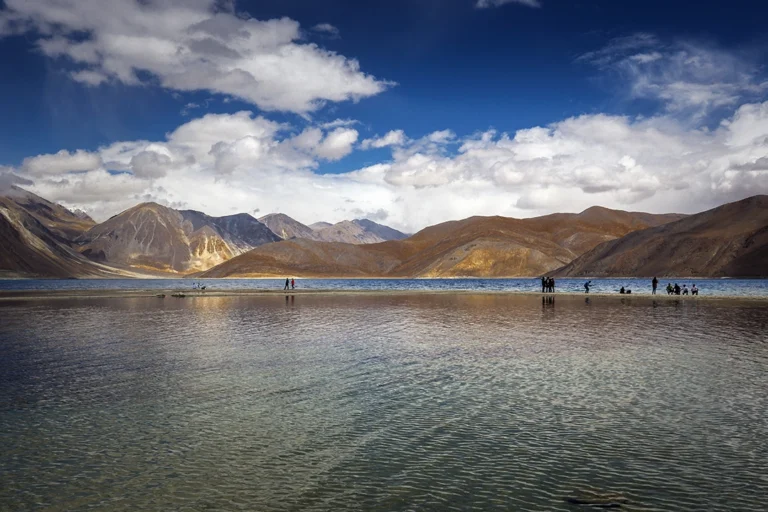
For many visitors, the most striking sight of Ladakh in winter is Pangong Lake. In sufficiently cold conditions, broad areas of its surface freeze. From the shore, photographers may find cracks, bubbles, overlapping ice sheets and changing colours where open water remains. Coverage is not identical every year or across the full lake. The safest approach is to photograph ice textures from secure ground and use a longer focal length when details lie farther away. Do not venture onto the ice based on appearances or reports that others have walked there. Cracks, variable thickness and shifting temperatures make that assumption dangerous.
Fully Frozen view of Pangong LakeA day view of fully frozen Pangong Lake Night Sky view of Pangong Lake with Milkyway Galaxy
Planning a Winter Journey to Pangong
Access depends on mountain road conditions and the availability of vehicles, drivers and accommodation. A road may be passable one day and restricted after snowfall. Confirm its status locally before leaving Leh. Keep journeys flexible and avoid promising yourself a sunset arrival. Seasonal camps near Pangong may be shut even when they still appear on booking websites. If a warm, reliable overnight stay is not confirmed, consider a different excursion. Emergency planning and the driver’s judgment matter more than completing a sightseeing checklist.
Khardung La and Nubra Valley
The route toward Nubra crosses demanding high-altitude terrain around Khardung La. Snow, wind and poor visibility can delay or prevent crossings. Even if Leh feels mild, conditions at the pass may be severe. Avoid long stops at high elevation, and never pressure a local driver to continue when safety is uncertain. Nubra’s visual appeal comes from contrasts: dunes, broad valley floors, villages and distant snow-covered peaks. Hunder and Diskit can be rewarding subjects if accommodation and road access are established. Carry enough buffer time for a slower return.
A signboard near Khardungla PassA winter landscape of South Pullu reaching towards Nubra Valley
Lamayuru, Stakna and Other Monasteries
Ladakh’s monasteries are part of the region’s living cultural landscape. Lamayuru is known for its dramatic eroded hills, sometimes called Moonland. Stakna stands above the Indus valley and photographs beautifully when the building catches directional light. Prayer flags, stone pathways and distant ridges offer quieter images. Always seek permission when needed, particularly indoors or during rituals. Do not move religious objects or interrupt residents to improve a composition. In winter, the monasteries and their communities continue everyday life beyond the expectations of visiting photographers.
Lamayuru Monastery, LehOther view of Stakna Monastery
Tso Moriri and Kyagar Tso
In Ladakh in winter, these remote lakes are rewarding photographic subjects but should be optional extensions rather than compulsory stops. Tso Moriri sits in a high-altitude landscape framed by mountains and settlement around Korzok. Kyagar Tso is smaller and visually distinct. Ice coverage changes with temperature and weather, and winter access can be severely limited. Digital map routes cannot establish that roads are usable. Verify permissions, accommodation, fuel and road conditions directly with official or credible local sources. Respect shoreline habitats and avoid driving off established routes.
Hanle and Night-Sky Photography
Hanle is associated with the Indian Astronomical Observatory and is known for comparatively dark skies. The place is also a community, so respect local homes and avoid intrusive lighting. Winter astro-photography demands attention to equipment: batteries discharge faster in the cold, fingertips lose dexterity and lens condensation can appear when gear enters a warm room. Prepare compositions in daylight, pack spare batteries close to the body and use an astronomy app for the specific dates. The Milky Way’s bright core is seasonal; star trails can be a better subject at other times. Do not fly drones or operate bright lights near sensitive facilities without explicit authorization.
Hanle Monastery in the Hanle river valleyIndian Astronomical Center, Ladakh
Winter Photography Techniques
Low winter sunlight is particularly useful for revealing relief in mountain ridges. Expose carefully for snow, checking the histogram instead of trusting the camera’s preview. Photograph RAW if you want flexibility in balancing highlights and deep shadows. Use a telephoto lens for compressed mountain layers and a wider lens when a road or ice crack creates a clear leading line. Keep lens cloths accessible and protect batteries from the cold. After returning indoors, allow equipment to warm inside a closed bag to reduce sudden condensation. Back up files whenever dependable electricity is available.
Travel Routes, Permissions and Connectivity
Flying to Leh is often the most practical winter arrival. The main overland highways are seasonal and can be closed or restricted by snow. Before each excursion, check current advisories and verify access through reliable local authorities. Permit requirements may differ by citizenship and destination. Avoid relying on outdated blog lists, especially for restricted border-adjacent areas. Mobile service can be inconsistent away from larger settlements. Download maps and save accommodation and driver details offline. Carry suitable payment methods and enough essential supplies for unexpected delays.
Choosing Winter Accommodation
In winter, room heating and the reliability of basic services matter more than attractive hotel pictures. Ask whether the property has functioning heat, hot water, electricity, food and staff during the actual dates you intend to stay. Confirm remote overnight stays directly. Some summer guesthouses and camps are not winter operations. If a room is heated with fuel-burning equipment, understand ventilation and carbon-monoxide precautions. A warm base in Leh with shorter excursions may be a better first visit than several uncertain nights at remote destinations.
What to Pack
Build clothing around moisture-managing thermal layers, a warm insulating layer and an outer shell that resists wind. Pack insulated footwear with reliable traction, suitable socks, mittens or gloves, a hat and neck protection. Sunglasses, sunscreen and lip care remain important because ultraviolet exposure can be strong at altitude. Add personal medication, an insulated water bottle, charging equipment, a power bank and offline navigation. Camera users should bring spare batteries, weather protection and a backup plan. Avoid sacrificing warmth or safety to reduce luggage.
Seven-Day Winter Itinerary
Day one: arrive in Leh and rest. Day two: continue acclimatization with only gentle local activity if well. Day three: explore nearby town viewpoints and reachable monasteries. Day four: visit Nubra only if road conditions and overnight arrangements permit. Day five: return to Leh with time for delays. Day six: consider Pangong only when weather, acclimatization and transport arrangements support it; otherwise stay near Leh. Day seven: hold a buffer day before departure. Hanle, Tso Moriri and Kyagar Tso require additional days and should not be forced into this schedule.
Responsible Winter Travel
Responsible travel in Ladakh in winter requires particular care: the cold desert is ecologically fragile and its communities have finite resources. Carry back non-biodegradable waste, respect prayer spaces and do not photograph people closely without consent. Never drive across fragile ground to reach a viewpoint. Avoid walking across uncertain ice and keep a respectful distance from wildlife. Winter heating, transport and water create real costs for local residents and businesses. Choosing experienced local operators and paying fairly supports the places travellers come to photograph.
Frequently Asked Questions
Is Ladakh safe in winter? It can be visited with careful preparation, suitable health, experienced transport and flexible plans; conditions cannot be guaranteed. Does Pangong always freeze completely? No, ice coverage varies by season and location. Can I visit Nubra in January? Only if the route and services are available and local conditions permit. How long should I acclimatize? Follow Leh’s minimum forty-eight-hour advice before travelling higher, and allow longer if symptoms warrant it. Can I do Hanle on a short trip? It is better treated as an additional journey with its own logistics and altitude considerations.
What Winter Travel Photos Often Miss
A beautiful photograph rarely shows the work that made it possible. Before leaving a hotel, check the forecast, contact your driver, confirm a safe return route and tell somebody where you intend to go. Cold weather drains electronics, but it also affects attention and judgement. Prepare the camera settings in shelter so you can spend less time adjusting tiny buttons in the wind. Plan one primary composition and a backup scene nearby. When access is restricted, the alternative can be surprisingly productive: a village street, a detail of a monastery wall or a mountain viewed from the road may tell a more original story than a familiar postcard angle.
Understanding Ice Without Taking Risks
Ice formation is affected by temperature, wind, depth and local water movement. A surface can appear continuous from a viewpoint yet be thin or broken in places. On Pangong and the other lakes, photograph patterns from stable shore locations rather than testing the surface. Polarising filters may change reflections, but sometimes those reflections are the most useful part of the composition. Try a vertical frame to lead the eye from cracked foreground ice into the surrounding hills. Bracket exposures if bright ice and dark rock exceed the range your camera can capture comfortably. Respect protected areas and local warnings even when the shore looks empty.
Food, Warmth and Everyday Winter Life
Not every winter memory needs to come from a remote viewpoint. A simple hot meal after a cold morning can be one of the most welcome parts of the journey. Leh offers regional dishes and familiar Indian food, though opening hours and menus vary with the season. Choose clean, regularly operating places and ask the host what is available. In villages, remember that food and fuel must be transported or stored through difficult conditions. A traveller’s flexibility helps local hosts considerably. Photograph meals and interiors with permission and avoid turning a family’s private routine into an uninvited photo session.
How to Build a Stronger Photographic Story
Think in sequences rather than isolated dramatic frames. Start with an establishing photograph that places the viewer in the landscape. Follow it with a medium-distance composition showing the road, a monastery or the shoreline. Then look for a detail: ice at the lake edge, a prayer flag or the texture of weathered stone. Finish with a photograph that suggests scale or the human presence in the landscape. This simple approach also improves a travel article. Readers learn where each image belongs and why it matters, instead of scrolling through a disconnected collection of beautiful pictures. Captions should explain the actual place and visible subject, not repeat the focus keyword.
Road and Weather Decisions That Save a Trip
A winter itinerary should contain decision points rather than fixed promises. Each evening, review the next day’s route with a local operator. In the morning, confirm whether there were closures, snowfall or fresh restrictions overnight. Keep a fallback excursion closer to Leh, and avoid committing to non-refundable remote stays without understanding cancellation arrangements. Share your route with someone reliable and build a comfortable margin before your departure flight. When weather changes, returning early is a successful decision, not a failed adventure. Good planning protects both travellers and the people who may otherwise have to assist them.
Photography Ethics and Authentic Storytelling
Readers deserve to know whether a photograph documents the scene as it was seen or has been creatively composited. Basic contrast and colour adjustments are normal in landscape photography, but material additions such as a different sky should not be represented as an unaltered documentary record. If a night photograph combines exposures, describe that technique accurately when it affects the scene. Use your own captions to establish the location, approximate season and visual subject. Preserve originals and editing versions for your archive. These details reinforce the credibility of a photography-led website more than generic claims that every location is magical or unforgettable.
A Practical Pre-Departure Checklist
Before booking, check whether the dates suit your photographic goals, whether accommodation is genuinely operating in winter and whether your health permits rapid travel to altitude. A few days before departure, review government advisories, airline updates and transport arrangements. On arrival, reserve the first two days for acclimatization. Before each remote drive, confirm roads, vehicle readiness, food, warm clothing, communication options and a return plan. Each night, back up photographs and recharge batteries where possible. This method takes less effort than repairing a journey after a preventable mistake.
Final Thoughts
Winter Ladakh is most rewarding when approached slowly. The memorable moments may be ordinary ones: a monastery in late-afternoon light, ice patterns viewed safely from shore, or a silent mountain road after a snowfall. A successful journey is not measured by the number of remote locations visited. It is measured by how thoughtfully the traveller planned, how respectfully the places were treated and whether everyone returned safely. For photographers in particular, patience is a creative advantage.