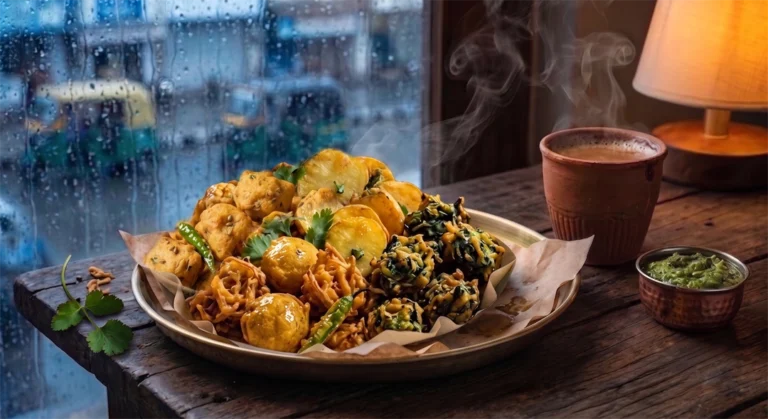
Monsoon gut health India is one of those topics I start thinking about the moment the first proper rain hits Delhi and the city smells like wet dust, pakoras, and trouble. Every year, I hear the same line from friends, neighbours, and my own family: ‘My stomach has gone off again.’ That is not bad luck. It is a pattern. Digestive health during the Indian monsoon changes because rain affects, our food handling, our commute, and even the way bacteria behave in warm, damp weather.
I have seen this in my own Delhi life more times than I can count. One day the lane outside my home is dry and dusty, the next day there is waterlogging, open drains, and a vendor serving tea with a hand that has touched five surfaces. If you live in Delhi or NCR, you know how quickly a small gut issue can turn into a lost week. That is why I wanted to write this differently, with the Ayurvedic logic and the microbiology side by side, not as two separate worlds. If you want a wider everyday health routine too, I have linked one useful guide here: healthy food habits guide.
Monsoon gut health India is not just about ‘eating light’. It is about understanding why old food rules existed in the first place, and why many of them still work now. It is also about knowing where the real risk sits in Delhi water, on the street, in your office canteen, and inside your own fridge if you are careless. Once you see the pattern, monsoon gut health India becomes much easier to manage.
Monsoon gut health India gets worse every year for the same boring reason: the rainy season changes the environment faster than our habits can keep up. Warmth, humidity, and standing water help germs survive longer. Meanwhile, we keep drinking from the same bottles, ordering the same chaat, and assuming that ‘just one bite’ will be harmless. It rarely is.
How Daily Exposure Increases Gut Infection Risk
Most rainy-season stomach infections begin with tiny exposures, not one big dramatic mistake. A wet hand on a tap handle, a glass rinsed in questionable water, or a cut cucumber handled at room temperature can all carry enough bacteria or viruses to upset your stomach. I have seen this after office lunches in Delhi more than once, where everyone eats the same food and two people fall sick while the rest stay fine. That is gut immunity, dose, and timing at work.
What makes this season tricky is that your gut does not face only food poisoning. It also faces stress, less sleep, and more tea, which can worsen acidity and bowel sensitivity. So when you feel ‘off’ every monsoon, it is not weakness. It is your body reacting to a crowded microbial season.
Why Delhi Faces Higher Monsoon Gut Risks
Delhi experiences unique digestive health challenges during monsoon because because our city lives on a fragile water network. Heavy rain can mix sewage with supply lines in some areas, and old pipelines can allow contamination during pressure drops. If you have ever seen muddy water after a storm, you already know the problem. Even when the water looks clear, the risk can still sit at the microbial level.
That is why boiling, filtration, and careful storage matter so much here. Your body is not being dramatic when it protests after monsoon water or street food. It is reading the environment correctly.
What Actually Changes In Your Gut In Monsoon
Monsoon gut health India changes because your gut is not a fixed machine. The microbiome shifts when you eat differently, sleep worse, and meet more pathogens. Rainy weather also makes food spoil faster, so your intestine gets hit from both ends, less protective routine and more harmful exposure. This is where the modern science side becomes very practical.
How Monsoon Affects Your Gut Microbiome
Much of the seasonal digestive disruption begins inside the gut microbiome. Research from the NIH on gut microbiome changes shows that gut bacteria are closely tied to digestion and overall health. In plain language, when your regular gut bacteria get disturbed, your digestion becomes less stable. You may feel bloated, loose, gassy, or suddenly intolerant to foods you normally handle well.
This is why monsoon stomach trouble can feel so random. The same plate of food might be fine one week and disastrous the next if your gut barrier is already irritated.
Why Digestion Slows During Monsoon
Digestive discomfort often increases because eating habits change during the rainy season. by slower and heavier eating patterns. Many of us shift to fried snacks, late dinners, and more tea because the weather feels comforting that way. However, rich food plus damp weather plus germ exposure is a bad combination. Your digestive fire in Ayurvedic language and your enzyme activity in modern language are both less happy when the system is overloaded.
That is why people often report heaviness, belching, nausea, and irregular stools in the rainy season. The problem is not your stomach being ‘weak’. The problem is the season pushing it harder than usual.
Where The Contamination Really Comes From
Monsoon gut health India depends on finding the real source of contamination instead of blaming ‘bad luck’. In Delhi, the culprits are often water supply issues, ice from unsafe water, raw foods washed badly, milk kept warm too long, and food touched by too many hands. Once you map the source, prevention becomes simple and boring, which is exactly what good health needs.
Safe Drinking Water Matters Most During Monsoon
Most seasonal stomach infections begin with unsafe drinking water, because water can carry pathogens long before your meal arrives. The WHO drinking water factsheet explains how unsafe water can spread disease when sanitation fails. In Delhi, this matters even more during heavy rain, because supply contamination or storage errors can enter homes quietly. If you use an overhead tank, filter, or purchased water, cleaning and sealing matter more in monsoon than in winter.
Even brushing your teeth with unsafe water can irritate the gut if contamination levels are high enough. That is why this season demands a water habit, not just a water purifier.
Street Food Risks During the Rainy Season
Street food becomes significantly riskier during heavy rains. A complicated relationship. I love Delhi chaat as much as anyone, but rainy-season hygiene is not the time to trust every cart. Mayo Clinic notes that traveler’s diarrhea is often caused by contaminated food or water, which is exactly the mechanism behind many monsoon stomach bugs too: Mayo Clinic on traveler’s diarrhea.
Uncovered chutneys, ice, cut fruit, and reheated snacks can all become risk points. The food may smell fine and still be unsafe. That is the frustrating part.
The Ayurvedic Framework Nobody Explains Properly
Monsoon gut health India makes the most sense when you read Varsha Ritucharya as a contamination strategy, not just a seasonal food list. Ayurveda said the rainy season weakens digestion, increases acidity, and makes the body vulnerable to imbalance. Modern microbiology says moisture, contamination, and food spoilage increase pathogen load. They are describing the same rainy-season reality in different languages.
Understanding Varsha Ritucharya
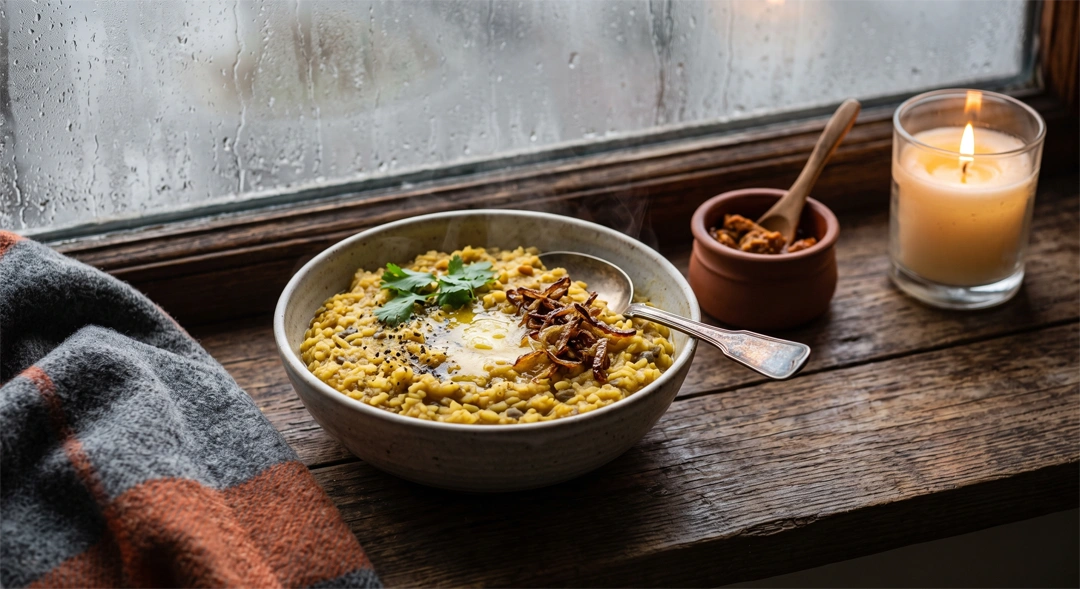
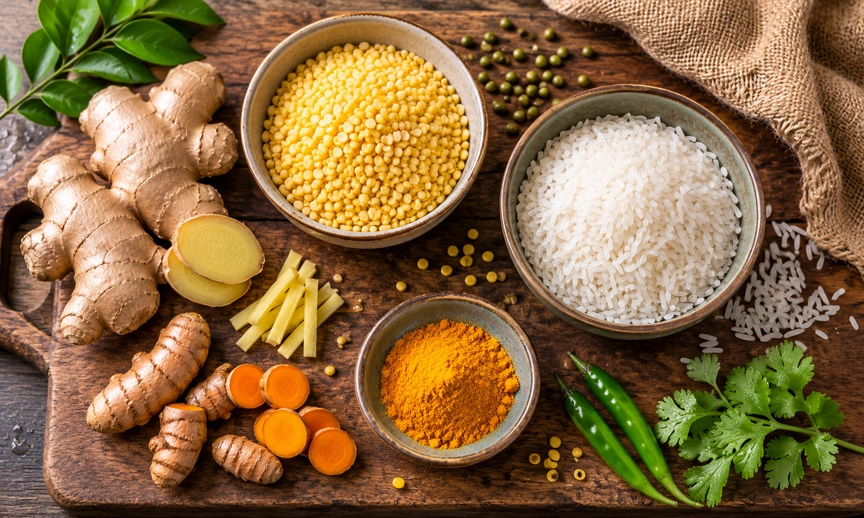
Ayurveda recommends lighter seasonal eating through Varsha Ritucharya, means light, warm, freshly cooked, easier to digest meals. In Ayurveda, this is meant to protect agni when the rains make digestion sluggish. In modern terms, cooked hot food reduces microbial risk and makes the gut’s job easier. That is why khichdi, moong dal, soups, and warm water have survived as monsoon staples for generations.
When people dismiss Ayurveda as old-fashioned, they miss the logic. It was a season-based risk management system.
Should You Eat Curd During Monsoon?
Curd doesn’t need to be avoided by everyone during monsoon. Fresh curd can be fine for some people, especially if it agrees with their digestion, but heavy, refrigerated, sour curd can feel too cooling or aggravating during rainy dampness. If your gut is already irritated, the issue is less ‘curd is bad’ and more ‘is this the right form, amount, and time’.
If you want a deeper probiotic angle, I wrote about yogurt here: probiotics in yogurt. The real answer is personalization, not superstition.
Foods Your Grandmother Was Right About
Monsoon gut health India still has a lot to learn from grandmothers because many old food rules were really hygiene rules in disguise. Warm, freshly cooked food, mild spices, and shorter ingredient lists lowered the chance of contamination. My nani in Delhi never needed a lab report to tell me that leftover pakoras in humid weather were a bad idea. She just knew the stomach would complain later.
Simple Foods That Support Digestion
Digestion usually improves with lighter homemade meals, like moong dal, rice, lauki, pumpkin, light soups, ginger, cumin, and freshly made rotis. These foods are easier to digest and less risky when served hot. Ginger and cumin also help with nausea and gas, which is why they show up in so many Indian home remedies. The point is not magic. The point is practicality.
When your gut is irritated, simpler food gives it a break. That break helps recovery.
Why Fresh Hot Meals Are Better
Freshly cooked meals remain the safest choice during humid weather. Freshly made food has lower microbial growth than food that sits out in humid air. In Delhi, where power cuts, traffic delays, and late dinners are common, this becomes even more important. If you cook at home, smaller batches are better than one huge pot that lives in the kitchen all day.
That is also why packed lunch hygiene matters. The same home food can become risky if it sits warm for hours before you eat it.
Foods You Should Actually Avoid Now
Monsoon gut health India also means knowing what to pause, not just what to add. Raw cut salad from outside, street ice, oily deep-fried snacks from unknown sources, stale dairy, and uncovered sweets are all common troublemakers. The rainy season rewards caution, not bravado. I say that as someone who has regretted one too many ‘small’ bites on a humid Delhi evening.
Foods That Carry Higher Infection Risk
Some foods become much riskier during the rainy season. Cut fruit, chutneys sitting in the open, shellfish, and milk products left unrefrigerated are classic risks. If food is moist, handled often, and stored badly, microbes love it. The monsoon basically gives them a better home than it gives you.
That is why the best rule is simple: if you cannot see the hygiene process, be more cautious about the food.
Improve Your Refrigerator Hygiene
Poor refrigerator habits can undo otherwise healthy eating. Old leftovers, crowded shelves, and storing cooked food too long all create problems. In humid weather, cooling food slowly or reheating unevenly can leave dangerous spots alive. Clean containers, quick refrigeration, and proper reheating matter much more in this season.
If you want a practical routine check, my everyday health habits piece may help: daily healthy habits. Small habits save big stomach pain.
What Doctors Say About Monsoon Immunity
Monsoon gut health India is not really about building superhero immunity. It is about reducing exposure, supporting recovery, and not confusing gut infection with normal seasonal discomfort. Doctors usually focus on hydration, hygiene, safe food, rest, and early treatment when warning signs appear. That approach may sound plain, but plain works.
Doctor-Recommended Prevention Tips
Doctors recommend reducing exposure before thinking about immunity. Medicine does not ask you to fear the rain. It asks you to respect how germs travel. If you live in Delhi, this matters even more in neighborhoods where drainage overflows or tanker water quality is inconsistent.
Good immunity is not a powder or a miracle food. It is a daily pattern of not getting unnecessarily exposed.
Why Dengue Season Matters Too
Rainy weather increases both mosquito-borne illnesses and digestive infections. I have seen families focus only on fever and ignore gut symptoms, even though both can happen in the same weather window. If you are also worried about dengue patterns, this Delhi-specific explainer may help: dengue fever guide.
Doctors would say the same thing here: do not guess. Watch the symptoms, hydrate, and seek help early if things look wrong.
Building A Simple Daily Monsoon Gut Protocol
Monsoon gut health India gets much easier when you stop trying to be perfect and start being consistent. A simple daily protocol beats random food fear. Think safe water, warm breakfast, clean lunch, light dinner, and early treatment if symptoms begin. That is enough to prevent many rainy-season gut disasters.
A Morning-to-Night Gut Routine
A simple daily routine is easier to maintain than strict seasonal diets. not leftover overnight water from an uncovered bottle. Breakfast should be light but filling, like poha, upma, idli, or khichdi if your stomach feels sensitive. Lunch should be freshly cooked and not too oily. Dinner should be earlier and smaller, because late heavy meals make monsoon bloating worse.
Keep hand hygiene non-negotiable. In Delhi, that matters after metro rides, office commutes, and market visits.
Water Safety Tips for Delhi Homes
Delhi households benefit from checking water storage more often during monsoon. overhead tanks, and drinking-water storage every few weeks. If the water tastes odd, smells off, or the area has flooding, take extra care. Boiling is still a strong backup when suspicion is high. And yes, the old advice about carrying your own bottle is still excellent.
I do this whenever I am out for long hours in NCR. It is not glamorous, but it works.
When Stomach Trouble Means See A Doctor
Monsoon gut health India is manageable at home only when symptoms stay mild and short-lived. If you have high fever, blood in stool, severe dehydration, persistent vomiting, or pain that keeps worsening, stop guessing and see a doctor. A stomach infection in the rainy season can be simple, but it can also become serious fast, especially for children, older adults, and anyone already unwell.
Warning Signs You Should Never Ignore
Not every stomach upset can be managed at home. Dry mouth, very dark urine, dizziness, inability to keep fluids down, and severe weakness need attention. If you are passing stools repeatedly for more than a day or two, or if you feel feverish and shaky, do not wait it out. The body can dehydrate quickly in humid weather.
Trust your instinct, but also trust timelines. A short stomach upset is one thing. A worsening pattern is another.
How Long Recovery Usually Takes
Most mild stomach infections improve within a few days. But infections like typhoid or more serious bacterial illness take longer and need medical care. That is why self-diagnosis is risky. A stool pattern may look ‘normal monsoon’, but the actual cause may be very different.
If you want a safe next step mindset, read the signs, not just the season. Your gut will tell you when it needs help.
Frequently Asked Questions
Why does stomach infection increase in monsoon in India?
Monsoon gut health India worsens because rain increases contamination in water, food, and surfaces. Warm humidity helps germs survive longer, and flooding can mix sewage with drinking-water sources. Many people also eat more outside food during the season. That combination makes stomach infections much more common in Indian cities and towns.
Is Tap water safe to drink during monsoon in Delhi?
Monsoon gut health India and Delhi water safety go hand in hand, and tap water is not automatically safe in every area during heavy rain. If there is pipeline leakage, tank contamination, or waterlogging, risk rises. Use filtration, boiling when needed, and clean storage. If the water looks, smells, or tastes unusual, do not take chances.
What foods should be avoided during monsoon season?
Monsoon gut health India is better when you avoid cut raw salads from outside, uncovered chutneys, stale dairy, street ice, badly stored sweets, and food kept warm for too long. Very oily fried snacks can also irritate an already sensitive stomach. Freshly cooked, hot, simple food is much safer in this season.
Is curd bad to eat during monsoon?
Monsoon gut health India does not mean curd is banned for everyone. Fresh curd may suit many people, but if your digestion feels sluggish, avoid large amounts of very sour or heavily chilled curd. The key is freshness, portion size, and how your body responds. If curd makes you feel heavy or bloated, pause it for a few days.
What is Varsha Ritucharya in Ayurveda?
Monsoon gut health India connects closely with Varsha Ritucharya, the Ayurvedic seasonal routine for the rainy season. It recommends light, warm, freshly cooked, and easy-to-digest food because digestion is believed to weaken during monsoon. Modern science agrees on the practical side: hot, fresh food lowers contamination risk and is gentler on the gut.
How to boost immunity during monsoon naturally?
Monsoon gut health India improves naturally when you sleep well, drink safe water, wash hands properly, eat hot home-cooked meals, and avoid random street food exposure. Eat seasonal vegetables, keep hydration steady, and do not overdo fried snacks and sugar. Real immunity support is mostly about lowering infection chances, not chasing miracle foods.
Why do more people get typhoid during monsoon?
Monsoon gut health India is closely linked with typhoid risk because typhoid spreads through contaminated food and water. During heavy rain, sanitation systems can get stressed, and unsafe water exposure becomes more likely. That makes bacterial spread easier. If you have prolonged fever, stomach pain, weakness, or diarrhoea, get checked instead of waiting.
Is street food safe to eat during monsoon?
Monsoon gut health India and street food can coexist, but only with caution. If the vendor has clean water, covered food, fresh turnover, and good hygiene, risk is lower. Still, monsoon is the season when uncovered chutneys, ice, and repeated handling become dangerous. If you are already feeling sensitive, it is smarter to skip.
What are the first signs of a waterborne infection?
Monsoon gut health India should make you alert to early signs like loose stools, stomach cramps, nausea, vomiting, fever, and unusual weakness after drinking water or eating outside. Dehydration can follow quickly. If several people who ate together fall ill, that also points to contamination. Early fluids and medical advice may prevent a worse episode.
How long does monsoon stomach infection usually last?
Monsoon gut health India episodes often settle within one to three days if the infection is mild and you hydrate well. But the duration depends on the cause. Viral upset, food poisoning, and bacterial infections do not behave the same way. If symptoms last more than a few days, or if fever and blood appear, see a doctor promptly.
Conclusion
Monsoon gut health India has never been only about avoiding rain. It is about understanding the season as a microbial event, a food-storage challenge, and a daily hygiene test all at once. When I look at Delhi during the rains, I do not just see puddles and clouds. I see how quickly water, food, and routine can slip out of control. That is why the old Ayurvedic food rules make sense and modern medicine agrees with them more than people realise.
For me, the biggest shift has been stopping the annual drama and building a calm system. Safe water. Simple hot food. Less street gamble. Better storage. Faster response to warning signs. None of this is fancy, but all of it is powerful. If you want to keep building this kind of routine, revisit the everyday health habits guide here: healthy habits guide. Your gut does not need perfection. It needs consistency, especially now.
If this season has already made you feel off, start small today. Boil or filter your water, eat one fresh warm meal, and notice what your stomach tells you. Monsoon gut health India improves when you stop treating the rainy season like a mystery and start treating it like a pattern.
Disclaimer: This article “Monsoon gut health India” is intended for educational purposes only and should not be considered medical advice. Always consult a qualified healthcare professional for diagnosis or treatment of persistent digestive symptoms.