Make ahead Diwali sweets are the difference between a calm festive week and a kitchen that feels like a war room. Every year, I hear the same thing in Delhi homes and in WhatsApp groups too – one site says besan ladoo lasts a week, another says a month, and both sound equally confident. That is exactly why I wanted to write this guide for picknstory.com. I wanted something you can actually use, not just a random guess dressed up as advice.
My own Diwali prep usually starts with one tray, one notebook, and one very strict rule – I do not trust storage gossip if I can verify it. When I was checking sweets for a family get together in my Delhi home, I kept looking at the dates on packed mithai boxes and thinking how little clarity most of us get. We buy, store, forget, and then wonder if that peda is still safe. This is where make ahead Diwali sweets need a smarter plan.
So in this guide, I am anchoring everything to shelf life tiers, especially what FSSAI style published guidance and food safety logic imply for mithai storage. I am also mapping the plan to the 2026 Diwali calendar, from Dhanteras to Bhai Dooj, because timing matters. Moreover, I am including what to check on a halwai tray, because buying mithai is not just for home cooks. If you want one more festive read, see the long sweet journey of jalebi.
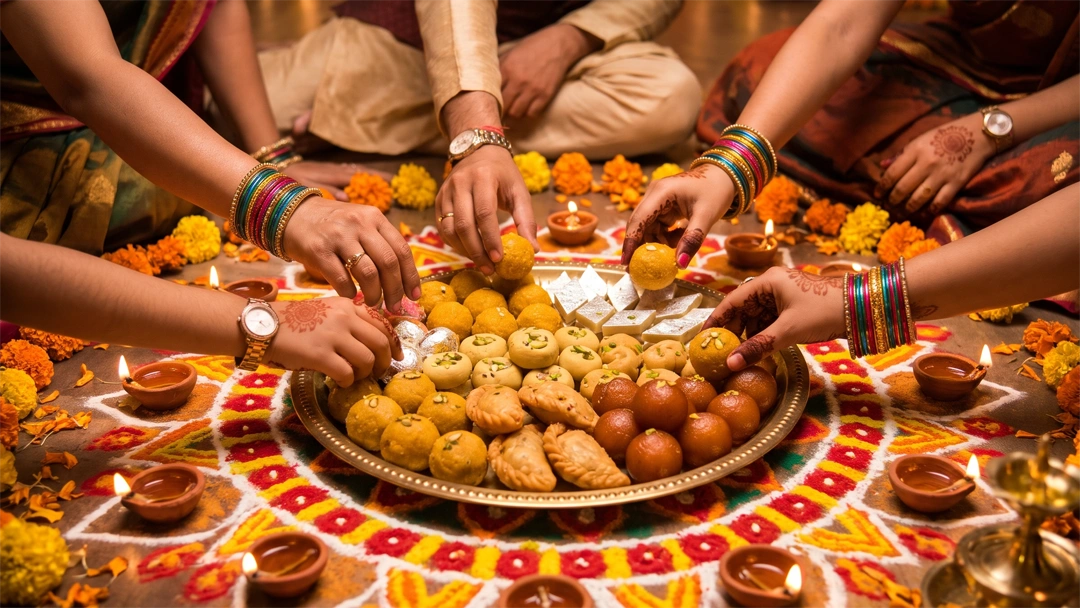
Diwali itself, from a cultural point of view, is about lamps, visits, gifts, and mithai that travels from one home to another. Diwali is not one single day in most Indian homes. It is a run of dinners, pujas, boxes, and unplanned guests. That is why make ahead Diwali sweets must be chosen by shelf life, weather, and the number of days left until Bhai Dooj, not by habit alone.
Make ahead Diwali sweets confuse people because shelf life is often treated like a family opinion instead of a food safety question. One blogger stores besan ladoo for a week, another says a month, and a third says it depends on the ghee. All three may be partly right, but they are missing the real point. Shelf life changes with moisture, sugar content, milk content, nuts, and the city you live in.
Make ahead Diwali sweets also vary because homes and halwais package them differently. A dry sweet kept in an airtight tin in a cool room behaves very differently from the same sweet sitting in a warm paper box near the stove. Moreover, many sites repeat what they have seen work in one kitchen, not what is safe for every Indian household. That is why a single number can mislead you.
Make ahead Diwali sweets depend on moisture, not myths
Make ahead Diwali sweets last longer when the recipe is low in water and the storage is dry. Besan ladoo, dry fruit chikki, and plain atta laddoos stay safer than milk based sweets because bacteria need moisture to grow. Sugar does help preservation, but only up to a point. If a sweet absorbs humidity, the safe window shrinks fast.
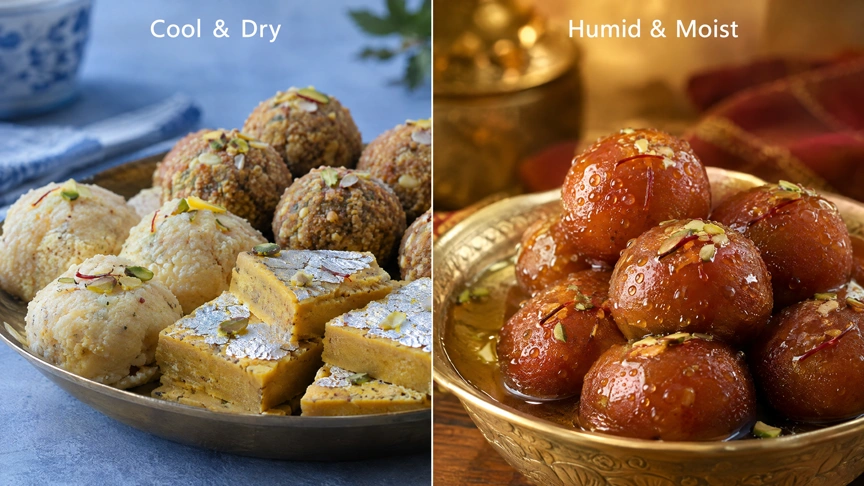
In India, the same sweet can age differently in Delhi, Mumbai, and Chennai because air and temperature are not the same. That is why a neat internet promise is not enough. Your kitchen corner, your fridge loading pattern, and even how often the box is opened matter. Make ahead Diwali sweets need a storage plan, not just a recipe.
Why halwai boxes are not all equal
Make ahead Diwali sweets bought from a halwai also depend on packaging and handling. A sweet box with a printed best before date, a batch number, and a clear ingredient list is more reliable than an open tray with no label. I always look for the date printed on the base or sticker, and I ask when the batch was made. If the seller hesitates, I treat that as a warning sign.
One quick rule helps a lot. The more exposed the tray has been to air, hands, and heat, the shorter the safe life becomes. So yes, the sweet may look fine, but that is not the same as being safe. With make ahead Diwali sweets, the packaging story matters as much as the recipe story.
What FSSAI Actually Says About Mithai Shelf Life
Make ahead Diwali sweets should be planned around food safety logic, not just nostalgia. FSSAI does not give one universal life span for every mithai, because that would be careless. Instead, the safe answer comes from ingredient classes, storage conditions, and whether the sweet is dry, dairy rich, or highly perishable. That is the useful lens for Diwali shopping.
Make ahead Diwali sweets fit into tiers. Dry sweets with low moisture can hold longer, while milk based and fresh syrup sweets need quicker eating. That is also how many packaged food labels in India work, with a best before date that assumes proper storage. The label is not a suggestion. It is a safety boundary.
The 30 day tier for dry sweets
Make ahead Diwali sweets in the 30 day tier are your safest prep bets when stored well. Think besan ladoo, dry fruit chikki, til chikki, coconut laddoo made without fresh milk, and some atta based laddoos. If they are made with enough roasting, low moisture, and airtight storage, they can last longer than richer sweets. That said, the city climate can still cut that window.
Use a clean, dry tin or a food grade airtight box. Keep it away from the stove, sunlight, and the mixer grinder heat zone that many of us have in our Delhi kitchens. If you open the box often, the shelf life shortens. Make ahead Diwali sweets only stay in the 30 day tier when they are treated like precious dry goods, not like loose snacks.
What 30 days does not mean
Make ahead Diwali sweets do not become immortal just because a recipe is dry. Thirty days is not a blanket promise for every home made sweet, and it is not a license to ignore smell, texture, or taste changes. If the sweet turns sticky, smells stale, or grows odd patches, do not eat it. Safety comes before sentiment.
For packed sweets, the best before date on the tray should still win. If the label says 15 days, do not stretch it to 30 because an internet article did. Use the shortest reliable number. That is the whole point of a smarter Diwali plan.
The 30 Day Tier You Can Make Right Now
Make ahead Diwali sweets in the 30 day tier are perfect if you want to finish the bulk of your work early. This is the category for dry, roasted, low moisture sweets that can be made before the rush starts. If you are hosting in 2026, this tier lets you spread the work across the month without turning the week before Diwali into a panic. It is the best place to begin.
Make ahead Diwali sweets from this tier also travel well. They are easier to gift, easier to store, and less likely to spoil in transit. In my Delhi circles, these are the sweets people secretly prefer because they survive office gifting, auto rides, and last minute puja visits. The trick is to keep the ingredients stable and the finish dry.
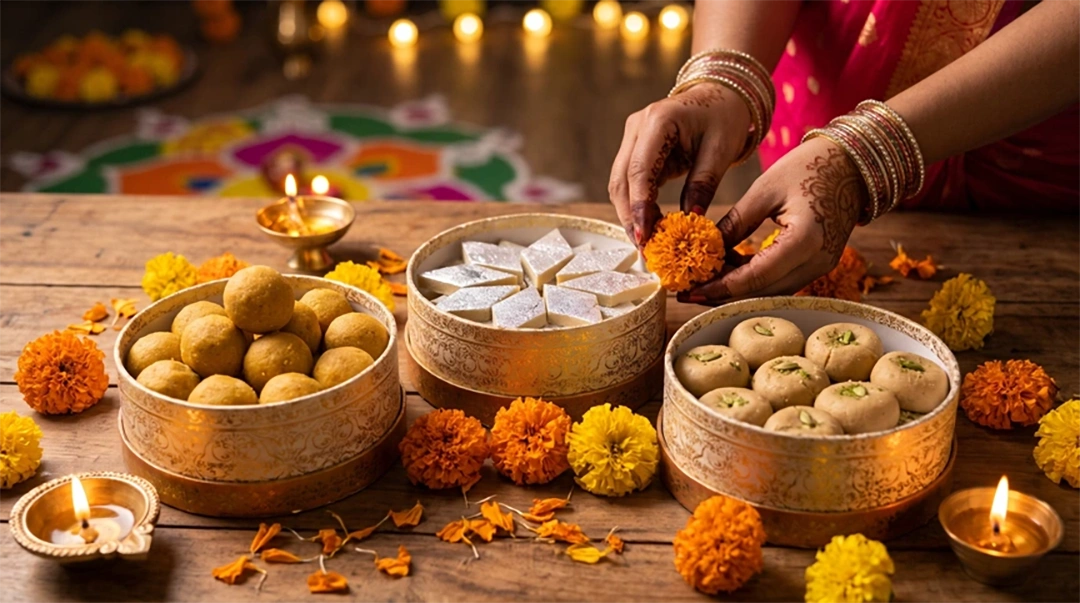
Besan ladoo and dry fruit laddoo
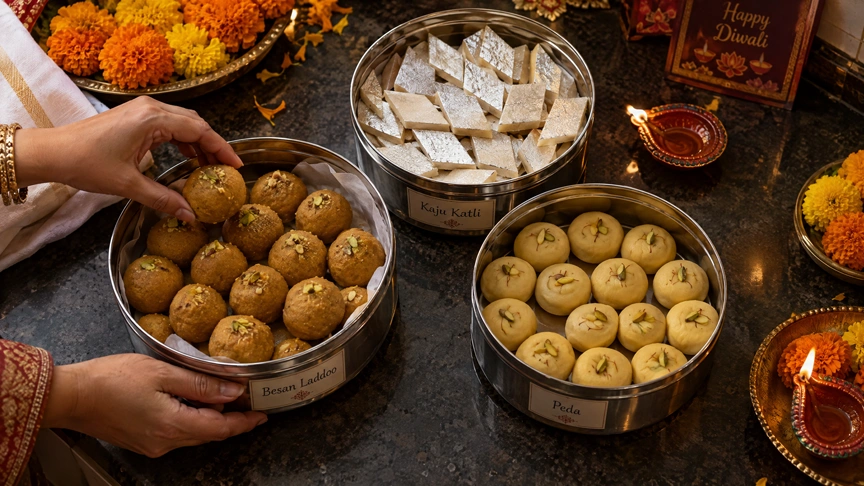
Make ahead Diwali sweets like besan ladoo are the classic early prep choice. Roast the besan until it smells nutty and the raw edge disappears, then cool it fully before adding sugar and ghee. If you package them while warm, condensation becomes your enemy. Store them airtight and away from moisture. Dry fruit laddoo works similarly, especially if you avoid fresh coconut or wet fillings.
I often make a small test batch first, because aroma tells you a lot. When the besan is done right, the kitchen smells like toasted grain and ghee, not raw flour. That smell is my cue to stop. Make ahead Diwali sweets like these reward patience more than speed.
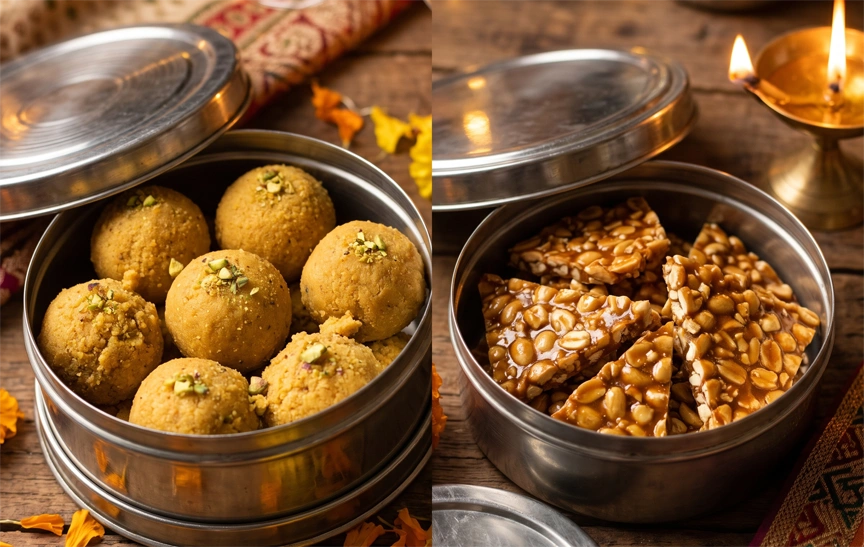
Chikki, til laddoo, and jaggery based options
Make ahead Diwali sweets such as chikki and til laddoo hold up well because they are naturally dry and sugar rich. Jaggery based versions need extra care in humid weather, but they still fit the long shelf life tier if cooled properly and stored airtight. For a deeper read on jaggery and its traditional use, see this piece on jaggery.
The key is to keep these sweets crisp, not chewy. If they soften, humidity has entered. That is when the storage clock speeds up. Make ahead Diwali sweets in this tier are excellent for early batches, especially if you are planning gifts for office colleagues or relatives who may not eat the box immediately.
The 7 Day Tier Kaju Katli and Gujiya
Make ahead Diwali sweets in the 7 day tier need more respect, because they are more delicate than dry laddoos but less fragile than milk sweets. Kaju katli and gujiya are the two big names here. They can be prepared in advance, but only if you know exactly how they were made and how they are stored. For many homes, this is the sweet spot between convenience and caution.
Make ahead Diwali sweets in this category are best when bought or made close to the festival. They can survive a week if the kitchen is cool and the box is tightly sealed. However, if the filling contains moisture or the katli is very soft, shorten the window. This is where many people go wrong. They assume all festive sweets behave the same.
Kaju katli needs dryness and speed
Make ahead Diwali sweets like kaju katli are popular because they feel premium and travel beautifully. But they are sensitive to humidity. The cashew paste, sugar syrup, and finishing ghee all affect how long they stay fresh. If they sweat on the surface or lose that clean snap, they are already slipping out of their best zone. Store them in a cool area, not next to hot cookware.
If you are buying them, ask for the packing date. A tray with a fresh date sticker is far safer than one that has been sitting open under the counter. Make ahead Diwali sweets from the kaju category are best consumed within a week, especially in warm cities.
Gujiya needs filling control
Make ahead Diwali sweets like gujiya can be made ahead, but the filling decides everything. A dry khoya filling behaves differently from a wet one, and fried gujiya lasts longer than steamed or soft variants. Let them cool completely before packing, because trapped steam will ruin the crust. I have seen this happen in Delhi homes more than once, usually when people rush to pack before dinner.
If you plan to serve gujiya after a few days, keep the shells crisp and the filling dry. Refrigeration can help if the weather is very warm, but always bring them back to room temperature before serving. Make ahead Diwali sweets in this tier are more about technique than luck.
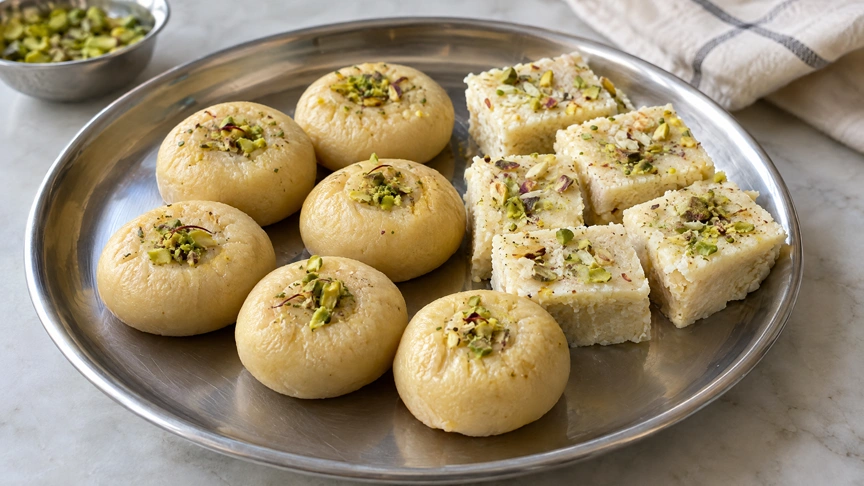
The 4 Day Tier Peda Burfi And Boondi Ladoo
Make ahead Diwali sweets in the 4 day tier are the ones you should plan last among the make-ahead batch. Peda, burfi, and boondi ladoo are beloved, but they often contain dairy, moisture, or syrup absorption that shortens shelf life. This tier is where people most often misjudge freshness. If you want the sweet taste of the festival without risk, keep these close to the celebration day.
Make ahead Diwali sweets in this group are still useful for Dhanteras to Chhoti Diwali. The storage window is short, but that also means the flavor is usually better when eaten soon. A fresh peda has a softer milk note, while an older one turns grainy. That is your cue. Do not wait until the box becomes a memory.
Peda and burfi need cool storage
Make ahead Diwali sweets like peda and burfi should be handled gently from the moment they set. Milk solids can go stale quickly, especially in warm kitchens. Keep them in a very clean airtight box and avoid stacking them if the surfaces are sticky. If the room is hot, the refrigerator may help, but only if the container is sealed well so the sweets do not dry out.
I once watched a tray of kalakand sit on a counter in South Delhi during a power cut. The top layer started to sweat before dinner even began. That is how fast dairy sweets can change. Make ahead Diwali sweets in the 4 day tier are for careful timing, not long storage.
Boondi ladoo is not as durable as it looks
Make ahead Diwali sweets like boondi ladoo can fool people because they seem sturdy. In reality, they absorb moisture and lose texture faster than dry laddoos. Freshness depends on the sugar binding, the oil quality, and how moist the boondi was at frying. If the ladoos feel sticky or smell slightly fermented, do not serve them.
The best use is for a short festive run, not for early stocking. If you are making them for guests, make them closer to the puja day. Make ahead Diwali sweets should match the actual calendar, not your wishful thinking.
Rasgulla Rasmalai And Same Day Sweets
Make ahead Diwali sweets do not include every mithai on the table, and this is where people need the strongest warning. Rasgulla, rasmalai, and similar wet sweets belong to the same day category in most home settings. They have high moisture, dairy, and a soft structure that changes quickly. If you are planning them, plan them for eating, not storing.
Make ahead Diwali sweets are the wrong lens for these items unless they are professionally packed and refrigerated according to label instructions. Even then, the safest habit is to consume them fast. They are delicious, yes, but they are also more vulnerable to contamination, especially in warm, humid weather. The fresher the better, always.
Why fresh syrup sweets spoil faster
Make ahead Diwali sweets based on syrup are risky because the sugar syrup is not enough to make them safe for long. The sponge or chhena stays moist, which bacteria love. In Indian homes, these sweets often sit out for hours during guests, photos, and repeated serving. That is exactly when problems begin. They should not be treated like dry mithai.
If you are serving rasgulla or rasmalai, buy them near serving time and finish them the same day. Refrigeration helps, but only within the maker’s recommended period. Make ahead Diwali sweets are wonderful, but not every festive dessert belongs in the make ahead plan.
How to spot trouble early
Make ahead Diwali sweets that are same day only will usually show small warning signs if they are going off. Sour smell, slimy syrup, off taste, and a texture that feels oddly loose are all red flags. Do not try to rescue them with extra sugar or chill time. Once a fresh sweet turns, it should be discarded.
For many homes, the real trick is not making everything in advance. It is choosing which sweets can wait and which cannot. That judgment is the difference between festive joy and a digestive regret.
Dhanteras To Bhai Dooj Your Five Day Schedule
Make ahead Diwali sweets work best when you attach them to the actual 2026 festival rhythm. Diwali is not a one evening event. Dhanteras, Narak Chaturdashi, Lakshmi Puja, Govardhan Puja, and Bhai Dooj spread the gifting and eating across several days. That means your sweets plan should also be spread out. Otherwise, you either overbuy or overstore.
Make ahead Diwali sweets should be divided by day. Early batch sweets go first, medium shelf life sweets go midweek, and fresh sweets are reserved for the main puja and visits. This is practical, not fussy. It is the easiest way to keep quality high and waste low. If you ask me, this is also how Delhi homes quietly survive festive overload.
A simple five day home schedule
Make ahead Diwali sweets can be planned in a five day rhythm. Make dry sweets first, then burfi and peda closer to the middle of the week, then fresh sweets right before the main day. Use Dhanteras for buying ingredients and testing batches. Use the next two days for packing and label checking. Reserve the freshest tray for the day when the most guests arrive.
This method also helps with gifting. You are not opening one large box and hoping for the best. You are rotating stock like a smart kitchen manager. Make ahead Diwali sweets become easier when the calendar leads the menu.
What to do with leftovers
Make ahead Diwali sweets often leave behind a few pieces after the celebration. Do not let them sit untracked. Move dry sweets back into airtight storage, keep dairy sweets refrigerated if safe, and finish fresh sweets quickly. If you are unsure about a sweet, do not keep it ‘just in case’.
I like to make one final sweep after Bhai Dooj and sort the leftover boxes immediately. It saves money and prevents awkward fridge surprises later. Make ahead Diwali sweets are meant to reduce stress, not create a post festival science experiment.
How Delhi Mumbai And Chennai Climates Change It
Make ahead Diwali sweets behave differently in Delhi, Mumbai, and Chennai because the weather changes the storage math. Delhi in October and November can swing from dry afternoons to dusty, chilly evenings. Mumbai stays sticky for longer. Chennai can be warm and humid enough to shorten every shelf life tier. A sweet that lasts one week in one city may need to be eaten sooner in another.
Make ahead Diwali sweets must therefore be matched to climate, not just recipe. In Delhi, a cool dry room helps dry sweets survive longer. In Mumbai and Chennai, airtight boxes and faster rotation matter much more. I have seen people in NCR leave sweets near a window and assume the night air is enough. It is not always enough.
Delhi and NCR storage habits
Make ahead Diwali sweets in Delhi often benefit from lower humidity, but dust is a real issue. Keep boxes closed tightly, and do not place them near gas stoves or sunlit windows. A shelf in a cool cupboard is better than a pretty tray on the dining table. If you are keeping sweets for guests across multiple days, split them into smaller boxes so you are not opening the same container again and again.
This is where my Delhi habit comes in handy. I label every box with the make date in marker. It looks nerdy, but it saves time. Make ahead Diwali sweets stay safer when you know exactly what you made and when.
Mumbai and Chennai need faster turns
Make ahead Diwali sweets in humid cities should be consumed sooner, especially if they are milk based. Even the best airtight box cannot fully stop moisture from affecting texture. Refrigeration becomes more useful, but it also changes taste and softness, so plan accordingly. Buy smaller quantities and make fewer days ahead.
One useful rule is simple. If the room feels sticky, your sweets schedule should get shorter. Make ahead Diwali sweets are not about rigid dates. They are about honest storage decisions.
Buying From A Halwai Read The Best Before Tray
Make ahead Diwali sweets are not only a home kitchen decision. They are also a shopping decision. When you buy from a halwai, the tray itself gives you clues. Look for batch dates, ingredients, visible handling hygiene, and whether the sweets are covered. A clean, labeled tray is a very different thing from an open tray near the cash counter. The best before date is not decoration.
Make ahead Diwali sweets bought from trusted shops should still be checked before you pay. Ask how long the sweet has been out, how it is stored, and whether it was made in the morning or the previous day. Most good halwais answer clearly. If they do not, walk away. In festive season, good taste should never come before basic safety.
What to check before paying
Make ahead Diwali sweets from a tray should be checked for shine, smell, and packaging. Excess wetness, sweating, cracks, or a dull stale smell mean the sweet is not at its best. Look for a label with a manufacturing or packing date, best before date, and ideally a batch number. If the seller says the tray was made fresh but cannot say when, that is not good enough.
Also check the environment around the tray. Is it under bright heat, near an open door, or handled with bare hands? Those details matter. Make ahead Diwali sweets are only as safe as the tray they came from.
Questions smart buyers should ask
Make ahead Diwali sweets deserve a few simple questions from every buyer. Ask whether the sweet contains khoya, fresh cream, or any perishable filling. Ask how long it stays good at room temperature. Ask whether it needs refrigeration after opening. These are not rude questions. They are smart consumer habits, especially during festivals when sales move fast.
If you want more India food context, browse this snack guide too. It helps you think like a practical buyer, not just a festive spender. Make ahead Diwali sweets should feel joyful, but they should also feel informed.
Frequently Asked Questions
How early can I make Diwali sweets?
Make ahead Diwali sweets can be started as early as three to four weeks before Diwali if you are making dry items like besan ladoo, chikki, and some atta based laddoos. The key is to keep each batch in airtight storage and label it clearly. For milk based sweets, shorten the timeline. Make ahead Diwali sweets work best when you match the recipe to the calendar, not the other way around.
Which Diwali sweets last the longest?
Make ahead Diwali sweets that usually last the longest are the dry ones, especially besan ladoo, til chikki, dry fruit laddoo, and some jaggery based sweets. They keep better because they contain less water and fewer perishable ingredients. Still, room temperature, humidity, and packaging matter a lot. Make ahead Diwali sweets always need proper storage to reach their full safe window.
How long does besan ladoo last at room temperature?
Make ahead Diwali sweets like besan ladoo can often last around two to four weeks at room temperature if they are roasted well, cooled fully, and stored in a dry airtight tin. In humid weather, the safe window may be shorter. Check for smell, stickiness, or change in texture. Make ahead Diwali sweets should never be judged by appearance alone.
Can you freeze Diwali sweets?
Make ahead Diwali sweets can sometimes be frozen, but not all of them freeze well. Dry sweets usually handle freezing better than milk based or syrup sweets. Use freezer safe airtight containers and thaw them slowly in the fridge or at room temperature, depending on the sweet. Make ahead Diwali sweets should only be frozen if the texture will still be pleasant after thawing.
How long does kaju katli stay fresh?
Make ahead Diwali sweets such as kaju katli usually stay fresh for about five to seven days when stored properly in a cool, dry, airtight box. Humidity can reduce that window. If the surface sweats, loses its snap, or smells stale, do not keep stretching the date. Make ahead Diwali sweets like kaju katli are best eaten soon after buying or making.
Which Diwali sweets must be eaten the same day?
Make ahead Diwali sweets do not include rasgulla, rasmalai, and many other fresh milk or syrup based sweets. These are best eaten the same day, or within the shortest label period if they are packed commercially and refrigerated correctly. In warm Indian weather, they spoil faster. Make ahead Diwali sweets should be chosen with this risk in mind.
How long do milk sweets like peda last?
Make ahead Diwali sweets like peda and burfi are usually safer for only a few days, often around three to four days at room temperature, depending on ingredients and weather. Refrigeration can help in some cases, but taste and texture may change. Make ahead Diwali sweets with dairy should be treated as short window treats, not long storage items.
Is it safe to eat mithai after the best before date?
Make ahead Diwali sweets should not be eaten just because they look okay after the best before date. That date is based on expected quality and safety under proper storage. If the sweet is dry and stored well, it may still look fine, but that does not guarantee safety. Make ahead Diwali sweets are safest when you respect the label date and your senses.
How should I store Diwali sweets in humid weather?
Make ahead Diwali sweets in humid weather should be kept in tightly sealed containers, away from heat and direct air exposure. Use smaller boxes so you open less at a time, and refrigerate only if the sweet type can handle it. Humidity makes everything age faster. Make ahead Diwali sweets need faster rotation in Mumbai, Chennai, and even damp corners of Delhi.
Which sweets can I make in advance for Bhai Dooj?
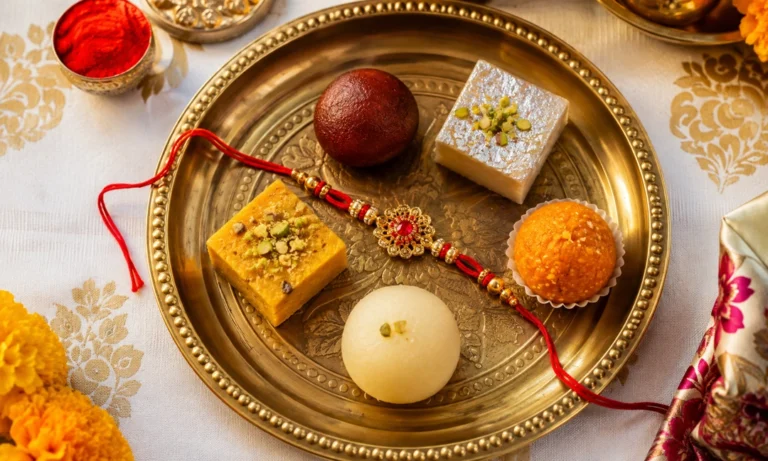
Make ahead Diwali sweets for Bhai Dooj should be the sturdier ones, like besan ladoo, chikki, dry fruit laddoo, and some kaju based sweets if they are still within the safe window. Avoid fresh dairy sweets unless you are making them very close to the day. For a related festive food read, see this jalebi story. Make ahead Diwali sweets are easiest when the calendar leads the plan.
Conclusion
Make ahead Diwali sweets are my favorite kind of festive planning because they bring peace before the rush. I like the feeling of opening a neatly labeled box and knowing exactly what is safe to serve, what should be eaten first, and what should never have been made too early. In Delhi, where Diwali calendars fill up fast with card parties, family dinners, and last minute shopping, that calm matters more than people admit.
What I hope you take away from this guide is simple. Not every mithai belongs in the same storage bucket. Dry sweets can be made well in advance. Kaju katli and gujiya need a tighter window. Peda, burfi, and boondi ladoo need closer timing. Rasgulla and rasmalai should stay on the same day list. If you keep the shelf life tiers in mind, you stop guessing and start planning like a pro.
That is also why I prefer asking better questions at the halwai counter. Best before dates, batch dates, and storage instructions are not small things. They are the difference between festive joy and unnecessary waste. If you want more food stories from our India kitchen, revisit this sweet history piece. Make ahead Diwali sweets are not about doing everything early. They are about doing the right things early. Make ahead Diwali sweets