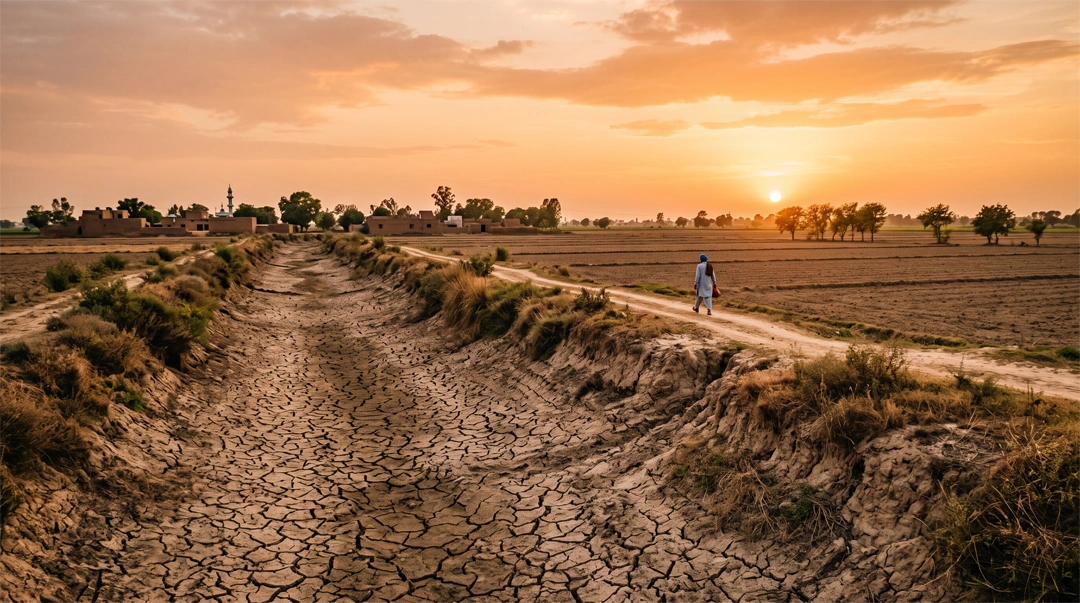
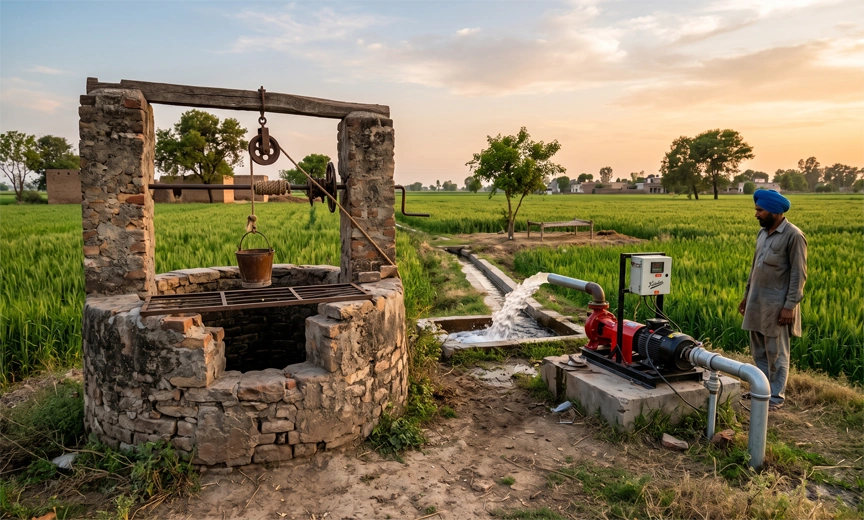
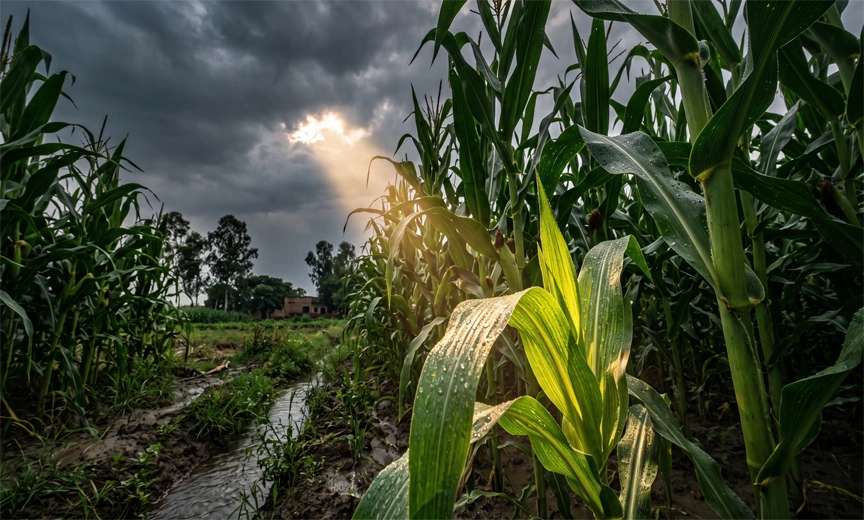
Punjab groundwater crisis is no longer a report on a page. It is the dry crack in a field near Ludhiana, the extra pump hour in a Moga village, and the anxious look on a farmer’s face when the monsoon arrives late. In Delhi, I grew up hearing my father say that Punjab feeds India, but even the strongest grain belt can wobble when rain plays truant. This year’s delayed monsoon has made that truth feel painfully close. The Punjab groundwater crisis is not just about wells going down. It is about a 50-year habit of taking more from the earth than the sky could return.
I have followed monsoon stories for years, but this one feels different because it lands in a season already carrying old debt. On my commute across NCR, I keep thinking of the same pattern: heat first, then hope, then a hurried rain that comes nine days too late. That delay matters in Punjab more than most people outside the region realise. The Punjab groundwater crisis has district-level fingerprints, and once you look at Central Ground Water Board data, the story stops being abstract. It becomes Sangrur, Patiala, Bathinda, Mansa, all sinking in their own way. If you also want the Delhi side of this climate pressure, my note on heat stress in North India connects the dots.
What hurts most is that the Punjab groundwater crisis is not a surprise storm. It is a long season of decisions, especially around paddy, canal dependence, and tubewell comfort. The sky can still save a little, but not enough to reverse what has been lost. And that is why this year’s late monsoon feels like a moral question, not just a weather event. It asks whether we are willing to face the cost of our food choices honestly.
Punjab groundwater crisis is felt first in timing. When the monsoon slips by even a few days, the whole agricultural rhythm shifts, because Punjab farms do not wait politely for the rain to settle in. The late arrival in 2026 has hit the transplant window hard, especially in western and central districts where every dry day means another round of pumping. The Punjab groundwater crisis becomes visible when farmers start counting not clouds, but diesel, power hours, and the falling sound of tubewells.
Punjab Groundwater Crisis In The Waiting Game
Punjab groundwater crisis shows how a short delay becomes a long bill. A farmer does not simply lose water. He loses the best transplant date, more labour coordination, and the chance to use the first soft rain as a natural ally. In places like Sangrur and Patiala, the delay means the soil surface bakes harder before the first real soaking. Once that crust sets, more water is needed to prepare the nursery and field.
Interestingly, this is where city people often misunderstand rural anxiety. In Delhi, nine late days can mean traffic and annoyance. In Punjab, nine late days can mean a shifted crop calendar and a deeper dip in already stressed aquifers. The Punjab groundwater crisis is built on these tiny delays repeated over decades.
Why A Delayed Monsoon Feels Bigger In Punjab
Punjab groundwater crisis is magnified because rainfall is not evenly useful across the state. The same shower that helps a rainfed patch in the hills barely scratches the surface of paddy country. Farmers need dependable moisture at a very specific time, and a late monsoon arrives after the seedbed has already begun to demand more from groundwater. That is why the first crop decision becomes the first water debt.
Meanwhile, the emotional side matters too. My own Delhi summers taught me to watch the sky with hope. Punjab turns that habit into economics. Every extra day of waiting can change the quality of transplanting, seedling survival, and the future pumping load. The Punjab groundwater crisis is not waiting to happen. It is already happening, one delayed day at a time.
Why Punjab Canals Cannot Save This Season
Punjab groundwater crisis is often answered with one familiar argument: canals should do the job. But canals are not a magic switch. They carry history, politics, maintenance gaps, and uneven distribution. The canal network can help, yes, but this season it cannot suddenly replace the role of tubewells in most farms. The Punjab groundwater crisis stays stubborn because many command areas do not receive water when they need it most.
Canals Need Time, Silt, And Fair Delivery
Punjab groundwater crisis cannot be solved by simply opening gates. Canals need maintenance, desilting, and coordinated release. They also need the water to actually be available upstream, which is never guaranteed in a year shaped by weak rain timing. In many districts, tail-end farmers are the first to suffer when canal flow is low or delayed. A canal that reaches on paper but not on time is little comfort.
Moreover, the canal system was never built to be a single-season rescue for a paddy-heavy landscape. It can reduce pressure in some belts, but it cannot instantly remove the dependence created by years of groundwater substitution. That is the core of the Punjab groundwater crisis. The pipe and the pump have become more trusted than the channel and the schedule.
What Farmers See At Ground Level
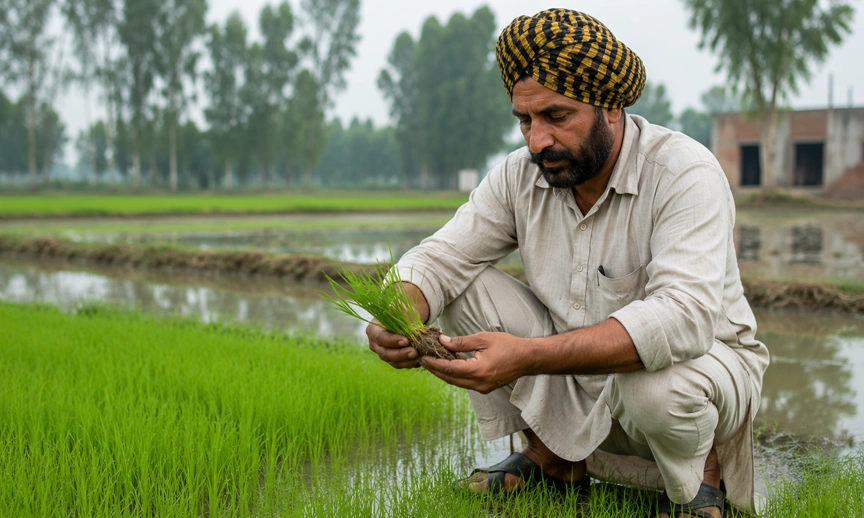
Punjab groundwater crisis becomes more real when you stand beside a field and ask how much canal water actually arrived. Many farmers will tell you the same thing: canal water is welcome, but it is too uncertain for planting decisions. In 2026, the late monsoon has only sharpened that insecurity. A farmer cannot risk seedling survival on hope alone.
I remember a visit near Karnal years ago, where a farmer said the canal was like a guest who comes when he wants, not when the family is ready. That line stays with me. The Punjab groundwater crisis works the same way. Reliability is everything. Without it, the tubewell remains the first instinct, even when everyone knows the aquifer is paying the price.
The Tubewell Trap Behind A 29mm Yearly Loss
Punjab groundwater crisis has been measured in many ways, but the annual fall is the sharpest story. In several districts, the water table is dropping by roughly 29 millimetres a year in broad regional terms, and in some blocks the decline is far worse. That sounds tiny until you realise groundwater works like savings in a bank account. Small withdrawals, repeated for decades, become a crisis. The Punjab groundwater crisis is the long consequence of normalised overuse.
Why Tubewells Became The Easy Answer
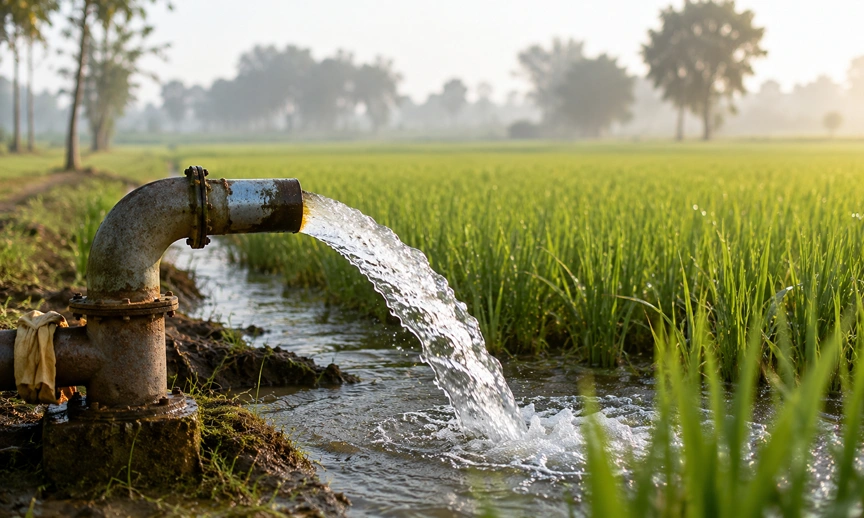
Punjab groundwater crisis grew because tubewells were practical. They were fast, flexible, and available when canal water was not. For a farmer under transplant pressure, that convenience mattered more than any warning note from an office in Chandigarh or Delhi. Electricity subsidies and pump culture made groundwater feel like a right, not a finite reserve.
That is the trap. A technology that solved yesterday’s problem became tomorrow’s addiction. Once the crop system adjusted to tubewell certainty, groundwater became the default insurance policy. The Punjab groundwater crisis is therefore not only geological. It is behavioural, economic, and political.
The District Map Tells Its Own Story
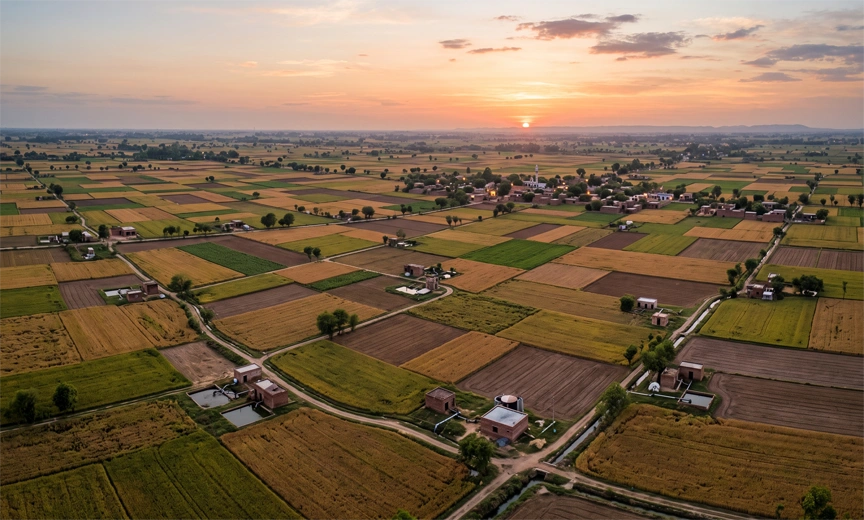
Punjab groundwater crisis is not uniform. Central Ground Water Board district data shows sharper stress in the south-west, especially in Mansa, Bathinda, Fazilka, and parts of Sangrur and Patiala. Some blocks are overexploited year after year. Others sit in a more mixed zone, but the overall pattern is still downward. This local detail matters because national headlines flatten everything into one vague state story.
Surprisingly, many urban readers still imagine Punjab as one green field with one water problem. It is not. It is a patchwork of stressed aquifers, different recharge rates, and crop decisions that vary village to village. The Punjab groundwater crisis lives in those distinctions.
El Nino Explained Through One Punjab Field
Punjab groundwater crisis becomes easier to understand when you stand in one field and watch the weather behave badly. El Nino is not an abstract Pacific event. It is the reason a farmer in Tarn Taran may wait longer for the first useful rain, while another in Faridkot keeps the motor running. The Punjab groundwater crisis is linked to such global shifts because the monsoon itself becomes less predictable.
A Warming Ocean, A Slower Sky
Punjab groundwater crisis is connected to El Nino because warming in the Pacific can weaken the monsoon winds that normally carry moisture northward. The result is not always total drought. Often it is delay, uneven spread, and fewer good rain days. That is exactly what hurts paddy timing. A late monsoon does not just reduce water. It changes how that water arrives.
Moreover, farmers do not use the phrase El Nino in the field. They say the sky is acting strange. That plain language is often more accurate than policy jargon. The Punjab groundwater crisis is what happens when that strange sky meets a crop system built for certainty.
What One Field Reveals About Climate Stress
Punjab groundwater crisis can be read in one patch of land where the soil is waiting, the seedlings are ready, and the rain has not yet become useful. If the first shower comes weak, the farmer pumps. If the next one is patchy, he pumps again. This is how a climate signal turns into a groundwater signal.
For anyone in Delhi who has watched a heat wave stretch the city dry, the feeling is familiar. The difference is that Punjab’s farms cannot simply switch on air-conditioning or wait indoors. The Punjab groundwater crisis is field-level climate adaptation by exhaustion, and El Nino makes the exhaustion worse.
What A Delayed Paddy Transplant Really Costs
Punjab groundwater crisis is not only about falling wells. It is about what a delayed transplant does to the whole season. When paddy goes in late, the crop can face different pest pressure, altered maturity, and harvesting delays that clash with the next sowing cycle. The Punjab groundwater crisis therefore shows up as income loss, labour stress, and a compressed farming calendar.
The Money Loss Comes In Small Pieces
Punjab groundwater crisis creates costs that many outsiders never count. More diesel or electricity is the obvious one. But there is also the extra labour cost of redoing nursery work, the risk of poor establishment, and the possibility of lower yield if the transplant window slips too far. A late monsoon can push all of these into the same season. One delay multiplies another.
That is why farmers become conservative. They do not wait for perfect conditions. They act with the memory of previous dry spells. The Punjab groundwater crisis teaches caution, and caution itself has a price.
My Delhi Lens On A Punjab Problem
Punjab groundwater crisis feels personal to me because I have seen how food prices and supply anxiety ripple into Delhi homes. When a crop schedule slips in Punjab, it does not stay in Punjab. It shows up in mandis, transport chains, and family budgets. That connection is often invisible until it bites.
I also think of the many Delhi families with roots in Punjab who still phone home for weather updates before they ask about anything else. That is not nostalgia. It is survival instinct. The Punjab groundwater crisis is a farming issue, yes, but it is also a kitchen issue, a market issue, and a memory issue.
When Fertiliser Shortage Meets Fickle Rain
Punjab groundwater crisis is made worse when weather uncertainty meets input shortage. Fertiliser delays, distribution hiccups, and price anxiety can all pile onto a late monsoon season. In a year like 2026, timing becomes almost cruel. The Punjab groundwater crisis is not a single thread. It is a knot of agronomy, logistics, and trust.
Inputs Do Not Wait For Weather
Punjab groundwater crisis shows how fragile the farming system becomes when fertiliser does not arrive neatly with the rain. If urea or other inputs are delayed, farmers may hesitate to apply them at the right stage. If rain is also late, the same hesitation grows. The result is either overuse later or lost efficiency earlier. That means more stress on both crop and soil.
Interestingly, many farmers know the exact sequence they want. First rain, then transplant, then nutrients. When the sequence breaks, the whole season feels off. The Punjab groundwater crisis is partly about this broken rhythm.
How Rural Stress Spreads Beyond The Farm
Punjab groundwater crisis also affects families who are not on the land every day. Women managing households feel the strain when pump bills rise and market prices wobble. Young people see farming as more uncertain, not less. The farm begins to look less like inheritance and more like risk management.
If you want a wider Delhi-NCR climate context, my piece on Delhi pollution realities shows how environmental stress does not stay in one district or one city. The Punjab groundwater crisis is part of that same larger pattern of pressure meeting poor timing. The fields and the cities are speaking to each other, whether we like it or not.
How The Green Revolution Built This Crisis
Punjab groundwater crisis has deep roots in the Green Revolution. That era brought food security, dignity, and national confidence. It also brought a crop pattern that leaned heavily on water-intensive paddy and assured procurement. The Punjab groundwater crisis is what happens when success is never rebalanced after the emergency ends. History matters here, because today’s shortage was built through yesterday’s triumph.
The Best Intentions, The Long Shadow
Punjab groundwater crisis cannot be understood without the promise of the Green Revolution. The state was asked to produce more food, faster, and it did. High-yield varieties, fertiliser use, mechanisation, and irrigation together lifted India from scarcity. But the system rewarded water-intensive choices for decades, even after the emergency had passed. That is the long shadow.
For background, the broader history is well described in this overview. The key point for Punjab is simple. What began as a national necessity became a regional water burden.
Why Reform Took So Long
Punjab groundwater crisis persisted because reform is politically hard. Farmers need income today, not a lecture on tomorrow. Procurement has historically favoured paddy, and that made crop choice feel safe. Once safety and subsidy lined up, shifting away became difficult. This is why the crisis is not just ecological. It is institutional.
Surprisingly, many people think farmers resist change out of habit alone. That is unfair. They respond to the incentives in front of them. The Punjab groundwater crisis is built into those incentives, which is why fixing it needs more than moral pressure.
What Real Recovery Would Actually Require
Punjab groundwater crisis will not be fixed by a single good monsoon. Recovery needs a package of changes that respect farmers’ risk and the state’s water limits. The Punjab groundwater crisis demands crop diversification, better canal reliability, fair market support, and a serious push toward water budgeting. Anything less is cosmetic.
Less Water Crops Need More Market Support
Punjab groundwater crisis can only ease if farmers are paid to switch away from paddy in a real, dependable way. Maize, pulses, oilseeds, and some fodder systems use less water, but they need procurement, storage, and price assurance. Without that, a farmer simply cannot gamble on a new crop. The policy must reduce risk, not just issue advice.
That is why real recovery is not a slogan. It is a set of boring but powerful systems. Better seed supply, better extension, better price signals, and better irrigation planning. The Punjab groundwater crisis will only bend if all of those move together.
Public Health Also Has A Stake
Punjab groundwater crisis has health consequences too. In some belts, deeper pumping can bring more contaminants into the conversation, including naturally occurring arsenic in certain groundwater settings. The WHO notes the seriousness of arsenic exposure in drinking water, and the concern is real in water-stressed regions. You can read more at WHO arsenic facts. Water policy is therefore health policy.
The science around groundwater depletion and crop stress is also strong, including recent research indexed at PubMed. Punjab groundwater crisis will not improve through sentiment alone. It needs measurement, enforcement, and patience, all at once.
Reading The Sky The Way Farmers Still Do
Punjab groundwater crisis is also a story about observation. Farmers still read the sky in a way most urban Indians have forgotten. They smell the wind. They look at cloud height. They ask neighbours whether the first real shower has touched the next village. The Punjab groundwater crisis has made this sky-reading more serious, because the wrong decision now costs money, water, and time.
Old Weather Wisdom In A New Climate
Punjab groundwater crisis has not erased traditional knowledge. It has made it more valuable. A seasoned farmer knows that the first rain after a hot spell may only settle dust, while the next one may actually help transplanting. This practical wisdom is built from decades of watching the land. It is not superstition. It is field science.
Meanwhile, city people often rely on apps and alerts alone. Those tools help, but they do not replace local judgment. The Punjab groundwater crisis reminds us that climate adaptation still begins with attention.
What Delhi Can Learn From Punjab
Punjab groundwater crisis should worry Delhi too, because food security starts outside the city. We sit in apartments, check the forecast, and complain about humidity. Farmers look at the same forecast and decide whether to pump, transplant, or wait. That gap in stakes is enormous. It is also why empathy matters.
If you want to understand how weather stress affects city life too, see this Delhi health guide. The Punjab groundwater crisis is not separate from our lives. It is already in our thalis, our markets, and our monthly budgets. And it will stay there until we treat water like the national asset it is.
Frequently Asked Questions
Why Is Punjab Groundwater Level Dropping So Fast?
Punjab groundwater crisis is driven by years of extraction faster than recharge, especially for paddy cultivation and tubewell dependence. The state’s flat terrain, strong irrigation demand, and limited natural recharge in some districts make the decline feel fast. In many blocks, farmers pump because that is the safest way to protect timing. The Punjab groundwater crisis is therefore a mix of farming need, policy incentives, and climate stress.
Is Punjab Facing A Water Crisis In 2026?
Punjab groundwater crisis is absolutely a live issue in 2026, not a future warning. The delayed monsoon has raised pressure on transplanting, and several districts remain under severe groundwater stress. The crisis is not visible only in official maps. It is also visible in farmer decisions, rising pumping hours, and anxiety over crop timing. The Punjab groundwater crisis is already affecting this season.
How Does El Nino Affect The Punjab Monsoon?
Punjab groundwater crisis can worsen when El Nino weakens or delays monsoon circulation. That often means fewer useful rain days, patchier rainfall, and a later start to the season. Farmers then depend more on groundwater to keep seedlings alive and transplanting on schedule. The Punjab groundwater crisis becomes sharper because the weather does not arrive in the sequence the crop system expects.
Why Do Punjab Farmers Rely On Tubewells Instead Of Rain?
Punjab groundwater crisis pushed farmers toward tubewells because they are fast, dependable, and under the farmer’s direct control. Rain is uncertain, and canal delivery can be uneven or late. Tubewells fill the gap when transplanting cannot wait. Over time, that convenience became dependence. The Punjab groundwater crisis is the result of this long shift from seasonal trust to mechanical certainty.
What Is The Punjab Preservation Of Subsoil Water Act?
Punjab groundwater crisis led to policy responses like the Punjab Preservation of Subsoil Water Act, which aimed to delay paddy transplantation to better align with the monsoon and reduce early-season pumping. The idea was to save groundwater by changing crop timing. It helped in some ways, but the broader Punjab groundwater crisis remains because crop incentives and water demand still run very high.
How Much Groundwater Does Paddy Farming Use In Punjab?
Punjab groundwater crisis is closely tied to the huge water appetite of paddy. Exact use varies by soil, method, and district, but paddy is one of the most water-intensive crops in the state. Flooded fields need repeated irrigation, and in many areas that water comes from tubewells. The Punjab groundwater crisis deepens because every hectare of paddy adds to seasonal pumping demand.
When Will Monsoon Rains Normalize In Punjab This Year?
Punjab groundwater crisis makes this question urgent, but no one should promise a clean date. Monsoon behaviour can improve after a delayed start, yet normalisation depends on regional weather systems, not wishful thinking. Farmers watch the pattern week by week, not month by month. The Punjab groundwater crisis means even a good shower may not fully undo the early-season loss.
Can Canal Irrigation Replace Groundwater In Punjab?
Punjab groundwater crisis cannot be solved by canals alone, at least not in the short term. Canals help, but they need maintenance, enough supply, and timely distribution. Many farms still rely on groundwater because canal water is not always available when needed. The Punjab groundwater crisis will only ease if canals, crop choices, and procurement incentives change together.
Is Punjab Water Table Crisis Reversible?
Punjab groundwater crisis is reversible only in a partial, long-term sense. Some aquifers can recover if extraction falls and recharge improves. But that requires serious crop diversification, better water governance, and less dependence on water-heavy farming. The Punjab groundwater crisis will not vanish quickly. It can improve, but only if policy and practice move in the same direction.
What Crops Use Less Water Than Paddy In Punjab?
Punjab groundwater crisis can be reduced by shifting part of the acreage to maize, pulses, oilseeds, and some fodder crops, depending on local soil and market support. These crops generally need less water than paddy and can fit a more climate-resilient system. The Punjab groundwater crisis will not ease unless farmers feel financially safe making that switch. For more on water-linked climate stress, see this city climate note.
Conclusion
Punjab groundwater crisis is not a headline I can read and forget. It is a mirror held up to how North India eats, farms, and delays hard decisions until nature makes them for us. I write from Delhi, but this story reaches into my own daily life because the food on my table begins in the same stressed fields that are now waiting for rain. The late monsoon of 2026 has only made the old wound easier to see. The Punjab groundwater crisis is historical, climatic, and painfully human.
What gives me hope is that solutions already exist. They are not flashy. They are slower than a news cycle and more honest than a slogan. Better crop choices, better canal delivery, better pricing, and better water discipline can still change the direction. Farmers do not need lectures. They need systems that reward caution instead of punishing it. And the rest of us need to stop treating water as someone else’s problem.
If this article made you think differently about where your food comes from, hold that thought and share it. Talk about water with the same seriousness you reserve for fuel prices or electricity bills. Read more on climate stress and urban life at this guide, because the same weather is shaping all of us. The Punjab groundwater crisis will only change when we begin to value every drop, and I mean that in the most literal way. Punjab groundwater crisis.