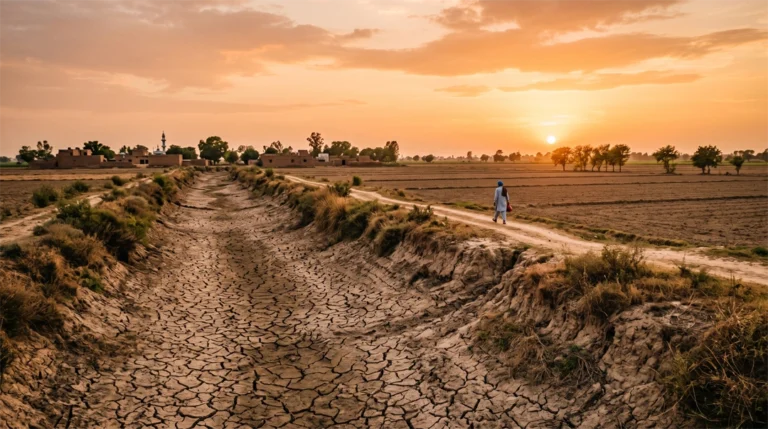
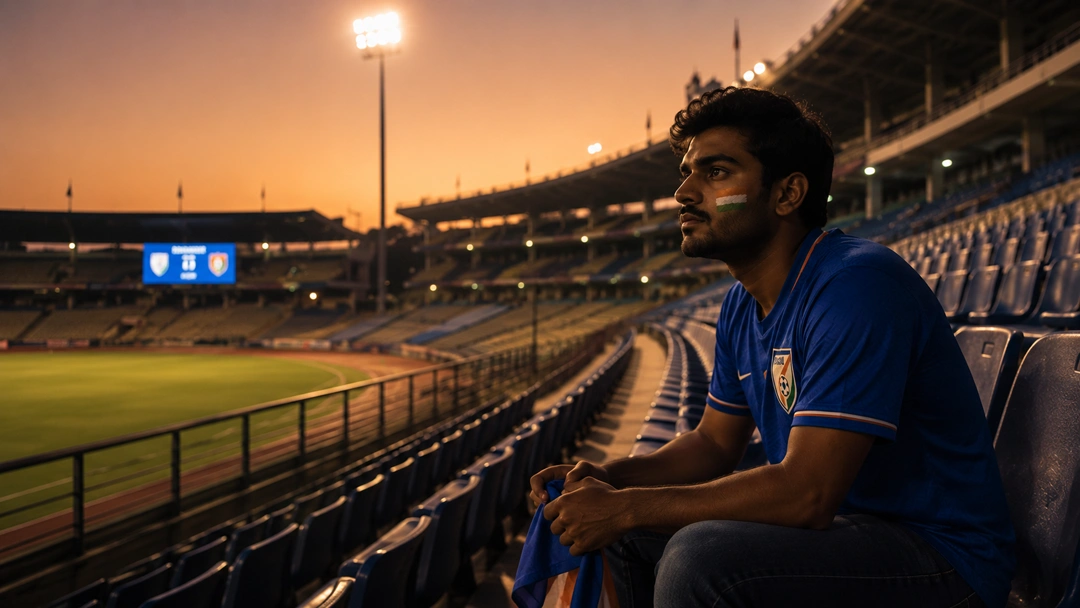
India football crisis is not some abstract sports debate for me. It feels personal, because I have grown up in Delhi watching stadiums fill for cricket while football supporters keep surviving on scraps, hope, and a stubborn love for the game. This week, when Curacao and Cape Verde qualified for the 2026 World Cup, I felt that familiar sting. A country of about 156,000 people found its way to football’s biggest stage, and India still could not. That contrast is exactly why the India football crisis keeps haunting every serious fan.
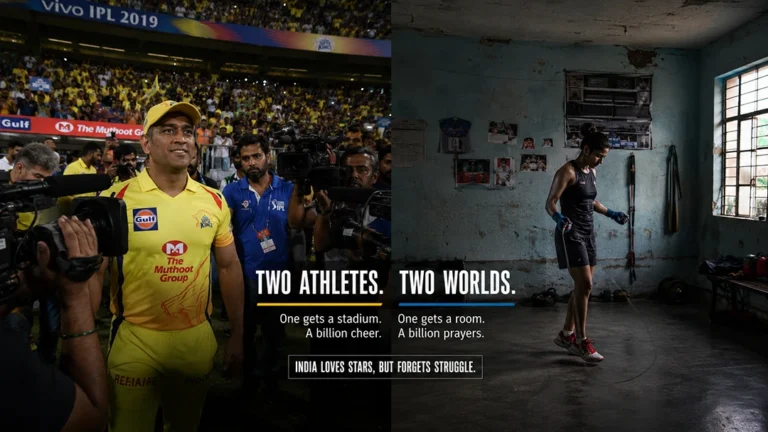
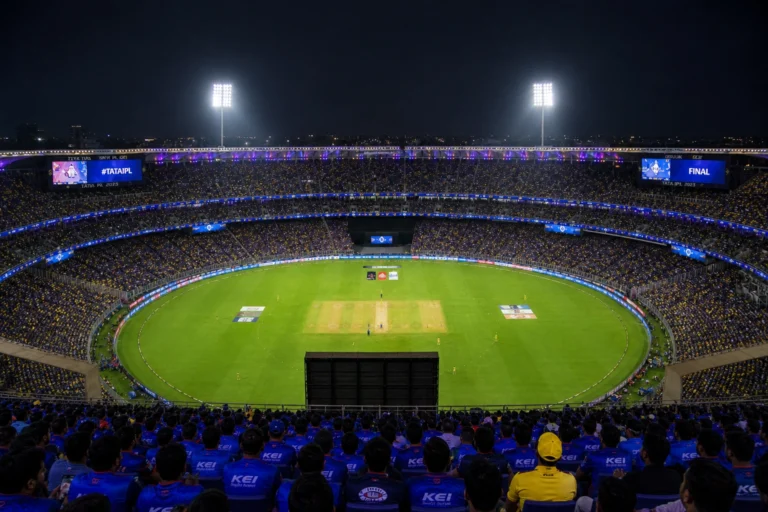
And no, this is not about some magical football gene or a lazy ‘cricket killed football’ story. It is about systems, money, planning, and who gets taken seriously. The India football crisis has been building for years, and the evidence is plain if you look at the AIFF’s finances, its public choices, and the way grassroots football has been treated like an afterthought. I wrote about our cricket-first culture too in this IPL story, but football’s problem is much deeper than competition from another sport.
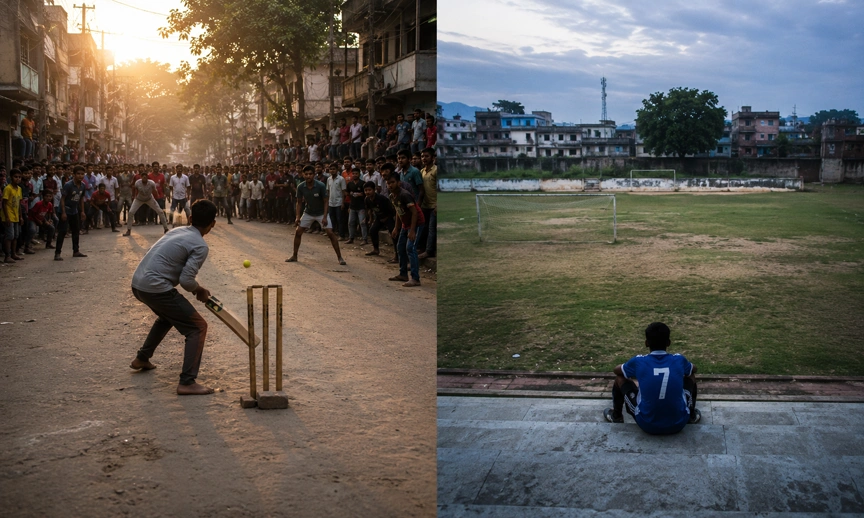
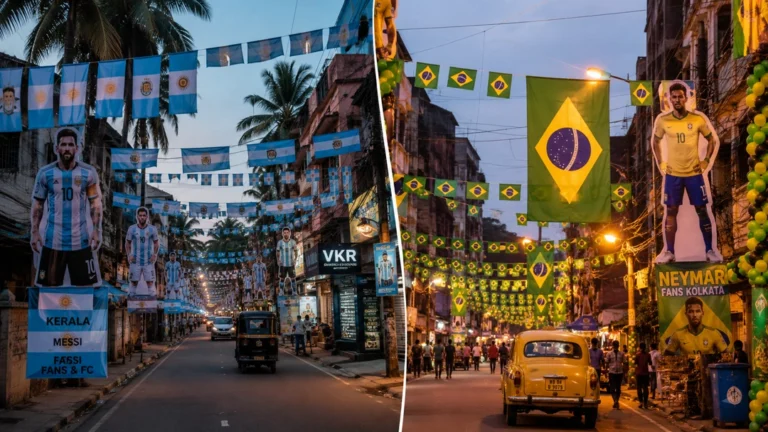
Surprisingly, India’s women’s team gives the lie to the ‘no football culture’ excuse. They have stayed ahead of the men in rankings for long stretches, proving that talent exists when the pathway exists. The India football crisis is really a story of broken administration, wasted chances, and too many people pretending that passion alone can win qualifiers. It cannot. Moreover, when I look at Kerala local grounds, Delhi school fields, and weekend cages in NCR, I do not see a nation without football. I see a nation that keeps failing to build a home for it.
A Nation Of 156,000 Beat Us To The World Cup, Why India Never Actually Played A World Cup
India football crisis becomes impossible to ignore when Cape Verde, a nation of roughly 156,000 people, reaches the World Cup before us. Cape Verde’s rise is not a miracle. It is what happens when a small country builds an honest football structure and sticks with it. Curacao, another tiny nation, joined that same 2026 celebration. Meanwhile, India still carries the burden of never having actually played in a FIFA World Cup. The contrast is painful, but it is also useful.
The old tale says India withdrew from the 1950 World Cup because the players wanted to play barefoot. That is only part of the story, and the more important part is that India had already been moving through confusion, lack of clarity, and weak support. The India football crisis did not start yesterday. It started with decades of not treating football as a national priority. We kept admiring our Asian Games history while the world moved on to modern professional systems.
Why Small Nations Can Punch Above Their Weight
The India football crisis looks even sharper when you study small nations. Size alone never qualified anyone. What matters is talent identification, coaching, league quality, and a federation that knows what it is doing. Cape Verde built a pathway. India built excuses. That is the uncomfortable truth. When a tiny island nation can create a team that stays organized under pressure, it tells you that geography is not the problem.
In Delhi, I have met teenagers who can trap, turn, and pass beautifully in narrow spaces, even on dusty grounds. The raw skill is there. The question is why we keep losing it between school football and the national team. The India football crisis is not about population. It is about conversion.
What World Cup Qualification Really Demands
Qualification demands continuity. It demands age-group coaching, match exposure, scouting, and a federation that protects the long game. The India football crisis is exposed every time we talk only about senior results and forget the pipeline. A country can be small and still qualify if it builds a ruthless system. India has often been too large, too scattered, and too politically distracted to do that well.
That is why Cape Verde matters as a symbol. It tells us the door is open for anyone who does the work. India has not done enough of the work.
The Lazy Excuses: Genes, Cricket, And Culture
India football crisis is often buried under three lazy excuses: genes, cricket, and culture. I hear them everywhere, from tea stalls to TV panels. People say Indians are not built for football, as if sport were decided by bloodline. They say cricket stole every child, as if one sport can explain an entire national failure. They say our culture does not care. Yet every one of these claims falls apart under basic scrutiny.
First, the gene argument is nonsense. Footballing ability is trained, nurtured, and sharpened through competition. Second, cricket may dominate attention, but attention is not the same as destiny. Third, culture is alive in India. You can see it in Bengal, Goa, Kerala, Manipur, Mizoram, and in migrant neighborhoods across Delhi NCR where kids still kick a ball in lanes after school. The India football crisis is about infrastructure, not DNA.
India’s Women Show The Best Counter-Evidence
The cleanest rebuttal to the no football gene story is India’s women’s side. They have repeatedly been ranked ahead of the men, and that alone should end the conversation. If the problem were biology, the pattern would be consistent across genders. It is not. The India football crisis is about opportunity, coaching, exposure, and respect. When those improve, results improve too.
That is why I find the gene talk so frustrating. It lets adults escape responsibility. It turns a governance problem into a pseudo-scientific shrug.
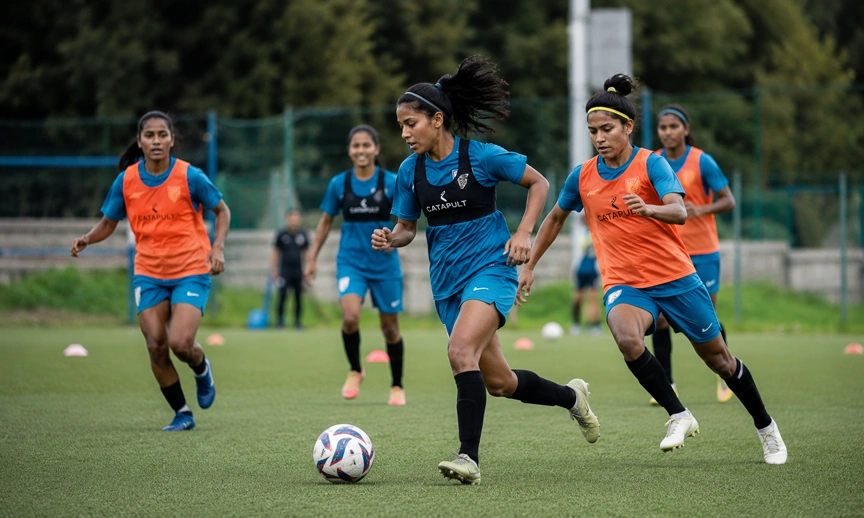
Cricket Is Not The Enemy, Bad Planning Is
Cricket is not the villain here. The India football crisis would still exist even if cricket disappeared tomorrow. The real issue is that football was never given comparable seriousness. Youth systems were weak, school sport was uneven, and the federation often reacted late. Cricket’s success only makes the contrast sharper. It shows India can build elite pathways when it wants to.
So the answer is not to blame cricket. The answer is to stop using cricket as a cover for football’s failures.
What AIFF Cut While The Funding Went Up
India football crisis is also a finance story. The AIFF has faced widely documented financial strain, and at the center of it is a system that has often spent poorly while talking big. Public reports and federation disclosures have pointed to severe stress, legal disputes, and cash-flow problems. At the same time, grassroots football has been squeezed. One of the most alarming claims in recent reporting was a 78 percent cut to grassroots spending. If true, that is not a trim. That is a warning sign.
When money goes up but the base goes down, something is badly wrong. Grassroots is where Indian football should be strongest, because our talent is abundant. Instead, the India football crisis keeps repeating the same cycle: budgets, promises, headlines, then silence. If you starve the base, you get fewer coaches, fewer local leagues, fewer scouts, and fewer players who are ready when the national team needs them.
Where The Money Usually Vanishes
The India football crisis often hides in administration costs, short-term event spending, and patchy state-level execution. That is why fans feel betrayed. They do not see a clean route from funding to better pitches, better academies, or better performance. The federation’s role is to connect the money to the child in the district competition. Too often, that bridge is broken.
In Delhi, I have watched promising boys disappear after age 15 because transport costs, kit costs, and coaching fees became too much. That is what budget failure looks like on the ground.
Grassroots Cut Means Future Cut
The India football crisis is not just about the present men’s team. It is about the team that should exist in 2030 and 2034. Grassroots cuts are future cuts. They reduce the player pool, the tactical education, and the habit of winning. If India wants to compete with even mid-tier Asian sides, this is the first place to fix.
More funding only matters when it reaches the field. Otherwise it is just a number on paper.
The Rename Nobody Asked For, Mid-Tournament
India football crisis got stranger when the AIFF moved to rename itself the Football Federation of Bharat. Whatever one thinks of the symbolism, the timing felt bizarre. Mid-tournament rebrands are not how you fix football. They do not produce better scouting, faster passing, or smarter youth policy. They mostly create confusion, headlines, and fatigue. Fans in India were asking a simple question: Why this, and why now?
The problem is not patriotism. The problem is priorities. The India football crisis needed administrative repair, not a branding exercise. A name change cannot replace competence. It cannot rescue a weak youth pipeline, and it certainly cannot hide the fact that football in India still lacks stable long-term structure. That gap is what matters.
Branding Cannot Substitute For Governance
People often confuse visibility with progress. The India football crisis is a reminder that the two are not the same. A new signboard does not improve pitches. A new acronym does not help district coaches. A new logo does not solve selection bias or poor scheduling. Governance is boring, but governance is the game.
In Delhi, I know exactly how this looks. A glossy launch event happens somewhere central, while a neighborhood ground stays broken, muddy, and underused. That is not transformation. That is performance.
Fans Wanted A Plan, Not A Distraction
The India football crisis deepened because supporters sensed they were being sold symbolism instead of solutions. People can live with hard truths. They cannot live with diversion. If the federation had paired any rebrand with a transparent football roadmap, it would have been easier to trust. Instead, the move felt mid-tournament and mistimed.
Football people want better academies, not better slogans. That is the real ask.
FIFA Banned India Once. Nobody Remembers Why
India football crisis has older ghosts too. India was once banned by FIFA in 2006, and many fans barely remember why. The reason was administrative interference and a governance dispute around the federation. That matters because it showed, long ago, how fragile our football institutions were. A ban is not just a punishment. It is a signal that the house is badly managed.
People forget these episodes because football memory in India is short. We celebrate one good result, then move on. But the India football crisis is cumulative. Every governance lapse, every legal tangle, every rushed appointment leaves a mark. In football, memory matters because systems outlive headlines. If the system keeps getting interrupted, the players pay for it.
Why The Ban Should Still Shame Us
The India football crisis should still carry the shame of that ban because it was avoidable. It was not a weather event or an unlucky draw. It was a sign that football had become vulnerable to administrative chaos. That is exactly the kind of problem that kills growth over time.
The lesson is simple. If the federation is unstable, the national team will be unstable too. That chain matters more than one-off talent.
The Cost Of Repeating The Same Mistake
The India football crisis repeats when we ignore history. Every time officials act like football can be fixed through image management, they invite the same old failure. The 2006 ban should have led to cleaner governance, better checks, and stronger accountability. Instead, we got more talk and too little structural discipline.
That is why older fans still sound angry. They have seen this movie before.
Kerala, Manipur, Mizoram: Where Talent Survives
India football crisis would be even worse if not for a few states that keep producing real football culture. Kerala, Manipur, and Mizoram are not side notes. They are the proof that talent survives when communities protect it. In these places, football is not an occasional national talking point. It is lived, local, and competitive. That is why so many Indian footballers come from these regions.
In Delhi, I often meet families who moved here from the Northeast and still keep football alive in parks, colonies, and school fields. The India football crisis looks different there. It is not about lack of interest. It is about whether the national system can recognize and reward what those states already produce. Too often, it does not.

Local Ecosystems Matter More Than Catchphrases
The India football crisis cannot be solved by national slogans alone. Kerala needs better academies, Manipur needs stronger pathways, and Mizoram needs more elite exposure. These states have the passion, but passion still needs infrastructure. District tournaments, school leagues, and coaching education matter as much as talent.
What survives in these states is not luck. It is community memory, and India should learn from it.
Delhi NCR Needs Its Own Football Habit
The India football crisis is not only a faraway problem. Even in Delhi NCR, we can see how weak the pipeline is when compared with cricket. Grounds are crowded, but systematic football progression is rare. Children play. Then they stop. The step between street play and serious competition is too wide.
If we can build football habits in big cities and not just heartland strongholds, the national pool will finally grow.
What Actually Fixes This, Not Slogans
India football crisis will only improve if we stop romanticizing and start rebuilding. That means stable grassroots funding, proper district leagues, better coaching licenses, more matches, and stronger school-to-club pathways. It also means protecting women’s football, because the women’s team has already shown what happens when structure exists. If you want a real model, start there.
We need less ceremony and more repetition. More games. More scouting. More measurable outcomes. The India football crisis is fixable, but not by one press release or a new nickname. It is fixed by boring, persistent work done over years. That is not glamorous, but that is how successful football countries operate.
What The Federation Must Do First
The first move is accountability. The India football crisis cannot be solved if budgets remain opaque and priorities keep shifting. Next comes youth football, because that is where the future is made. Coaches need to be paid, pitches need to be playable, and clubs need a reason to invest beyond a single season.
The federation should also create a transparent roadmap for every age group. Without that, we are only guessing.
What Fans And States Can Push For
The India football crisis is not only an administrative job. Fans, state associations, schools, and private academies all have a role. States can demand better tournaments. Parents can ask harder questions about coaching quality. Media can stop treating every football discussion like charity. And yes, we should reward those regions that actually deliver players.
If the game matters, the ecosystem must act like it matters.
Can India Realistically Reach 2030 Or 2034
India football crisis does not mean India is doomed forever. But 2030 looks extremely difficult unless reforms begin immediately, and 2034 would still require a sustained, well-managed decade. Qualification is not about wishful thinking. It is about sequences. If India builds a serious youth structure now, improves domestic competition, and stops wasting time on distractions, then progress becomes possible.
Honestly, I think the realistic question is not ‘Can we make it soon?’ It is ‘Are we finally willing to do the work?’ The India football crisis will not resolve through optimism alone. But there is room for hope because the country has talent, fan energy, and pockets of real football culture. That is more than many people admit.
What Must Change By The Next Cycle
The India football crisis can only improve if the next cycle brings coaching depth, better scheduling, more youth caps, and a federation that behaves like a football federation. The players cannot fix this alone. They need a structure that respects their time and talent. Without that, every new cycle becomes a replay of the last one.
That is why the next two years matter so much. Delay is the enemy.

Hope Needs Proof, Not Noise
The India football crisis will end only when progress becomes visible at the base. Fans do not need grand promises. They need proof in tournaments, rankings, and player development. If a small nation can qualify, India can at least build toward qualifying honestly.
I still believe we can get there, but belief must be matched by discipline.
Frequently Asked Questions
Why Has India Never Qualified For The FIFA World Cup?
India football crisis is rooted in weak long-term planning, inconsistent governance, and a poor development pipeline rather than any lack of interest. India has had talented players, but it has not built enough competitive depth, coaching quality, or match exposure to survive World Cup qualification campaigns. The issue is structural, not cultural.
What Is India’s Current FIFA Ranking In 2026?
India football crisis is reflected in the team’s modest global standing in 2026, which remains far below the level needed for World Cup qualification. Rankings shift often, so fans should check official FIFA releases for the latest number. The deeper point is that the ranking mirrors the system, not just one coach or one tournament.
Why Did AIFF Rename Itself Football Federation Of Bharat?
India football crisis became noisier when the AIFF pursued a Bharat rebrand. Supporters saw it as symbolic and badly timed, especially because the game needed governance fixes more than identity changes. A new name cannot solve funding gaps, youth issues, or administrative confusion. It only matters if matched with real reform.
How Small Can A Country Be And Still Qualify For The World Cup?
India football crisis is a reminder that size does not decide qualification. Cape Verde and Curacao show that even very small countries can reach the World Cup if they build stable systems, identify talent well, and invest consistently. Football is about organization, not population size. That is the real lesson.
Is Indian Football Really Behind Because Of Cricket?
India football crisis is often blamed on cricket, but that explanation is too easy. Cricket dominates attention, yes, but it does not prevent football from being well-run. India’s women’s football team is the best counter-evidence because it has outperformed the men at times despite the same sporting culture. The real issue is structure, not rivalry.
What Is The AIFF Financial Crisis About?
India football crisis includes reported financial strain, legal trouble, and poor budget choices inside the federation. Grassroots support has reportedly been cut sharply in some periods, even as public expectations rose. That means the problem is not just the amount of money, but where it goes. Fans want transparency and proper development spending.
How Much Does India Invest In Football Infrastructure?
India football crisis is worsened by uneven investment in pitches, academies, coaching, and local competitions. There is funding, but it often does not flow cleanly to the grassroots where it matters most. Different states and programs vary widely, so there is no single neat number that solves the story. The complaint is about quality and consistency.
Can India Qualify For The 2030 FIFA World Cup?
India football crisis makes 2030 a tough target, but not an impossible dream if reforms begin now. India would need better youth systems, stronger domestic leagues, more international exposure, and a stable federation. The clock is the main enemy. Without immediate change, 2030 remains a long shot.
Why Did India Withdraw From The 1950 World Cup?
India football crisis is often traced back to the 1950 withdrawal, which has become folklore. The barefoot story is famous, but the broader picture includes weak readiness, poor support, and confusion around the tournament. Whatever the exact mix of reasons, the decision became a missed opportunity that still shapes memory today.
Which Indian States Produce The Most Football Talent?
India football crisis is less severe in places like Kerala, Manipur, and Mizoram because football culture remains strong there. These states consistently produce skilled players and passionate communities. They prove that Indian football talent exists in abundance when local ecosystems support it. The national challenge is turning that regional strength into a full pipeline.
Conclusion
India football crisis is painful because it is so unnecessary. We are not short of talent, and we are not short of fans. We are short of seriousness. When I look at Curacao and Cape Verde, I do not see magic. I see countries that respected the process enough to qualify. When I look at India, I see too many detours, too many excuses, and too much wasted time.
From Delhi, this feels especially close to home. I have watched footballers on cracked grounds, in schoolyards, in migrant pockets, and in neighborhoods where the sport survives despite neglect. That is why I refuse the lazy stories about genes or cricket. The India football crisis is fixable if we stop treating football like a side project and start treating it like a national system.
If you care about the game, keep asking harder questions. Demand transparency. Demand grassroots spending. Demand a real roadmap for boys and girls alike. And keep the pressure on the people who run the sport. The next World Cup cycle should not become another lost chapter. India football crisis