
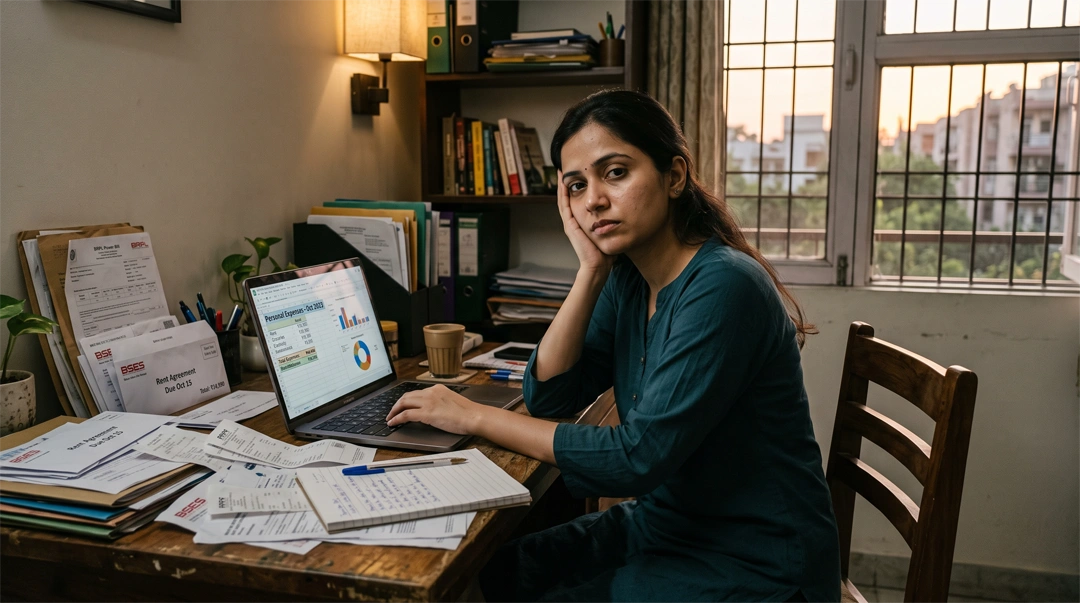
Middle class India 2026 is not just a phrase I am typing for SEO. It is the sound of a WhatsApp salary credit, followed by a rent reminder, a school payment link, a pharmacy bill, and that uneasy calculation you do in your head while wondering where the month disappeared. In Delhi NCR, I hear this from friends, cousins, neighbours, and even the cab driver who tells me his daughter has started skipping tuition because the fee jumped again. It feels strangely familiar, almost like the whole city is living on a tightrope.
I am writing this from the middle of my own Delhi/NCR life, where even a decent salary can feel like a moving target. The problem with middle class India 2026 is not that people have stopped working hard. The problem is that too many costs are rising faster than pay, and the gap is now wide enough to feel in daily life. That is why I wanted to break this down month by month, with a Delhi NCR household lens, and not blame individuals for a structural squeeze. I also want to connect it to the larger burnout I keep seeing, the kind I wrote about in hustle culture burnout in India.
Middle class India 2026 is especially harsh because it hits ordinary families in layers. Rent rises. EMIs consume future income. Schools behave like luxury brands. Healthcare no longer feels optional. Groceries have gone from manageable to mildly shocking. And then there is the sandwich generation pressure, where you are paying for children, parents, and your own uncertain future at the same time. middle class India 2026 is not a personal failure story. It is an economics story, a policy story, and a very human story.
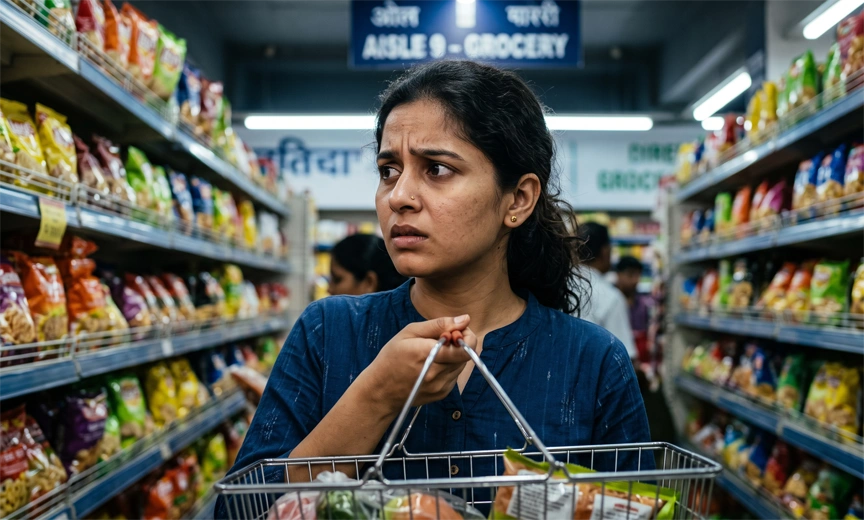
The 2026 Reality: More Salary, Less Month Remaining
Middle class India 2026 begins with a strange contradiction. Many salaried people are earning more than they did in 2021, yet the month still ends too early. I have heard this in Delhi cafes, in society lift conversations, and even in long family calls where nobody wants to say it directly. The pay slip looks bigger, but the life feels smaller. The rise in income is real, but so is the rise in everything that matters.
Take a Delhi NCR family with two working parents, one school-going child, and aging parents to support. In 2021, their combined net household income may have been around Rs 1.2 lakh a month. In 2026, it may be Rs 1.6 lakh or even Rs 1.8 lakh. That sounds like progress. However, once rent, EMI, school fees, groceries, transport, insurance, and medicines are added, the leftover savings can be thinner than before. middle class India 2026 feels squeezed because fixed obligations have become sticky, while salaries remain partly variable and taxed at source.
Meanwhile, this pressure is not unique to one family or one neighborhood. It is visible across Noida, Gurugram, Ghaziabad, and entire urban cities. The cost of stability itself has gone up. The older idea that every salary hike brings comfort no longer fits city life. middle class India 2026 is really about paying more to stay in the same place.
Middle class India 2026 in a monthly snapshot
In 2021, a household in Noida might have paid Rs 28,000 for rent, Rs 22,000 for school costs, Rs 12,000 for groceries, Rs 18,000 for EMI, and Rs 4,000 for healthcare and medicines. By 2026, the same household could be paying Rs 45,000 for rent, Rs 35,000 for school, Rs 20,000 for groceries, Rs 28,000 for EMI, and Rs 7,000 or more for healthcare. That is before weekend outings, clothes, mobile bills, fuel, or repairs. Middle class India 2026 is not failing to budget. It is budgeting inside a system that has become much more expensive.
Why the emotional strain is rising too
Money pressure affects mood, sleep, marriage, and parenting. That is not drama. It is modern urban reality. I see friends cancel dinners not because they are stingy, but because they are tired of pretending that every month can absorb another surprise bill. middle class India 2026 has turned monthly planning into emotional labor. And when the mind is carrying that weight, even a small expense can feel like an insult.
How Indian Rents Quietly Doubled in Five Years
middle class India 2026 is easiest to understand when you look at rent. In Delhi NCR, rent did not always jump in one dramatic leap. It crept up, then jumped, then reset expectations entirely. A flat that cost Rs 25,000 to Rs 30,000 a month in 2021 can now easily demand Rs 40,000 to Rs 55,000, depending on location, society, and access to metro lines. That means rent alone can eat one quarter to one third of a modest urban salary.
I live in Delhi NCR, and I have watched this happen in real time. Friends who once lived in central locations quietly moved farther out, then farther still. Some accepted smaller homes. Some shifted from independent rentals to shared arrangements. Others stayed put because school and office routes made moving feel impossible. middle class India 2026 does not offer many graceful choices here. It asks families to pay more for the same square feet, the same sunlight, and the same leaky balcony.
What makes this particularly hard is that rent is non negotiable. You cannot cut it easily the way you can skip a restaurant meal. For families with children and office commutes, location is connected to time, safety, and schooling. So even when salaries rise, the rent increase takes away a large part of the gain. middle class India 2026 is living with this hidden tax on city access.
Why moving is not always a solution
People often ask why families do not simply move to cheaper areas. The answer is that savings on rent can disappear into transport, school commute time, and social disruption. A cheaper flat 15 kilometers away may mean more fuel, longer daily travel, and less time with children or parents. In Delhi life, time is also money. middle class India 2026 makes this tradeoff painfully clear. When the city becomes expensive, distance itself starts costing the middle class in ways that are not visible on paper.
The EMI Trap: When Home Dreams Become Monthly Dread
Middle class India 2026 also runs into the EMI trap. For many families, homeownership was supposed to mean security. Instead, it has become a long monthly obligation that feels heavier when interest rates and other costs rise. An EMI that once seemed manageable at Rs 18,000 may now sit at Rs 28,000 or Rs 35,000. Add car EMI, appliance EMI, or a personal loan taken during an emergency, and the monthly pressure compounds quickly.
EMI culture also changes decision making. Families postpone travel, delay upgrades, and avoid job changes because a salary gap could disturb repayment. Some even keep unhealthy jobs because the loan will not wait. middle class India 2026 is not just a salary story. It is a debt service story, where monthly obligations quietly define the shape of everyday life.
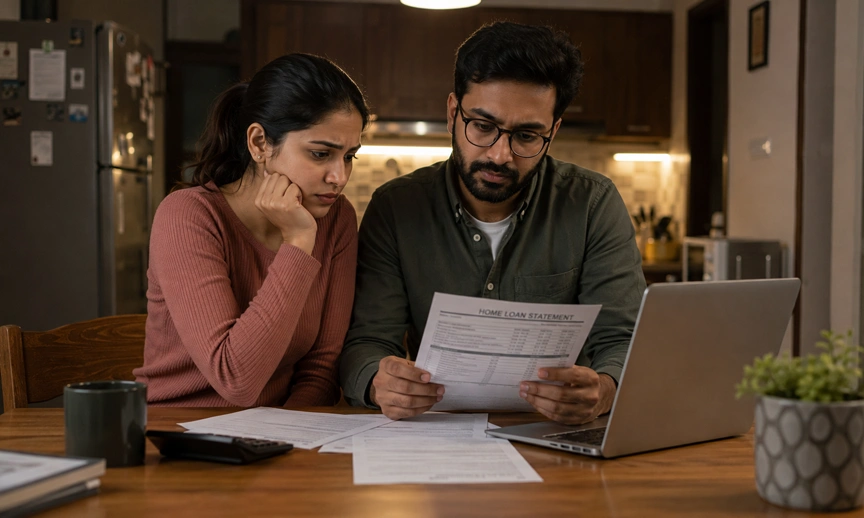
Middle class India 2026 and the cost of borrowing
Borrowing has become normal for furniture, gadgets, cars, and even small medical needs. That normalisation is dangerous when income growth is uneven. A family can end up with several small EMIs that together behave like one giant fixed bill. In many homes, the difference between comfort and anxiety is just one missed bonus or one delayed increment. middle class India 2026 exposes how fragile the balance can be when a lot of everyday life is built on future income.
When the loan feels bigger than the life it financed
There is also a psychological cost. A home should feel like safety, but for some families it now feels like pressure. A car should feel useful, but it can become a source of monthly dread if maintenance and fuel are added. The real issue is not that people borrowed. It is that the system has made borrowing too central to middle class life. middle class India 2026 keeps asking families to pay today for the life they hoped to enjoy tomorrow.
School Fees and Healthcare: The Invisible Tax on Indian Parents
Middle class India 2026 hits parents hardest through school fees and healthcare. These are the two expenses that feel morally impossible to reduce. You can cook at home. You can delay a purchase. But you cannot negotiate away a child’s school or ignore a parent’s medicine list. That is why these costs hurt so much. They are not luxury spend. They are dignity spend.
In Delhi NCR, school fees have climbed in a way that makes many families feel excluded from the very schools they once considered normal. Admission fees, annual charges, transport, activity costs, and annual hikes together create a burden that is far above inflation in many households. middle class India 2026 often sees private school education as a monthly subscription that never ends and never gets cheaper.
Why education costs rise faster than salaries
Private schools have built a model around infrastructure, branding, activity-based learning, and constant annual increases. Parents feel trapped because switching schools is emotionally and academically disruptive. The demand for quality education remains high, but capacity is limited and the pressure to keep up is intense. middle class India 2026 is paying not only for teaching, but for the fear of falling behind. This is why school fees rise faster than many salaries. Parents keep paying because children cannot be made to wait.
Healthcare is a financial shock absorber that broke
Healthcare used to be the emergency line in many budgets. Now it often behaves like a recurring expense. Tests, preventive checkups, physiotherapy, dental care, and medicines for chronic conditions all add up. The sad part is that stress itself can worsen health. The NIH has highlighted the link between financial stress and poor health, and that feels very relevant in Indian homes today. middle class India 2026 is carrying both the cost and the consequences of that cost.
Why Your Grocery Bill Doubled – Because It Actually Did
middle class India 2026 shows up most visibly at the grocery store. Families notice it when a basket that once felt full now seems oddly small, even after spending more. Cooking oil, pulses, vegetables, dairy, spices, packaged staples, and household cleaning items have all become costlier in subtle but steady ways. The bill does not explode overnight. It just becomes hard to ignore.
What changed is not only the price of individual products. It is the frequency of purchase. Families are eating at home more often, hosting more carefully, and buying smaller quantities more frequently. That can look like discipline on paper, but in reality it is often a sign of caution. middle class India 2026 has turned the grocery run into an inflation lesson no one asked for.
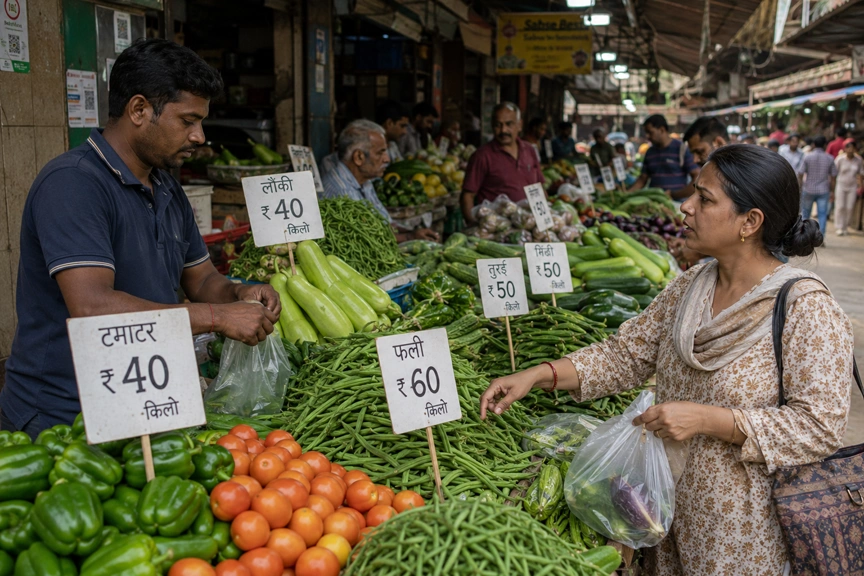
Middle class India 2026 and the shrinking cart
The average household now trades up less often and compares prices more aggressively. People buy one brand this week and another the next. Fruit baskets become smaller. Non-essential packaged items disappear first. Some families shift toward local markets over supermarkets, hoping to save a little. Yet the overall effect remains the same. middle class India 2026 is spending more for less perceived abundance, and that feeling alone changes the mood at home.
How inflation behaves in daily life
Inflation is not just a macroeconomic word. It is the moment you remove one item from your list because it feels indulgent. It is choosing a slightly cheaper detergent, postponing cashews, or buying fewer fruits because school fees are due. That is why official averages can feel disconnected from real life. middle class India 2026 lives the gap between statistical inflation and kitchen-table inflation every single month. The kitchen tells the truth long before the spreadsheets do.
The Salary Hike Illusion: What CTC Hides From Middle Class Indians
middle class India 2026 is also trapped by the salary hike illusion. People hear about a raise and assume the household is doing better. But CTC is not take-home salary, and annual appraisals often do not beat the combined rise in rent, fees, EMIs, and food. What looks like growth on paper can shrink once tax, PF, bonus uncertainty, and deductions are applied. The gap between headline salary and usable salary is where the illusion lives.
This is why people feel confused and guilty at the same time. They are told they are doing well, yet they feel stretched. middle class India 2026 teaches us that income growth without purchasing power growth is not real comfort. It is a prettier spreadsheet.
Middle class India 2026 and the gap between gross and real
CTC can hide several things: taxes, employer contributions, vesting structures, and one-time components that do not repeat reliably. A family planning a budget needs predictability, not packaging. When employers talk in large annual figures but household expenses are monthly and recurring, stress becomes inevitable. middle class India 2026 is living in that mismatch every day. The monthly budget does not care how attractive the offer letter looked.
Why annual increments no longer feel meaningful
Even a 7 percent or 10 percent raise can vanish if rent rises faster, school fees jump, or a parent needs medical care. That is why the middle class feels stuck even when salaries technically improve. It is not imagination. It is arithmetic. middle class India 2026 is learning that a raise only matters if it outpaces real-life inflation. Otherwise, it is just a number that flatters HR presentations.
The Sandwich Generation Pressure – Parents Plus Children Costs
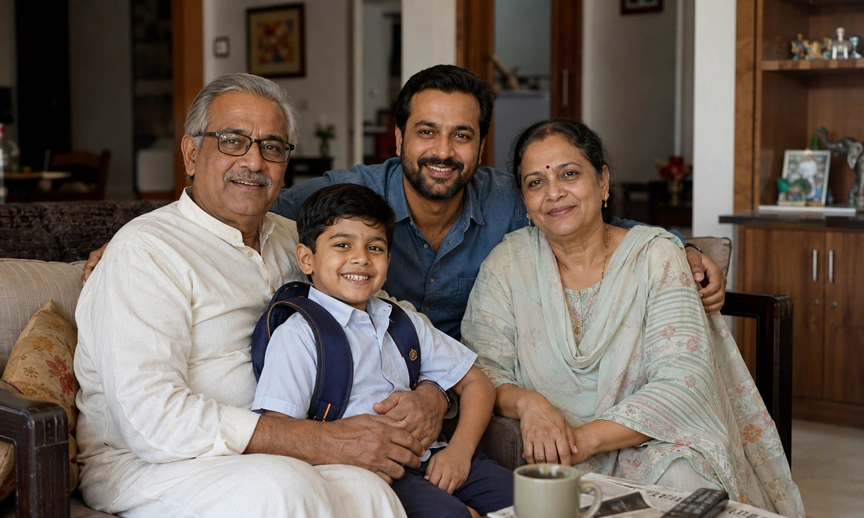
Middle class India 2026 becomes emotionally heavy in the sandwich generation. These are adults in their 30s and 40s who are simultaneously paying for children and caring for aging parents. This is the part of the story that often gets missed in top search results, but it is central to urban Indian life. The squeeze is not linear. It is layered.
This pressure changes relationships too. Adult children feel guilt. Parents feel helpless. Spouses start discussing money more often and sometimes more sharply. Yet none of this is because people are irresponsible. middle class India 2026 has simply stacked obligations on top of one another until even decent earners feel cornered.
What no one says out loud in family groups
Many people are quietly postponing their own goals. They are delaying a second child, a better home, a sabbatical, or even a career change because the family system cannot handle another shock. That silence is important. middle class India 2026 is full of people who are coping well in public and calculating fearfully in private. The real cost of the squeeze is not only financial. It is the shrinking of life choices.
What Urban Indians Are Quietly Cutting Back On in 2026
Middle class India 2026 is changing behavior in ways that are easy to miss at first. People are still spending, but they are spending differently. Restaurant visits are fewer. Swiggy orders are more selective. New clothes are bought later. Vacations are shorter or closer to home. Premium subscriptions get canceled and restarted repeatedly. The middle class is not disappearing from consumption. It is negotiating with it every day.
Interestingly, these cutbacks are not just about vanity spending. They often begin with convenience expenses, then move to travel, then to discretionary care. The first things to go are usually the things that make life feel easy. That is the quiet tragedy of middle class India 2026. It does not remove essentials first. It removes breathing room.
Middle class India 2026 and the new frugality
Families are comparing utility plans, meal subscriptions, cab options, and insurance premiums more carefully than before. That is wise, but it is also tiring. Money conversations now happen constantly. middle class India 2026 has made savings culture practical again, but out of pressure rather than pride. People are learning to say no more often, and not always happily.
What this means for lifestyle and mental space
Less discretionary spending can mean less guilt, but it can also mean less joy. That is why many people feel as if life has become more efficient but less alive. A budget can be balanced while the mood deteriorates. middle class India 2026 is not only about consumption. It is about the shrinking space for spontaneity, recovery, and small pleasures that once made city life feel manageable.

The Practical Financial Reset: What Can Actually Help Right Now
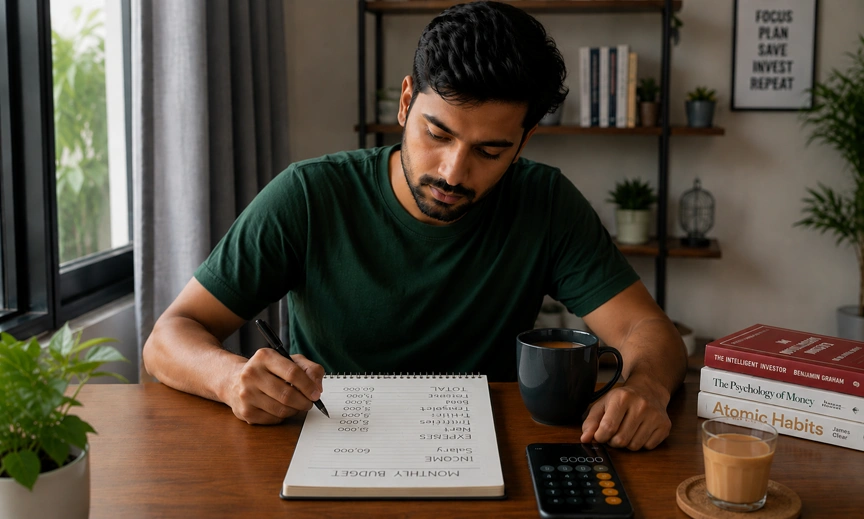
middle class India 2026 needs more than motivational advice. It needs practical resets that recognize how urban Indian households really function. The first step is honesty. Look at fixed costs first, not aspirational goals. If rent, EMIs, school fees, and medical outgo are already taking most of your income, your plan must begin there. middle class India 2026 becomes manageable only when the household sees reality clearly.
One useful approach is to separate essential, semi-essential, and flexible expenses every month. Another is to avoid stacking loans unless absolutely necessary. Where possible, rebuild an emergency fund before upgrading lifestyle. Families can also renegotiate insurance, compare school transport alternatives, and review subscriptions that quietly drain money. middle class India 2026 rewards small, boring discipline far more than dramatic financial hacks.
It also helps to have one household meeting a month. Not a crisis meeting. Just a calm review of rent, fees, medicines, savings, and upcoming obligations. I have seen Delhi families reduce anxiety when everyone knows the plan. For households exploring new income streams, technology can help too, including ideas from making money with AI in India and the broader shifts in AI in everyday life in 2026. middle class India 2026 is easier to survive when the system supports you, not just your effort.
Middle class India 2026 and smarter household planning
Automate savings if you can, even if the amount is small. Keep a separate medical buffer. Avoid lifestyle inflation every time your salary rises. If possible, align big expenses to the same month so they do not ambush you one by one. middle class India 2026 is not fixed by optimism alone. It improves when households design for reality instead of aspiration.
Frequently Asked Questions
Why does my salary feel insufficient despite annual raises in India 2026?
Middle class India 2026 feels tight because salary growth is often slower than the rise in rent, school fees, EMIs, food, and healthcare. Your raise may be real, but your take-home improvement gets eaten by fixed costs that do not pause. That is why the month still feels short even after a good appraisal.
What is the average monthly expense for a middle class family in Delhi in 2026?
Middle class India 2026 in Delhi NCR can easily cost Rs 85,000 to Rs 1.8 lakh a month for a family of three or four, depending on rent, school type, loan burden, and medical needs. A major chunk goes into housing and education. The exact number changes by locality, but the pressure is broadly the same.
How much has rent increased in Indian cities between 2021 and 2026?
Middle class India 2026 has seen rent rise sharply in many Indian cities, especially Delhi NCR, Mumbai, Bengaluru, and Hyderabad. In several urban pockets, rents have nearly doubled compared with 2021 levels. The increase depends on location and housing stock, but the trend is unmistakable. Housing is now one of the biggest monthly stress points.
Why are private school fees in India rising faster than salaries?
Middle class India 2026 is burdened because private schools often raise fees to cover infrastructure, transport, staff, and branding costs. Families rarely switch schools because admission and continuity matter so much. Salaries, however, do not rise at the same pace. That mismatch makes school costs feel like a quiet but relentless tax on parents.
What is the EMI to income ratio that financial experts recommend for Indians?
Middle class India 2026 should ideally keep all EMIs below about 30 to 40 percent of monthly take-home income. Many experts prefer even lower if school fees, rent, or aging parents are part of the picture. Once EMIs become too large, savings and emergencies get squeezed. This is where households begin feeling trapped.
How are inflation and real wages affecting the Indian middle class differently?
Middle class India 2026 shows the difference clearly. Inflation raises the cost of everyday life, while real wages reflect what your salary can actually buy. If wages rise by 8 percent but your essential expenses rise by 12 percent, you are poorer in practical terms. That gap is why many households feel pressure even when they appear to be earning more.
What expenses are urban Indians cutting back on the most in 2026?
Middle class India 2026 is seeing cutbacks in dining out, travel, entertainment, premium subscriptions, new clothing, and impulse purchases. People are also reducing convenience spending like cabs and food delivery. The first cuts often come from the things that make life feel lighter. That is why the squeeze feels emotional, not just financial.
What is the sandwich generation problem and how does it affect Indian families?
Middle class India 2026 is full of sandwich generation families who support children and aging parents at the same time. The result is two-way financial pressure, more caregiving tasks, and little room for error. It can affect health, marriage, and career decisions. Many households feel stretched not because they overspend, but because they are responsible for too many people at once.
How can a middle class Indian family manage rising costs without sacrificing long-term savings?
Middle class India 2026 needs a clear monthly hierarchy. Start with emergency savings, then essential bills, then school and medical costs, and only after that discretionary spending. Avoid taking on new debt for lifestyle upgrades. Review insurance, subscriptions, and transport costs regularly. Even small savings help if they are protected consistently. Household planning matters more than perfect budgeting.
Is the Indian middle class actually shrinking or just feeling more financial pressure?
Middle class India 2026 is not simply imagining the squeeze. Many households are feeling more pressure because cost inflation, debt, and housing expenses are rising faster than take-home pay. Some people may still belong to the middle class statistically, but their lived experience has worsened. That is why the middle class looks stable on paper and stressed in daily life.
Conclusion
The reality of middle class India 2026 is that many families are doing everything they were told to do and still feeling financially stretched. They studied hard, built careers, bought homes, planned for their children, and tried to save for the future. Yet month after month, rising rents, school fees, healthcare costs, and loan repayments continue to eat away at the sense of security that the middle class once relied on.
That is why this conversation matters. The pressure facing urban households today is not simply the result of poor financial choices. In many cases, it reflects a larger mismatch between incomes and the growing cost of everyday life. Families are not asking for luxury. They are trying to maintain stability while balancing responsibilities to children, parents, and their own future.
Still, awareness is powerful. Understanding where the pressure comes from helps remove the guilt that many people carry unnecessarily. It also creates space for smarter decisions, better planning, and more honest conversations about money.
Middle class India 2026 may be facing one of its toughest periods in recent years, but recognising the challenge is the first step toward adapting to it. No family should feel alone in a struggle that millions are quietly experiencing together.
Disclaimer: The financial figures and household estimates in this article are illustrative and based on publicly available data from Indian economic reports and cost-of-living indices. This article is not financial advice. Readers should consult a certified financial planner or advisor for personal financial decisions. Prabhjit will write and insert the final disclaimer text manually.